Category: Arts

the United States Congress, in the National Foundation on the Arts and Humanities Act, defined “the arts” as follows:

The term “the arts” includes, but is not limited to, music (instrumental and vocal), dance, drama, folk art, creative writing, architecture and allied fields, painting, sculpture, photography, graphic and craft arts, industrial design, costume and fashion design, motion pictures, television, radio, film, video, tape and sound recording, the arts related to the presentation, performance, execution, and exhibition of such major art forms, all those traditional arts practiced by the diverse peoples of this country. (sic) and the study and application of the arts to the human environment.[6]

Art is a global activity in which a large number of disciplines are included, such as: fine arts, liberal arts, visual arts, decorative arts, applied arts, design, crafts, performing arts,[3] … We are talking about “the arts” when several of them are mentioned: “As in all arts the enjoyment increases with the knowledge of the art”.[7]

The arts can be divided into several areas, the fine arts which bring together, in the broad sense, all the arts whose aim is to produce true aesthetic pleasure,[8] decorative arts and applied arts which relate to an aesthetic side in everyday life.[9]

  • So You Think There Are No Dangers to Using AI Technology Like ChatGPT? …Better Look Before You Leap!

    So You Think There Are No Dangers to Using AI Technology Like ChatGPT? …Better Look Before You Leap!

    Photo by Sammie Chaffin on Unsplash

    23 world-class scholars map the risk landscape

    No doubt you have heard or read something about ChatGPT by now. It is being hailed and hyped by its fans as the next major tech breakthrough. Its detractors claim it has designs on ending the human race. Regardless of your own view, so-called Artificial Intelligence programs and applications that use Large Language Models (LMs) as their core training data are making breakthrough advances and enjoying rapid adoption in classroom and professional settings. But 23 authors who collaborated on the paper, Ethical and social risks of harm from Language Models, believe more work needs to be done to identify and reduce the risks of using these tools. 

    They published a detailed report to “help structure the risk landscape” (Weidinger et al.). In other words, their work maps out where the potential problems lie, where they come from, and where we should expect to see them in real-world usage. The authors hope tools based on LMs will be used safely, responsibly, and fairly. But in the high-tech world, whose motto is “Move fast and break things,” they realize that hopes alone won’t get the job done.

    So, what is a Large Language Model?

    Many people are eager to use the emerging technology based on LMs. OpenAI’s ChapGPT-3 reached the million user milestone in just 5 days!—faster than any social media platform—quicker than FaceBook, Twitter, or Insta (even faster than Netflix!). Despited the popularity, relatively few users understand the complexity behind these new systems’ proprietary curtains. Many conceive of them as having cognitive abilities reflecting human communication. But, as discussed below, they don’t.

    Addressing these misconceptions is one of the report’s goals. To define LMs and computer scientist’s jargon about A.I.“conversational” systems, or “chatbots,” the authors included an appendix with definitions, a thorough bibliography (referencing more than 300 citations), and an abridged Table arranged by risk classification. These added resources inform readers who want to dive deeper.

    The author’s goals

    Combining their expertise across multiple academic disciplines, they presented one of the most-cited papers in the AI literature to achieve the three-part goal of:

    1. Ensuring AI developers, corporations, and organizations know the perils and accept responsibility for reducing them.
    2. Raising public awareness that threats exist and what steps should be taken to reduce or eliminate them, and;
    3. Assisting groups working on LMs to identify the sources and solutions to the problems they’ve identified.

    21 Risks… and counting

    With this purpose in mind, the paper identifies and groups the risks to users and society into six categories. It labels 21 specific threats. The report names and discusses each one in detail, and where possible, the authors determine the source of the potential peril. They create hypothetical scenarios demonstrating each hazard in action to help readers and researchers see how these might play out in the real world. See the complete list here.

    The carefully organized paper includes a reader’s guide, and is arranged into five parts: An Introduction, an extensive 23-page Classification of harms, a two-page Discussion, two additional pages giving Directions for future research, and a single-page Conclusion. 

    Where do the risks come from?

    The authors explain that large language models like the Colossal Clean Crawl CorpusWebText, (Dodge et al.), and others are fed to computers for sophisticated processing. Highly complex algorithms based on statistics and probability use an enormous layered array of expensive processing power to generate output from these systems that magically seems like normal and natural conversational language. This is where the potential problems start. 

    Getting better, more accurate answers depends on the mass and caliber of text data analyzed. This means the quality of the training dataset and who controls it are significant factors affecting the quality and effectiveness of “downstream” outcomes—and the introduction of risks. The authors point out that little documentation defines what constitutes “quality” to the developers working on these tech tools. They note there seems to be no regulation about who owns the training data or who is responsible for redacting and editing it for accuracy or removing potentially harmful content. 

    “Based on our current understanding, […] stereotyping and unfair bias are set to recur in language technologies building on LMs unless corrective action is taken.”

    Laura Weidinger

    When considered alongside studies that show “language utterances (e.g., tweets) are already being analyzed to predict private information such as political orientation, age, and health data….” (Weidinger et al. 20), we can begin to appreciate what might happen if the wrong parties use these technologies for unfair or harmful reasons.

    But wait, do humans really think and speak this way?

    Humans don’t learn language or speak based on probabilities. Only machines do. As stated above, a training set full of embedded prejudices or falsehoods will, by default, output those prejudices and errors. A training set that under or over-represents some groups will likewise output the same under and over-representations.

    Humans also consider context and new knowledge when we communicate. Computers cannot do this. A computer trained before Queen Elizabeth’s death will output responses that assume she is still alive and reigning as Queen.

    People who don’t work as professional political propagandists know that repeating a lie an infinite number of times won’t make it true. On the other hand, computers will simply add up all those lies—then output responses like they’re probably accurate based on the numerical count alone. Unlike humans, they cannot make qualitative judgments. 

    However, as the machines gain more widespread adoption, they appear to “speak” more and more naturally. Think about asking questions of Apple Computer’s Siri or Amazon’s Alexa. These human-computer interactions with human-sounding digital assistants create a special category of potential risks and abuses.

    Remember the “guy” below?

    By Lyman Hansel Gerona on Unsplash

    The trouble with conversational agents

    These computerized but human-sounding CAs are based on technology that makes some people overly trusting. The authors cite studies showing that some people trust them more than people—even willing to divulge private information— despite computers, conversational agents, and digital assistants having no basis for ethical thinking or action.

    “The more human-like a system appears, the more likely it is that users infer or attribute more human traits and capabilities to that system.”

    Laura Weidinger

    These CA systems might even be perpetuating gender-based norms by utilizing “female-sounding voices.” The paper cites a report by UNESCO that raises specific concerns, saying, digital voice assistants:

    • ‘reflect, reinforce, and spread gender bias;
    • model acceptance and tolerance of sexual harassment and verbal abuse;
    • send explicit and implicit messages about how women and girls should respond to requests and express themselves;
    • make women the ‘face’ of glitches and errors that result from the limitations of hardware and software designed predominately by men; and
    • force ‘synthetic’ female voices and personality to defer questions and commands to higher (and often male) authorities. 

    Problems may outnumber solutions

    Some issues may be too difficult or expensive to overcome. For instance, the computational power necessary for training and using these LM-based programs requires large amounts of electricity. The financial and environmental expense is one broad category of risk that may make it impossible for some groups to access emerging technology effectively. There may be no commercial incentive for developers to train AI on language sets with only a few tens or hundreds of thousands of speakers. This effect will further marginalize these languages and speakers from downstream applications of AI technology widening the gap between the technological and economic “haves” and “have-nots.”

    Added monetary and societal impacts could arise from the automation (and subsequent loss) of creative or knowledge-based jobs. Currently, LM programs, though improving, are error-prone, especially when considering factors like knowledge or technology “lock-in.” The applications only “know” information included in their training data. The initial ChatGPT-3 training data ended in 2021. So human monitors and fact-checkers will be needed to clean up the outputs of LM systems in sensitive applications where accuracy matters.

    Still, AI is being prompted to write computer code, poetry, academic articles, proposals, court orders, and even medical treatments. Are you ready to trust your healthcare to probabilities and statistical analysis, or do you want a doctor?

    These developments and the excitement (hype) accompanying the emergence of programs like ChatGPT make understanding and reducing the risks essential.

    Conclusion

    This important report does not discuss LMs’ potential benefits. The authors believe more research needs to be done to evaluate the benefits considering the risks they have earmarked. Anything less is irresponsible and rife with potential harm.

    Although this article barely scratches the surface of the potential problems and associated risks in the full report, my hope is that you are persuaded to “look before you leap” when it comes to AI and ChatGPT. We recommend reading the entire report for a more thorough understanding.
  • Listening To The Grateful Dead Will Teach You Everything You Need To Know — But You Must Also Dance

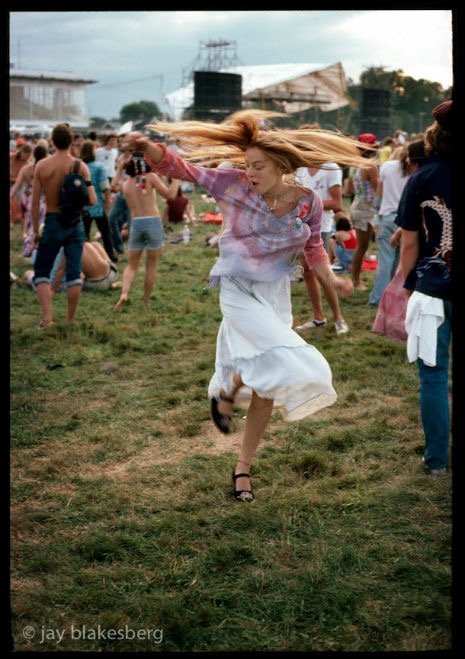
    Listening To The Grateful Dead Will Teach You Everything You Need To Know — But You Must Also Dance

    # 99 on my 99 Life Tips–A List is: You can learn everything you need to know in life from listening to the Grateful Dead — but you must also dance.

    The Godfather is the i-Ching, I beg to differ

    My tip is a derivative of this Godfather scene in You’ve Got Mail, the 1998 rom-com starring Tom Hanks and Meg Ryan. In the classic scene, Hanks answers Ryans questions with references to the Godfather, assuring her it is the “answer to every question,” the “i-Ching,” and “the sum of all wisdom.” It is a brilliant scene Hanks pulls off with aplomb, throwing in some impromptu Brando imitations for emphasis.

    I love the scene, but beg to differ. My go-to source is the Grateful Dead. Within their musical catalogue is everything you need to know. Non DeadHeads don’t understand (and don’t want to know) how their music infiltrates, penetrates, and saturates a Dead fan’s mindset to the last brain cell. 

    “For the truly Deadicated, theMusic Never Stops” 

    My someday book

    I plan to write a book in which every chapter will be a life-topic with related song titles — like this sampler:

    • Love — They Love Each Other, Sugar Magnolia, Not Fade Away, Comes A Time
    • God — Hell in A Bucket, Lay Down My Brother, Wharf Rat
    • Family — Me & My Uncle, Brother Esau, Mama Tried
    • Relationships Row Jimmy, He’s Gone, Cold Rain & Snow
    • Politics — Throwing Stones, Standing On The Moon
    • Philosophy — Terrapin Station, St. Stephen, Eyes of the World, Box of Rain
    • Justice — Dupree’s Diamond Blues, Stagger Lee, Viola Lee Blues
    • Economics — Deal, Loser, Easy Wind, Big Boss Man
    • Psychology— China Cat Sunflower, Brown-Eyed Women, The Other One
    • Death— Death Don’t Have No Mercy, To Lay Me Down, Brokedown Palace, Black Peter

    This partial, non-exhaustive listing is exemplary of how songs in their extensive repertoire have application to every aspect of life. Like I said above, you can learn everything you need to know from listening to the Grateful Dead.

    Discovering all these connections made the music the soundtrack of my life; and one of my favorite lyrics serves up advice for all life’s uncertainties:

    “If you get confused, listen to the music play”

    ~Grateful Dead: Franklin’s Tower

    One Flew Over The Cuckoo’s Nest

    As a young adult, I got lost for several years in the hippy lifestyle (including the drug use part). I travelled cross-country following the band from show to show. The community was like none I’ve experienced since. The traveling kaleidoscope of clowns was family — a home on the road. 

    On my journey in 1985, I met Ken Kesey, author of One Flew Over the Cuckoo’s Nest, himself instrumental in the hey-day of what is known as the 60’s movement, and equally pivotal in the Dead’s beginnings as the house band for the infamous San Francisco Acid Tests so marvelously chronicled in Tom Wolfe’s seminal volume, The Electric Kool-Aid Acid Test

    I went to dozens and dozens of shows became more and more lost in the mysticism and mythology and mis-application of truths and nearly lost my physical and mental health in the melee. 

    A year later, I met someone even more famous than Kesey. At a show in March of 1986, I met Jesus. My life forever changed, though the music has remained the soundtrack of it. The accoutrements of drugs and touring, I left behind. They aren’t necessary. They really never were. The music itself is a healing gift. One I’m Grateful to God to still enjoy. 

    Dance as if your life depends on it

    So many Grateful Dead songs are about impending mortality. The idea is in their very name. A fellow writer on Medium wrote this beautiful essay Accepting Your Mortality is the Beginning of Living Well. I heartily concur. The Grateful Dead’s music helps remind me. And it reminds me that the only effective antidote against an encroaching death is to live, to sing, and by God, to dance.

    Is there anything more celebratory, more filled with life and joy, the kind of life-celebration powerful enough to mock death — than dancing in the face of it?

    I think often of the story in the Old Testamanet, when the Ark of The Covenant was restored to Israel and Jerusalem after spending months and years outside the city, a young King David danced in such ecstatic jubilation, he danced right out of his clothes. 

    I still dance that way — celebrating life — warding off death. Now, I spin and whirl and shake my bones in the privacy of my home. Almighty God is the recipient of my Gratitude as He watches the overflow of my pent-up life. Nothing expresses exultation for the joy of living the way dancing does. As I dance before my God, the band playing is Jehovah’s favorite choir, the Grateful Dead.

    Everything you need to know—Just remember to dance

    So yes, I’m quite convinced, you can learn everything you need to know in life from listening to the Grateful Dead… but you must also dance.

    “Sometimes the songs that we hear are just songs of our own.”

    ~ Grateful Dead: Eyes Of The World
  • Why You Should Be Motivated By Hope

    Why You Should Be Motivated By Hope

    be motivated by hope more than by fear
    Photo by Don Pinnock on Unsplash

    # 94 on my 99 Life Tips–A List is: As much as lies within you, be motivated by hope more than by fear. 

    For your entire life, two great underlying motivators have debated and fought over all your decisions — hope of gain and fear of loss. These two combatants, working in opposition, have driven you to do, or not do, to opt for, or against, every choice having meaningful results from the time you were old enough to exercise free agency (self-direction in your preferences).

    Scan through a listing of headlines and sub-titles on Medium, or any platform like it. Nearly all seek clicks and readers by triggering hopes or fears. I recently read an interesting article on Medium by Ashley Broadwater that admits playing upon reader’s fears hoping to make headlines go viral. Similarly, look at a news media website. It’s nearly all fear… with a sprinkling of hope. This isn’t a judgement—merely an observation you may not have noticed or framed in these terms. 

    Can you guess which of these is the strongest, most predominant? Do people prove to be motivated by hope more than by fear? Sadly, no. The dominant motivator is fear, as shown in this research paper

    Fear has Instagram

    Quicker to act on the brain, fear stimulates a more primal region, causing autonomic physical responses in a way that hope does not. Fear is the Tony Robbins of motivational speakers shouting at your brain. (Not that Tony himself motivates by fear, he’s just bigger and louder—look at his website).

    Hope is meek, mild-mannered Seth Godin. (Compare Seth’s website). Like Seth, Hope relies on an understated, minimalist style and aesthetic. It is an emotional motivator that comes from higher, cortical levels of passive brain activity and more rational and active reasoning. Yes, hope is there, but seems a little unsure of itself, almost apologetic, as if it would be too much of an imposition or interruption if it were suddenly to speak up and assert itself. 

    Not Fear. Like a lie, Fear is halfway around the world before Hope can put on its pants. Except in our case, fear has taken over the brain before you can arouse hope to compete. Hope won’t cause an adrenaline dump. It won’t make your heart climb into your throat. Fear will do both those things then post it on Instagram. 

    These two, one larger and louder, the other more suppressed and quiet, are so ingrained, and one in particular, fear, so deeply rooted into both your physiology and psyche, you may not be aware of either. You cannot see them anymore, you’ve grown so used to them. Which is exactly why I’m writing this. I want you to be aware. You NEED to be aware. You’re making all of your decisions at their behest.

    Fear wins on points

    Fear wins on points as the dominant motivator. But it has an unfair advantage gained by being first to the market, so to speak.

    Neurophysiologists and psychologists agree that fear appeared very early in evolutionary brain development. It is the proverbial lizard-brain. This makes sense. Responding to saber-tooth tigers quickly can save your life more than contemplating Sartre and metaphysics hoping to create more inspirational cave art. Fear is why the art is in caves — and hope is why, even in caves, there is art.

    Think of the fear that would drive humans to live in caves, and the hope that would inspire them to create art on their walls. Beautiful and inspiring isn’t it?

    Fears and hopes and dreams of our own

    And that’s you and me. We have fears that drive us into our own caves. Both you and I seek protection and security. We hate the idea of loss. We are afraid to fail. These fears make us tolerate conditions we would never encourage a loved one to accept. Some fears paralyze our most precious dreams. Until the hope of their realization whispers in our ear, and we take up the pen, or the brush. Other fears cripple our resolve and erode our self-esteem—until we confront our demeaning and demanding boss, break free from an abusive relationship, and go for our hopes.

    Hope, meek, mild-mannered hope is all we have to nudge us forward out of comfort, and safety, and certainty. Hope encourages us with promise, prospect, potential, and possibility in our struggle to overcome fear. We overcome fear, all of it, by reaching for the hope of something better, something more than, even though we put everything at risk to arrive there.

    So, dear friends, as often as you can, be motivated by hope more than by fear. At the very least I hope by reading this you’re stirred to a new cognizance of what motivates you on a day-to-day basis and especially what drives the most impactful, big-picture decisions you make.

    More to say and the takeaway for now

    There is more to say on this subject than can I can address in one article. I’ll be working on related stories on this topic, having only scratched the surface in my background research. The relation of hope and fear to behavioral economics, politics, labor markets, relationships, and social justice movements are all topics I hope to write about. I’m excited to discover more, and I hope my findings will assist in your life’s journey.

    As a writer, I know the mind-crippling fear you must overcome (repeatedly) hoping your work can be meaningful to others—not just scoffed at and cast aside. Kudos to all of you who face down that elemental fear to paint, to sculpt, and to write on the walls of your own caves — and who invite us to take a peak. I see your art, and I see you. I think that’s what you, me, and all creators are hoping for.

    Just take this away; these two principle motivators impact all of your decisions. Scan your history to determine which has prevailed to this point. Motivated by hope, I equipped you with a fresh awareness to help you determine which will prevail as you go forward. It is my earnest hope that you will be motivated by hope more than by fear.

  • Just Because You’ve Read About It Doesn’t Mean You Know About It

    Just Because You’ve Read About It Doesn’t Mean You Know About It

    you've read about it
    Photo by Kelcy Gatson on Unsplash

    # 24 on my 99 Life Tips–A List is: Reading about something is not the same as doing something. Reading a story about Paris is not the same as actually visiting Paris. This applies to every aspect of reading. As valuable as it is, it is no substitute for experience.

    The intended audience for this tip is the ardent, imaginative reader. Your mind can trick you into believing you’ve done and experienced something because you’ve read about it. You may convince yourself you’ve learned all there is to know because you’ve read about it. I don’t mean to imply your reading will cause a psychotic break with reality. But the emotional and intellectual engagement stirred by reading good writing creates a world. A real one. And sometimes it’s difficult for the most intelligent to realize that all the things they’ve read about, and therefore felt as if they were present seeing, hearing, feeling, fighting, loving, longing in the scenes and characters is real only in their mind. Perhaps this has happened to you.

    I am not being disparaging. Real in the mind is real. There is nothing more “real”. But no one is a trout fisherman because they read a story about trout fishing outside Pamplona. Even if you recall details like the crisp newspapers to wrap the day’s catch in. And regardless whether you can almost taste the dust from the bus ride back to town. Dust you’ll quench with Sangria in the bar in time for the day’s bull running. No, dear reader, reading about drinking red wine won’t stain your teeth or make you drunk. Even when Hemingway is writing the tale.

    I always think of two things in relation to this tip:

    The first is the scene in Good Will Hunting in which Robin Williams’ psychiatrist character chastises Matt Damon’s ne’er do well savant character. Damon’s Will Hunting receives a dressing down for being so smug. He’s never actually done the things he’s read about. He’s never been out of Boston. Although he could recite all kinds of facts about Michelangelo, gleaned from the books he’s read, he doesn’t know what it smells like inside the Sistine Chapel. Because he’s never been. “You’re Just A Kid”. Williams’ character tells him. He’s never really been in love. He’s merely read about a lot of things. Though he can provide brilliant analysis with his near perfect recall, reading is no substitute for the actual streets of Rome. It’s a fantastic scene.

    The second is on a cross-country car trip when I was 20. I had picked up a Frenchman named Dominic hitchhiking from Binghamton, NY, on his way to see a girl in Sterling, CO. After a side-trip to New York City we started west. On the second day, Dominic grew critical of the countryside in his fatigue at seeing the farms and cornfields along the interstate. 

    As night fell on a long day of driving, my passenger got impatient. He pleaded with me to get out of the cornfields. After seemingly endless miles of nothing but corn, we saw an exit towards a town. Maybe it would be a more suburban, less pastoral view. I could drive forever at that age, but the corn was like a green ocean. I was suffering sensory deprivation. Plus, we were forced to limit our expenditures to fuel and food. We would not waste precious money on a hotel for the few hours of sleep we’d need before heading out again. I either needed to drive on to a rest stop, or find a suitable place.

    This is the West

    We came off the interstate and I turned off the service road onto a long, wide 2-lane in western Ohio. Mailboxes dispersed on either side marked the corners of front yards as big as baseball fields. Dark, wood-framed farmhouses sat well back from the road. Only occasionally did we see a light in a window. Still, Dom suggested I pull off into one of the front yards where we could sleep. He insisted we could set up my tent beside my Toyota, or sleep under the stars in our sleeping bags. 

    “What? Right in their front yard?” I said, “Have you lost your mind?”

    “Oh, not at all,” he replied in good but broken English, “This is the West, I have read all about it.”

    “Oh,” says I, “you’ve read about it. Good. Then you’ve no doubt read about shotguns, too.”

    I kept right on driving, headed back nearer the interstate, away from Dom’s temptation to get us shot at or dog bit, and eventually found a dirt farm road leading back into a cornfield where we would be safe and could get a few hours shut eye.

    “I have read about it.” I’ll never forget that. Don’t you forget it either.

  • How Music Affects Your Emotions Directly

    How Music Affects Your Emotions Directly

    # 23 on my 99 Life Tips–A List is: Music bypasses your thoughts to affect your emotions directly. It is unique among art forms for this quality as far as I’ve discovered. Take care then, what you are inviting to stir your emotions.


    Music affects emotions and brain responses in emotional centers regardless of lyrical content, or whether the pieces are solely instrumental. There is a body of brain imaging and clinical proof that music bypasses your thoughts to affect your emotions directly.

    This topic is worthy of a book or a doctoral thesis on its own. I will limit my commentary to calling your attention to the facts stated. Of note is that one study linked above showed that hearing sad music provoked some people to deeper levels of sadness.

    “… the study found that for some people, sad music can cause negative feelings of profound grief.”

     ~ Memorable Experiences with Sad Music—Reasons, Reactions and Mechanisms of Three Types of Experiences published in Plos One

    Emotions usually spring from thoughts

    Emotions usually arise as the products of thoughts, and independent of willing them into existence. A person can choose to be happy, but cannot by willing it, make it so directly. One cannot will happiness. One must first think happy thoughts… or listen to happy music. Music affects your emotions directly, not needing the mind to act as conduit.

    I am listening to jazz by Art Pepper as I write this. This is the first time I’ve immersed myself in an hour of his playing. I am familiar with him as a jazz musician only because I’ve read references to him in some Barry Eisler books, and I’ve heard snippets of tunes while watching the Bosch detective series derived from Michael Connelly’s novels. (You can stream Bosch on Amazon Prime Video).

    Having no familiarity with Pepper’s music, I am enjoying his fluid, sensual, upbeat, even cheerful jazz clarinet and saxophone as the perfect accompaniment to writing. There is nothing melancholy or depressing about it. It is urgent and energetic—sometimes staccato, phrased like well punctuated sentences. He plays woodwinds the way a hummingbird flies, darting here and there—never still for long. There is nothing angry, and certainly no rage. I find myself carried along, fully engaged with the virtuosity of expression, the coolness of style that draws me in like a whisper rather than repelling me like a shout.

    Ray Bradbury said the best jazz musicians play as if they don’t believe in death. An hour or so in and I know Pepper is an unbeliever, too. Listening to him I don’t believe in death, either. Rather, I feel smarter, more sophisticated and cosmopolitan—more vibrant and alive. It would be the perfect soundtrack for a dinner party, or an art crawl. Perhaps to serenade a gathering of happy, comfortable friends as they sample wines, cheeses, and chocolates. I like it. It makes me feel good and I will add Pepper’s jazz to my rotation.

    You have your favorite music. Ask yourself what it does for you. How does it make you feel? Do you have a “go to” band or song?

    Music as mental health medicine

    I have a life-rule not included on my 99 Life Tips list, but it would easily be the hundredth tip. Never, ever drink when you’re down. That, too, is a story in its own right. You should, however, have some healthy alternatives for self-medicating your mental health. I find there is nothing better than music. The studies linked above cite the therapeutic value of music as well. Music affects your emotions. Just take care to recognize which emotions you’re inviting yourself to feel when you make your choice of music to listen to.

    “Dear Mr. Fantasy, play us a tune

    Something to make us all happy

    Do anything, take us out of this gloom

    Sing a song, play guitar, make it snappy

    You are the one who can make us all laugh

    But doing that you break out in tears

    Please don’t be sad, if it was a straight mind you had,

    We wouldn’t have known you all these years”

    ~Traffic: Dear Mr. Fantasy
  • Read for Sheer Joy—The Ultimate Call To Action

    Read for Sheer Joy—The Ultimate Call To Action

    # 17 on my 99 Life Tips–A List is: Read for the sheer joy of it. If you cannot read due to time constraints, look for time leaks to plug so you can make time to read. If you still cannot get the time to sit with a book or good magazine, listen to audiobooks at every available moment: when walking, when commuting, or on a drive of any distance.

    I count reading as the cornerstone of all my acquired skills. It is the skill that informs and makes possible all the others I possess other than those that I’ve picked up by observation and practice. (I learned to drive nails with a hammer by hitting my thumb a lot—reading would have been less painful, but not as good a teacher).

    Reading Is What Makes Writers Immortal

    The whole concept of reading amazes me. Graphical communication supposes the creation of information in the present to be recorded for impartation and consumption in the future without a loss of meaning. Whether a book, an article, an essay, or a note, written words bring the author’s mind to the reader, whether or not the author is still physically alive. 

    For those who wonder about cryonics to achieve immortality, I say, try writing. Via reading, the author’s mind is as alive and fresh and real as the day he chiseled, or penned, or typed the words.

    So much of spoken language is thankfully ephemeral. It passes on the same wind that carries its vibrations to the ear of the hearer. And sometimes it goes in one ear and out the other just as rapidly. 

    As a test, list how many speeches you know about as compared to how many book titles you’ve read. Any famous speeches that predate radio and television have survived and made it to us because we can read them. How sad if we only had oral history to learn from and to pass on to our progeny.

    Written language is an archive of saved thoughts. Expecting the existence of a reader, the writer writes. She supposes that what she records will be relevant and helpful to some reader who comes along in five minutes, or five years, or five millennia.

    Reading Is A Kind Of Magic

    With these ideas in mind, reading anything is a joy to me. It is a kind of magic. I feel sorry for those who only read of necessity. One of the mind-blowing experiences missed by those who find no pleasure in reading is the opportunity to try on a new life, or a new world in your imagination, to time travel, either by re-living the past or rocketing into the sci-fi future.


    If you read the words pink elephant, you cannot help but see it. How did I put it in your mind? I wrote it and you read it. Amazing. If you think that was cool, try to escape the knowledge of that happening with every word you ever read. A writer somewhere cooks up a thought, pecks it out in abstract shapes, squiggles, and lines, posts it somewhere and the reader’s internal interpreter assigns meaning to all the gibberish and makes it real in the reader’s mind. 

    And while there is something precious and sensual about holding a book in your hands, of feeling the paper as you turn the pages, digital formats and audiobooks are a fantastic way to get many of the same benefits, and they’re convenient in a pinch. Go ahead, read for sheer joy.

  • What Do You Like & Why Do You Like It?

    What Do You Like & Why Do You Like It?

    # 85 on my 99 Life Tips–A List is: Know why you like what you like. Learn to identify the feeling of liking something before you have the words to tell yourself you like it. That resonance, that connection, that is your home.


    This one has been staring at me for a couple of days. I know what I mean by the tip I offered months ago when I created my list and posted it, but this one captures so much.

    What you like defines you

    Why do you like that? Why don’t you like this? Can your likes change—become weaker (?), or stronger? If they can change, did the thing formerly liked change? Or did the former “Like-er” change? Important stuff.

    We all start in infancy as blank slates. Yes, I know, the argument of nature vs. nurture. Sure, sure. Still… I have no Grateful Dead genes that make me resonate to that frequency, nor any Russian genes I’m aware of that make the slow, deliberated, painstakingly detailed accounts of Dostoevsky so appealing and full of life and truth to me.

    So, as for the accumulation of culture—which is really a fancy word for group or social liking of a thing—I’m on the nurture side of that debate. We like what we like because we get exposed to it by someone who convinces us that people like us like stuff like this. There’s a kind of peer pressure to like most of the things we choose. 

    [That, and the size of the menu in proportion to the size of our appetites, and whether we find good entrements (palate cleansers) between samplings.] 

    There are also degrees of liking a thing. You may wear the tee-shirt, but not kill bats on stage and drink their blood. (You can look up the old Ozzy Osbourne legend somewhere… Google it.)

    So, Greg, you’re 300 words in and haven’t told me a damn thing about why I like some stuff and not other stuff.

    True, dear reader, we are halfway down a proper electronic page and I cannot tell you what to like. I can, however, urge this—Don’t let anyone else tell you either!

    We all got our first likes because someone pushed sweet mashed pears into our baby mouths before they spooned in disgusting pureed lima beans. Someone played Mozart, or Miles Davis or Metallica before Beethoven, Benny Goodman, or Bad Company.

    We first gain likes and tastes from the people around us who expose us to them and usually because they like them too. (Maybe not with babyhood pears, but you catch my drift).

    Here’s the rub

    At some point, earlier or later, I don’t know, you will want to pay attention to whether or not you’d like Led Zeppelin at all if that delectable girl in the yellow overalls didn’t look so good wearing that logo emblazoned across her beautiful… t-shirt (what did you think I was going to type?)

    My mom was a member of the Columbia Records club. This was back when dinosaurs roamed North America and people still had turntables on which to extract sound from round plastic platters. She got several albums a month, and she used to sit dreamily and play one album called Go To Heaven by a band of long-haired men, standing in a cloud on the cover, wearing cheesy looking, white, polyester-velveteen Lawrence Welk suits. 

    Alabama Getaway and Don’t Ease Me In off that record sounded like countrified crapola to my 13-year-old ears. Hearing it made me gag and flee the premises, long before I got to hear Lost Sailor and Saint of Circumstance

    I couldn’t stand it! Yuck! 13-year-olds ought not be judged too harshly for underdeveloped anything. Puberty makes for a cloudy filter.

    But I did like her Fleetwood Mac, and Rickie Lee Jones, and Little Feat albums. I even liked Jimmy Buffett, and I wanted to like Crosby, Stills, Nash, and Young because they had the coolest album cover. (You know the antique looking, sepia-toned album where they’re posed with a dog, and Crosby cradles a shotgun, and Neil is draped with bandoleers and a pistol, and a guitar is lying on the ground — Deja Vu—and it looks like Matthew Brady took the photograph right after the battle of Antietam or something). 

    God, I loved the look of that album cover because I was crazy for all kinds of Civil War stuff. That picture was so cool! Who cared about hippies floating in white John Travolta suits in a cloud!?

    But the music, Jeez! My misanthropic mom would get drunk, put on Teach Your Children and slur, “Hunnneee, jusss lishen to theesh wordzz. Thish iss evertheeen I wanna  shay to you kidzz.”


    OMG!! Please No!Likes can change

    I hated C,S,N,Y then. Association, ya know?

    Though, I LOVE their music now. Different association… ya know?

    The same reason I now love all things Grateful Dead. I had to grow into it. Then it grew into me.

    So, sometimes early exposure doesn’t take root. Germination takes longer. Circumstances change, and then, bam! You hear something, or see something, or taste it, and it’s like tasting and seeing and hearing home. Like gathering up fragments of self that complete you. I know, weird.

    But, they say there’s no accounting for taste. And truly there isn’t. If you will put on your Indiana Jones hat and do some personal archeology to dig up the reasons you’ve buried and kept your own personal treasures, you’ll learn a hella lot about yourself.

    Fact is, your likes and loves will tell you more about yourself than your dislikes.

    Shove over, I’ve invited God in

    Probably shouldn’t drag God into a story already crowded with Jimmy Buffett, my drunk mom, Rickie Lee Jones, and bandoleers, but I see [Him] as defined (bad word, I don’t think [He] can be defined adequately, else the whole God idea shrinks, but it’s the best word we’ve got) by what [He] likes, immeasurably more than by what [He] dislikes. Just like you and me are defined more by what we like and allow in than by what we hate and keep out.

    It’s the opposite of the way evangelical Christians think of God and themselves. These define themselves by what they oppose, what they’re against, what they resist and are afraid of. They never crack open Song of Songs, the most beautiful ode to physical, sexual love ever written (“kisses sweeter than wine”). It just sits there unread and unappreciated in their bibles. They conveniently forget Noah got drunk (after preserving humanity), David committed adultery—and murder (and was still called a man after God’s own heart), Jesus turned water into about a hundred gallons of wine at a wedding, and Peter denied Jesus (but Jesus restored him again over fish tacos on the beach).

    They forget God loved everybody, EVERYBODY so much, [He] paid the ultimate price to win us back. I don’t imagine [He’s] trying to keep anyone out on technicalities like who they love. [He’d] prefer to outfit us all in white suits, invite us to stand in a cloud, and Go To Heaven. Or maybe my God is just bigger and more full of Grace and Mercy than yours. I dunno. Or maybe I’m wrong. But I’d rather be wrong believing in God as revealed Love. Maybe you’re unflawed, and you’re loved for your perfection. That doesn’t apply to me. But because God loves flawed me as much as [He] does, my only response is to trust [Him.] That is what faith is all about, after all. The heart’s response to a God showing and proving [His] Love.

    If you’re curious about my brackets around masculine pronouns in reference to God, it’s because of my uncertainty of how to think of God and gender. I think of God as Father, the only real Father I’ve ever known. But God is called El Shaddai in the Hebrew scriptures, too, which means “the Breasted One”, or nurse. I love that image—of God being the source of life and growth and sustenance, of comfort, and warmth, and security, the way a nursing mother is to her infant child. You are welcome to your own images. I am convinced in my heart that my brackets aren’t offensive to [Him], or Him. End of disclaimer.

    Back to the topic at hand—Here’s an unlimited credit card

    Learn to identify what you like, on your own terms. Evaluate your preferences to see if you picked them up as the price of admission to some tribe or other, or thinking they’d be the key to some girl’s heart. 

    What do you like, the real you? Imagine you have an unlimited credit card. Your preferences and tastes are the only ones you need consult. You start with an empty iPod, empty media shelves, and an unfurnished home—no pictures on the walls, nothing in the pantry, fridge, wine cellar, or liquor cabinet. What’s parked in the driveway? What do you get? What do you like? Not—what does your wife, husband, lover like? No. What do you like?

    Go ahead, you have my full permission to fill your life with as many of those things you can. On the way, you’ll answer the question: Why do you like that? It may be this simple. You just do! It resonates. And it scratches the persistent itch, uncovers the empty spot, and fills up the void. Because it caresses your heart; and sings you, rocks you, swaddles you, envelops you, whispers you—home.

    It may as simple as the idea enshrined by Mick Jagger—

    “I know it’s only Rock n’ Roll, but I like it… yes I do!”

    ~ Rolling Stones: It’s Only Rock n’ Roll

    Mick likes Rock n’ Roll, and that like defines Mick. What defines you? What do you like?

    One day, I’ll invite you over to my own imaginary bare-floored, yoga-pillowed pad where we can have church listening for the whisper of God, blasting my collection of studio and live Dead performances on my megawatt stereo system, while we drink Napa Valley wine and Russel’’s Reserve and Grok out on all my Van Gogh and Monet and Mondrian paintings. Or maybe we’ll “ooh and aahhh” over my library of thousands of volumes of curated literature, housing everything from Brené Brown to Zane Grey.

    You’ll like it. Or at least I will.

    What did you ask? Oh, yeah, that Aerosmith you hear coming from the other room? Oh, that’s just my girlfriend rocking out on the sounds she likes. She calls mine alternately “Grandpa” or “Sleepy” music. If you prefer the Demon of Screamin’ to my sleepy tunes, you are welcome to plug in your headphones. To each his own. I can’t tell you what to like, I can only ask you to tell me, why do you like it?

  • LifeSpace Design—3 Books Help You Match Your Space To Your Life

    LifeSpace Design—3 Books Help You Match Your Space To Your Life

    LifeSpace Design-Matching your Space To Your Life
    Not my Uncle’s place, but a house with character (Shutterstock Image: Licensed to Author)

    # 80 on my 99 Life Tips–A List is: When contemplating a home, ask yourself, “What kind of life do I see myself doing here?” Does the space match the anticipated activity?

    My introduction to lifespace design

    Thefirst trade I learned was carpentry. I had the good fortune to work for an uncle (with whom I also lived for a season when I first left home) who had a brilliant eye and feel for spaces and who shared it with me.

    He purchased a small, nondescript house and transformed it into an oasis of livability, aesthetic pleasure, comfort, and utility. The rear of the house included a 20-foot-diameter deck built around the trunk of white oak. A flagstone path led from the deck to an outdoor shower with sides of batten-board red cedar. The open-sided entry afforded privacy by proximity to uninhabited woods.

    There’s nothing as pleasing as an outdoor shower. It’s the nearest thing to skinny-dipping you can do standing up.

    Heating, chores, and smells like home

    Inside the house was unlike any space I’ve experienced since. A squat, black woodstove in the large front room heated the entire home. It sat perched atop a boulder so big the front door had to be removed to bring it in. 

    We shored up the structure beneath the floor with piers, beefier joists, and concrete. Up top, we set the stone (the size of a king-sized bed) in its own bed of thinset mortar. Then we carefully drilled holes to anchor the feet of the woodstove to the stone’s flat gray surface using bolts epoxied in place. This was not a mere cosmetic stone, nor an homage to cave-dwelling. To my amazement the heat absorbed by the slab of stone during the day would radiate from it at night, warming the house, while the stove went untended.

    First thing in the morning, I did my first ever “real man’s” chores. I cut wood from the stack, carefully splitting it with a leather-handled hatchet to lengths I could feed the stove. Then I fed Jack Moon, the blue-eyed half-wolf, half husky wolf-dog that guarded the back of the property from within his 6-foot-high dog run.

    Most mornings I returned from chores to the aroma of hickory smoke mingled with bacon— sizzling in the huge cast-iron skillet lit from underneath by blue gas flame. Those smells will always mean home. 

    In back of the house my uncle built a house-sized barn topped by a gambrel roof that served as workshop, toolshed, and classroom of life.

    Barn v. McMansion

    Today, if someone offered me a choice between that barn (or a replica, since he is thankfully still using it), or any pretentious McMansion in some gated, cramped neighborhood, I’d gladly take the barn. There was more hominess, (my spell checker auto-corrected to holiness, and you know what, that’s not an accident), more holiness, and therefore more wholeness, than in any of those conspicuous-consumer, soul-less wannabe estates.

    My education about spaces and life and activity and how to meld the three was furthered by 3 unique books I’ll share here with you. 

    3 books about architectural space

    The PersonalCan you reach it?

    A Place of My Own: The Architecture of Daydreams, by Michael Pollan

    This deserves its own story, which I will probably supply one day. I’m certain there are many good ones already out there. This book explores the nature of space and place. How different spaces make us feel. How to match a space to its expected usage, and more. I cannot recommend this highly enough. It would easily make my top 10 list of all-time favorite, most important reads.

    A House is not a Cathedral

    The Not So Big House: A Blueprint For The Way We Really Live, by Sarah Susanka

    Susanka wrote this book as a backlash against the encroachment of the mini-Mansions like I decry above. She filled it with beautiful illustrations and photographs. The link above will give you a delightful glimpse.

    In a very similar vein as giants of residential architecture like Frank Lloyd Wright, the author shows and tells how impactful beauty and craftsmanship are to one’s experience of life. This is especially true in your home, the space where you spend most of your time.

    She makes a powerful argument that these homes are wasteful if not outright harmful. They borrow effects from industrial, financial, and governmental architecture with huge entryways, soaring foyers, sweeping staircases, all of which shrink the person entering the space, elevating the space with its contrived sense of awe (think of a downtown bank lobby or a cathedral after you’ve moved past the entry narthex).

    LifeSpace Design match your space to your life
    Beautiful for a cathedral (this from inside St. John the Baptist Cathedral in Savannah, GA) not so great for a home. (Photo by Author)

    Observing the lives of her architectural clients in the monstrosities, she realized they don’t use the grandiose living rooms, the formal sitting rooms, or the extra den. People still seek alcoves. They will always congregate in a kitchen. So she began designing homes for the way we actually live.

    A Town can have soul

    A Pattern Language: Towns, Buildings, Construction, by Christopher Alexander

    This book, one of three in a series that was first published in the mid-70s, describes building elements, “patterns”, that evoke desirable responses to the inhabitant or denizen of the building. Alexander doesn’t limit exposition of these patterns and principles to residences, he talks about public buildings, town design, and construction methods.

    The 253 identified patterns are not hierarchical. The author doesn’t impose his own sensibility or value system other than to list some and preclude others.

    But if you can find a copy of this work and familiarize yourself with the patterns, you’ll begin to notice them when you find them (as well as their absence) when you are contemplating and considering a place of your own, or a potential remodel.

    A couple of quick examples that come to mind 

    Light from two sides of a room: This pattern not only allows for more natural light, it increases the sense of space and will seem to melt the veil of interior and exterior space in a way light from only one wall will not accomplish.

    Transition from public space to private space: Alexander points to examples of Asian, specifically Japanese tendencies to create fencing, screens, archways, or gates between the sidewalk or driveway and the front entry of the home. The transition serves as a visible and physical symbol of moving from public to private activity, from public to private life. 

    Find this in examples like the photo below, and you’ll sense it physically too. These patterns are real.

    LifeSpace Design match your space to your life
    The gate, the steps, the beautiful woodwork all transition from public to private (Photo by Author)

    Here is a photo from the Savannah, GA riverfront that shows another desirable pattern, especially in towns and cities: outdoor dining with a view of nature.

    LifeSpace Design Match your space to your life
    Alexander wasn’t limited to residential patterns (Photo by Author)

    The Takeaway

    I hope this very brief treatment of this important topic will spur you to do further research on lifespace design, then put your findings to work. There is probably no greater or easier way to change your daily life and emotional mood than to create appropriate, purposely designed spaces in which to spend it.

  • The Best Time (Might have been 20 years ago; The Second Best Time is Today)

    The Best Time (Might have been 20 years ago; The Second Best Time is Today)

    The Best Time
    Photo by Mak on Unsplash

    # 38 on my  99 Life Tips–A List is: The best time to pursue your artistic or creative dream is 20 years ago. The second best time is today.

    “1To everything there is a season,

    A time for every purpose under heaven:

    2 A time to be born,

    And a time to die;

    A time to plant,

    And a time to pluck what is planted;

    3 A time to kill,

    And a time to heal;

    A time to break down,

    And a time to build up;

    4 A time to weep,

    And a time to laugh;

    A time to mourn,

    And a time to dance;

    5 A time to cast away stones,

    And a time to gather stones;

    A time to embrace,

    And a time to refrain from embracing;

    6 A time to gain,

    And a time to lose;

    A time to keep,

    And a time to throw away;

    7 A time to tear,

    And a time to sew;

    A time to keep silence,

    And a time to speak;

    8 A time to love,

    And a time to hate;

    A time of war,

    And a time of peace.”

    ~Ecclesiastes 3:1-8, NKJV

    The undeniable theme is there is a best time for everything 

    Borrowing from a phrase I read recently in The Overstory, by Richard Powers, that the “best time to plant a tree is 20 years ago, and the second best time is today,” I am convinced the same is true for artistic, creative pursuits.

    The best time to pursue them is 20 years ago. I wish I could turn back those years and start then, as a younger man, with more time to write more things and potentially reach more people and do more good. But wishing won’t make it so. I have the pleasure of having lived those 20 years and perhaps they have given me more things to write about, so I’m using the second best time… today.

    You should too. You cannot reclaim time lost, but you can prevent losing any more. Stop negotiating against yourself over whether you will pursue your art, your music, your writing, your creative dream, and begin. You won’t regret it. The fear of failure keeping you paralyzed, that seems so big, before you start, evaporates like the morning dew, once you begin. 

    Every creator is afraid. That is the essence of creation. I’m afraid every time I click Publish. To create is to make something never made before. You might fail. People may not like it. 

    So what? 

    If you never try, the people meant to love it, be inspired by it, even be saved by it, won’t be.

    So, since you have today, and since today is still the second best time to start…

    Start.

  • The 4th of July, 5 Uses of Rights in the Declaration, and the Idea of America

    The 4th of July, 5 Uses of Rights in the Declaration, and the Idea of America

    4th of July, The Declaration, 5 Uses of Rights, and an Idea
    Photo by Paul Weaver on Unsplash

    The Declaration of Independence, first published on this day in 1776, unanimously approved by the Continental Congress 2 days prior, on July 2nd, 1776, did not create laws, rights, a government, or a United States of America.

    It declared 13 Colonies’ unity in opposition to continued British rule, and their united determination to declare themselves Free and Independent States.

    The representatives who met, debated, resolved to break political ties, and who drafted and edited the document giving their reasons declared themselves at the end of that document to be representatives of the united States of America (lowercase united). Representatives of 13 Free and Independent States, united in the declaration of their freedom and independence.

    13 years of war

    The import of this is to note that it was some 13 years before a Continental Congress again met to “institute new Government, laying its foundation on such principles and organizing its powers in such form, as to them shall seem most likely to effect their Safety and Happiness.” to quote from the Declaration. That founding document is the US Constitution. Its Preamble enlarges upon ideas inherent in the Declaration laying out the purpose of Government envisioned by the framers.

    Those 13 intervening years between the Declaration and the Constitution were ones of war and privation on the citizens, property, and countryside of those 13 Independent States. Declaring themselves independent would have secured nothing without the blood that was shed to support the right they claimed to have, indeed the duty they claimed to have, to do so. The Revolutionary war put lead and steel in place of ink and parchment to win the rights ink and parchment asserted.

    That the representatives of those newly begotten States anchored themselves upon bedrock ideas predating any form of Government, party, or political system is noteworthy. 

    George F. Will, a notable political historian holding a doctorate in political philosophy, and well established as a Conservative thinker, says in his book The Conservative Sensibility, that America is the first country in world history founded upon an Idea. Geography did not establish it. Nor did ethnicity, nor genealogy, nor annexation by war. A political party or system did not create America. The inspirational coalescing power of an idea did.

    That all men are created equal, with rights that Government does not confer upon them, but they consent to enact and institute Government to secure and protect those rights.

    The word right or rights appears 5 times in the Declaration’s preamble. We may safely assert that the conception of rights, and the misuse or abuse of them by government, was preeminent in the representative’s minds.

    The Preamble

    “We hold these truths to be self-evident, that all men are created equal, that they are endowed by their Creator with certain unalienable Rights, that among these are Life, Liberty and the pursuit of Happiness.—That to secure these rights, Governments are instituted among Men, deriving their just powers from the consent of the governed,—That whenever any Form of Government becomes destructive of these ends, it is the Right of the People to alter or to abolish it, and to institute new Government, laying its foundation on such principles and organizing its powers in such form, as to them shall seem most likely to effect their Safety and Happiness. Prudence, indeed, will dictate that Governments long established should not be changed for light and transient causes; and accordingly all experience hath shewn, that mankind are more disposed to suffer, while evils are sufferable, than to right themselves by abolishing the forms to which they are accustomed. But when a long train of abuses and usurpations, pursuing invariably the same Object evinces a design to reduce them under absolute Despotism, it is their right, it is their duty, to throw off such Government, and to provide new Guards for their future security.”

    ~Wikipedia, Annotated Declaration of Independence

    unalienable Rights

    The Declaration enumerates what it calls Unalienable rights having come to all men from their Creator. The document declares all men are created equal with an equal share of, and claim to, the endowment of these rights. 

    Declaring this to be so, did not, unfortunately, make it so for all people then living in the 13 Colonial States, approximately 50% of whom were slaves or indentured servants.

    This is simple, verifiable, provable fact. To pretend it isn’t a fact is a disgrace to the name American and a slap in the face to history and history’s God.

    Many drafters of the Declaration, and most notably Jefferson himself, the document’s principal author, were slave owners. Their livelihoods and fortunes derived from slave labor. In declaring all men to be created equal, Jefferson penned a truth that preexisted his writing. In enumerating 3 specific rights as among those which are endowed to equal men, Jefferson names these: life, liberty, and the pursuit of happiness, clearly and indubitably denied to slaves.

    to secure these rights

    The revered document then states the most Revolutionary of ideas. That Government exists not to confer rights, but to secure rights that do not derive from government but from laws of human nature. 

    This is the most radical political statement in history. 

    Lest anyone use the word “radical” as an insult to hurl at a political opponent, remember these founders as the proud radicals they were. They would have worn the label as a badge of honor. 

    Once again, the Declaration rests upon an idea for its legitimacy before the court of public opinion, of history, and of history’s God.

    Right of the People to alter or to abolish it

    The Declaration asserts the absolute right of a people to overthrow any government that usurps individual rights or does not protect them; or that refuses to recognize that the only legitimate form of government for men who are created equal and endowed with equal rights must come from the consent of those equal men. This assertion, again based upon an idea, had to be tested on the battlefield, and proved with blood and treasure.

    right themselves by abolishing the forms to which they are accustomed

    Here Jefferson admits the willingness of people to suffer long with injustices to which they grow accustomed. Neither the willingness to do so, nor the duration of the season during which that willingness to suffer lasts, negates the right of the people to right themselves when they see fit to do so.

    It is their right, it is their duty to throw off such Government

    Indeed, in this bold last use of the word right in the preamble, Jefferson and the adopters elevate radical Revolution to overthrow illegitimate government from a right to a duty. At the end of the document, they again invoke their solemn duty to publish the document that officially signaled the dissolution of the political bonds between the 13 Colonies and British rule.


    In Conclusion

    I offer this very brief examination of the Declaration and some of its ideas and propositions for this reason: America, of all nations, was born of an idea. That idea is that all men are created equal. They have equal rights issuing from Nature and Nature’s God. Government does not create rights. Just government cannot take them away. Equal citizens with equal rights are free to their own lives, their own liberty, and to their own pursuit of happiness.

    This idea, this America is the one I love. The possibility for these things to be actualized exists only in this place, so far as I’m aware. That these ideals did not exist equally for all men (and women) from the nation’s inception is beyond dispute to honest students of history. 

    That the seeds of possibility and potential for a full flowering of freedom, liberty and equality for all were sown in the founding document, the Declaration of Independence, is likewise beyond dispute.

    That we as a nation, on our 245th birthday, still struggle to see these principles and ideas of equal rights and equal justice fully enacted for all our citizens, all the time, contradicts the very principles that first gave it birth.

    So, I celebrate America, the idea, more than America, the present reality. The present reality is the crucible in which to forge the idea, but the Idea, set forth on this day 245 years ago, is the America I love and pledge allegiance to on this 4th of July 2021. I celebrate the idea of America in acknowledgement that she has yet to live fully to the standards the framers set so high. And I celebrate with absolute determination to do my part to see the idea become the reality.