Category: Values

  • What Do You Like & Why Do You Like It?

    What Do You Like & Why Do You Like It?

    # 85 on my 99 Life Tips–A List is: Know why you like what you like. Learn to identify the feeling of liking something before you have the words to tell yourself you like it. That resonance, that connection, that is your home.


    This one has been staring at me for a couple of days. I know what I mean by the tip I offered months ago when I created my list and posted it, but this one captures so much.

    What you like defines you

    Why do you like that? Why don’t you like this? Can your likes change—become weaker (?), or stronger? If they can change, did the thing formerly liked change? Or did the former “Like-er” change? Important stuff.

    We all start in infancy as blank slates. Yes, I know, the argument of nature vs. nurture. Sure, sure. Still… I have no Grateful Dead genes that make me resonate to that frequency, nor any Russian genes I’m aware of that make the slow, deliberated, painstakingly detailed accounts of Dostoevsky so appealing and full of life and truth to me.

    So, as for the accumulation of culture—which is really a fancy word for group or social liking of a thing—I’m on the nurture side of that debate. We like what we like because we get exposed to it by someone who convinces us that people like us like stuff like this. There’s a kind of peer pressure to like most of the things we choose. 

    [That, and the size of the menu in proportion to the size of our appetites, and whether we find good entrements (palate cleansers) between samplings.] 

    There are also degrees of liking a thing. You may wear the tee-shirt, but not kill bats on stage and drink their blood. (You can look up the old Ozzy Osbourne legend somewhere… Google it.)

    So, Greg, you’re 300 words in and haven’t told me a damn thing about why I like some stuff and not other stuff.

    True, dear reader, we are halfway down a proper electronic page and I cannot tell you what to like. I can, however, urge this—Don’t let anyone else tell you either!

    We all got our first likes because someone pushed sweet mashed pears into our baby mouths before they spooned in disgusting pureed lima beans. Someone played Mozart, or Miles Davis or Metallica before Beethoven, Benny Goodman, or Bad Company.

    We first gain likes and tastes from the people around us who expose us to them and usually because they like them too. (Maybe not with babyhood pears, but you catch my drift).

    Here’s the rub

    At some point, earlier or later, I don’t know, you will want to pay attention to whether or not you’d like Led Zeppelin at all if that delectable girl in the yellow overalls didn’t look so good wearing that logo emblazoned across her beautiful… t-shirt (what did you think I was going to type?)

    My mom was a member of the Columbia Records club. This was back when dinosaurs roamed North America and people still had turntables on which to extract sound from round plastic platters. She got several albums a month, and she used to sit dreamily and play one album called Go To Heaven by a band of long-haired men, standing in a cloud on the cover, wearing cheesy looking, white, polyester-velveteen Lawrence Welk suits. 

    Alabama Getaway and Don’t Ease Me In off that record sounded like countrified crapola to my 13-year-old ears. Hearing it made me gag and flee the premises, long before I got to hear Lost Sailor and Saint of Circumstance

    I couldn’t stand it! Yuck! 13-year-olds ought not be judged too harshly for underdeveloped anything. Puberty makes for a cloudy filter.

    But I did like her Fleetwood Mac, and Rickie Lee Jones, and Little Feat albums. I even liked Jimmy Buffett, and I wanted to like Crosby, Stills, Nash, and Young because they had the coolest album cover. (You know the antique looking, sepia-toned album where they’re posed with a dog, and Crosby cradles a shotgun, and Neil is draped with bandoleers and a pistol, and a guitar is lying on the ground — Deja Vu—and it looks like Matthew Brady took the photograph right after the battle of Antietam or something). 

    God, I loved the look of that album cover because I was crazy for all kinds of Civil War stuff. That picture was so cool! Who cared about hippies floating in white John Travolta suits in a cloud!?

    But the music, Jeez! My misanthropic mom would get drunk, put on Teach Your Children and slur, “Hunnneee, jusss lishen to theesh wordzz. Thish iss evertheeen I wanna  shay to you kidzz.”


    OMG!! Please No!Likes can change

    I hated C,S,N,Y then. Association, ya know?

    Though, I LOVE their music now. Different association… ya know?

    The same reason I now love all things Grateful Dead. I had to grow into it. Then it grew into me.

    So, sometimes early exposure doesn’t take root. Germination takes longer. Circumstances change, and then, bam! You hear something, or see something, or taste it, and it’s like tasting and seeing and hearing home. Like gathering up fragments of self that complete you. I know, weird.

    But, they say there’s no accounting for taste. And truly there isn’t. If you will put on your Indiana Jones hat and do some personal archeology to dig up the reasons you’ve buried and kept your own personal treasures, you’ll learn a hella lot about yourself.

    Fact is, your likes and loves will tell you more about yourself than your dislikes.

    Shove over, I’ve invited God in

    Probably shouldn’t drag God into a story already crowded with Jimmy Buffett, my drunk mom, Rickie Lee Jones, and bandoleers, but I see [Him] as defined (bad word, I don’t think [He] can be defined adequately, else the whole God idea shrinks, but it’s the best word we’ve got) by what [He] likes, immeasurably more than by what [He] dislikes. Just like you and me are defined more by what we like and allow in than by what we hate and keep out.

    It’s the opposite of the way evangelical Christians think of God and themselves. These define themselves by what they oppose, what they’re against, what they resist and are afraid of. They never crack open Song of Songs, the most beautiful ode to physical, sexual love ever written (“kisses sweeter than wine”). It just sits there unread and unappreciated in their bibles. They conveniently forget Noah got drunk (after preserving humanity), David committed adultery—and murder (and was still called a man after God’s own heart), Jesus turned water into about a hundred gallons of wine at a wedding, and Peter denied Jesus (but Jesus restored him again over fish tacos on the beach).

    They forget God loved everybody, EVERYBODY so much, [He] paid the ultimate price to win us back. I don’t imagine [He’s] trying to keep anyone out on technicalities like who they love. [He’d] prefer to outfit us all in white suits, invite us to stand in a cloud, and Go To Heaven. Or maybe my God is just bigger and more full of Grace and Mercy than yours. I dunno. Or maybe I’m wrong. But I’d rather be wrong believing in God as revealed Love. Maybe you’re unflawed, and you’re loved for your perfection. That doesn’t apply to me. But because God loves flawed me as much as [He] does, my only response is to trust [Him.] That is what faith is all about, after all. The heart’s response to a God showing and proving [His] Love.

    If you’re curious about my brackets around masculine pronouns in reference to God, it’s because of my uncertainty of how to think of God and gender. I think of God as Father, the only real Father I’ve ever known. But God is called El Shaddai in the Hebrew scriptures, too, which means “the Breasted One”, or nurse. I love that image—of God being the source of life and growth and sustenance, of comfort, and warmth, and security, the way a nursing mother is to her infant child. You are welcome to your own images. I am convinced in my heart that my brackets aren’t offensive to [Him], or Him. End of disclaimer.

    Back to the topic at hand—Here’s an unlimited credit card

    Learn to identify what you like, on your own terms. Evaluate your preferences to see if you picked them up as the price of admission to some tribe or other, or thinking they’d be the key to some girl’s heart. 

    What do you like, the real you? Imagine you have an unlimited credit card. Your preferences and tastes are the only ones you need consult. You start with an empty iPod, empty media shelves, and an unfurnished home—no pictures on the walls, nothing in the pantry, fridge, wine cellar, or liquor cabinet. What’s parked in the driveway? What do you get? What do you like? Not—what does your wife, husband, lover like? No. What do you like?

    Go ahead, you have my full permission to fill your life with as many of those things you can. On the way, you’ll answer the question: Why do you like that? It may be this simple. You just do! It resonates. And it scratches the persistent itch, uncovers the empty spot, and fills up the void. Because it caresses your heart; and sings you, rocks you, swaddles you, envelops you, whispers you—home.

    It may as simple as the idea enshrined by Mick Jagger—

    “I know it’s only Rock n’ Roll, but I like it… yes I do!”

    ~ Rolling Stones: It’s Only Rock n’ Roll

    Mick likes Rock n’ Roll, and that like defines Mick. What defines you? What do you like?

    One day, I’ll invite you over to my own imaginary bare-floored, yoga-pillowed pad where we can have church listening for the whisper of God, blasting my collection of studio and live Dead performances on my megawatt stereo system, while we drink Napa Valley wine and Russel’’s Reserve and Grok out on all my Van Gogh and Monet and Mondrian paintings. Or maybe we’ll “ooh and aahhh” over my library of thousands of volumes of curated literature, housing everything from Brené Brown to Zane Grey.

    You’ll like it. Or at least I will.

    What did you ask? Oh, yeah, that Aerosmith you hear coming from the other room? Oh, that’s just my girlfriend rocking out on the sounds she likes. She calls mine alternately “Grandpa” or “Sleepy” music. If you prefer the Demon of Screamin’ to my sleepy tunes, you are welcome to plug in your headphones. To each his own. I can’t tell you what to like, I can only ask you to tell me, why do you like it?


  • Wisdom Is The Choice of The Best End and The Best Means for Achieving It…to be continued

    Wisdom Is The Choice of The Best End and The Best Means for Achieving It…to be continued

    Wisdom is the choice of the best end — here is a nice one, Antigua, Mamora Bay at sunset
    Antigua, Mamora Bay Sunset (Photo by Author)

    # 78 on my 99 Life Tips–A List is: Wisdom is also the application of the best means for the most valuable ends. See # 77 above for initial thoughts regarding wisdom.

    In keeping with the string of tips and stories about intelligence, truth, and wisdom, this is the reader’s digest summation. Wisdom chooses the best end, then achieves it by the best methods.

    Easier said than done.

    Getting lost in the weeds of esoteric ideas is no benefit if you want to be wise (and who doesn’t want to be?). Simple answers and concepts are the most helpful to get you and keep you on track. 

    The Best End

    You may wish to grab a Venti-sized latté while you ponder what this means to you. It will take a while. 

    What is the mainspring of your life? What is your ultimate reason, purpose, goal? Why do you do what you do? What is it you’re hoping for?

    The ultimate end of a person’s life dictates their life, morality, their praiseworthiness or guilt. It is the motive behind every decision. It is the mission statement, even if unspoken, deeply buried in the unconscious.

    Wisdom is the choice of the best (most valuable) end.

    Which is what exactly? What is the correct answer?

    America’s founding documents declare it to be, “the pursuit of happiness”—but is the pursuit, or the happiness—the end?

    If happiness; is that the most valuable end? Is your happiness more valuable than mine? It may be to you, but when weighed on a universal scale? Are they not equal?

    And if that has you scratching your head, assuming a belief in God, is your happiness more valuable than God’s? And are you more deserving of happiness than God is?

    That will keep the mental wheels spinning a while.

    Lest we digress too much, a repetition is in order. Wisdom is the choice of the best end.

    Oh, that’s easy, you say. Lots of money is the best, most valuable end. But is it? Is money more valuable than time? What is an extra hour at the end of your life going for on the open market nowadays? A day? A year? Pretty pricey if you can find a vendor.

    Well, ok then, time is more valuable, you agree. But is time more valuable than health, or peace of mind? Would any reader wish to live for eternity with a tormented mind? Or with a debilitating illness?

    No? Didn’t think so.

    This explains why philosopher types are so vilified. So damn many questions!

    Still, you must choose a worthy end of your own if you hope to be wise. Your choice of end shows your wisdom—or lack thereof. A hint: You’ve already chosen an end regardless of whether you know what it is. We all have. But you can move off the default choice, which is to live entirely with regard for your own momentary pleasures as fully as possible, to some more valuable and well-considered purpose.

    The Best Way To Get There

    This is going to have to wait for another treatment of its own. You’ve got plenty to work on.

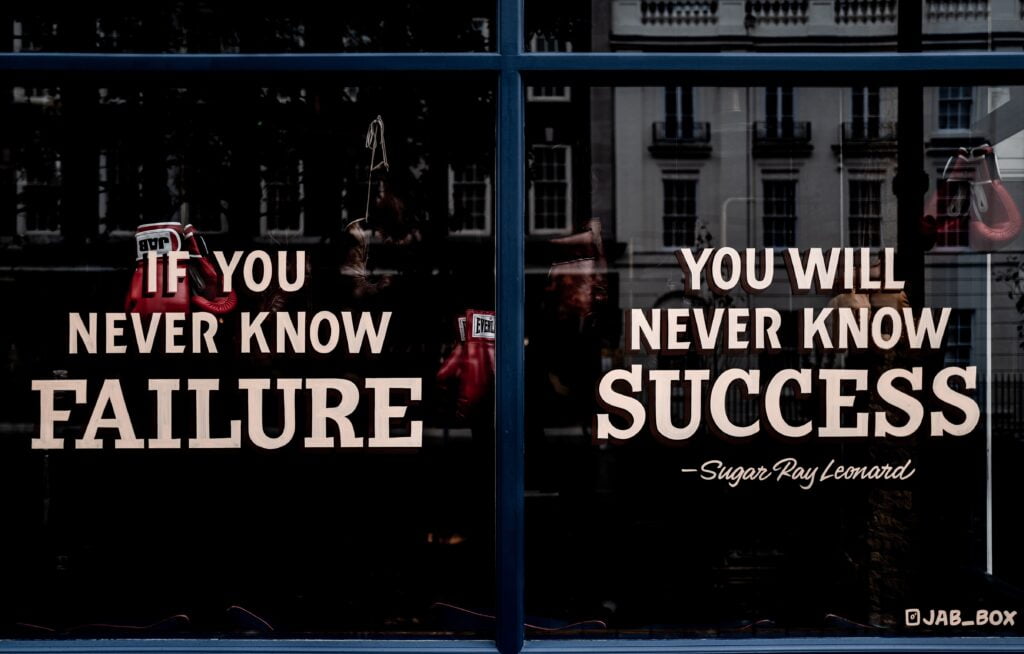
  • Extract Value From Failure—Fail Forward To Success

    Extract Value From Failure—Fail Forward To Success

    Extract Value From Failure
    Photo by the blowup on Unsplash

    # 75 on my 99 Life Tips–A List is: Living well involves extracting every positive thing of value from inevitable failures.

    It is a mistaken notion to believe that a good life is impossible unless only good things happen in it.

    Aside from its improbability—for anyone—as far as evidence suggests, it denies the value of improvement arising directly from the ashes of failure.

    Gregg Popovich, Hall of Fame NBA coach for the San Antonio Spurs, famously said of his teams that they were most vulnerable after a win (which they did often under his guidance). He said after a win you think you have nothing to learn and nothing to improve upon.

    “The measure of who we are is how we react when something doesn’t go our way.”

    ~Gregg Popovich

    Forgive quotes from a sports figure and not from the literati, but sports is one of those morality plays with lots of variables that pits opponents against one another in a test of comparable skill in which every night someone is undefeated for that day and someone else is a complete loser. 

    The winner gets to feel good about themselves and the loser has to find the fortitude to rise to the next day’s challenge. 

    The losers have to find something of value, some takeaway, to inspire them to their best effort in the next day’s contest. You know, like you and me when life trips us up. It is how we handle adversity, or how it handles us, that determines the quality of our lives.

    Not enough adversity?

    I recall an interview I saw with actor Mark Wahlberg (another famous literary figure… wink) in which he discussed his fears for his children. Wahlberg is a celebrity father who loves his kids, well known for his own gritty childhood in the Dorchester neighborhood of Boston, MA. The interviewer, talking to him about the difficulties he’d overcome as a young teenager on mean streets doing some bad things, asked what he feared most for his own children. 

    “That they won’t face enough adversity,” quipped Wahlberg in all sincerity.

    He knows the value of tenacity, perseverance, and resilience. He knew you cannot lie down when you get hit. You must get back up and keep moving. Those who have lived overly sheltered, pampered lives don’t.

    It is a truism that the severity of every person’s trials is relative. That truth gave rise to the atrocious, but true, phrase, “First World Problems”, as in 

    “OMG, There’s a crack in my iPhone’s screen protector! Uggghhh! FML!”

    It’s embarrassing. Still, everyone’s problems are existential threats and earth-shattering to them.

    Those of us who have faced down real difficulties know how tough real-world problems are, and we’ve learned how tough they’ve made us, right? We have learned how to extract value from failure.

    We’ve mined everything possible from the trials, tragedies, and travesties, learned from them, and we’re still standing. Standing and smiling. Smiling and moving forward. We know how to enjoy a good life and live well because we’ve seen the other side and we know how fortunate we are. Gratitude makes everything sweeter and makes living well easy.

    Don’t waste your failures!

    Fail forward.

  • The Best Time (Might have been 20 years ago; The Second Best Time is Today)

    The Best Time (Might have been 20 years ago; The Second Best Time is Today)

    The Best Time
    Photo by Mak on Unsplash

    # 38 on my  99 Life Tips–A List is: The best time to pursue your artistic or creative dream is 20 years ago. The second best time is today.

    “1To everything there is a season,

    A time for every purpose under heaven:

    2 A time to be born,

    And a time to die;

    A time to plant,

    And a time to pluck what is planted;

    3 A time to kill,

    And a time to heal;

    A time to break down,

    And a time to build up;

    4 A time to weep,

    And a time to laugh;

    A time to mourn,

    And a time to dance;

    5 A time to cast away stones,

    And a time to gather stones;

    A time to embrace,

    And a time to refrain from embracing;

    6 A time to gain,

    And a time to lose;

    A time to keep,

    And a time to throw away;

    7 A time to tear,

    And a time to sew;

    A time to keep silence,

    And a time to speak;

    8 A time to love,

    And a time to hate;

    A time of war,

    And a time of peace.”

    ~Ecclesiastes 3:1-8, NKJV

    The undeniable theme is there is a best time for everything 

    Borrowing from a phrase I read recently in The Overstory, by Richard Powers, that the “best time to plant a tree is 20 years ago, and the second best time is today,” I am convinced the same is true for artistic, creative pursuits.

    The best time to pursue them is 20 years ago. I wish I could turn back those years and start then, as a younger man, with more time to write more things and potentially reach more people and do more good. But wishing won’t make it so. I have the pleasure of having lived those 20 years and perhaps they have given me more things to write about, so I’m using the second best time… today.

    You should too. You cannot reclaim time lost, but you can prevent losing any more. Stop negotiating against yourself over whether you will pursue your art, your music, your writing, your creative dream, and begin. You won’t regret it. The fear of failure keeping you paralyzed, that seems so big, before you start, evaporates like the morning dew, once you begin. 

    Every creator is afraid. That is the essence of creation. I’m afraid every time I click Publish. To create is to make something never made before. You might fail. People may not like it. 

    So what? 

    If you never try, the people meant to love it, be inspired by it, even be saved by it, won’t be.

    So, since you have today, and since today is still the second best time to start…

    Start.

  • Gain Mastery—For All My Philosopher Friends, Both of You

    Gain Mastery—For All My Philosopher Friends, Both of You

    Gain Mastery like the swordsmith
    Photo by Motoki Tonn on Unsplash

    # 71 on my 99 Life Tips–A List is: Attempt to gain mastery at something, whether it be a topic or a skill.

    Malcolm Gladwell, in his book Outliers, asserts that it takes 10,000 hours of deliberate practice to achieve world class mastery in a field. A new study debunks that idea, but it doesn’t negate the importance of striving for mastery. Whether it’s 10K hours or half that, mastering a subject, topic, area of interest, or skill, is valuable as both a means and as an end. So, attempt to gain mastery at something.

    My journey hasn’t been so focused. I’ve adopted the shotgun approach to both interests and career paths. I rationalize it by claiming to be cut out of philosopher cloth. The truth is probably closer to an ADHD diagnosis. Regardless, I am heeding my own advice; I am going to master writing as both craft and career, and guitar as both hobby and personal therapy method.

    I can summarize almost all counsel for burgeoning writers in the phrase, “write what you know.” That’s fine. I mean, who would want to read non-sense from someone who doesn’t know what the hell they’re talking about? But a problem with this is that the other universal piece of writing advice which usually couples with the first in short order is, “be the first voice people think of in your niche.”

    A niche, you say?

    It’s that second part that is worrisome. Being a philosopher is fine, but it’s niche-averse. Having wide-ranging interests and even having some familiarity and expertise in a variety of disciplines is fun, exciting, and wards off boredom and monotony, but it’s not the recipe for mastering a niche. 

    The downside of niche-less-ness is amplified when you feel compelled to add your voice to a wide variety of topics. Where are my talking points, anyway? There’s a tendency to live off-script, which is sometimes more fun for you than the people around you.

    So, the attempt to gain mastery at something specific is worth the effort. It serves as a focal point, is measurable, gains are scalable, and can become exponential. What is difficult, requiring intense concentration and concerted energy in the beginning, can become second nature, autonomic, and fluid as mastery increases.

    It’s the first steps of the mastery journey that are all uphill. But those first steps are worth lacing up the hiking boots in anticipation of the gains along the path and the rewards at journey’s end.

    Besides, someday someone may come looking to you for Japanese steel only you can produce, regardless of your sushi-chef disguise. You wouldn’t want to let them down. 

  • The Essence of Moral Failure, Or, How To Be Filthy Rich And Famous

    The Essence of Moral Failure, Or, How To Be Filthy Rich And Famous

    Image of classical statue depicting blind justice with scales. True Justice is Moral, it treats everyone's interests equally
    True Justice is Moral, not merely Legal. It treats everyone’s interests equally. (Adobe Stock image: licensed by author)

    # 51 on my, 99 Life Tips – A List is: Treat people as if their interests are exactly as important as yours. They are. (But they are not more important.)

    The Golden Rule has a couple of variations that condense to the same thing. The interests of people are relative and equal. This being the case, morality requires that you treat people as if their interests are exactly as important as yours. Any deviation is the essence of moral failure.

    To be moral, moral codes must be based on truth. At a casual glance, when contemplating aphorisms like, ”All men are created equal…”, the discriminating among us (and I use that term in the positive sense of one who has refined tastes and exercises good judgment), may argue about its veracity. By some metrics it doesn’t appear to be true at all.

    Yet, in the U.S. Declaration of Independence, this is one of the enumerated ”self-evident” truths. But, the careful observer recognizes the obvious. There is a disparate distribution of talent, physical attributes, mental aptitude, socio-economic standing, and opportunities for improvement and advancement between humans. 

    When I compare myself to LeBron James, or Stephen Hawking, or Yo Yo Ma, I see some pretty glaring inequalities. And those exist at the physical, mental, and talent levels. What about differences on the socio-economic ladder between myself and the wealthiest ”10%” who own more than the bottom 70% combined?

    Egregious Wealth Inequality is a Particular Kind of Immorality

    The following graphics show that the top 1% owns 31.4% of US net wealth as of the 4th quarter of 2020. The population from the 90th to 99th percentile owns 38.2%; the 50th to 90th percentile, owns 28.3% of net wealth; and the bottom 50 percent owned only 2% of the nation’s net wealth. Yay Capitalism!

    line charts and graphs showing the distribution of net wealth in the US by percentile
    If all men are created equal, and if everyone’s interests are equal, how is this happening? It may be legal, but is it moral? (Image from https://www.statista.com/statistics/299460/distribution-of-wealth-in-the-united-states/ screenshot by author)

    And to add insult to injury, the share of wealth going to the top is increasing as depicted by this graphic:

    graphic showing the share of net wealth is increasing for the top percentile
    The rich get richer, the poor poorer. Yet everyone’s interests are equal. This is everyone’s moral failure. (Image from https://www.statista.com/statistics/299460/distribution-of-wealth-in-the-united-states/ screenshot by author)

    Of course, I could have saved your time and some screen space by just summarizing the current state of Capitalism in the US with this familiar graphic. One wonders where these traditional, mythical images come from?

    Ouroboros. Snake eating its own tail. Depicting inequalities.
    Ouroboros. When society, especially economically, refuses to treat everyone’s interests as equal, this is what happens. (Adobe Stock Image: licensed by author)


    All men are created equal? Really? How so?

    Faced with these inequities, whence comes the certitude expressed, that all men are created equal? Or, on what moral basis are we enjoined to love our neighbor as our self? Or, for what reason are we to do unto others as we would want them to do unto us?

    It is because the self-interest of every human being is equal. The lowliest peasant or serf in history had interests as important to him or her as those of the gaudiest Lord or Czar. It may have been ”legal” for a Lord to exploit and use the serf, but it was immoral. 

    Similarly, today, it may be legal for capitalist billionaires and their corporations to pocket for themselves the wealth created by employees they hire and pay as cheaply as possible. It may be legal to exploit and despoil the environment, stripping it of resources faster than they can be replenished. Laws may allow or even encourage taking advantage of local real estate, utilities, and infrastructure, at little or no cost in resultant tax revenues back to the community and state. But such behavior is reprehensibly immoral, nonetheless. Let’s agree to call it what it is.

    It is a special gift of the ultra-wealthy to hide their immorality behind law, and do so to almost universal social acclaim. And yet the interests of Elon Musk or Jeff Bezos are not more important than the interests of the person just hired at minimum wage to scrub the corporate toilets.

    Where is our Moral Courage?

    Every dollar pocketed by selfish exploitation is an evidentiary document at the bar of Moral Justice, legal though it may be by custom or culture. We just happen to live at a moment in history when we celebrate the immoral as champions, rather than castigate them as villains.

    This is possible because for decades now the West has lost any voice of moral courage.

    In his famous speech at Harvard in 1978, Alexander Solzenhitsyn, the famous Soviet dissident, and Nobel Laureate said this:

    ”I have spent all my life under a Communist regime and I will tell you that a society without any objective legal scale is a terrible one indeed. But a society with no other scale than the legal one is not quite worthy of man either. A society which is based on the letter of the law and never reaches any higher is taking very scarce advantage of the high level of human possibilities. The letter of the law is too cold and formal to have a beneficial influence on society. Whenever the tissue of life is woven of legalistic relations, there is an atmosphere of moral mediocrity, paralyzing man’s noblest impulses. And it will be simply impossible to stand through the trials of this threatening century with only the support of a legalistic structure.”

    ~ Alexander Solzenhitsyn, speech entitled, A World Split Apart Harvard, 1978 (emphasis mine)

    Our Interests are Equal The Moral Act Like It

    Self-interest is relative. Mine may not mean much to you. But my interests are certainly important to me. Just as important as yours are to you. 

    This is the basis of equal treatment and the basis of equal love. My hopes and desires and needs are not more important than yours or anyone else’s. They are important to me for reasons of my own. And yours are the same. They are important to you for reasons sufficient to you. 

    When we acknowledge this, and treat each other accordingly, we’re operating on the basis of truth. We are affording each other the respect and recognition born of interests that are of equal value. 

    In any dealings we may have together, I don’t expect you to treat me as if my interests are more important than your own. Don’t expect me to make my interests subservient to yours, either. They are equal. We may choose to negotiate and compromise. There may be give and take, but if either of us elevates and imposes our interests above the interests of the other, we are guilty of that which constitutes the entire essence of moral and ethical failure, regardless of our justifications, of so-called ”legality”, and regardless of our stock portfolio or checking account balance.

    And let us hold each other to account. Let us act as if our interests have value. And let us think about these things in our business dealings, in our purchases, in our valuation of the character and actions of others, especially when evaluating the wealthiest, who routinely extract from you every penny of interest they can. Just because something is legal does not mean it is right. Remember this and as far as is in you, treat people as if their interests are exactly as important as yours. Because they are.

  • Authorized or Authoritative? – They Aren’t The Same Thing

    Disinformation spreads when people become overly dependent on supposedly authorized sources for truth. Confusing authorized with authoritative makes the disinformation spread worse. Authorized is not the same as authoritative. To be authorized simply means to be endorsed or to hold an official position. To be authoritative means to be trustworthy and reliable for accuracy. These are not the same thing. Anyone authorized to dispense information ought to be authoritative. Then, disinformation would disappear. Herd immunity to lies would be a done deal. This is not the case.

    An example from the typical church experience

    People obtain information, curated and packaged for consumption, with too little investment in its gathering, and therefore too scant a regard for its veracity. I often think of the words of Luther who famously said, ”Don’t tell me what the Bible means, tell me what it says.” He was insistent to work out the meaning on his own. Today, many a churchgoer is content for their ministers to tell them not only what the bible says and means, but also how they should think, feel, and act as a result. It is apparently more agreeable to be spoon fed divine nuggets of scriptural insight, than be personally responsible to crack open the big, dusty book with the red letters. Having somebody else do all that bible study and prayer, and report the findings is so much easier. Especially when the somebody is a paid, authorized professional.

    I’m only being half-facetious. People are that way with all types of information, not just the spiritual variety. We look to authorized experts to tell us what is what. But we never fact-check the ones who tell us what we want to hear, or already believe. A talking head’s popularity with our social clan is more important than their reliability. We are contented to accept that which everyone else like us embraces. The fear of ridicule is far greater than the fear of personal poisoning from swallowing falsehoods.

    Consider this hypothetical
    Here, where truth matters, do you want authorized, or authoritative?

    Imagine yourself dropped into the Amazonian Rainforest. How do you stay alive? How do you know what will kill you if you eat it? Not, truth or dare; but, truth, or die. In the jungle, you’d be better off watching one monkey’s dietary choices than to read ten books about the Amazon from award-winning authors who have never spent a night alone in it. There, swallowing a lie may be manifest as swallowing a deadly mushroom. In matters of life and death, since authorized is not the same as authoritative, which one will you trust with your well-being? Do you want authorized, or authoritative?

    This female capuchin monkey in the Ecuadorian Rainforest is more authoritative about safe vegetation than 10 authors of books on the Amazon.

    And therein lies the problem. Our protected lives make us soft. We live at ease. Truth, for its own sake, isn’t seen as a matter of life and death. We come unglued if a lover lies to us, or friend betrays our trust, but we look the other way in the face of lies of national proportion. What is it that makes us like those who strain at a gnat and swallow a camel? Are we really too lazy to think for ourselves, research for ourselves, listen for ourselves? Or do we just believe the authorized can be trusted to do all that work for us? Are we their beneficiaries? Aren’t we sheep vulnerable to fleecing when we don’t demand accountability from the authorized?

    I believe authoritative, verifiable Truth is everywhere. It all comes from the same Source, though it presents and resounds from countless outlets. It wants you to find it. But you have to want to find it like your your life depends on it.

  • We Don’t All Value The Same Things

    Every direction on the internal compass points toward what is valued…

    One of the most intriguing verses in the Bible is this:

    Every man’s way is right in his own eyes… ~ Proverbs 21:2 NASB

    This is a statement, in scripture, that confirmation bias and self-enhancement fallacies are universal. It is not a positive affirmation that whatever you think, and whatever you do, is right! It is a statement declaring that every person believes themselves and the conduct of their lives to be right.

    Clearly, everyone’s ways are not right.

    This raises two puzzling questions: What is right? Who determines what is right?

    Now, I am not making an appeal to you, dear Reader, that you believe the verse is true by using the authority bias and appealing to a scripture that you may hold no truck with whatsoever, which is, of course, your prerogative. I just find it fascinating for such a clear declaration of a linked set of universal biases to be sitting in the middle of sacred texts. 

    Rather, my appeal as to the veracity of the text is to the evidence of your own life. Do you make decisions and take actions because you believe yourself to be wrong? Or, do you do what you do, believing yourself to be right, at least right for you?

    The outworking suggested by the verse has been true for me, and I suspect, has also been true for you. One effect is that it causes us to project our own set of values, norms, and beliefs onto others. We will have a tendency to judge others by standards we hold to be true for ourselves. We may deceive ourselves into thinking that everyone shares the same value hierarchy that we ourselves hold. We may think everyone prefers and is pursuing the same thing. This is not the case.

    We don’t all value the same things. Even long-time couples, whose lives are intertwined in a myriad of ways so that they end up more as one thing, than two separate things, may have different values, different preferences and pursuits. They may entertain different goals and hopes. Enough difference between ultimate ends and there is a problem.

    If we all shared the same values, we could easily produce an algorithm that would assure us of using the appropriate means to achieve the goals we seek. The only debate would be about means, not about ends, since those would all be universally shared and agreed upon. Everything from dietary choices to politics would be easy. 

    But we don’t all value the same things. It is a plausible argument that we should, but most of us are too myopic to look down the road far enough to see what true value looks like, that state (I posit here that true value consists in states of being, not in things possessed) in which you say, ”This is a good as it gets. I am content. I am satisfied. I could ask for no more.”

    In the political realm (which by extension affects the social aspects of Americans, at least), Thomas Jefferson in the Declaration of Independence inked in some values. These were well thought out by the political philosophers of his day, vis. ”all men are created equal”, and the idea that each of us has been endowed with some inalienable rights, among which are ”life, liberty, and the pursuit of happiness”. 

    These Rights, these Values, are a package deal

    These are value statements. If like me, you’re American, you will give hearty assent that these are valuable ends, worthy of pursuing and protecting. But Dear Reader, consider; what is life to a man who has no liberty? What is liberty to a man who is not treated equally? How can either pursue happiness?

    These values are interconnected, they fall apart if pursued singularly, with a willy-nilly disregard for their interlocking nature. Which, of course, is why Governments are instituted among men. (The sentence immediately following the enumeration of inalienable rights above). Inherent in the very idea of government is the individual’s sacrifice of unrestrained liberty.

    Yet to some, having not well considered these things, and believing their ways to be right, Liberty is the highest value. And so they have proven they are willing to use their liberty to jeopardize their neighbors lives during a pandemic. To them, the pursuit of happiness is more important than either equality, or life. But I submit that unrestrained liberty is as equally devoid of true value as unrestrained pursuit of happiness. And is as equally un-American as it is inhumane.

    The way of a fool is right in his own eyes, but a wise man listens to counsel. ~ Proverbs 12:15

  • Take No Thought

    Yesterday’s post posed the question: would you accept a salary that would meet all of your needs for the rest of your life? I then discussed some pitfalls pursuant to chasing wants.

    My morning ritual involves coffee, a quick run-through of automated reminders about bills due, and a quick check of banking software to assure the resources are available for the bills, lest I should need to move funds.

    I start each day making sure that I have the financial resources on hand for that day’s financial needs.

    But what other resources do I need for today? And can they be stored up? Can they be transferred from account to account?

    I’ll need breaths. Lots of them. Even more if I can squeeze in a walk or bike ride. I dare not try to store them up.

    He’s gonna need a much larger bag, no?

    I’ll need Grace. Lots of it! That can’t be stored either. Grace is deposited via the conduit of Faith on an as-needed basis and must be spent immediately.

    I’ll need my heart to keep beating. I don’t have any way to put the needed beats in an account that I can withdraw from if I start to run low.

    I need all the neurons and axons and dendrites in my neural cortex to fire correctly all day long. No neural storage banks either…

    Anyway…made me think.

    The most valuable things I’ll need for today, I’ll have to receive moment-by-moment as the need arises. Like the manna of old, I’ll have to gather only what I can use today. Attempting to store more than a day’s worth will spoil and breed worms.

    I think maybe that’s what Jesus meant when he said, ”Take no thought for tomorrow, for tomorrow will worry about its own things. Sufficient for the day is its own trouble.”

    The things we take for granted, like breaths, and heartbeats, and mental processes are where the really important things reside. While we spend our energy and our time chasing and storing up, ”bread that does not satisfy.”

    Have a nice day! It’s the only March 29th, Two Thousand and Twenty-One that you’re ever gonna get.