Category: Blogging

  • Writing At The Red-Line — A 140 Day Streak, 200 Posts, and 50 Articles in 30 Days

    Writing At The Red-Line — A 140 Day Streak, 200 Posts, and 50 Articles in 30 Days

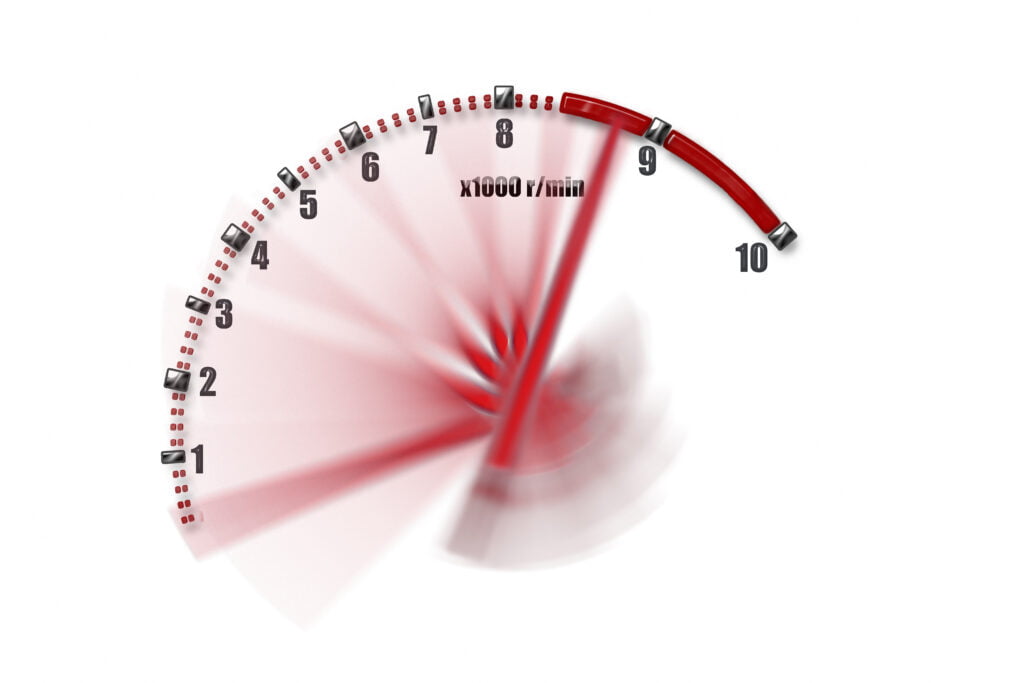
    Writing at the red-line
    Shutterstock Image licensed to Author

    I’ve now posted over 200 articles, essays, and stories on both my personal blog and on Medium. I’ve published most of them during the last 140 days, during which I’ve kept alive a streak of posting at least one piece daily. (50 articles being published in a span of just 30 days.) 

    By keeping this streak alive, and publishing this many articles, I’ve been probing for my personal outer limit of maximum productivity. I wanted some answers to a burning question — What kind of results could you get, and what would life as a writer look like if you“red-lined” it all the time?

    You May Throw More Balls Than Strikes

    Those familiar with sports will appreciate the analogy to a baseball pitcher. He may be able to throw 100 mph fastballs—100 mph being his red-line. But while red-lining can he consistently hit the target his catcher sets for him? Or does maximum velocity come at the expense of control?

    If you’re a creator, you will appreciate what I’m saying. At some point, maximum output takes its toll in eroded creativity. Quality suffers and yields more balls than strikes. We may fool ourselves for a time and call it production, because it is a type of production. But if we fool ourselves for long, we risk losing the creative spark along with the discernment to tell the difference. Sure we can “throw” 100, but easing off may help us find the strike zone more consistently.

    Revision Goes On Holiday

    I’m glad for this time I’ve red-lined it and churned out as many stories as I could realistically write. Though I know fully that not each story is my best work. Some may be embryonic. There may be the framework of an idea, but that kind of speed doesn’t allow for much reflection before you take up the next story. Writing means revision. You revise little at the red-line. 

    “I’ve found the best way to revise your own work is to pretend that somebody else wrote it and then to rip the living shit out of it.” 

    Don Roff

    Thankfully, some quality seeped into one of my stories which is sitting at nearly 1000 views and over 500 reads since its publication earlier this month. This may be the norm for many or you, but it isn’t yet for me. Compared to my usual results, the stats for this story are pleasantly shocking.

    I’m encouraged by the number of reads, highlights, comments, and positive feedback this story is garnering. I want my writing to be meaningful. The experience with this story is affirming. It is driving my current statistics causing this month to outpace anything I’ve achieved on Medium as measured by reads and engagement—which equates to more pay.

    Meaning Over Money

    I’ve consistently earned over a hundred grand a year for the last eighteen in the job I’m transitioning from to write full time—but I haven’t touched this many lives in two decades. That feels fantastic. Money is nice. This is better. Both would be, well…

    I’m far, far from real money in my career reboot, and farther still from making a living from writing solely for my Medium audience (which may not be possible at all—at least not for another 4 or 5 years), but there is some attestation that with time and continued hard work, I can make a living writing. 

    There is a nice growth curve happening due to both the productivity of having more articles up, and the instance of one well-performing story. If there’s a formula for success on Medium, it’s likely found in some combination of those two essential ingredients.

    Of course, another thing I’ve learned besides my production limit is that pushing the publish button isn’t the harbinger of personal nuclear destruction I once feared. You may occasionally publish what is mere sophisticated drivel, and it won’t kill you. Critics don’t automatically jump out of the woodwork to cut you to shreds with the cat-o’-nine-tails of derision in an open public forum.

    Besides, if you’re anything like me, you’re your own harshest critic. You know when your stuff is flat. 

    Out-Publish Your Fears

    I out-argued myself for decades into writing nothing at all for public consumption. I was afraid. The fear of failure arising from my belief that I would write nothing good enough to matter kept me from writing anything but journal entries, copious notes, and skeletal drafts of ideas—each of which I abandoned before giving them skin and heart. Publishing stories at my red-line has taken away a lot of the fear of both failure and criticism. Now I’m motivated much more by the hope of success than by those fears.

    You Write What Life Gives You

    Writers know it isn’t as easy as falling off a log. There’s a lot of demon wrestling. If everyone could write well and make money at it, they would. Let’s see your creative work, critic.

    Writing isn’t supposed to be too easy, since good writing is born of life. It has the truth of life in it—and it sows seeds of life from writer to reader. Raise your hand if you think life is easy. But writing should be more emotionally and mentally rewarding than just chasing a buck in a meaningless job. And that means not writing all the time at your highest WPM (words per minute) red-line.

    Take Your Foot Off The Gas — This Isn’t A Drag Race

    I will gradually ease the tachometer of my writing output away from the red-line of imminent engine failure, but I’m hooked on the habit of daily writing now. I realize this isn’t a drag race. There is no shortcut to success that sprinting can achieve. Good writing, like becoming a good writer, is a process. That engagement with the process is the best fruit of the last 140 days. I’m a daily writer — not because I have to be in response to external pressures. I have no contracts to meet, nor a bucket of minimum words to fill at two cents each. 

    No, I’m a daily writer now—because I’m compelled internally. I always marveled at those who said you know you’re a writer when you have to write. I never really understood. Now, I do.

  • Do You Negotiate Against Yourself?—How Often Do You Win?

    Do You Negotiate Against Yourself?—How Often Do You Win?

    Do you negotiate against yourself a lot? A part of you knows there are things you should or shouldn’t do, but another part bargains against those choices. This may be true for everyone.

    The negotiating you do with yourself determines your results.

    120 days ago my forward-thinking CEO self-negotiated a deal with my lazy, afraid, excuse-making employee self. My CEO got the employee to agree to a 30 in 30 challenge. For those who don’t know what that is, it’s a simple idea in which you write and publish 30 micro-blog posts in 30 days.

    CEO me got unreliable employee me to agree. To be fair, writing as a calling and vocation have been so important to both my CEO and employee selves that the fear of failure made it easier to shelve it, never do it at all, than try it—fail—and suffer irredeemable humiliation. 

    But there was a thick layer of dust on the plan to One Day Maybe become a writer… I’m talking years thick. Covid fallout impacted my usual source of income, freeing time for my CEO self to jolt the procrastinating employee into action. 

    “There’s time, now. That excuse is dead!”

    I found my login credentials for my long dormant blog, started spitting out some drivel that at least got my fingers limbered up and got the ball rolling.

    But it was sporadic. I didn’t get discovered after 3 days of blogging brilliance, and the employee self, doggedly pessimistic in the face of my CEO self’s aggressive optimism, was nearly ready to shut it down again.

    Along came the 30 in 30 challenge

    “Come on, dude. 30 250 word micro stories? Even you can do that. Tell ya what, when you’re finished each day, you can even have a bourbon and pretend you’re Hemingway.”

    “Sold!” agreed my novice-writer self. “You supply the bourbon and I’ll do 30 days.”

    Major negotiation completed, the challenge began that day. There was no more negotiating “IF” I was writing, only when, and about what.

    That was 120 days ago. I haven’t missed a day. Once I’d knocked down the original 30 days, it set the habit. I’m hooked, and I’m a writer now. My CEO self and employee self are nearly always on the same page… terrible pun intended. The employee writer still needs a haircut, but the CEO lets him write in Grateful Dead t-shirts so everything’s chill.

    So, friends with any kind of big negotiations you’ve struggled with for too long—cut a deal! Decide to do it. Take the “IF” part of the bargaining off the table. Get rolling and don’t look back! Oh yeah,… don’t forget the haircut. 

    Subscribe to follow me to see all my posts on Medium. You can also find my writing at gregproffit.com. Check out my 99 Life Tips—A List.

  • Thoughts on Covid Response — Culture Impacts Results

    The Covid-19 pandemic has been both a global morality play and a world-wide laboratory for observation of social behaviors. For the most part, countries and cultures steeped in cooperation and interdependence have responded better than those based more on individualism. By any metric, western countries, particularly the United States, show far more positive results and deaths when factored for population, than many Eastern, Asian countries. India is the outlier in terms of its rates of infection and deaths. One could hope they share a culture that values life and where the cultural impacts behavior in a positive way, to preserve it. That’s not always the case. Though it is the case that culture impacts results.

    Raw Statistics

    Statistical analyses of raw numbers like the ones linked above measure effects, not causes. There are not likely to be any studies broken down by political party or religious affiliation. If there were, they might prove illuminating. Not that politics or religions create disease. They don’t. They are not the primary cause. But once started, a viral disease spreads, or is mitigated, by the actions of the people where it is present. And people act on what they believe. Persons in the hardest hit countries, with the United States firmly ensconced in the top (bottom) position, either do not believe the virus is serious, or they don’t believe it’s up to them to do anything to help stop it.

    The surest proof of belief is action. If you believe a chair will hold your weight, you demonstrate that belief by sitting on it. All actions (and I include inactions as a type of negative action), are the effects of some type of belief. If I do X, I believe I will achieve Y. Or conversely, if I refrain from doing X, I believe it will prevent Y. Any modifications made to behavior on account of Covid have come from belief in their necessity and efficacy. Those who have not believed it was serious (at least to themselves) have ridiculed the warnings and spurned the recommendations. This has happened to a statistically significant degree in Western countries and cultures contrasted with non-Western.

    Is American Culture A Selfish Killer?

    The Soviet Union collapsed because its brand of Communism failed. What does the unspeakably poor Covid record of the United States say about our culture and government? Is American culture a selfish killer? Or is that an un-Patriotic question? Maybe that is an unfair comparison. Maybe it’s not relevant. But something in the fabric of Western culture (in general), and the United States (in particular) has been the cause of the atrocious global rankings. Some will comfort themselves with the notion that the US shows so poorly because we test so thoroughly. Some will say we are more honest and open with our results. (No one from New York or Florida, though). These views may be accurate. If so, I stand corrected. There is no evidence to suggest these scenarios are true. And it doesn’t negate the fact that many (including many state governors) believe liberty and economics are more valuable than health and life.

    Origination is not as important as Elimination

    To bring this back to my opening, a pandemic starts however and wherever it starts. Knowing how and where this virus started provides zero useful information to stop it. Humans are hard-wired to assign blame, but sometimes fingering the culprit is not as important as limiting the damage. Once started, people are alternately praiseworthy or blameworthy for their actions to limit the spread. Here again, the culture impacts on results.

    The West could have learned from the pandemic. Citizens could have been made aware of shared, mutual dependencies. From the outset, political leaders could have promoted the literally life-altering message of self-sacrifice for the greater good. Instead, it has been the vehicle in an all-out race pitting lunatic-liberty against life. A difficulty for many to embrace these concepts may hinge on their unwillingness to take any responsibility for their role in spreading a virus they don’t feel responsible for starting in the first place. Since they did not personally start it, they absolve themselves of any responsibility to slow its spread. I don’t know if that’s true. I suppose another possibility is that a lot of people in Western civilizations really just don’t give a damn about each other, acting out the belief that people aren’t all that important, except as tools for making money.

  • Labeling

    These are usually meant to be filled in by the wearer, correct? …Thought so.

    People who are all one thing may exist. I cannot prove they don’t. I am not one of them. Those I’ve known beyond the level of acquaintance have all seemed composed of a blend of interests and beliefs, like me. Their bundle of contradictions and idiosyncrasies may be a different size than mine, but I’ve yet to meet the human version of a concrete monolith.

    A feature – or is it a bug? – of Western culture is the inclination to categorize and to classify: Domain, Kingdom, Phylum, Class, Order, Family, Genus, Species. Thank you, Mr. Aristotle. These main categories are fine as far as they go. The broader the category, the more members. Within each main Classification are sub-classes for further sorting and refining. As the concentric circles of inclusion tighten for each subset, the smaller the pool of members. Inclusion in one grouping down the hierarchy happens simultaneously with exclusion and separation from the others.

    The 7 broad brush categories (and their nested sub-categories) are useful for some things, but be honest, prior to reading the category names, how long had it been since you’d thought of them? The classifications aren’t helpful at all in pursuit of self-realization (unless self is broadly defined as that which everything else is not). One doesn’t discover the concept, Species, and cry ”Eureka!, my quest to know myself and my purpose on this planet is over!”, ”I belong to a species!”, ”Glory, Hallelujah!”

    Deeper levels of categorization create problems. ”I’m a homo sapiens,” you declare, satisfied with the sub-division distinguishing yours from other species. Is additional fine-tuning necessary? Knowing your species and behaving as such will answer many questions: who can I successfully mate with? Is this why my body isn’t covered with feathers? So, my brain is larger than a lion’s, but I’m slower, so that means I’m supposed to out-think and not outrun them, right? Seems to be refinement enough, because traverse one level down and you’re at the edge of quicksand.

    There are several subspecies of homo sapiens, of which Homo Erectus is our home base. At this, the Homo Erectus level, we are one big, happy family of Man (pardon, ladies). And now comes the fun. We divide into Sexes. Used to be no biggie, but now we further divide into Gender (and its definitions – including whether or not one is Cis-Gendered) and Sexual Preference (with its accompanying divisions). We divide into Races. Always a biggie because it includes not only the amount of an individual’s melanin, but also National identity as well as historical atrocities and grievances . We divide by Culture. This one makes us feel threatened because of differences of language and art and world view. (Some of us even take shelter within a subculture.) We divide by Religion. Not content to rest in the security we find in our own, we must discredit, disgrace, and disavow all others, as well as belittle and exile those who neither share our preferred Faith, nor claim any Faith at all. We divide by Socio-Economic class. Because Capitalism, Yo! And…we divide by Political ideas, which is not exactly true, is it? We divide over politicized words, the common person having little to no real understanding of what the emotionally charged ”isms” even mean.

    The average person doesn’t know the difference between Communism, Democracy, or Socialism, much less the variants. If pressed to define those terms, could you do so without resorting to a dictionary? Can you confidently say what Conservatism is? Progressivism? What are the rules for inclusion? What you do know is how you feel when you see or hear political labels. You know some people you like, and you want them to like you; and you listen to what they say to believe, and that’s good enough for you. No further thinking required. Peel off the adhesive backing and apply the label.


    But what do you call a guy who spent years as a cross-country, touring DeadHead (and who still loves their music), a former drug addict turned street evangelist and full-time minister (who loves Jesus), a father of seven kids (all birthed at home and subsequently home-schooled), a gun owner and concealed carry permittee (who once even had an AR-15), an entrepreneurial small-business owner of an S-Corp LLC, who hasn’t worked in an office in 18 years, a lifetime Republican voter (until Trump v Clinton forced a decision to vote Libertarian, and then Trump v Biden forced a decision to vote Democrat)? What do you label a guy who would rather read than sleep (and often does), and who has accumulated more mostly useless knowledge on such a wide variety of topics that even he doesn’t know what he’s most interested in, but who could therefore convincingly debate either side of almost any topic, and enjoys doing just that? What do you call someone who has only strong opinions, but who is equally convinced that he could be wrong about any or all of them?

    Go ahead, pigeon-hole me. 

    However, the paragraph above notwithstanding, this essay is not about me. This is about the foolishness of labeling and of dividing over minutiae. I offered my details to illustrate the absurdity of slapping a too-granular, one-word label on another person. If pressed, there is no single label that comes to mind that I would be agreeably comfortable to wear. Your mileage may vary, but is that not also true for you? If yes, then what can we do about it?

    We have two choices. One, we can stop focusing so much on the smallest circle of belonging, and widen our aperture of inclusion to the next circle out, or if that’s still too tight, the next. Unity lives in the big circles. It shares quarters there with Understanding, and Humanity, and Love. I know this sounds like idealistic, utopian, liberal-speak, but it’s true. If it’s not, then our second option is to keep digging smaller and smaller circles for our like-minded tribe until we’re down to a foxhole. That’s a tight fit to be shared with one, and only one, other person. I cannot speak for you, but I would be hard pressed to find anyone with whom I am in agreement on all things, 100% of the time…not even myself. 

    You may need that level of agreement and uniformity of compliance in order to feel good about yourself and your life. For your sake, I hope that’s not the case. That’s a hefty burden of insecurity to lug around. I don’t want any ideas or beliefs that are so fragile that I have to defend them against all opposition lest they die. The more compulsion I feel to defend a position, the less certain I am of its correctness. Truth and Good Ideas far outlive both their proponents and their opponents. Who wants to live in a carefully detailed, perfectly classified, scrubbed, and homogenized world? That seems more like a taxidermist’s shop, or a Nature museum than the messy Real World we’re in.  It’s not that hard to see that each of us is more than a slogan on our bumper stickers. One rung up the classification ladder, we’re a helluva lot more alike than we are different.

  • The Menu

    Today’s selection affects tomorrow’s offerings

    You are born into this world and within a matter of years an invisible but real menu of options is  yours. Your menu is yours and no one else’s, listing things only you can do in your life. Some of the items on your menu are still there. They are still available to you. Other options have disappeared. They are forever off your menu. They may have vanished when you chose one course rather than another, that is, your choice of one thing, negated the other. They may have disappeared because the opportunity window closed.

    When you die, the opportunity window closes forever. I am not trying to depress or frighten you. The best time to have thought of this was fifteen or twenty years ago. The second best time is now. You have fewer items on your menu today than last year on this date. You may have fewer items than last week, or yesterday. The items on the menu shift and disappear. Some of the items on your menu when you were young are as gone as if you were already dead. This is an almost unbearable sadness when you think about it. 

    This is NOT you, but it will be each of us, one day.

    Don’t think too much about what’s gone. If you’re reading this, you still have a menu. But don’t hesitate either. An option available today, could be gone tomorrow. There remains the possibility that you will make a choice today of such import and impact that new items appear. You can create new options for yourself. While some items fade, disappear, and are gone, others will beckon you onwards to a life still to be lived. All the windows aren’t closed yet against the chill of age. What remains on your menu of choices? What will you have today?

  • How, Not What, Do You Think?

    With Seven Practice Questions
    How do you know what you know? Did you discover it by thinking, or were you simply told?

    As I work my way through the excellent essay, Two Concepts of Liberty, by Isaiah Berlin, I am experiencing anew a particular delight , common in my grade school years, of registering how the critical, skeptical, rational mind approaches a question. I am thrilled (which is exactly the correct word) to observe and follow Berlin thinking his way through complex questions about the nature of liberty, more than I am by any conclusions drawn. 

    I distinctly remember this feeling when very young; when I was first learning how to think, and not merely what to think. So much of my formal education, even at the college level, consisted in being told what, and not how, to think. (But that’s another topic).

    It is a rare treat to discover a writer or speaker with the mental and psychological discipline to use his mind when approaching a question, and not be used by it. One who employs his mental faculties to see a problem the way one utilizes a magnifying glass, or a microscope, or an MRI machine. Neither the glass, the scope, nor the imaging machine impose preference upon the subject matter. They simply observe it, (but at increasingly higher resolution, depth, and granularity of detail). 

    Too often, presuppositional prejudices in the mind are a blinding filter, canceling some of the information needed for the fullest view. When the search for evidence supporting a pet theory or ideological point of view usurps the place of pure truth as the ultimate pursuit of inquiry, the resulting conclusions are always suspect. Berlin’s treatment of the subject of Liberty doesn’t fall prey to petty bias. It is an exemplary reminder of how bifurcated issues should be approached by the intellectually honest.

    Here is a particularly thought-provoking quote from the essay: 

    ”[From the standpoint of Liberty,] ‘Pagan self-assertion’ is as worthy as ‘Christian self-denial’ All errors which [a man] is likely to commit against advice and warning, are far outweighed by the evil of allowing others to constrain him to what they deem his good.”

    Some statements are worth reading at least twice. (The bracketed words are mine, for context). Go ahead. I’ll wait.

    Can you deduce what Berlin is asserting? He is not saying that Paganism is as worthy as Christianity. He is making no comparative argument about their respective virtues at all. He is referencing the respective practitioners solely in terms of their equal use of liberty in choosing to act for themselves without outside interference or coercion. Their respective liberty to choose their own path is equal. He is making no claims regarding the comparative value of what they choose.

    For many readers, seeing the terms ‘Pagan’ and ‘Christian’ in such proximal juxtaposition, will cloud the mind with prejudice so that the the point being addressed is missed entirely. And for some readers, the juxtaposition may reveal a different type of prejudice. That only those practicing socially, culturally, religiously approved liberties, should be allowed to do so; while those believing or acting contrary to the mainstream view must have their choices curtailed by restrictive laws to protect them from harming themselves, or polluting the mainstream.


    What do you think about the following questions? Remember – What you think is determined by How you think – so try to imagine your mind as a magnifying glass looking at each question afresh just to see all that is there to be discovered.

    1. Is it better to A) erect a barricade of laws – out of benevolence – to prevent a man from committing errors that my harm himself, thus prohibiting him the liberty to do so, or B) allow the man liberty to commit errors and suffer the natural consequences? 
    2. Which is the greater evil to the man in question? 
    3. What are the ramifications of either course? 
      1. What if the potential self-harm has the possibility of becoming public harm?
      2. Is this the most clearly revealed dividing line between private and public acts?
    4. How far-reaching might the ripples of consequence extend for either choice? 
    5. How large – or how intrusive – a barricade of restriction might be needed if A is selected?

    These questions and their answers are central to freedom. They form the heart, not only of Libertarian political philosophy, but circulate throughout both Conservative and Liberal ideologies. We all seem to share the idea that there is something wrong with allowing another to determine what is good for us, and then by force of law to constrain us to their, and not our own, ”choice”. Such an enforced ”choice” is no choice at all, in any normal sense of the word. Stop to think how many laws and policies have just this element of intrusive interference as their foundation. 

    These are things to think about, Dear Reader. These ideas make up the substance of the great questions of morality; and as politics is merely a branch, or social outworking of moral philosophy, we owe it to ourselves to get it right. And to do so, we will need to stop listening so intently to those voices on either side telling us what to think, rediscover the inward joys of how to think, and then get busy with it.

  • An Easter Story

    Why do you seek the Living among the dead?

    This question is at the heart of the Easter story. Setting aside for now all the technical and theological aspects inherent in the Passion story, the essence boils down to finding and assimilating and celebrating life. Easter focuses the attention on expectation, disappointment, hope, and the kind of certainty that is present in true faith. 

    At the end of this Year Of Death, where now will we find life? Has death overcome it? The disciples came to look for Life in a cemetery, and specifically, in a tomb. They were scolded. They had received enough instruction that they might have known better. But the reality of what they had seen, overcame the reality of what they could not yet see. Being certain of what their eyes and experience told them, they acted as they did. They came to do homage to a dead body.

    It is thankful that their faith wasn’t the cause of God’s acting. Else, Jesus would still be buried behind that stone. Because they had none. No, they had been invited to believe in the Faith that God has in Himself to achieve what He achieves, with or without our believing. Their failure to give credit to what they had been told, more than to what they had seen, did not constrain God in the slightest. 

    But, it did cause them to look in the wrong place. And once there, this reliance upon their own ability to see caused them not to recognize Life in the form of a gardener. I guess if we must see something in order to believe it, then even when it is presented to the eyes, we won’t recognize it for what it is. Where have you been looking for life? What do you have to see to know if you’ve found it? 

    A gardener knows the secret to Life is patience. He is not a day-trader. He knows that there is much more going on beneath the surface than what can be seen above it. He knows better than to trust his eyes for determining truth.

  • Heteronomy or Autonomy, You Choose

    If you are regularly (perhaps even daily), buffeted by contrary winds, whether they be social, cultural, religious, or political, can you say of yourself that you are free? If your emotional state is impacted every time you turn on the News, every time you read an article, every time you see a Twitter or Facebook post, are you not voluntarily giving power, real power to forces outside yourself?

    These voices aren’t making me happy! Can’t they just leave me alone?

    Each of us faces opposition to our preferences. When the opposition is internal, we recognize the working of reason putting up a bulwark or providing reinforcements so that we don’t succumb to baser desires. But when the opposition to personal preference is external, and beyond direct control, how then do we deal?

    Friend, exactly what is happening when you get upset over opinions that are different than yours? Why does a different viewpoint elicit irrational behavior? Are we not each entitled to our own opinions. To what degree does a complete stranger’s beliefs have an existential impact on you? What is the cause so dear, that results in you slinging zingers at the opposition? Do you suppose that deriding or defeating political opponents will create lasting happiness within you?

    This you???

    Does everything in your external world, things over which you have no control, have to be perfected aligned with your preferences in order for you to experience internal peace? Do you feel it your duty to verbally hack away at every perceived threat to your personal perspective? That does not make you smarter. It reveals your ignorance. It reveals the contradictions in the things you claim to believe.

    If your state of mind as an individual human is impacted over and over again by the willful statements and actions of politicians, celebrities, the group to which you claim membership, or social media strangers (regardless of whether their names are on your ”friends” or ”followers” lists), then you are living under the domination of a form of heteronomy.

    Who has you surrounded? Who is controlling you? Who gets to determine the “real” you?

    Your mental and emotional states are shaped, dominated, and ruled by outside factors that are non-responsive to your own will. And you may well be deceiving yourself that you are autonomous, self-directed, free, and impacted in life only by the things you will and choose. In Reality, you are just a bi-pedal version of Pavlov’s dog, and just about as free.

    As they say, “If the collar fits…”

    You have allowed yourself to be classically conditioned to respond to all sorts of stimuli that you have No. Power. To. Change. Instead, those external things are changing you.

    For me, not a single thing either Donald Trump or Joe Biden or Kim Kardashian or Matt Gaetz or Bob Weir or Mitch McConnell or Major League Baseball says or does today will add or detract from my actual life. My hunch is that is equally true for you, Dear Reader, if you would allow yourself to take off your ”Angry glasses” or your ”Victim glasses” or your ”Righteous glasses” and just look with your own eyes and reason, at the measurable impact on your life these people (you either feel so allied with or so opposed to) actually have on your day.

    You can reclaim your autonomy. You can.

  • We Don’t All Value The Same Things

    Every direction on the internal compass points toward what is valued…

    One of the most intriguing verses in the Bible is this:

    Every man’s way is right in his own eyes… ~ Proverbs 21:2 NASB

    This is a statement, in scripture, that confirmation bias and self-enhancement fallacies are universal. It is not a positive affirmation that whatever you think, and whatever you do, is right! It is a statement declaring that every person believes themselves and the conduct of their lives to be right.

    Clearly, everyone’s ways are not right.

    This raises two puzzling questions: What is right? Who determines what is right?

    Now, I am not making an appeal to you, dear Reader, that you believe the verse is true by using the authority bias and appealing to a scripture that you may hold no truck with whatsoever, which is, of course, your prerogative. I just find it fascinating for such a clear declaration of a linked set of universal biases to be sitting in the middle of sacred texts. 

    Rather, my appeal as to the veracity of the text is to the evidence of your own life. Do you make decisions and take actions because you believe yourself to be wrong? Or, do you do what you do, believing yourself to be right, at least right for you?

    The outworking suggested by the verse has been true for me, and I suspect, has also been true for you. One effect is that it causes us to project our own set of values, norms, and beliefs onto others. We will have a tendency to judge others by standards we hold to be true for ourselves. We may deceive ourselves into thinking that everyone shares the same value hierarchy that we ourselves hold. We may think everyone prefers and is pursuing the same thing. This is not the case.

    We don’t all value the same things. Even long-time couples, whose lives are intertwined in a myriad of ways so that they end up more as one thing, than two separate things, may have different values, different preferences and pursuits. They may entertain different goals and hopes. Enough difference between ultimate ends and there is a problem.

    If we all shared the same values, we could easily produce an algorithm that would assure us of using the appropriate means to achieve the goals we seek. The only debate would be about means, not about ends, since those would all be universally shared and agreed upon. Everything from dietary choices to politics would be easy. 

    But we don’t all value the same things. It is a plausible argument that we should, but most of us are too myopic to look down the road far enough to see what true value looks like, that state (I posit here that true value consists in states of being, not in things possessed) in which you say, ”This is a good as it gets. I am content. I am satisfied. I could ask for no more.”

    In the political realm (which by extension affects the social aspects of Americans, at least), Thomas Jefferson in the Declaration of Independence inked in some values. These were well thought out by the political philosophers of his day, vis. ”all men are created equal”, and the idea that each of us has been endowed with some inalienable rights, among which are ”life, liberty, and the pursuit of happiness”. 

    These Rights, these Values, are a package deal

    These are value statements. If like me, you’re American, you will give hearty assent that these are valuable ends, worthy of pursuing and protecting. But Dear Reader, consider; what is life to a man who has no liberty? What is liberty to a man who is not treated equally? How can either pursue happiness?

    These values are interconnected, they fall apart if pursued singularly, with a willy-nilly disregard for their interlocking nature. Which, of course, is why Governments are instituted among men. (The sentence immediately following the enumeration of inalienable rights above). Inherent in the very idea of government is the individual’s sacrifice of unrestrained liberty.

    Yet to some, having not well considered these things, and believing their ways to be right, Liberty is the highest value. And so they have proven they are willing to use their liberty to jeopardize their neighbors lives during a pandemic. To them, the pursuit of happiness is more important than either equality, or life. But I submit that unrestrained liberty is as equally devoid of true value as unrestrained pursuit of happiness. And is as equally un-American as it is inhumane.

    The way of a fool is right in his own eyes, but a wise man listens to counsel. ~ Proverbs 12:15

  • A Narrative About Narratives

    Narratives are everywhere! Pssst! You’re living one, right now!

    The word narrative is a noun meaning: a spoken or written account of connected events, a story.

    That’s it. That’s the whole definition. There is no lurking subterfuge. There is no attempted brain-washing. There is nothing nefarious about the word. 

    Are there some narratives that do those things? Undoubtedly. The purpose of some narratives is persuasion. The objective of others is merely revelation. But those who use the word narrative as a pejorative are doing a disservice to the language which is the coin of the realm when it comes to attempted communication.

    We all listen to narratives, if only the one in our heads that assigns reasons and meaning to the things that happen in our lives. Some of those inner narratives are devoid of rationale, betraying our own neuroses and biases and fears. 

    External narratives are all around us. They make up the lyrics of your favorite song. They are buried in visual ads that tell the story of how much sex appeal you will instantly invoke if you buy this brand of deodorant or shampoo. Certainly, they are present in media ”stories”. How could they not be. A narrative is, after all, nothing but a ”story”.

    The trick is to recognize both the point of view of a story (narrative), and its object. Is the narrator attempting to show you something, or trying to get you to believe something? If you hear a story presented in the format, People like us, believe X,Y, and Z, I advise that you proceed with caution, someone is selling something.

    All stories fall apart unless they are told from a point of view, and unless they have a point to make (Even when the point is entertainment). Objectivity is impossible for a storyteller. The best storytellers can even change points of view so skillfully you don’t know it’s happening. (For a sample, try reading the excellent, Sometimes A Great Notion, by Ken Kesey. He’ll put you right inside the head of Canada Goose dropping through fog to land on a wind-tossed Oregon river.)

    I find the following lines from a song to be insightful regarding the role of storytellers. 

    ”The storyteller makes no choice

    soon you will not hear his voice.

    His job is to shed light

    Not to master.”

    ~ Grateful Dead, Terrapin Station

    Narratives are only scary if:

    1. You’re unskilled at determining the perspective of the storyteller, 
    2. you find it difficult to differentiate between statements of opinion and statements of fact,
    3. you struggle with recognizing what the story is meant to do, and finally,
    4. you believe everything you’re told.

    If that describes you, perhaps earmuffs and blinders are a solution while you learn to do so.

    In case you have followed along to this point and missed the clues I’ve dropped:

    This essay is a narrative told from the perspective of me. It is my opinion. (Except for the definition above, which is a provable fact). The point is to rescue the word ‘narrative’ from disrepute, so that we may disarm both it, and those who misuse the word against us. Finally, I could be wrong, so evaluate my statements carefully and appropriate them at your own risk.

    You have no doubt heard the wise and oft-repeated maxim, ”Consider the source.” Which we should all do, all the time. Even when, or perhaps especially when, evaluating the narrative playing in our own heads.

    So the next time someone tries to bludgeon you with the claim that you are just listening to ”So-and-So’s Narrative” about a particular topic, you can smile, nod, and know that they are listening to someone else’s narrative, too. 

    Thus endeth the story…er, narrative.

    That wasn’t so scary was it?