Tag: 99tips

  • Listening To The Grateful Dead Will Teach You Everything You Need To Know — But You Must Also Dance

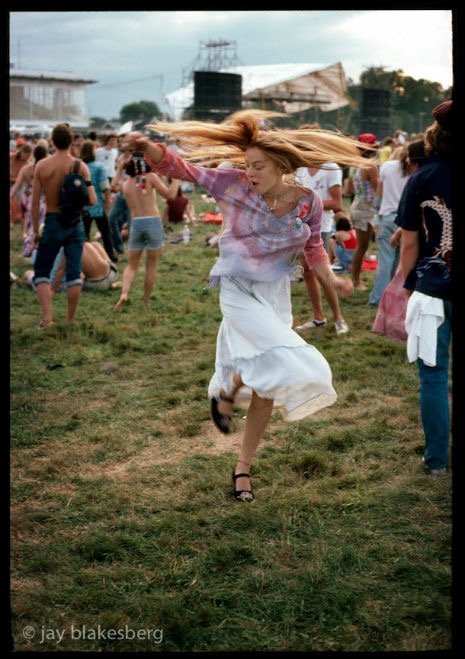
    Listening To The Grateful Dead Will Teach You Everything You Need To Know — But You Must Also Dance

    # 99 on my 99 Life Tips–A List is: You can learn everything you need to know in life from listening to the Grateful Dead — but you must also dance.

    The Godfather is the i-Ching, I beg to differ

    My tip is a derivative of this Godfather scene in You’ve Got Mail, the 1998 rom-com starring Tom Hanks and Meg Ryan. In the classic scene, Hanks answers Ryans questions with references to the Godfather, assuring her it is the “answer to every question,” the “i-Ching,” and “the sum of all wisdom.” It is a brilliant scene Hanks pulls off with aplomb, throwing in some impromptu Brando imitations for emphasis.

    I love the scene, but beg to differ. My go-to source is the Grateful Dead. Within their musical catalogue is everything you need to know. Non DeadHeads don’t understand (and don’t want to know) how their music infiltrates, penetrates, and saturates a Dead fan’s mindset to the last brain cell. 

    “For the truly Deadicated, theMusic Never Stops” 

    My someday book

    I plan to write a book in which every chapter will be a life-topic with related song titles — like this sampler:

    • Love — They Love Each Other, Sugar Magnolia, Not Fade Away, Comes A Time
    • God — Hell in A Bucket, Lay Down My Brother, Wharf Rat
    • Family — Me & My Uncle, Brother Esau, Mama Tried
    • Relationships Row Jimmy, He’s Gone, Cold Rain & Snow
    • Politics — Throwing Stones, Standing On The Moon
    • Philosophy — Terrapin Station, St. Stephen, Eyes of the World, Box of Rain
    • Justice — Dupree’s Diamond Blues, Stagger Lee, Viola Lee Blues
    • Economics — Deal, Loser, Easy Wind, Big Boss Man
    • Psychology— China Cat Sunflower, Brown-Eyed Women, The Other One
    • Death— Death Don’t Have No Mercy, To Lay Me Down, Brokedown Palace, Black Peter

    This partial, non-exhaustive listing is exemplary of how songs in their extensive repertoire have application to every aspect of life. Like I said above, you can learn everything you need to know from listening to the Grateful Dead.

    Discovering all these connections made the music the soundtrack of my life; and one of my favorite lyrics serves up advice for all life’s uncertainties:

    “If you get confused, listen to the music play”

    ~Grateful Dead: Franklin’s Tower

    One Flew Over The Cuckoo’s Nest

    As a young adult, I got lost for several years in the hippy lifestyle (including the drug use part). I travelled cross-country following the band from show to show. The community was like none I’ve experienced since. The traveling kaleidoscope of clowns was family — a home on the road. 

    On my journey in 1985, I met Ken Kesey, author of One Flew Over the Cuckoo’s Nest, himself instrumental in the hey-day of what is known as the 60’s movement, and equally pivotal in the Dead’s beginnings as the house band for the infamous San Francisco Acid Tests so marvelously chronicled in Tom Wolfe’s seminal volume, The Electric Kool-Aid Acid Test

    I went to dozens and dozens of shows became more and more lost in the mysticism and mythology and mis-application of truths and nearly lost my physical and mental health in the melee. 

    A year later, I met someone even more famous than Kesey. At a show in March of 1986, I met Jesus. My life forever changed, though the music has remained the soundtrack of it. The accoutrements of drugs and touring, I left behind. They aren’t necessary. They really never were. The music itself is a healing gift. One I’m Grateful to God to still enjoy. 

    Dance as if your life depends on it

    So many Grateful Dead songs are about impending mortality. The idea is in their very name. A fellow writer on Medium wrote this beautiful essay Accepting Your Mortality is the Beginning of Living Well. I heartily concur. The Grateful Dead’s music helps remind me. And it reminds me that the only effective antidote against an encroaching death is to live, to sing, and by God, to dance.

    Is there anything more celebratory, more filled with life and joy, the kind of life-celebration powerful enough to mock death — than dancing in the face of it?

    I think often of the story in the Old Testamanet, when the Ark of The Covenant was restored to Israel and Jerusalem after spending months and years outside the city, a young King David danced in such ecstatic jubilation, he danced right out of his clothes. 

    I still dance that way — celebrating life — warding off death. Now, I spin and whirl and shake my bones in the privacy of my home. Almighty God is the recipient of my Gratitude as He watches the overflow of my pent-up life. Nothing expresses exultation for the joy of living the way dancing does. As I dance before my God, the band playing is Jehovah’s favorite choir, the Grateful Dead.

    Everything you need to know—Just remember to dance

    So yes, I’m quite convinced, you can learn everything you need to know in life from listening to the Grateful Dead… but you must also dance.

    “Sometimes the songs that we hear are just songs of our own.”

    ~ Grateful Dead: Eyes Of The World
  • If Your Kids Ask Your Opinion — Then You’ve Been A Good Parent

    If Your Kids Ask Your Opinion — Then You’ve Been A Good Parent

    do your kids ask your opinion
    Photo by Kelly Sikkema on Unsplash

    # 98 on my 99 Life Tips–A List is: Parent so your kids seek your advice;  If your kids ask your opinion, you have been a good parent.

    As the father of 7, five girls and two boys, I think I’m qualified to speak on this. My kids range from 34 to 17 as of this writing, all born of the same mother.

    Parents reading this don’t have to be told how challenging the job is. There are times you ask yourself, “Am I doing this parenting thing right?” The role lends itself to self-doubt and recriminations. Still, if your child asks your opinion, you can feel pretty certain you’ve done something right.

    When your kids are very young they get your opinions regardless of whether they want them. You teach them, train them, and nurture them as their primary source of information, hopefully sharing the task with their other parent, speaking with a single, unified voice. These foundational years are the time to establish trust and confidence.

    They age, learn to read, go to school, and become sponges receiving input from many different sources and voices. Teachers, friends, authors, social media, all exert influential pressure on your growing child’s views. You do your best to shepherd this period of growth and change. There’s a tightrope between wanting to protect your child and wanting them to be tough. As the circumference of their world expands, it becomes harder to stay at the center of it. 

    By their teenage and young adult years, it takes serious effort to stay in their world at any level. As a good parent, you’ll make every effort to insure your child still considers your voice in their decision-making matrix.

    At a point much sooner than any parent realizes, your child no longer has to listen to your opinions. Sure, they may still live under your roof and so they cannot escape the sounds you make, but that doesn’t mean they’re listening. But hopefully they are. If you’ve created the kind of relationship in which you’ve been your child’s most ardent cheerleader, providing unconditional support, they’ll know it.

    They may not rush to sit at your feet seeking your infallible wisdom. Yours may no longer be the first voice they consider. But you hope yours is one of the voices they seek, one of the opinions they value, as they contemplate options with ever more far-reaching implications. 

    Sometimes, at this age, their avoidance of your opinion is itself evidence they know your view on the matter — which doesn’t always mean they’ll accept or adopt it.

    And if they don’t come to get your input, or if they act contrary to what you’ve taught and modeled for them, that doesn’t mean you’re a bad parent. You may be a fantastic parent with a particularly stubborn or temporarily blinded or disgruntled child. 

    I empathize with any of you who have gone through this. I know exactly how bad that feels, and how easy it is to label yourself a failure when it happens — which simply isn’t true.

    In time, circumstances may be that that your kids neither hear your opinion daily, nor have to ask you for  it. The value of your solicited advice increases when they no longer have to abide by it. When you are asked for your opinion, by a child advancing further into adulthood and independence, it feels amazingly validating. In that case, you can be certain you’ve done something right. Pause to smile and pat yourself on the back. You’ve been a good parent.

  • You Can Sip Tequila — How to Savor and Enjoy It Without Training Wheels

    You Can Sip Tequila — How to Savor and Enjoy It Without Training Wheels

    you can sip tequila
    Photo by Garreth Paul on Unsplash

    # 26 on my 99 Life Tips–A List is: Tequila can be sipped, savored, and enjoyed like a fine scotch or bourbon if you get an Añejo. Save the blancos and reposados for mixing.

    When I was coming of legal drinking age, tequila meant shots, usually with a salt and a wedge of lime. Bartenders refer to these accompaniments to a tequila shot as “training wheels” or simply, “wheels”. The drinker carefully wets the back of the web between thumb and forefinger with the lime, sprinkles on salt, which sticks to the lime juice moistened skin, sucks the salt off, quickly slams the tequila down in a squint-eyed, unpleasant gulp, trying hard not to taste it, then bites hard on the lime to ease the burn. What you taste is salt, fire, and lime.

    This ritual, called tequila cruda in Spanish, is what many picture when they think of “drinking” tequila. But you can sip, savor, and enjoy Tequila without all that fuss if you know a thing or two. Aficionados and connoisseurs enjoy fine tequilas this way, not only in Mexico, but the world over. High end tequilas are a cultured luxury equal to the best whiskeys.

    Curiously, an article titled, Millenials Are Show-Offs When Buying Spirits, from thespiritsbusiness.com, had this to say about about millennial brand loyalty and tequila:

    “At home, Tequila had the most loyal drinkers with nearly nine out of 10 respondents confessing they have a brand preference.”

    ~ thespiritsbusiness.com here and above

    Only the respondents know whether they sip these brands to which they are loyal, or slam the tequila back with wheels. 

    5 Classifications

    Tequila masters bottle three distinct grades in 5 classifications. Check this article for further reading.

    The least filtered, least aged are the Blancos and Jovens. Usually clear, these may have added colorants or sweeteners to give them a gold tone. These are good for mixing… only. True tequila comes from the heart of the blue agave plant. Only spirits distilled at a minimum of 51% blue agave qualify. Look for this when buying a bottle or ordering a drink.

    Reposados age longer, are usually golden, the color derived from the barrels used in aging, and make fine tequila in mixed drinks.

    Añejo (pronounced “On-Yay-Ho”), and Extra Añejos are the highest graded, longest aged tequilas. These spirits have distinct flavor profiles and complexity. Sip, savor, and enjoy these like a fine bourbon or scotch. They are complex, flavorful spirits to be imbibed neat or with a cube or two of ice. Like other well-known liquors, especially scotch, both altitude and soil composition affect the characteristics and flavor of the Añejos. Anyone who has tasted the difference between a crisp Highland and a smokey, peaty Islay scotch whiskey will appreciate the differences between fine, aged Añejos. No wheels required, nor desired. Enjoy!

  • You Should Never Pay For Top-Shelf Liquor In A Mixed Drink

    You Should Never Pay For Top-Shelf Liquor In A Mixed Drink

    top shelf liquor in a mixed drink
    Photo by Mathew Benoit on Unsplash

    # 25 on my 99 Life Tips–A List is: Never pay for top shelf liquor in a mixed drink. You’re only going to taste the mix, anyway. Use house (well) liquor for any mixed drink.

    Every bar or restaurant that serves mixed drinks will advertise cocktails that feature high-end, top-shelf liquors. But those high-end, higher priced liquors are wasted in a mixed drink, along with the premium you pay for them, because most of us cannot taste anything but mix and perhaps some “bite” or “burn” from the alcohol. You cannot taste the quality of the liquor so never pay for top shelf liquor in a mixed drink. You’re just wasting money, showing off, or showing off by wasting money.

    You should learn how to make your favorite drink at home. Make it with the cheapest liquor you can buy at your local package store. Learn the recipe, the ingredients, and the ratios. As you drink it, notice what you’re really tasting. It will be the mix.

    Even in classics, the mix will overwhelm the finest liquor

    Some classic cocktails, martinis, and high-balls comprise one liquor, usually 1 to 1.5 ounces in the pour, and one mixer. Think gin and tonic, classic vodka or gin martini, whiskey sour, etc. Even when ordering these drinks, resist the temptation to go top shelf. The ratios are not 1:1in a bar. The mixer will overwhelm and drown the alcohol. 

    Instead, show your sophistication by ordering “well” or “house” liquor in your mixed drinks. Never pay for top-shelf liquor in a mixed drink. If you want top shelf liquor, learn to drink it neat or with a rock or two. Some scotch whiskey aficionados will add a drop or two of water. Literally. They can taste the difference in flavor profile from that minuscule amount. I don’t have that kind of palate. You probably don’t either.

    So, if these connoisseurs of high-end, top shelf single malts can tell if a drop or two of water is added, what do you think happens to that top shelf liquor when you add a couple of ounces of freshly squeezed lime juice or simple syrup to the glass? Do you think the character of the liquor changes? Its complexity, taste (including where on your tongue you notice the taste), and finish are all compromised. Be smart and keep that money in your pocket for slow sipping and savoring of the finer liquors—neat. Never pay for top-shelf liquor in a mixed drink.

  • Do The Hardest Thing First — Always Be Working Toward Easier

    Do The Hardest Thing First — Always Be Working Toward Easier

    do the hardest thing first
    Shutterstock image licensed by Author

    # 96 on my 99 Life Tips–A List is: Do the hardest thing first. Move the heaviest thing first is like it. Always be working towards easier.

    “Eat a live frog every morning, and nothing worse will happen to you the rest of the day.” 

    ~Mark Twain

    Here is a link to a fellow Medium writer,Saimadhu Polamuri’s, book review on the business productivity tome, Eat That Frog, by Brian Tracy. You can read it to learn more about the business and productivity applications of this principle.

    But I didn’t learn the concept of doing the hardest, least pleasant thing, first, from Mark Twain, Brian Tracy, or Saimadhu. I got it from my Uncle Kurt building houses and learning the construction trade.

    On a construction site, the lowest person on the totem pole is a “grunt”, the same term used for the lowest ranked infantry soldier in the army. Grunts get the dirty jobs, and the dirty jobs are usually unskilled ones, like hauling lumber. 

    Lumber loads

    Intermittently, while working on a project, lumber trucks would deliver truckloads of lumber banded together with metal straps to keep the load secure on the back of the truck. Once offloaded, the lumber had to be sorted into kinds and then carried to strategic positions on the job site. It would be horribly inefficient for the more skilled lawman, for instance, to have to retrieve a board for every cut. The sawyer and his helper pull new stock for cutting from a pile of boards ready to hand. That pile doesn’t magically move itself to the saw station though. A grunt carries it there, board by board, depending on the dimension of the lumber being carried.

    Kiln-dried spruce studs, pre-cut to 93-inch lengths are light. Almost airy compared to pressure treated yellow pine 2 x 12’s, called two-by-twelves, that might be 16 to 20 feet long. And four-by-eight sheets of plywood (in this case 4-feet by 8-feet) are not only heavy, they are unwieldy. They don’t walk themselves to the correct place on the site, ready for cutting or assembly.

    Crowning boards

    My uncle taught me how to identify the board types by width and length. He taught me how to crown dimensional lumber, too. Crowning involves quickly sighting down the length of a board to see which way it curves. No piece of lumber is perfectly straight. Or, at least it’s rare to find a perfectly straight board. Once crowned, I marked the edge of the board at one end with my carpenter’s pencil, jabbing out a quick inverted “V” called a carrot, with the point touching the crowned side of the board. 

    It amazes and distresses me to walk into a house under construction, site down a wall, and see waving undulations. The carpenters did not crown the boards so they would at least all curve in the same direction, giving the illusion of straightness. These undulations are amplified and noticeable once sheetrock is hung and trim molding or cabinetry is fastened to the wavy walls.

    .

    And crowning floor joists is even more important. You always want the crowns up so that the load of weight placed on the floor will have the tendency to straighten the boards. Floor joists should never have crowns facing down, which will create a shallow depression in the floor. You don’t want them will-nilly either, which will make the floor feel like it’s rolling underfoot depending on the finished flooring material.

    Simple Logic

    Anyway, now that you know all about crowing lumber, back to eating frogs, and why you should do the hardest thing first.

    Once marked, I had to carry the boards. My uncle taught me to carry the heaviest, longest boards first. The only exception was if I had to carry boards a further distance. Then I might start with lighter boards, trading distance for weight. The energy expenditure amounted to the same thing. I worked my way through a lumber pile exactly like this each time we received a delivery.

    My Uncle’s rationale made perfect sense to me. 

    He asked, “Are you going to be more or less tired after carrying the first board?”

    “More,” I said.

    “Right,” agreed my uncle, “then don’t you want to carry the lightest boards when you’re the least tired?”

    “Yes, sir,” I allowed.

    And so that’s the way I did it. I carried the heaviest boards the furthest distance, reserving my strength and knowing each trip to the lumber pile was getting easier. 

    That’s the way I’ve tackled life ever since. I do the hardest thing first. Then every subsequent thing feels a little easier. I’m always working towards the next easiest thing. Working this way shrinks a huge stack of lumber, and it shrinks problems, and it helps you give your best to your least favorite necessities. You should try it, too. Do the hardest thing first, everything is easier from there on.

  • Do Not Borrow Problems Not Yours To Solve

    Do Not Borrow Problems Not Yours To Solve

    # 97 on my 99 Life Tips–A List is: Do not borrow problems not yours to solve. Life will give you enough to do.

    Do you know what the biggest problem facing most people is? Their biggest problem is that they don’t know what their biggest problem is. Maybe this is you.

    We all know people who make it their life’s work to stick their nose into other people’s business. We’ve all got friends and family and co-workers coming out our ying-yangs telling us how to do this or that, or how to fix something or other we know good and well they have neither experience nor expertise we can rely on.

    Don’t do that. Don’t borrow problems that aren’t yours to solve. You just make yourself a royal pain-in-the-ass. Life will give you enough to do just focusing on your own shit.

    When you receive unsolicited advice from someone telling you what you should do about whatever, and you can see they are drowning in a cesspool of their own unsolved problems, how does that feel? Do you consider them a trusted source? Do you appreciate their concern and rush to incorporate their advice?

    No Poseurs Allowed!

    Hell no! You don’t want to be that guy/girl/non-binary poseur either.

    Leave other people’s problems alone. Leave them alone until they ask you. The invitation to pitch in with help and advice in someone else’s affairs is a sacred trust. Don’t neglect it and don’t abuse it. Be the person who gets asked your opinion, not the kind who never gets asked yet can’t stop giving it.

    One day soon, I will write a story titled, How To Know If You Are A Good Parent. The story will comprise one question and two follow up comments.

    The question: Do your kids ask for your advice?

    The comments: If yes, you are a good parent. If not, you need some improvement.

    Now, like chord positions on a guitar neck, this story can be transposed to play in different keys. We can change it from the key of Parenting to the key of Friendship, say. We can then change the title substituting Friend for Parent and keep the content of the story exactly the same. See how nice that works?

    Is this too simplified? Maybe. But then, I’m a simple guy. Let’s keep things real, shall we?

    Don’t borrow problems not yours to solve. Go to work on your biggest problem. Start by figuring out exactly what that is.

    We good?

  • Why You Should Be Motivated By Hope

    Why You Should Be Motivated By Hope

    be motivated by hope more than by fear
    Photo by Don Pinnock on Unsplash

    # 94 on my 99 Life Tips–A List is: As much as lies within you, be motivated by hope more than by fear. 

    For your entire life, two great underlying motivators have debated and fought over all your decisions — hope of gain and fear of loss. These two combatants, working in opposition, have driven you to do, or not do, to opt for, or against, every choice having meaningful results from the time you were old enough to exercise free agency (self-direction in your preferences).

    Scan through a listing of headlines and sub-titles on Medium, or any platform like it. Nearly all seek clicks and readers by triggering hopes or fears. I recently read an interesting article on Medium by Ashley Broadwater that admits playing upon reader’s fears hoping to make headlines go viral. Similarly, look at a news media website. It’s nearly all fear… with a sprinkling of hope. This isn’t a judgement—merely an observation you may not have noticed or framed in these terms. 

    Can you guess which of these is the strongest, most predominant? Do people prove to be motivated by hope more than by fear? Sadly, no. The dominant motivator is fear, as shown in this research paper

    Fear has Instagram

    Quicker to act on the brain, fear stimulates a more primal region, causing autonomic physical responses in a way that hope does not. Fear is the Tony Robbins of motivational speakers shouting at your brain. (Not that Tony himself motivates by fear, he’s just bigger and louder—look at his website).

    Hope is meek, mild-mannered Seth Godin. (Compare Seth’s website). Like Seth, Hope relies on an understated, minimalist style and aesthetic. It is an emotional motivator that comes from higher, cortical levels of passive brain activity and more rational and active reasoning. Yes, hope is there, but seems a little unsure of itself, almost apologetic, as if it would be too much of an imposition or interruption if it were suddenly to speak up and assert itself. 

    Not Fear. Like a lie, Fear is halfway around the world before Hope can put on its pants. Except in our case, fear has taken over the brain before you can arouse hope to compete. Hope won’t cause an adrenaline dump. It won’t make your heart climb into your throat. Fear will do both those things then post it on Instagram. 

    These two, one larger and louder, the other more suppressed and quiet, are so ingrained, and one in particular, fear, so deeply rooted into both your physiology and psyche, you may not be aware of either. You cannot see them anymore, you’ve grown so used to them. Which is exactly why I’m writing this. I want you to be aware. You NEED to be aware. You’re making all of your decisions at their behest.

    Fear wins on points

    Fear wins on points as the dominant motivator. But it has an unfair advantage gained by being first to the market, so to speak.

    Neurophysiologists and psychologists agree that fear appeared very early in evolutionary brain development. It is the proverbial lizard-brain. This makes sense. Responding to saber-tooth tigers quickly can save your life more than contemplating Sartre and metaphysics hoping to create more inspirational cave art. Fear is why the art is in caves — and hope is why, even in caves, there is art.

    Think of the fear that would drive humans to live in caves, and the hope that would inspire them to create art on their walls. Beautiful and inspiring isn’t it?

    Fears and hopes and dreams of our own

    And that’s you and me. We have fears that drive us into our own caves. Both you and I seek protection and security. We hate the idea of loss. We are afraid to fail. These fears make us tolerate conditions we would never encourage a loved one to accept. Some fears paralyze our most precious dreams. Until the hope of their realization whispers in our ear, and we take up the pen, or the brush. Other fears cripple our resolve and erode our self-esteem—until we confront our demeaning and demanding boss, break free from an abusive relationship, and go for our hopes.

    Hope, meek, mild-mannered hope is all we have to nudge us forward out of comfort, and safety, and certainty. Hope encourages us with promise, prospect, potential, and possibility in our struggle to overcome fear. We overcome fear, all of it, by reaching for the hope of something better, something more than, even though we put everything at risk to arrive there.

    So, dear friends, as often as you can, be motivated by hope more than by fear. At the very least I hope by reading this you’re stirred to a new cognizance of what motivates you on a day-to-day basis and especially what drives the most impactful, big-picture decisions you make.

    More to say and the takeaway for now

    There is more to say on this subject than can I can address in one article. I’ll be working on related stories on this topic, having only scratched the surface in my background research. The relation of hope and fear to behavioral economics, politics, labor markets, relationships, and social justice movements are all topics I hope to write about. I’m excited to discover more, and I hope my findings will assist in your life’s journey.

    As a writer, I know the mind-crippling fear you must overcome (repeatedly) hoping your work can be meaningful to others—not just scoffed at and cast aside. Kudos to all of you who face down that elemental fear to paint, to sculpt, and to write on the walls of your own caves — and who invite us to take a peak. I see your art, and I see you. I think that’s what you, me, and all creators are hoping for.

    Just take this away; these two principle motivators impact all of your decisions. Scan your history to determine which has prevailed to this point. Motivated by hope, I equipped you with a fresh awareness to help you determine which will prevail as you go forward. It is my earnest hope that you will be motivated by hope more than by fear.

  • There Is A Grand Canyon Between You and Jesus

    There Is A Grand Canyon Between You and Jesus

    There is a Grand Canyon between you and Jesus
    Photo by Christine Roy on Unsplash

    # 35 on my 99 Life Tips–A List is: There is a Grand Canyon between you on your best day and Jesus on his worst. Being “Christlike” is a fallacy. Genuine Christianity has never been about imitation or method acting.

    A Grand Canyon of Difference

    Take honest inventory of your spiritual life, and you’ll realize there is a Grand Canyon between you and Jesus. Even on your best day, when you’ve dressed up, said your prayers, had a devotional time, listened to Christian music, and meditated on God—you cannot produce the Spiritual resource needed to live the Christian life. That resource is Christ Himself, through the person and power of the Holy Spirit.

    Yes, dear friend, even dear brethren, there is a Grand Canyon between you and Jesus, the gulf formed by the differing sources of power relied upon for life.

    Allow me to introduce Watchman Nee (cover your toes)

    Watchman Nee, a Chinese National and Christian author, in his book Not I, but Christ, stirred controversy when he wrote this:

    “If you can teach a dog to be a Christian, then you can teach a man to be a Christian. There is none who can live the Christian life but Christ.”

    This quote, also from Nee, is like it:

    God is not seeking a display of my Christ-likeness, but a manifestation of His Christ.

    ~ Watchman Nee

    and finally this:

    We think of the Christian life as a ‘changed life’ but it is not that. What God offers us is an ‘exchanged life,’ a ‘substituted life,’ and Christ is our Substitute within.

    ~ Watchman Nee

    Follow the links provided to learn more. His writing will change your view of the Christian life.

    Christianity as strength training

    In my 35 years as a believer, I’ve seen many good-hearted people and many well-meaning preachers speak and act as if being a good Christian is like going to the gym. Through your disciplined efforts; you get stronger and stronger. Soon, you can do more and more reps. Gradually, you get fit; you lose weight. You keep working at it, persevering to put in the effort to get the results, feeling the smile of God, and being congratulated by your fellow-believers for all your dedicated, inspiring work. Work hard enough and your life gets better. But, it’s hard, relentless work. Friend, I’ve been you.

    The gym for Christians is church attendance and prayer and bible study and meetings and maybe tithing or doing some good works. It’s stopping drinking and smoking and cussing and listening to bad music and hanging out with bad people (any non-Christians). It is voting the right way and saying the right things and replacing the magnets on your refrigerator with bible verses.

    Is this as good as it gets until we die and go to Heaven

    But it is also mingled with failure and discouragement. It is struggling with habitual sin, and backsliding and repenting, and keeping up appearances and attending services—but still being defeated. So you grit your teeth and say, “God is Good.” But you can’t escape the gnawing, empty feeling that there has to be more to the Christian life than what you’re experiencing. And all the while, you blame yourself for your lack of “progress”, and feel guilty for letting God down. But you hang in there knowing that Heaven will be worth all the hard work and effort.

    The typical idea suggests that one can become a “strong Christian”. In some circles, you’ll actually hear that term applied to particularly zealous and serious examples. The truth is—when we are weak, then we are strong, for then Christ’s power can rest upon us. God will let us be as strong as we want to be, but God is attracted to weakness.

    That’s why He likes me so much. 😉

    (And will be attracted to you the same way; as soon as you embrace your weakness as I have my own.)


    The Canyon separates Jesus from self-empowered fiasco

    I say, there’s a Grand Canyon between us and Jesus if that’s the extent of it.

    It is either Christ manifesting Himself in and through us, or it is a human fiasco dressed up in church clothes saying churchy things. Many of the things we try to do for God are performed, not by the Spirit, but by self conjured effort, relying on our own “wisdom” and willpower, not on the power of God. Perhaps that’s why we see little of it in our day.

    What God wants done by us, He will do in and through us. Let’s not confuse that into thinking that anything we say or do in the Name of Jesus is done by Jesus. It’s just not.

    Please don’t take offense. If you understand me correctly, and accept my motivation for writing this, you’ll embrace the living Christ to manifest Himself in and through you. The true Christian life has always been about who Jesus is and what He is in us, not about you or me. He’s the only one who can live the life He’s called us to live, let’s trust Him to do just that, shall we? Because there is a Grand Canyon between you and Jesus.

  • Don’t Let The Love Of God Hit You In The Back

    Don’t Let The Love Of God Hit You In The Back

    don't let the love of God hit you in the back
    Photo by Eleni Bellou on Unsplash

    # 34 on my 99 Life Tips–A List is: The love of God is like light from the Sun. If you turn your back on the Sun, the light will hit you in the back.

    I’m writing so you don’t let the Love of God hit you in the back. In the Bible, or Christian scriptures, there are many references to the love of God. Here is a listing of some of the more well know of them. Leaving aside very thorny, legitimate questions about the existence of evil and pain in the world for now, I will focus on one verse:

    Whoever does not love does not know God, because God is love.

    ~ 1 John 4:8, NKJV

    This verse, pregnant with meaning, tells the reader all they need to know about the essential nature of God. God is love. Love is not an attribute, feature, or property God has or sometimes flexes. Love is God’s essence.

    Does the Sun HAVE light and heat or IS it light and heat?

    We could say, speaking about the star at the center of our solar system, the sun has light, or the sun has heat. But when we think about the sun, it is most accurate to think about what the sun IS than what it has or what it does. For us, the sun is light and heat, therefore energy and life. It is the energy source of all living things on the planet. Every calorie consumed (a measure of thermal units) is stored, portable energy from the sun.

    Now we may imagine a person living in isolation, closed off in a room with heavy light blocking shades drawn, pulled closed against the intrusion of all sunlight. We may imagine duct tape at the edges to create an atmosphere devoid of even the leakage of light. But we know that all those efforts to avoid sunlight won’t make the sun itself stop shining. It will shine on the exterior of that building. It will shine on the back of those shades. Yes, those inside can ignore that and shut themselves off from it, but the sun will shine on undeterred.

    The Love of God is the same

    I see the God who is Love the same way. Since God is Love, there is nothing any of us can do to create love in God. And since God is Love, there is nothing any can do to shut it off, either. For God to stop loving would be to cease being God. The ode to Love and the God who is Love in the fourth chapter of 1 John in the New Testament is so compelling, one might almost invert the words to Love is God and still be just as true.

    Beloved, let us love one another, for love is of God; 

    and everyone who loves is born of God and knows God.

    ~ 1 John 4:7, NKJV

    Love needs a recipient

    I decided a long time ago. If God is love, then the one thing an essential Love of that magnitude needs is a recipient, a “beloved” if you will. I decided God doesn’t have to look past me. I will absorb all the Love God wants to shine my way. For over 35 years, I have kept my face turned in the posture of recipient, the beloved. You can do the same. Turn towards that love. Don’t let the love of God hit you in the back. If you wake each day to the simple truth that God is Love, and you are still here, therefore you are loved, it will change your life.

    I recognize that I’m not loved for my perfections, nor unloved for my sins. Nor am I loved for anything other than existence. I’m loved in spite of myself. I am loved because I’m here, and just like light from the sun, God’s love is shining upon me whether I face it or turn my back on it. Best to throw my arms and heart wide and give that God who is Love, what that Love is after… a home.

    “And we have known and believed the love that God has for us.

    God is love, and he who abides in love abides in God, and God in him.”

    ~ 1 John 4:16, NKJV

    Yes, perplexing questions remain. They are above my pay-grade. Most are beyond my capacity to understand at all. Doubtless you and I both have unanswered, bothersome, and painful questions, but they don’t negate the answers I have. And the single greatest answer is God is Love… not has, or shows, or gives Love, but IS Love. Don’t let the Love of God hit you in the back.

  • Just Because You’ve Read About It Doesn’t Mean You Know About It

    Just Because You’ve Read About It Doesn’t Mean You Know About It

    you've read about it
    Photo by Kelcy Gatson on Unsplash

    # 24 on my 99 Life Tips–A List is: Reading about something is not the same as doing something. Reading a story about Paris is not the same as actually visiting Paris. This applies to every aspect of reading. As valuable as it is, it is no substitute for experience.

    The intended audience for this tip is the ardent, imaginative reader. Your mind can trick you into believing you’ve done and experienced something because you’ve read about it. You may convince yourself you’ve learned all there is to know because you’ve read about it. I don’t mean to imply your reading will cause a psychotic break with reality. But the emotional and intellectual engagement stirred by reading good writing creates a world. A real one. And sometimes it’s difficult for the most intelligent to realize that all the things they’ve read about, and therefore felt as if they were present seeing, hearing, feeling, fighting, loving, longing in the scenes and characters is real only in their mind. Perhaps this has happened to you.

    I am not being disparaging. Real in the mind is real. There is nothing more “real”. But no one is a trout fisherman because they read a story about trout fishing outside Pamplona. Even if you recall details like the crisp newspapers to wrap the day’s catch in. And regardless whether you can almost taste the dust from the bus ride back to town. Dust you’ll quench with Sangria in the bar in time for the day’s bull running. No, dear reader, reading about drinking red wine won’t stain your teeth or make you drunk. Even when Hemingway is writing the tale.

    I always think of two things in relation to this tip:

    The first is the scene in Good Will Hunting in which Robin Williams’ psychiatrist character chastises Matt Damon’s ne’er do well savant character. Damon’s Will Hunting receives a dressing down for being so smug. He’s never actually done the things he’s read about. He’s never been out of Boston. Although he could recite all kinds of facts about Michelangelo, gleaned from the books he’s read, he doesn’t know what it smells like inside the Sistine Chapel. Because he’s never been. “You’re Just A Kid”. Williams’ character tells him. He’s never really been in love. He’s merely read about a lot of things. Though he can provide brilliant analysis with his near perfect recall, reading is no substitute for the actual streets of Rome. It’s a fantastic scene.

    The second is on a cross-country car trip when I was 20. I had picked up a Frenchman named Dominic hitchhiking from Binghamton, NY, on his way to see a girl in Sterling, CO. After a side-trip to New York City we started west. On the second day, Dominic grew critical of the countryside in his fatigue at seeing the farms and cornfields along the interstate. 

    As night fell on a long day of driving, my passenger got impatient. He pleaded with me to get out of the cornfields. After seemingly endless miles of nothing but corn, we saw an exit towards a town. Maybe it would be a more suburban, less pastoral view. I could drive forever at that age, but the corn was like a green ocean. I was suffering sensory deprivation. Plus, we were forced to limit our expenditures to fuel and food. We would not waste precious money on a hotel for the few hours of sleep we’d need before heading out again. I either needed to drive on to a rest stop, or find a suitable place.

    This is the West

    We came off the interstate and I turned off the service road onto a long, wide 2-lane in western Ohio. Mailboxes dispersed on either side marked the corners of front yards as big as baseball fields. Dark, wood-framed farmhouses sat well back from the road. Only occasionally did we see a light in a window. Still, Dom suggested I pull off into one of the front yards where we could sleep. He insisted we could set up my tent beside my Toyota, or sleep under the stars in our sleeping bags. 

    “What? Right in their front yard?” I said, “Have you lost your mind?”

    “Oh, not at all,” he replied in good but broken English, “This is the West, I have read all about it.”

    “Oh,” says I, “you’ve read about it. Good. Then you’ve no doubt read about shotguns, too.”

    I kept right on driving, headed back nearer the interstate, away from Dom’s temptation to get us shot at or dog bit, and eventually found a dirt farm road leading back into a cornfield where we would be safe and could get a few hours shut eye.

    “I have read about it.” I’ll never forget that. Don’t you forget it either.