Tag: brokenness

  • People Fall In Love Everyday—None Fall Into Intimacy

    People Fall In Love Everyday—None Fall Into Intimacy

    # 90 on my 99 Life Tips–A List is: A good relationship is a good fit. The broken pieces and whole pieces interlock

    You may have heard that good relationships are a good fit. 

    I remember first hearing the concept from a post-Ph.D psychologist (a former college friend) when I told her about the demise of my 22 year marriage. She wisely told me relationships aren’t like going to the grocery store and picking the perfect item off the shelf, they have to be a good fit, comfortable for each partner.

    The mental image was suitable and thankfully soon thereafter, I reconnected with the best fit of my life, and for the past twelve years we’ve been constant companions. We built our relationship on mutual respect, but there’s a lot more to it than that. We take care of each other’s broken pieces, sometimes filling in missing portions, other times strengthening and protecting the ruins. 

    What makes a good fit?

    A good fit is indispensable to a good relationship, but I want to explore what makes a fit good?

    A good fit is when the broken pieces of each life fit together, not the whole ones.

    That’s something not everyone sees. Think of Tom Cruise and Kelly Preston in Jerry Maguire. Those two were too perfect. Sure, the sex was hot, but there was no room for intimacy in the midst of all that stifling, demanding perfection. Check the linked scene. Who could live up to that?

    If you want a good fit, one filled with deep intimacy, you have to embrace brokenness.

    And let me add this caveat; everyone’s broken. Even the people who think they’re perfect.

    Intimacy in a relationship comes from excavation of the buried, broken pieces, and carefully exploring how they fit together.

    Broken pieces fitting together creates intimacy
    Photo by CHUTTERSNAP on Unsplash

    What plays on dating app profiles, won’t create intimacy

    When someone starts a relationship telling all about their successes, achievements, and accolades, you may feel happy for the teller, even excited, but not intimate. There’s neither room, nor need for you in those stories other than as their personal admirer, cheerleader or fan. 

    They may be a wonderful influencer, but those stories don’t admit intimacy.

    When you share only your carefully curated best moments, you’re signaling how rich your life already is and how little your listener can do to make it any better except as your captive audience. It is nice to have affirmation, even admiration. But intimacy is better.

    Sounds a lot like typical dating profiles, doesn’t it?

    But within the broken places… lies a world humility, vulnerability, trust, and protection—intimacy.

    There may be such a thing as love at first sight, I don’t know. Sight to me is a very untrustworthy barometer of most anything real.

    I know this. There is no such thing as intimacy at first sight.

    Intimacy takes time. It takes trust. Being built on shared brokenness, it requires the discovery of where your broken places, ownership of the pieces, acknowledgement that there may be whole chunks missing now, and the willingness and the wisdom to know when to share those details with a new potential partner. 

    That last piece is key. Not everyone deserves your broken pieces. And no one deserves them too soon. Freely share your whole ones, let everyone see those. Fling those whole bits like you’re riding on a Mardi gras float. 

    But for your own sake, save the best of you, the broken places, for someone worthy.

    When two people build a friendship from mutual initial commonality and attraction, then patiently let each other venture in to the back rooms, the intimate rooms, ones furnished with painful memories and the pictures on the walls are of unforgotten wounds, something magical can happen. The magic of intimacy. 

    That shared brokenness is the best. Tenderness, lovingkindness, and protective shielding awakens between the partners. Each knows the other’s vulnerabilities and rather than exploiting them for selfish gain, cherishes and caresses them, partners carefully, lovingly tracing each other’s scars, and holding each other in fierce determination not to create new ones.


    You cannot fall into intimacy

    The Beatles, in With A Little Help From My Friends asked, 

    “Do you believe in love at first sight?

    Yes, I’m certain that it happens all the time

    What do you feel when you turn out the light?

    I can’t tell you but I know it’s mine.”

    Beatles: With A Little Help From My Friends

    I prefer the Joe Cocker, Woodstock version as seen here.

    Whether or not at first sight, people fall in love every day.

    No one falls into intimacy.

    That’s reserved for those willing to be vulnerable, patient, and fit each other’s broken pieces together into the puzzle of Intimate Love. That is a good fit.

  • All My Broken Places Came From Family – I’m Not Unique

    All My Broken Places Came From Family – I’m Not Unique

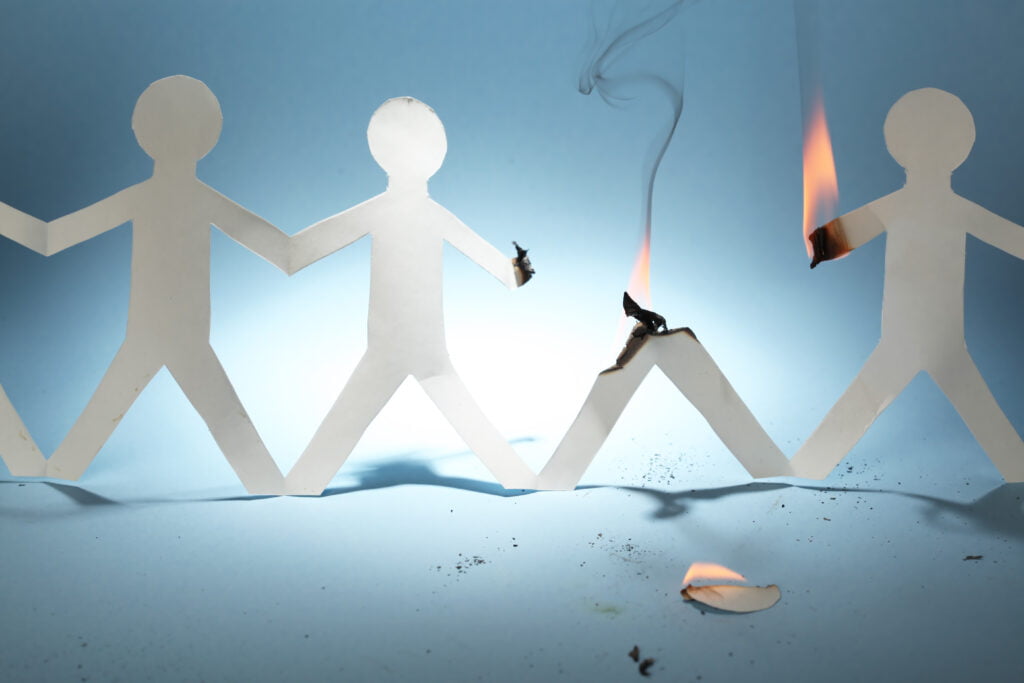
    Paper people with one burned. All my broken places came from family.
    Family is that social unit with the most power to do good…or harm. Some of us end up burned and broken. (Adobe Stock Image: licensed by author)

    # 58 on my, 99 Life Tips – A List is: Do not treat the word or concept of Family as a sacred, magical word that justifies either inflicting, or suffering, emotional, mental, or physical abuse. A family, or family member like that is not worth being joined to.

    This is a loaded topic. Too loaded, for many of us. Mention family, and you’ve invited us into a minefield….one where the repressed rage, anguish, and anxiety is buried just beneath the surface. We cannot pretend that family is an idyllic fairyland. For us, it is a haunted house.

    All my broken places came from family. Perhaps yours did too. I don’t think of Family as a sacred, magical word. I think of it as the context in which you can be mistreated in ways no stranger or non-family would dare to do. A context in which you’re trapped because ”Family”, but having once escaped, one to which you would never voluntarily return.

    Cynical? Yes. Bitter? Maybe.


    Okay…Not Okay

    I remember the morning after one of my mom’s suicide attempts, someone asking if I was okay. They had driven out to our house to check in on us in the wee hours when it was still dark outside. I recall the crunch of tires on the gravel driveway as they’d pulled in. I’d been awake all night…and I heard every whisper of sound.

    After hiding all the knives (including butter knives), I had lain listening on a sofa close by my mom’s bedroom door in case she stirred and tried to hurt herself again. I knew it was my job to stay awake and protect her. Hearing the car, I trudged to the back door with a blanket around my skinny shoulders. I cracked it open and peaked out.

    ”Are you okay?”

    To the inquirer, my breath steaming into the cold, black morning, I answered, ”Sure. I’m fine. We all have to play the cards we’re dealt.”

    I was maybe nine years old.


    Acknowledgement and Appreciation For Those Who Step In

    I’d like to say the dysfunction of my childhood stopped there, at nine. It didn’t. I didn’t get out of the situation until I was 16. And I know that some readers will have endured worse. And my heart goes out to you. I know what it is to be okay…not okay.

    I hope you’ve had extended family, or friends and their families, who stepped into the void to help, and begin to heal you. I could not be more grateful for those who performed that role in my life. You know who you are, and if I could speak with the tongues of men and angels, I could never adequately thank you. 

    If you’ve been that for someone like me, who has been injured and broken by their family, please know that though they may be too detached and broken to ever voice their thanks to you, they feel it. We really do. I guess we’re the human equivalent of rescue pets, more grateful than our past may ever let us show, due to the accumulated “trust issues”. Please forgive any failure to acknowledge your help and support.

    Who This Is For

    I didn’t write this for those who grew up in a dysfunctional family. You already know that slapping the ”Family” label on something isn’t some kind of magic dust. You don’t need me to tell you that, or remind you of it. Neither is it really directed to those who started a family only to have it blow up on you. You too, know the devastation that occurs when something that is supposed to last until death, doesn’t…but it kills part of you nonetheless. 

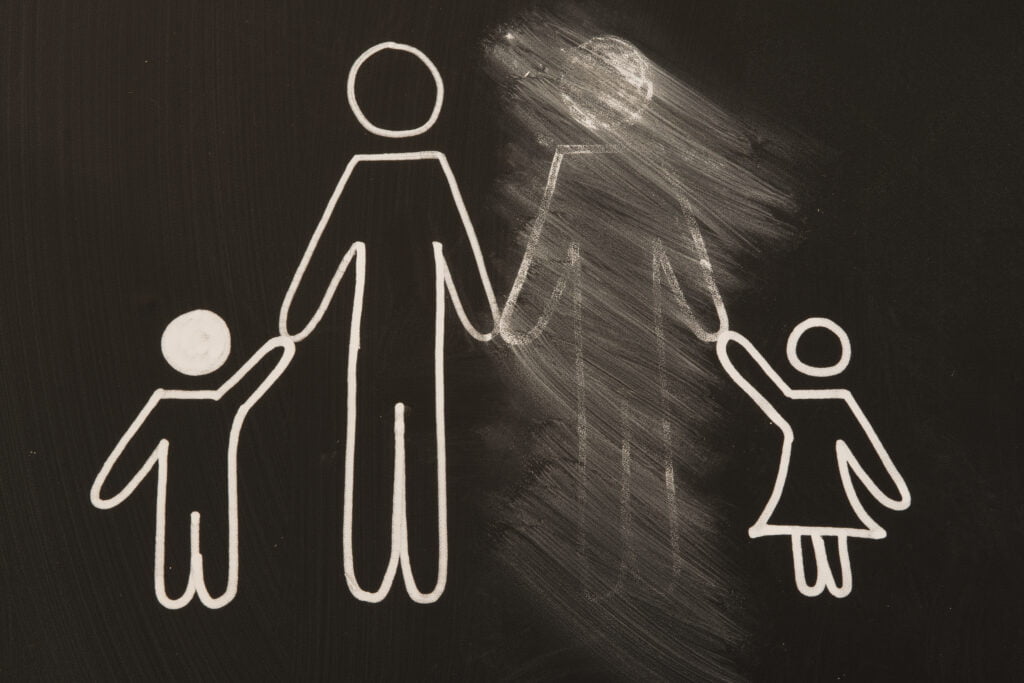
    broken family on a blackboard.
    Anyone who has suffered through a divorce knows there is more than the body that can die. “Till death do us part” may be more applicable than we give it credit for. (Adobe Stock Image: licensed by author)

    Rather, this is for all who, for the sake of ”family,” do things you ordinarily would never agree to do. You tolerate impositions and demands, and even endure mistreatment from ”family” members, and then don’t understand why some of us aren’t excited to join you for family gatherings and events.

    Family just doesn’t mean the same thing to us as it does to you. Some of us count escaping from family as among our greatest achievements. Some are probably alive today because we did. Family burned us. Our experiences sensitized us, and made us easily triggered. We know it’s abnormal, and characteristic of brokenness we didn’t ask for. But we can’t manufacture feelings we don’t have. In spite of how puzzled or concerned we may be not to feel the way you do.

    For us, family has lost its power to command either obligation, or automatic respect. It certainly doesn’t provide the cover or excuse for mistreatment. So, the family we recognize now is the one we choose and which chooses us back. That’s why we’re here with you and feel so protective of you.


    Thank You For Understanding

    We appreciate you. And, we’re glad you’re in our lives. None of us wants you to abandon your family ties for our sakes. We understand the connections and obligations you feel. We just want you to know it’s different for us. Not only do we not feel obligated, or sentimental, it’s that we’re beyond jaded. 

    I suspect for far too many of us, our most broken places came from family. That brokenness doesn’t necessarily define us, but it certainly, undeniably shaped us, and scarred us with invisible tattoos, etched not in ink, but in hurt, in confusion, and in despair. Engraved not on skin (perhaps), but deep in our souls (for certain). 

    So, if we’re skittish and subdued, and reticent and reluctant, at the mention of some family event or other; or if we overhear one of your family members speaking harshly to you, or treating you with abject insensitivity, and we respond with defensive vehemence, please know where it comes from.