
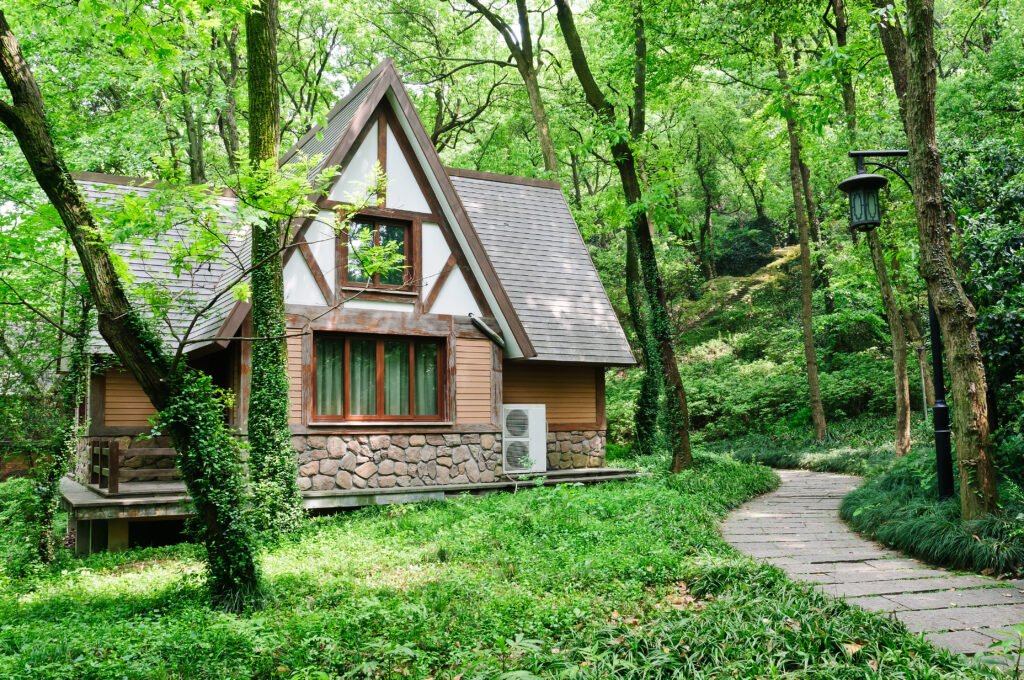
# 80 on my 99 Life Tips–A List is: When contemplating a home, ask yourself, “What kind of life do I see myself doing here?” Does the space match the anticipated activity?
My introduction to lifespace design
Thefirst trade I learned was carpentry. I had the good fortune to work for an uncle (with whom I also lived for a season when I first left home) who had a brilliant eye and feel for spaces and who shared it with me.
He purchased a small, nondescript house and transformed it into an oasis of livability, aesthetic pleasure, comfort, and utility. The rear of the house included a 20-foot-diameter deck built around the trunk of white oak. A flagstone path led from the deck to an outdoor shower with sides of batten-board red cedar. The open-sided entry afforded privacy by proximity to uninhabited woods.
There’s nothing as pleasing as an outdoor shower. It’s the nearest thing to skinny-dipping you can do standing up.
Heating, chores, and smells like home
Inside the house was unlike any space I’ve experienced since. A squat, black woodstove in the large front room heated the entire home. It sat perched atop a boulder so big the front door had to be removed to bring it in.
We shored up the structure beneath the floor with piers, beefier joists, and concrete. Up top, we set the stone (the size of a king-sized bed) in its own bed of thinset mortar. Then we carefully drilled holes to anchor the feet of the woodstove to the stone’s flat gray surface using bolts epoxied in place. This was not a mere cosmetic stone, nor an homage to cave-dwelling. To my amazement the heat absorbed by the slab of stone during the day would radiate from it at night, warming the house, while the stove went untended.
First thing in the morning, I did my first ever “real man’s” chores. I cut wood from the stack, carefully splitting it with a leather-handled hatchet to lengths I could feed the stove. Then I fed Jack Moon, the blue-eyed half-wolf, half husky wolf-dog that guarded the back of the property from within his 6-foot-high dog run.
Most mornings I returned from chores to the aroma of hickory smoke mingled with bacon— sizzling in the huge cast-iron skillet lit from underneath by blue gas flame. Those smells will always mean home.
In back of the house my uncle built a house-sized barn topped by a gambrel roof that served as workshop, toolshed, and classroom of life.
Barn v. McMansion
Today, if someone offered me a choice between that barn (or a replica, since he is thankfully still using it), or any pretentious McMansion in some gated, cramped neighborhood, I’d gladly take the barn. There was more hominess, (my spell checker auto-corrected to holiness, and you know what, that’s not an accident), more holiness, and therefore more wholeness, than in any of those conspicuous-consumer, soul-less wannabe estates.
My education about spaces and life and activity and how to meld the three was furthered by 3 unique books I’ll share here with you.
3 books about architectural space
The Personal—Can you reach it?
A Place of My Own: The Architecture of Daydreams, by Michael Pollan
This deserves its own story, which I will probably supply one day. I’m certain there are many good ones already out there. This book explores the nature of space and place. How different spaces make us feel. How to match a space to its expected usage, and more. I cannot recommend this highly enough. It would easily make my top 10 list of all-time favorite, most important reads.
A House is not a Cathedral
The Not So Big House: A Blueprint For The Way We Really Live, by Sarah Susanka
Susanka wrote this book as a backlash against the encroachment of the mini-Mansions like I decry above. She filled it with beautiful illustrations and photographs. The link above will give you a delightful glimpse.
In a very similar vein as giants of residential architecture like Frank Lloyd Wright, the author shows and tells how impactful beauty and craftsmanship are to one’s experience of life. This is especially true in your home, the space where you spend most of your time.
She makes a powerful argument that these homes are wasteful if not outright harmful. They borrow effects from industrial, financial, and governmental architecture with huge entryways, soaring foyers, sweeping staircases, all of which shrink the person entering the space, elevating the space with its contrived sense of awe (think of a downtown bank lobby or a cathedral after you’ve moved past the entry narthex).
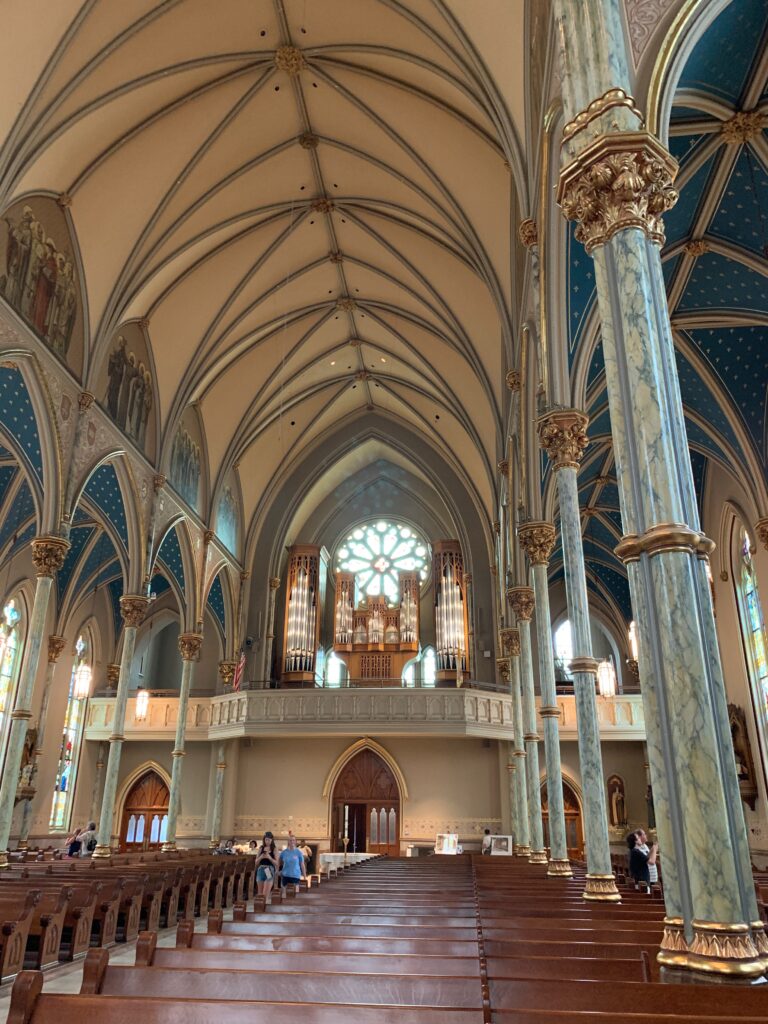
Observing the lives of her architectural clients in the monstrosities, she realized they don’t use the grandiose living rooms, the formal sitting rooms, or the extra den. People still seek alcoves. They will always congregate in a kitchen. So she began designing homes for the way we actually live.
A Town can have soul
A Pattern Language: Towns, Buildings, Construction, by Christopher Alexander
This book, one of three in a series that was first published in the mid-70s, describes building elements, “patterns”, that evoke desirable responses to the inhabitant or denizen of the building. Alexander doesn’t limit exposition of these patterns and principles to residences, he talks about public buildings, town design, and construction methods.
The 253 identified patterns are not hierarchical. The author doesn’t impose his own sensibility or value system other than to list some and preclude others.
But if you can find a copy of this work and familiarize yourself with the patterns, you’ll begin to notice them when you find them (as well as their absence) when you are contemplating and considering a place of your own, or a potential remodel.
A couple of quick examples that come to mind
Light from two sides of a room: This pattern not only allows for more natural light, it increases the sense of space and will seem to melt the veil of interior and exterior space in a way light from only one wall will not accomplish.
Transition from public space to private space: Alexander points to examples of Asian, specifically Japanese tendencies to create fencing, screens, archways, or gates between the sidewalk or driveway and the front entry of the home. The transition serves as a visible and physical symbol of moving from public to private activity, from public to private life.
Find this in examples like the photo below, and you’ll sense it physically too. These patterns are real.

Here is a photo from the Savannah, GA riverfront that shows another desirable pattern, especially in towns and cities: outdoor dining with a view of nature.

The Takeaway
I hope this very brief treatment of this important topic will spur you to do further research on lifespace design, then put your findings to work. There is probably no greater or easier way to change your daily life and emotional mood than to create appropriate, purposely designed spaces in which to spend it.

