
# 96 on my 99 Life Tips–A List is: Do the hardest thing first. Move the heaviest thing first is like it. Always be working towards easier.
“Eat a live frog every morning, and nothing worse will happen to you the rest of the day.”
~Mark Twain
Here is a link to a fellow Medium writer,Saimadhu Polamuri’s, book review on the business productivity tome, Eat That Frog, by Brian Tracy. You can read it to learn more about the business and productivity applications of this principle.
But I didn’t learn the concept of doing the hardest, least pleasant thing, first, from Mark Twain, Brian Tracy, or Saimadhu. I got it from my Uncle Kurt building houses and learning the construction trade.
On a construction site, the lowest person on the totem pole is a “grunt”, the same term used for the lowest ranked infantry soldier in the army. Grunts get the dirty jobs, and the dirty jobs are usually unskilled ones, like hauling lumber.
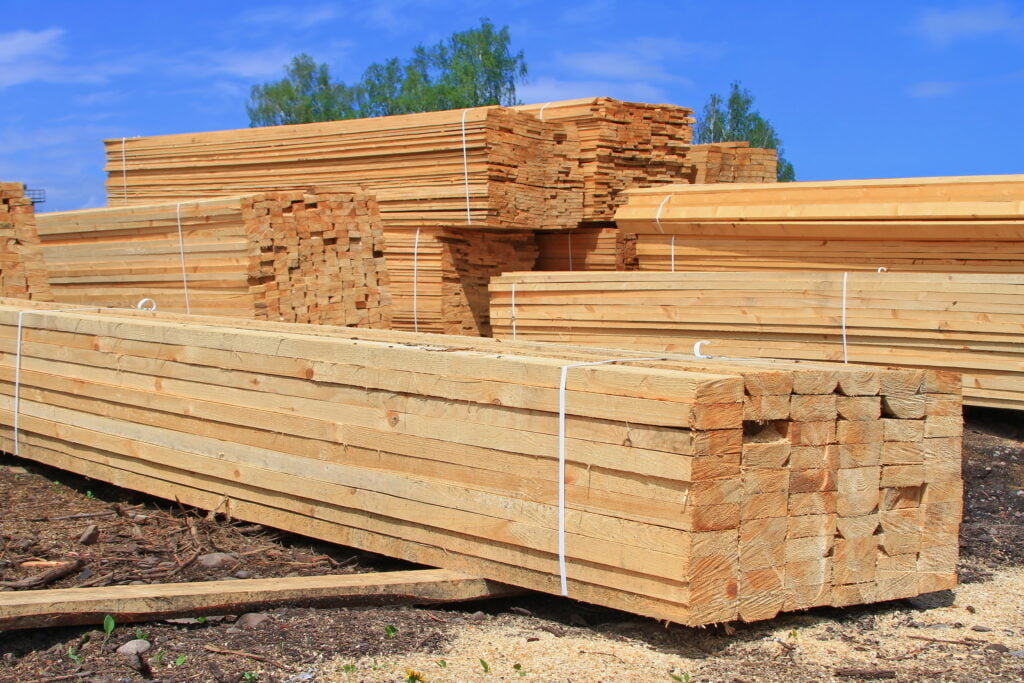
Lumber loads
Intermittently, while working on a project, lumber trucks would deliver truckloads of lumber banded together with metal straps to keep the load secure on the back of the truck. Once offloaded, the lumber had to be sorted into kinds and then carried to strategic positions on the job site. It would be horribly inefficient for the more skilled lawman, for instance, to have to retrieve a board for every cut. The sawyer and his helper pull new stock for cutting from a pile of boards ready to hand. That pile doesn’t magically move itself to the saw station though. A grunt carries it there, board by board, depending on the dimension of the lumber being carried.
Kiln-dried spruce studs, pre-cut to 93-inch lengths are light. Almost airy compared to pressure treated yellow pine 2 x 12’s, called two-by-twelves, that might be 16 to 20 feet long. And four-by-eight sheets of plywood (in this case 4-feet by 8-feet) are not only heavy, they are unwieldy. They don’t walk themselves to the correct place on the site, ready for cutting or assembly.
Crowning boards
My uncle taught me how to identify the board types by width and length. He taught me how to crown dimensional lumber, too. Crowning involves quickly sighting down the length of a board to see which way it curves. No piece of lumber is perfectly straight. Or, at least it’s rare to find a perfectly straight board. Once crowned, I marked the edge of the board at one end with my carpenter’s pencil, jabbing out a quick inverted “V” called a carrot, with the point touching the crowned side of the board.
It amazes and distresses me to walk into a house under construction, site down a wall, and see waving undulations. The carpenters did not crown the boards so they would at least all curve in the same direction, giving the illusion of straightness. These undulations are amplified and noticeable once sheetrock is hung and trim molding or cabinetry is fastened to the wavy walls.
.
And crowning floor joists is even more important. You always want the crowns up so that the load of weight placed on the floor will have the tendency to straighten the boards. Floor joists should never have crowns facing down, which will create a shallow depression in the floor. You don’t want them will-nilly either, which will make the floor feel like it’s rolling underfoot depending on the finished flooring material.
Simple Logic
Anyway, now that you know all about crowing lumber, back to eating frogs, and why you should do the hardest thing first.
Once marked, I had to carry the boards. My uncle taught me to carry the heaviest, longest boards first. The only exception was if I had to carry boards a further distance. Then I might start with lighter boards, trading distance for weight. The energy expenditure amounted to the same thing. I worked my way through a lumber pile exactly like this each time we received a delivery.
My Uncle’s rationale made perfect sense to me.
He asked, “Are you going to be more or less tired after carrying the first board?”
“More,” I said.
“Right,” agreed my uncle, “then don’t you want to carry the lightest boards when you’re the least tired?”
“Yes, sir,” I allowed.
And so that’s the way I did it. I carried the heaviest boards the furthest distance, reserving my strength and knowing each trip to the lumber pile was getting easier.
That’s the way I’ve tackled life ever since. I do the hardest thing first. Then every subsequent thing feels a little easier. I’m always working towards the next easiest thing. Working this way shrinks a huge stack of lumber, and it shrinks problems, and it helps you give your best to your least favorite necessities. You should try it, too. Do the hardest thing first, everything is easier from there on.
