Tag: scripture

  • Listening To The Grateful Dead Will Teach You Everything You Need To Know — But You Must Also Dance

    Listening To The Grateful Dead Will Teach You Everything You Need To Know — But You Must Also Dance

    # 99 on my 99 Life Tips–A List is: You can learn everything you need to know in life from listening to the Grateful Dead — but you must also dance.

    The Godfather is the i-Ching, I beg to differ

    My tip is a derivative of this Godfather scene in You’ve Got Mail, the 1998 rom-com starring Tom Hanks and Meg Ryan. In the classic scene, Hanks answers Ryans questions with references to the Godfather, assuring her it is the “answer to every question,” the “i-Ching,” and “the sum of all wisdom.” It is a brilliant scene Hanks pulls off with aplomb, throwing in some impromptu Brando imitations for emphasis.

    I love the scene, but beg to differ. My go-to source is the Grateful Dead. Within their musical catalogue is everything you need to know. Non DeadHeads don’t understand (and don’t want to know) how their music infiltrates, penetrates, and saturates a Dead fan’s mindset to the last brain cell. 

    “For the truly Deadicated, theMusic Never Stops” 

    My someday book

    I plan to write a book in which every chapter will be a life-topic with related song titles — like this sampler:

    • Love — They Love Each Other, Sugar Magnolia, Not Fade Away, Comes A Time
    • God — Hell in A Bucket, Lay Down My Brother, Wharf Rat
    • Family — Me & My Uncle, Brother Esau, Mama Tried
    • Relationships Row Jimmy, He’s Gone, Cold Rain & Snow
    • Politics — Throwing Stones, Standing On The Moon
    • Philosophy — Terrapin Station, St. Stephen, Eyes of the World, Box of Rain
    • Justice — Dupree’s Diamond Blues, Stagger Lee, Viola Lee Blues
    • Economics — Deal, Loser, Easy Wind, Big Boss Man
    • Psychology— China Cat Sunflower, Brown-Eyed Women, The Other One
    • Death— Death Don’t Have No Mercy, To Lay Me Down, Brokedown Palace, Black Peter

    This partial, non-exhaustive listing is exemplary of how songs in their extensive repertoire have application to every aspect of life. Like I said above, you can learn everything you need to know from listening to the Grateful Dead.

    Discovering all these connections made the music the soundtrack of my life; and one of my favorite lyrics serves up advice for all life’s uncertainties:

    “If you get confused, listen to the music play”

    ~Grateful Dead: Franklin’s Tower

    One Flew Over The Cuckoo’s Nest

    As a young adult, I got lost for several years in the hippy lifestyle (including the drug use part). I travelled cross-country following the band from show to show. The community was like none I’ve experienced since. The traveling kaleidoscope of clowns was family — a home on the road. 

    On my journey in 1985, I met Ken Kesey, author of One Flew Over the Cuckoo’s Nest, himself instrumental in the hey-day of what is known as the 60’s movement, and equally pivotal in the Dead’s beginnings as the house band for the infamous San Francisco Acid Tests so marvelously chronicled in Tom Wolfe’s seminal volume, The Electric Kool-Aid Acid Test

    I went to dozens and dozens of shows became more and more lost in the mysticism and mythology and mis-application of truths and nearly lost my physical and mental health in the melee. 

    A year later, I met someone even more famous than Kesey. At a show in March of 1986, I met Jesus. My life forever changed, though the music has remained the soundtrack of it. The accoutrements of drugs and touring, I left behind. They aren’t necessary. They really never were. The music itself is a healing gift. One I’m Grateful to God to still enjoy. 

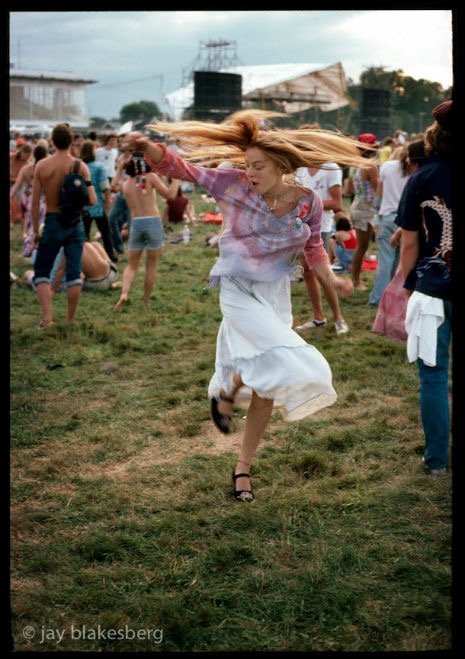
    Dance as if your life depends on it

    So many Grateful Dead songs are about impending mortality. The idea is in their very name. A fellow writer on Medium wrote this beautiful essay Accepting Your Mortality is the Beginning of Living Well. I heartily concur. The Grateful Dead’s music helps remind me. And it reminds me that the only effective antidote against an encroaching death is to live, to sing, and by God, to dance.

    Is there anything more celebratory, more filled with life and joy, the kind of life-celebration powerful enough to mock death — than dancing in the face of it?

    I think often of the story in the Old Testamanet, when the Ark of The Covenant was restored to Israel and Jerusalem after spending months and years outside the city, a young King David danced in such ecstatic jubilation, he danced right out of his clothes. 

    I still dance that way — celebrating life — warding off death. Now, I spin and whirl and shake my bones in the privacy of my home. Almighty God is the recipient of my Gratitude as He watches the overflow of my pent-up life. Nothing expresses exultation for the joy of living the way dancing does. As I dance before my God, the band playing is Jehovah’s favorite choir, the Grateful Dead.

    Everything you need to know—Just remember to dance

    So yes, I’m quite convinced, you can learn everything you need to know in life from listening to the Grateful Dead… but you must also dance.

    “Sometimes the songs that we hear are just songs of our own.”

    ~ Grateful Dead: Eyes Of The World
  • There Is A Grand Canyon Between You and Jesus

    There Is A Grand Canyon Between You and Jesus

    There is a Grand Canyon between you and Jesus
    Photo by Christine Roy on Unsplash

    # 35 on my 99 Life Tips–A List is: There is a Grand Canyon between you on your best day and Jesus on his worst. Being “Christlike” is a fallacy. Genuine Christianity has never been about imitation or method acting.

    A Grand Canyon of Difference

    Take honest inventory of your spiritual life, and you’ll realize there is a Grand Canyon between you and Jesus. Even on your best day, when you’ve dressed up, said your prayers, had a devotional time, listened to Christian music, and meditated on God—you cannot produce the Spiritual resource needed to live the Christian life. That resource is Christ Himself, through the person and power of the Holy Spirit.

    Yes, dear friend, even dear brethren, there is a Grand Canyon between you and Jesus, the gulf formed by the differing sources of power relied upon for life.

    Allow me to introduce Watchman Nee (cover your toes)

    Watchman Nee, a Chinese National and Christian author, in his book Not I, but Christ, stirred controversy when he wrote this:

    “If you can teach a dog to be a Christian, then you can teach a man to be a Christian. There is none who can live the Christian life but Christ.”

    This quote, also from Nee, is like it:

    God is not seeking a display of my Christ-likeness, but a manifestation of His Christ.

    ~ Watchman Nee

    and finally this:

    We think of the Christian life as a ‘changed life’ but it is not that. What God offers us is an ‘exchanged life,’ a ‘substituted life,’ and Christ is our Substitute within.

    ~ Watchman Nee

    Follow the links provided to learn more. His writing will change your view of the Christian life.

    Christianity as strength training

    In my 35 years as a believer, I’ve seen many good-hearted people and many well-meaning preachers speak and act as if being a good Christian is like going to the gym. Through your disciplined efforts; you get stronger and stronger. Soon, you can do more and more reps. Gradually, you get fit; you lose weight. You keep working at it, persevering to put in the effort to get the results, feeling the smile of God, and being congratulated by your fellow-believers for all your dedicated, inspiring work. Work hard enough and your life gets better. But, it’s hard, relentless work. Friend, I’ve been you.

    The gym for Christians is church attendance and prayer and bible study and meetings and maybe tithing or doing some good works. It’s stopping drinking and smoking and cussing and listening to bad music and hanging out with bad people (any non-Christians). It is voting the right way and saying the right things and replacing the magnets on your refrigerator with bible verses.

    Is this as good as it gets until we die and go to Heaven

    But it is also mingled with failure and discouragement. It is struggling with habitual sin, and backsliding and repenting, and keeping up appearances and attending services—but still being defeated. So you grit your teeth and say, “God is Good.” But you can’t escape the gnawing, empty feeling that there has to be more to the Christian life than what you’re experiencing. And all the while, you blame yourself for your lack of “progress”, and feel guilty for letting God down. But you hang in there knowing that Heaven will be worth all the hard work and effort.

    The typical idea suggests that one can become a “strong Christian”. In some circles, you’ll actually hear that term applied to particularly zealous and serious examples. The truth is—when we are weak, then we are strong, for then Christ’s power can rest upon us. God will let us be as strong as we want to be, but God is attracted to weakness.

    That’s why He likes me so much. 😉

    (And will be attracted to you the same way; as soon as you embrace your weakness as I have my own.)


    The Canyon separates Jesus from self-empowered fiasco

    I say, there’s a Grand Canyon between us and Jesus if that’s the extent of it.

    It is either Christ manifesting Himself in and through us, or it is a human fiasco dressed up in church clothes saying churchy things. Many of the things we try to do for God are performed, not by the Spirit, but by self conjured effort, relying on our own “wisdom” and willpower, not on the power of God. Perhaps that’s why we see little of it in our day.

    What God wants done by us, He will do in and through us. Let’s not confuse that into thinking that anything we say or do in the Name of Jesus is done by Jesus. It’s just not.

    Please don’t take offense. If you understand me correctly, and accept my motivation for writing this, you’ll embrace the living Christ to manifest Himself in and through you. The true Christian life has always been about who Jesus is and what He is in us, not about you or me. He’s the only one who can live the life He’s called us to live, let’s trust Him to do just that, shall we? Because there is a Grand Canyon between you and Jesus.

  • Don’t Let The Love Of God Hit You In The Back

    Don’t Let The Love Of God Hit You In The Back

    don't let the love of God hit you in the back
    Photo by Eleni Bellou on Unsplash

    # 34 on my 99 Life Tips–A List is: The love of God is like light from the Sun. If you turn your back on the Sun, the light will hit you in the back.

    I’m writing so you don’t let the Love of God hit you in the back. In the Bible, or Christian scriptures, there are many references to the love of God. Here is a listing of some of the more well know of them. Leaving aside very thorny, legitimate questions about the existence of evil and pain in the world for now, I will focus on one verse:

    Whoever does not love does not know God, because God is love.

    ~ 1 John 4:8, NKJV

    This verse, pregnant with meaning, tells the reader all they need to know about the essential nature of God. God is love. Love is not an attribute, feature, or property God has or sometimes flexes. Love is God’s essence.

    Does the Sun HAVE light and heat or IS it light and heat?

    We could say, speaking about the star at the center of our solar system, the sun has light, or the sun has heat. But when we think about the sun, it is most accurate to think about what the sun IS than what it has or what it does. For us, the sun is light and heat, therefore energy and life. It is the energy source of all living things on the planet. Every calorie consumed (a measure of thermal units) is stored, portable energy from the sun.

    Now we may imagine a person living in isolation, closed off in a room with heavy light blocking shades drawn, pulled closed against the intrusion of all sunlight. We may imagine duct tape at the edges to create an atmosphere devoid of even the leakage of light. But we know that all those efforts to avoid sunlight won’t make the sun itself stop shining. It will shine on the exterior of that building. It will shine on the back of those shades. Yes, those inside can ignore that and shut themselves off from it, but the sun will shine on undeterred.

    The Love of God is the same

    I see the God who is Love the same way. Since God is Love, there is nothing any of us can do to create love in God. And since God is Love, there is nothing any can do to shut it off, either. For God to stop loving would be to cease being God. The ode to Love and the God who is Love in the fourth chapter of 1 John in the New Testament is so compelling, one might almost invert the words to Love is God and still be just as true.

    Beloved, let us love one another, for love is of God; 

    and everyone who loves is born of God and knows God.

    ~ 1 John 4:7, NKJV

    Love needs a recipient

    I decided a long time ago. If God is love, then the one thing an essential Love of that magnitude needs is a recipient, a “beloved” if you will. I decided God doesn’t have to look past me. I will absorb all the Love God wants to shine my way. For over 35 years, I have kept my face turned in the posture of recipient, the beloved. You can do the same. Turn towards that love. Don’t let the love of God hit you in the back. If you wake each day to the simple truth that God is Love, and you are still here, therefore you are loved, it will change your life.

    I recognize that I’m not loved for my perfections, nor unloved for my sins. Nor am I loved for anything other than existence. I’m loved in spite of myself. I am loved because I’m here, and just like light from the sun, God’s love is shining upon me whether I face it or turn my back on it. Best to throw my arms and heart wide and give that God who is Love, what that Love is after… a home.

    “And we have known and believed the love that God has for us.

    God is love, and he who abides in love abides in God, and God in him.”

    ~ 1 John 4:16, NKJV

    Yes, perplexing questions remain. They are above my pay-grade. Most are beyond my capacity to understand at all. Doubtless you and I both have unanswered, bothersome, and painful questions, but they don’t negate the answers I have. And the single greatest answer is God is Love… not has, or shows, or gives Love, but IS Love. Don’t let the Love of God hit you in the back.

  • Your Neighbor Is Commanded To Love You—Do You Want Their Love?

    Your Neighbor Is Commanded To Love You—Do You Want Their Love?

    # 91 on my 99 Life Tips–A List is: You are commanded to love your neighbor, not to trust him.


    Do you want your neighbor’s love?

    We will look first at love, then at trust, which is only natural since trust is born of love. The commandment to love your neighbor comes from the Judeo-Christian tradition. Jesus called it one of 2 great commandments. The other great commandment is to love God with all one’s heart. The 2nd, Jesus said, is “like it”, that we are to love our neighbor as ourselves. If you could have it, do you want your neighbor’s love?


    Some questions for you to consider:

    • Is it possible to love God and not love your neighbor?
    • Does “as” mean “like”? Or does it mean that I am to think of and treat my neighbor “as if” they are myself? (If you thought of your neighbor as a “next door” version of yourself, but in a different body, would that change your treatment of them? Presumably for the better?)
    • Do you want your neighbor’s love? (Since they are to see themselves in you, too.)
    • Do you expect your neighbor’s love? And do they have the moral right to expect yours?

    An radical imaginary world

    A further consideration is to think just how radical the results would be if this most radical commandment in human history was universally obeyed.

    Imagine a science-fiction world wherein every neighbor loves every other neighbor. Imagine what that would mean for economics, politics, international relations, even the need for nations at all. 

    It would be like some sort of Kingdom of Heaven. Probably just like the one Christians often pray will manifest on earth in accord with the Divine Will (but with fingers crossed behind our backs).

    It’s easier to imagine The Martian Chronicles, Star Wars, Dune, and private spacecraft than a world filled with neighborly love isn’t it? It’s one thing to suspend disbelief to imagine Inter-Galactic Confederations and Spice Guilds. We can imagine a Death Star, but it’s quite a leap of imagination to believe in a world practicing universal neighborly love—too wide a leap for most of us. Superman and Catwoman are more believable than that.

    It is nice to play “what if” though, is it not? 

    Is a belief unpracticed really believed?

    I mentioned that this command comes from 2 of the 3 Abrahamic religions. (A similar command may exist in the tenets of Islam, I confess my lack of familiarity with its sacred texts). 

    And yet, Christianity (with a few notable exceptions for all too rare individual cases) seems to have showed a 2100-year propensity for missing the point. 

    As a believer myself, I’m dismayed that most of us professing belief in Jesus, act as if His day-to-day purpose in our lives is to help us feel better and prosper financially. We comfort ourselves with the belief He will secure our future admission to heaven. We don’t think about His primary daily purpose as empowering us to love our neighbor… the entire world of them.

    I’m guilty here, too. My usual prayers focus much more on my needs than on making me better at loving my neighbor.

    Sadly, “believers” will give unequivocal assent to the expression “love your neighbor as yourself”, even calling it the “Word of God”, and yet this mere intellectual assent spurs a vastly disproportionate few to become its “practitioners”. The widespread embrace of the idea without widespread accompanying action is a puzzle. As if it only exists to make a nice wall plaque or refrigerator magnet. 

    A command radical for its practicality

    But this command is imminently practical. And it is imminently radical for its practicality. Because if practiced, you will find yourself in direct conflict with the underlying principles of profit-motive capitalism. And it will radically conflict as well with your cherished political views and reverence for the founders. For instance, how are you to love your neighbor as yourself, yet use your liberty in the pursuit of happiness, unless you also pursue the happiness of your neighbor with equal vigor? 

    It becomes immediately apparent how incompatible the pursuit of happiness is with the 2nd great commandment. Unless, of course, you find happiness in loving your neighbor.

    In that case, Augustine’s directive applies: “Love, and do whatever you please…”

    But seriously, if I am to fulfill this command, how can I do so and not have a regard for my neighbor’s well-being as much as I regard my own, for issues like health care, or mask-wearing, or vaccinations, or universal basic income? Or am I to love my neighbor unless it intrudes on my pet political dogma?

    And moving to economic considerations, does the law of love allow me to make as much money as I can, selling items for the most the market will bear, enriching myself at my neighbor’s expense? Can profit-motive co-exist with the love-motive? Does neighborly love not command me to sell as cheaply as I can afford to sell, with regard both to my neighbor’s need of my products and services, and their interest in securing fair value as inexpensively as possible, while still loving myself enough to make a living that will provide for my legitimate necessities?

    Economic considerations of neighborly love

    Last I checked, I don’t require a private spaceship, or even a seat on one for a space tour. I don’t need to pay myself 299 times more because I’m the CEO than I pay my average employee. (An average of $12.7 million in 2020—during a pandemic). According to the law of neighborly love, these men are villains to be castigated, not heroes to be lauded.

    These are fundamental, practical questions. Loving your neighbor is the most radical economic and political philosophy ever espoused. It is the most radical action anyone can take. Universal adoption would topple every government, everywhere, other than to provide and administer infrastructure, health care and maintenance services.

    There can be no trust where there is no love

    Imagine a science-fiction world wherein every neighbor loves every other neighbor.

    It’s too preposterous to imagine, isn’t it? And that’s why we need not bother with the second part of my tip. For in a world in which we cannot reliably expect love from our neighbor, and in which the command cannot compel us to offer it ourselves, there can be no command to trust them. And thus arises the need for governments, with all their accompanying evils, to police the selfishness of humankind. Because in whatever form, they are less evil than unloving neighbors would be to each other without them.

    But just for a moment, pretend. Go ahead, hypothesize with me. If you could have it, do you want your neighbor’s love? Think maybe they’d want yours? Imagine the ramifications. Imagine if it started with you and me. 

    Love your neighbor as yourself. Right! That’s just way too radical. Crazy, ain’t it?

  • 2 Trees—Knowledge, Life, and A Celebration of Dependency

    2 Trees—Knowledge, Life, and A Celebration of Dependency

    2 trees-a celebration of Depency
    There were 2 trees in the garden. There still are. (Shuttestock Image licensed to Author)

    # 87 on my 99 Life Tips–A List is: There is nothing more magnificent in creation than a tree in a forest. I learned this way too late.

    Here I simply refer you to Richard Powers’ excellent (Pulitzer Award winning) book, The Overstory. Read it. Digest it. Believe it. Embrace it. Practice it. Live it as if your life, your kid’s lives and the planet’s life depends on it. It most likely does. This story is a celebration of dependency, because life is better than knowledge — life is dependency.

    2 Trees

    The story of creation begins in a garden. In that garden are two named trees. This story tells how the lie’s promise went unfulfilled and how life is better than knowledge.

    The Tree of the Knowledge of Good and Evil, and The Tree of Life.

    The story juxtaposes these, one to one another, making them antagonists. Black hat and white hat. The distinctions between these 2 trees set the stage for a marvellous story and yet they do no combat against one another. There is no arboreal clash of branches. They do not fight and sway. They simply exist. The two trees are saying something to us through the reach of literature if not from the literal nascent moments of our species and our shared race as humans. The battle is within ourselves.

    The one tree has gotten all the ink through the years, but there were 2 trees our first parents could have eaten from, only one of which was forbidden. There was also the tree of Life, about which no prohibition had been made.

    The Tree of The Knowledge of Good and Evil story is fundamentally a story about independence. The tempter offered something he could not give to fill something they could not have and did not need. This is the nature of temptation—to overpromise and underdeliver. Always. The temptation to Adam and Eve was to become “like God—knowing good and evil”.

    This is a lie of Trumpian proportions, the first Big Lie and mother of all Big Lies. For God is more than knowledge, and God is more than the arbiter of good and evil. God is that Supreme Creator who determines whether a thing, a thought, an act is good or evil in accord with that wisdom and love only God possesses. 

    Good? Evil?

    What man or woman has ever attained to such heights as to know conclusively what good is, independent of God?

    Was crucifixion good? Or was it evil? Was the discovery of North and South America by Europeans good? Good for the natives, the aboriginal peoples on those continents? If good, for whom was it good? For God? For all?

    Questions of these kinds are indecipherable entanglements. The best and brightest wear themselves out and drive themselves mad, picking at that backlash of knotted contradictions, hoping in vain to answer the very thing promised to our ancestors in that primordial lie. What is good? What is evil? And in our history, have we arrived at any satisfactory, mutually agreed upon, non-controversial decisions about what is good and what is evil? I trust the reader to recognize a rhetorical question when you read one.

    Like Begets Like

    As fruit contains its seeds within itself, so it is with lies. Like begets like. Apples produce apple trees, not cherries, or pears, or ferns. A lie’s fruit contains no seeds of truth. Accordingly, we see the fruit from that ill-fated tree was a deadly poison in proportion to the worthlessness and uselessness of the knowledge sought. Because that knowledge could not and cannot produce what the lie purported it could, and neither could that lie or the knowledge it claimed accessible to our ancestors, produce—Life.

    We may admit that the eating of the fruit gave them knowledge of good—as memory—the sacrifice of their original manner of life killed on the altar of independence. Likewise, it gave the knowledge of evil—as present and future — the now inability to keep and reestablish that level of Life-receiving dependence so foolishly sacrificed. In that, the tempter lied the truth, but so craftily as to make even this outcome veiled and hidden in that initial lie, “your eyes will be opened…”. And what an opening of the eyes that was. The knowledge wasn’t in the fruit! The knowledge was in themselves!

    The history of humankind

    The history of what happened at that tree is written in blood and pain, and murder, and war, and black charcoal ash scrawled on cave walls, and choking, teeming clouds of black ash smoke caressing skyscrapers, and in striped, torn skin, and in blood-stained bayonets. It is the sky teeming with rockets unleashed by the “good” to exterminate the “evil”. Oh, God! What a damned misery unleashed on the planet and the race from the belief in that Big Lie that by knowing “good and evil” the created would become as the creator. 

    And here we are, still in the dark. Still not knowing what good is. Still unable to tell what is evil. Still needing to be led by the hand. Still needing to be told. And still too damned proud and stupid to admit our blindness, our need, our destitution and stretch out our hands to Life, for as it says in another place, “knowledge puffeth up” but “love edifies”. 

    Those 3 words are the most concise history of humankind ever penned — “knowledge puffeth up”.

    There is another tree, also fruit-bearing. That 2nd tree remains, because the idea of it remains. Regardless of whether it is a physical, tangible tree, I believe it is the source of all trees, which may be the residual source and the sustenance of all biological life on this spinning ball we ride through Space. It may be a heavenly tree, possibly metaphorical, or hidden in ineffability. But a more magnificent creation, I cannot conceive. This tree of Life exists in the myths of numerous cultures and peoples. Myths this pervasive exist for a reason. There’s usually something real to back them.

    Life is better than knowledgeLife is dependency

    The fruit of that tree of Life is of 12 different kinds — its leaves have potency to heal the nations. (Is it any wonder we look to trees and forests for medicines?) Fruit is both food and a seed pod. In combination with medicinal leaves, everything the Tree of Life symbolizes implies dependency. Life is a series of dependencies — truth no created thing can capture so fully as a tree, which creates its entire mass, not from itself, but from the very air, exactly in the pattern we are to “in Him, live and move, and have our being.”  And nothing gives of itself more fully than a tree, either.

    I can find and infer and reasonably patch together knowledge within myself. But I cannot find life within myself. I cannot grow my food from within myself. I cannot, from within myself, create the air I need for my next breath. I cannot manufacture my own medicine from within. For Life, I am dependent. I am in need. And I’d rather acknowledge, even celebrate my dependency—for I would far rather live without knowing, than know without living.

  • Hate Is Emotional Attachment—How To Be Free From Its Vicious Grasp

    Hate Is Emotional Attachment—How To Be Free From Its Vicious Grasp

    Hate attaches you to the object of hatred
    Hatred poisons the hater more than the hated. (Shutterstock Image licensed to Author)

    # 86 on my 99 Life Tips–A List is: Hate is way too powerful an emotion to give to the people deserving of it. It attaches you to them the way love does. This is not a good thing.

    Hate attaches you to the object of your hatred. Both hatred and love define us in terms of a relationship, whether or not the relationship still exists. Hatred persisted in is not without this expensive surcharge to the hater. And even knowing this—damn if it isn’t nearly impossible to let it go.


    Hatred is murder in the heart

    As recorded in Matthew 5:28, Jesus said that if a man looks on a woman to lust after her, he has committed adultery in his heart.

    By this same reasoning, using the same application of moral principle, in my heart I’m a murderer. You probably are, too.

    Hatred is to murder what lust is to adultery. It is the emotional principle behind it. It may be hot, rage-fueled hatred, or vengeance served cold, but hatred is a symptom on the murder spectrum.

    That’s too damaging an emotion to keep, and too powerful to give to those most deserving of it.

    Your object of hatred is someone who has marred your world, and has marred your enjoyment of it. To where the mere existence of your object taints the world with a putrid stench. And face it, if you’ve known the depths of hate, given the ability, and with no repercussions, you’d blink and have your nemesis vanish or die a thousand deaths.

    [Stop grinning in imagined contemplation. Really. This is not a good thing.]


    Ain’t no time to hate

    Why you ask? You don’t know they did to me. Don’t I? I’ve struggled with my hatred for years. Finally, I’m realizing the truth in one of my favorite songs:

    “Ain’t no time to hate, barely time to wait.”

    ~ Grateful Dead: Uncle John’s Band

    Regardless, and I mean, literally, regard it no longer, look no longer at what was done to you. Focus instead at what still lies in front of you to do. Don’t let another day go by being emotionally attached to someone undeserving of a second thought. That’s what hate is, fundamentally—emotional attachment. Do you have time for that? I don’t!

    You are still here. Still standing. That person you hate didn’t destroy you, though they tried. They didn’t vanquish your spirit. Your soul remains intact. They just aren’t all that!

    The conditions for forgiveness may not be possible

    Am I suggesting you kiss and make-up? Oh, hell no!

    There are some wounds irrecoverable, irreconcilable, irredeemable by you or me. There are things that require recompense and repentance for forgiveness to even be thought of, much less have any meaning beyond the mouthing of empty words. And ofttimes, there is no way to exact recompense, and the opportunity no longer exists for the change of heart and mind repentance encompasses. If the forgiveness that yields reconciliation and restoration is impossible, we must leave the offender in the hands of God for judgement, or Karma, or whatever you call sowing and reaping in your tradition.


    Move forward as a different person

    What to do then if hatred is to be laid aside? What to do if forgiveness is an impossibility?

    You move ahead as a different person. The version of you the despised object sought to hurt and destroy survives (!) and yet exists no more in that form or that relation. The new you has escaped the orbit; thus free to be defined by what you move toward, not by what you leave behind. 

    You are as free from being defined by that former relation and the hatred it provoked, keeping the bond in place, as a slave is free upon learning of his emancipation, or an inmate upon learning of his release from prison.

    The Takeaway

    If you must look back, cast a backward glance in scorn, in pity, in disgust. Better to despise than to hate. Hatred is too powerful. Hate attaches you to the object of your hatred. It gives that object power over you by allowing that object to define the terms of your emotional and psychological health. You drag it behind you everywhere you go. That’s way more power than you should give to any deserving of those feelings we call hate. The burden is on the hater, much more than on the hated.

    Better to think of them as insignificant, impotent to do you further harm. While seeing yourself as free. Abandoning the hatred is loosing the last linking shackle. Go!

  • The Problem With Anger — It Will Not Achieve The Result You Want

    Know this, my beloved brothers: let every person be quick to hear, slow to speak, slow to anger; for the anger of man does not produce the righteousness of God.

    ~ James 1:19,20

    # 19 on my 99 Life Tips–A List is: Anger will not achieve the result you want. If you’re angry, keep your mouth shut.


    I beg those of my readers who don’t consider themselves to be adherents to the Christian traditions, or see themselves as convinced by an appeal to scripture, just bear with me. Follow my thoughts with an open mind to the end, and with an eye towards your own past experiences.

    I can attest to the truth of the above verses in my own life. I’ve had more dramatic scenes of anger, wrath, and righteous indignation than I care to count. Times when I could not hear. I could not see. I could not think straight. A few instances in particular stand out. I will spare you the details. Suffice it to say, no one involved had any doubt about my emotional state.

    Anger has never achieved my desired result

    But NOT ONE TIME have I lashed out in anger and achieved the result I really wanted. In my entire life. Not…one…time.

    Search your own memory banks. Remember the last time you were so angry you couldn’t see straight? You struck out in the throes of that feeling, so certain of your righteousness that no argument could convince you otherwise. How did that situation turn out? Did it go the way you wanted?

    Your mileage may vary. I can only testify to my own experience. 

    When I feel angry now, I am immediately certain that if I speak or act, I will be wrong. When I am angry now, it is an indicator that I am far from the kind of person who can be a vessel of the righteousness of God.

    I’m writing this because our nation is torn apart. We treat each other, Americans, even ones who grew up together, as if we’re sworn enemies. We’ve been co-opted into believing that anyone with a different political view is a villain. We’re told that the “others” aren’t American, and they aren’t putting “America First”. That they are “taking your country”! We’ve lost our collective minds!

    I challenge you to watch the events of January 6th with James in mind. Listen to the run-up. Listen to the speeches playing upon fear, prejudice, paranoia, just stoking up the anger to a boiling venomous cauldron. Are these people quick to hear the other side? Slow to speak about them or to them?

    I’m not sure what those who marched on the Capital thought they were doing. They were acting like they believed their anger would produce the righteousness of God.

    The words of Scripture above reveal that deception for exactly what it is.

    I just want to ask you…my brother…my sister…are you angry?

    Well, You say you want a Revolution, you better change your mind instead.

    ~ The Beatles: Revolution