Tag: success

  • Extract Value From Failure—Fail Forward To Success

    Extract Value From Failure—Fail Forward To Success

    Extract Value From Failure
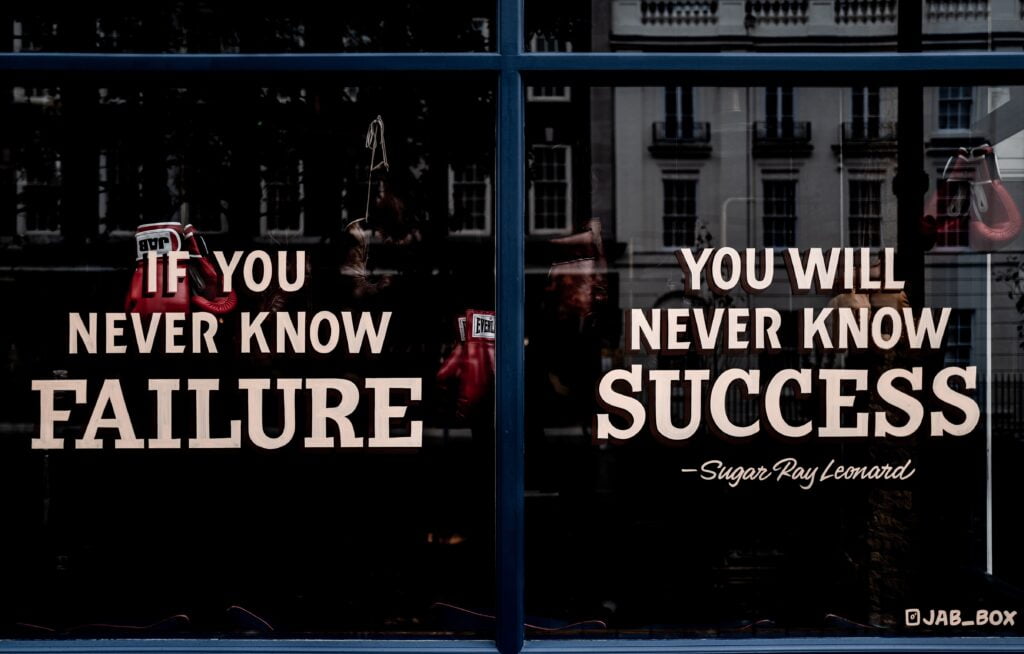
    Photo by the blowup on Unsplash

    # 75 on my 99 Life Tips–A List is: Living well involves extracting every positive thing of value from inevitable failures.

    It is a mistaken notion to believe that a good life is impossible unless only good things happen in it.

    Aside from its improbability—for anyone—as far as evidence suggests, it denies the value of improvement arising directly from the ashes of failure.

    Gregg Popovich, Hall of Fame NBA coach for the San Antonio Spurs, famously said of his teams that they were most vulnerable after a win (which they did often under his guidance). He said after a win you think you have nothing to learn and nothing to improve upon.

    “The measure of who we are is how we react when something doesn’t go our way.”

    ~Gregg Popovich

    Forgive quotes from a sports figure and not from the literati, but sports is one of those morality plays with lots of variables that pits opponents against one another in a test of comparable skill in which every night someone is undefeated for that day and someone else is a complete loser. 

    The winner gets to feel good about themselves and the loser has to find the fortitude to rise to the next day’s challenge. 

    The losers have to find something of value, some takeaway, to inspire them to their best effort in the next day’s contest. You know, like you and me when life trips us up. It is how we handle adversity, or how it handles us, that determines the quality of our lives.

    Not enough adversity?

    I recall an interview I saw with actor Mark Wahlberg (another famous literary figure… wink) in which he discussed his fears for his children. Wahlberg is a celebrity father who loves his kids, well known for his own gritty childhood in the Dorchester neighborhood of Boston, MA. The interviewer, talking to him about the difficulties he’d overcome as a young teenager on mean streets doing some bad things, asked what he feared most for his own children. 

    “That they won’t face enough adversity,” quipped Wahlberg in all sincerity.

    He knows the value of tenacity, perseverance, and resilience. He knew you cannot lie down when you get hit. You must get back up and keep moving. Those who have lived overly sheltered, pampered lives don’t.

    It is a truism that the severity of every person’s trials is relative. That truth gave rise to the atrocious, but true, phrase, “First World Problems”, as in 

    “OMG, There’s a crack in my iPhone’s screen protector! Uggghhh! FML!”

    It’s embarrassing. Still, everyone’s problems are existential threats and earth-shattering to them.

    Those of us who have faced down real difficulties know how tough real-world problems are, and we’ve learned how tough they’ve made us, right? We have learned how to extract value from failure.

    We’ve mined everything possible from the trials, tragedies, and travesties, learned from them, and we’re still standing. Standing and smiling. Smiling and moving forward. We know how to enjoy a good life and live well because we’ve seen the other side and we know how fortunate we are. Gratitude makes everything sweeter and makes living well easy.

    Don’t waste your failures!

    Fail forward.

  • Setting Goals: A How-To Guide in 5 Easy Steps, and A Conversation

    Be careful setting goals. If you don’t ask the right questions, you won’t end up with the right answers. Success achieving wrong answers, is not success worth succeeding at. It just means not enough care was taken in setting the goal. To that end here is a how-to guide in 5 easy steps.

    The guide:

    Step 1- Ask lots of questions.

    Step 2- Keep asking “why” to set the best goals.

    Step 3- Don’t stop until you run out of questions.

    Step 4- When you’ve asked all the questions you can think of, and provided yourself satisfactory answers, proceed.

    Step 5- If at any time more questions occur, stop and repeat steps 1-4 before proceeding.

    And, as promised, a conversation:

    You say, “I want to lose weight.”

    “Why?” I ask. 

    ”I don’t like the way I look,” you say.

    ”Oh, you spend a lot of time looking at yourself?” I ask.

    ”No, it’s just, I want to look better.” you say.

    ”Has someone told you you don’t look good?” I ask.

    ”No, but I would feel better and be healthier if I lost some.” You say.

    ”Sure,” I say, ”those are good reasons. Why do you want to feel better?”

    ”Doesn’t everybody?” you ask me.

    I pause and say, ”I guess everybody thinks they do, but not everybody acts like it.”

    ”Well, I’d be healthier then.” you offer.

    ”Right, and why is that important?” I ask.

    ”C’mon, that’s obvious!” you snort.

    ”Is it?” I ask.

    ”Sure,” you say, ”everybody wants to be healthy.”

    ”Do they? Even if no cheeseburgers? Or beer? Or coffee?” I ask.

    ”I see your point,” you concede.

    “Is there a certain weight that will make you healthy?” I ask.

    ”No, not just a weight,” you tell me, ”I guess there’s more to it than just a number on my scale.”

    ”Probably so,” I agree.

    ”So what you’re saying is it might take more than hitting a number to be healthy?” I ask.

    ”Right,” you agree.

    ”Ok. Let’s say you’re healthy. Presto! You’re healthy! Now what?” I ask.

    ”What do you mean, now what? That’s just it, I’d be healthy,” you reply.

    ”I mean, what do you do with your health?” I ask.

    ”I enjoy it!, you say.

    ”Yeah? How?” I ask, ”Doing what?”

    ”I don’t know,” you say, ”Guess I haven’t thought that far.”

    ”Isn’t that the point?” I ask.

    ”I guess it is.” You say.

    ”Maybe figure that out,” I say, ”that’ll keep you motivated.”

    ”True,” you agree.

    ”Once you’re more fit, and healthy, and you look better, will you be happy?” I ask.

    ”Happier!” you say.

    ”But there’s more to it than that?” I ask.

    ”Maybe?” you concede.

    ”Like what?” I ask.

    ”Well, I need to pay off some debt, too.” you say.

    ”Why?” I ask.

    ”Isn’t that obvious?” You ask me.

    ”Well, there are some good reasons for sure, but I’m asking you,” I counter, ”if your debts were gone, then you’d be happy?”

    ”I don’t know,” you say.

    ”That wouldn’t do it?” I ask.

    ”Prolly not,” you say, ”I’d still want more money.”

    ”How much more?” I ask.

    ”Much as I can get,” you say.

    ”Why?” I ask.

    ”Don’t know,” you admit, ”so I can get some things I want.”

    ”Why?” I ask, ”then you’d be happy?”

    ”I see where you’re going with this,” you say.

    ”Good, ” I say.