# 98 on my 99 Life Tips–A List is: Parent so your kids seek your advice; If your kids ask your opinion, you have been a good parent.
As the father of 7, five girls and two boys, I think I’m qualified to speak on this. My kids range from 34 to 17 as of this writing, all born of the same mother.
Parents reading this don’t have to be told how challenging the job is. There are times you ask yourself, “Am I doing this parenting thing right?” The role lends itself to self-doubt and recriminations. Still, if your child asks your opinion, you can feel pretty certain you’ve done something right.
When your kids are very young they get your opinions regardless of whether they want them. You teach them, train them, and nurture them as their primary source of information, hopefully sharing the task with their other parent, speaking with a single, unified voice. These foundational years are the time to establish trust and confidence.
They age, learn to read, go to school, and become sponges receiving input from many different sources and voices. Teachers, friends, authors, social media, all exert influential pressure on your growing child’s views. You do your best to shepherd this period of growth and change. There’s a tightrope between wanting to protect your child and wanting them to be tough. As the circumference of their world expands, it becomes harder to stay at the center of it.
By their teenage and young adult years, it takes serious effort to stay in their world at any level. As a good parent, you’ll make every effort to insure your child still considers your voice in their decision-making matrix.
At a point much sooner than any parent realizes, your child no longer has to listen to your opinions. Sure, they may still live under your roof and so they cannot escape the sounds you make, but that doesn’t mean they’re listening. But hopefully they are. If you’ve created the kind of relationship in which you’ve been your child’s most ardent cheerleader, providing unconditional support, they’ll know it.
They may not rush to sit at your feet seeking your infallible wisdom. Yours may no longer be the first voice they consider. But you hope yours is one of the voices they seek, one of the opinions they value, as they contemplate options with ever more far-reaching implications.
Sometimes, at this age, their avoidance of your opinion is itself evidence they know your view on the matter — which doesn’t always mean they’ll accept or adopt it.
And if they don’t come to get your input, or if they act contrary to what you’ve taught and modeled for them, that doesn’t mean you’re a bad parent. You may be a fantastic parent with a particularly stubborn or temporarily blinded or disgruntled child.
I empathize with any of you who have gone through this. I know exactly how bad that feels, and how easy it is to label yourself a failure when it happens — which simply isn’t true.
In time, circumstances may be that that your kids neither hear your opinion daily, nor have to ask you for it. The value of your solicited advice increases when they no longer have to abide by it. When you are asked for your opinion, by a child advancing further into adulthood and independence, it feels amazingly validating. In that case, you can be certain you’ve done something right. Pause to smile and pat yourself on the back. You’ve been a good parent.
# 93 on my 99 Life Tips–A List is: If you want to dance, you have to pay the piper.
This advice is from my Uncle. He said it so often that it is now enshrined in my life’s accepted canon.
This sacred tidbit is 1 Kurt 1:1.
It stands beside other canonized wisdom I received as a kid from those more wise than I.
My Granddaddy, Leo, used to say things like, “The faint heart never won the fair maiden.”
And, “Look before you leap.”
And “Nothing good ever happens after midnight.”
(Much later I would tell him he had never been out with me after midnight except to go flounder gigging).
He said these things so-matter-of-factly and with such conviction he also has a book in the canon—First Leo.
It is filled with priceless treasures, sometimes mixed with half-scriptures, like “the wages of sin is death.” Sometimes he elevated his extra-biblical quips to Divine status by asserting things like, “You know the Good Book says one in the hand is worth two in the bush.”
A melting pot of wisdom
I would shake my head and roll my eyes. But I didn’t dare try to dissuade him from mingling those aphorisms from Poor Richard’s Almanac and other dubious sources into a melting pot of wisdom. After all, I wasn’t “old enough for my wants to hurt me.”
But, the one from my Uncle stands out, both for its succinct truth, and for its unfailing accuracy.
If you want to dance, you have to pay the piper.
Other memorable verses from my Uncle include the timeless, “Let’s put her in the wind.”
He always said this at the end of a long workday when the power saws had screamed their last, the smell of fresh cut pine was hanging in the air, the tools were all gathered and put away, the job site was prepped for tomorrow, and power cords collected, coiled and looped like lassos.
That magical phrase signaled quitting time. It conjured sailing away towards a better shore, or riding off into the sunset, or exiting the stage into an evening of rest, relaxation, and recuperation, usually accompanied by a cold beer. Hearing it, just as remembering it now, induces a Pavlovian response. Your face parts in an involuntary smile, and you’re ready to tap a reserve of strength to pack up and go—away from work and towards play.
My Uncle and Granddad shared a common desire that propelled their energies. They wanted to play! So they worked hard to fully enjoy the play of not working in the interim. Neither one ever uttered something so mundane as “Work Hard, Play Hard.” But they lived it. And it rubbed off on me.
I do want to dance. Both literally (sometimes), and figuratively (daily). To dance is to play. In my mind, I hear my uncle, and dance becomes representative of play. To do so, I work, cause you have to pay the piper, as it says in First Kurt chapter one. So, you too, remember this advice, if you want to dance, you have to pay the piper.
Family is that social unit with the most power to do good…or harm. Some of us end up burned and broken. (Adobe Stock Image: licensed by author)
# 58 on my, 99 Life Tips – A List is: Do not treat the word or concept of Family as a sacred, magical word that justifies either inflicting, or suffering, emotional, mental, or physical abuse. A family, or family member like that is not worth being joined to.
This is a loaded topic. Too loaded, for many of us. Mention family, and you’ve invited us into a minefield….one where the repressed rage, anguish, and anxiety is buried just beneath the surface. We cannot pretend that family is an idyllic fairyland. For us, it is a haunted house.
All my broken places came from family. Perhaps yours did too. I don’t think of Family as a sacred, magical word. I think of it as the context in which you can be mistreated in ways no stranger or non-family would dare to do. A context in which you’re trapped because ”Family”, but having once escaped, one to which you would never voluntarily return.
Cynical? Yes. Bitter? Maybe.
Okay…Not Okay
I remember the morning after one of my mom’s suicide attempts, someone asking if I was okay. They had driven out to our house to check in on us in the wee hours when it was still dark outside. I recall the crunch of tires on the gravel driveway as they’d pulled in. I’d been awake all night…and I heard every whisper of sound.
After hiding all the knives (including butter knives), I had lain listening on a sofa close by my mom’s bedroom door in case she stirred and tried to hurt herself again. I knew it was my job to stay awake and protect her. Hearing the car, I trudged to the back door with a blanket around my skinny shoulders. I cracked it open and peaked out.
”Are you okay?”
To the inquirer, my breath steaming into the cold, black morning, I answered, ”Sure. I’m fine. We all have to play the cards we’re dealt.”
I was maybe nine years old.
Acknowledgement and Appreciation For Those Who Step In
I’d like to say the dysfunction of my childhood stopped there, at nine. It didn’t. I didn’t get out of the situation until I was 16. And I know that some readers will have endured worse. And my heart goes out to you. I know what it is to be okay…not okay.
I hope you’ve had extended family, or friends and their families, who stepped into the void to help, and begin to heal you. I could not be more grateful for those who performed that role in my life. You know who you are, and if I could speak with the tongues of men and angels, I could never adequately thank you.
If you’ve been that for someone like me, who has been injured and broken by their family, please know that though they may be too detached and broken to ever voice their thanks to you, they feel it. We really do. I guess we’re the human equivalent of rescue pets, more grateful than our past may ever let us show, due to the accumulated “trust issues”. Please forgive any failure to acknowledge your help and support.
Who This Is For
I didn’t write this for those who grew up in a dysfunctional family. You already know that slapping the ”Family” label on something isn’t some kind of magic dust. You don’t need me to tell you that, or remind you of it. Neither is it really directed to those who started a family only to have it blow up on you. You too, know the devastation that occurs when something that is supposed to last until death, doesn’t…but it kills part of you nonetheless.
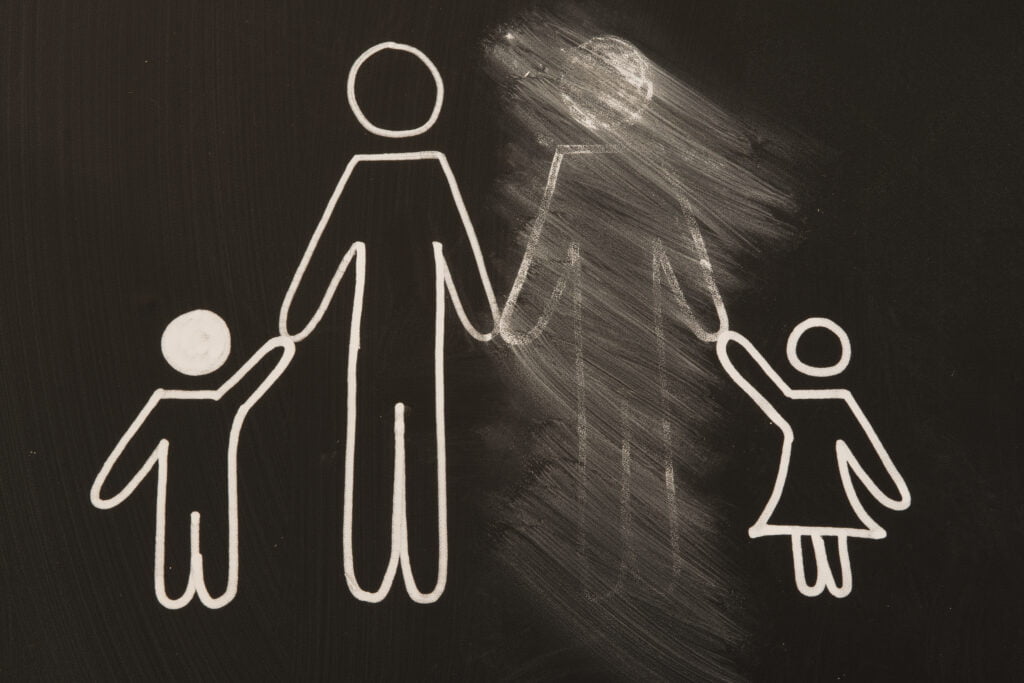
Anyone who has suffered through a divorce knows there is more than the body that can die. “Till death do us part” may be more applicable than we give it credit for. (Adobe Stock Image: licensed by author)
Rather, this is for all who, for the sake of ”family,” do things you ordinarily would never agree to do. You tolerate impositions and demands, and even endure mistreatment from ”family” members, and then don’t understand why some of us aren’t excited to join you for family gatherings and events.
Family just doesn’t mean the same thing to us as it does to you. Some of us count escaping from family as among our greatest achievements. Some are probably alive today because we did. Family burned us. Our experiences sensitized us, and made us easily triggered. We know it’s abnormal, and characteristic of brokenness we didn’t ask for. But we can’t manufacture feelings we don’t have. In spite of how puzzled or concerned we may be not to feel the way you do.
For us, family has lost its power to command either obligation, or automatic respect. It certainly doesn’t provide the cover or excuse for mistreatment. So, the family we recognize now is the one we choose and which chooses us back. That’s why we’re here with you and feel so protective of you.
Thank You For Understanding
We appreciate you. And, we’re glad you’re in our lives. None of us wants you to abandon your family ties for our sakes. We understand the connections and obligations you feel. We just want you to know it’s different for us. Not only do we not feel obligated, or sentimental, it’s that we’re beyond jaded.
I suspect for far too many of us, our most broken places came from family. That brokenness doesn’t necessarily define us, but it certainly, undeniably shaped us, and scarred us with invisible tattoos, etched not in ink, but in hurt, in confusion, and in despair. Engraved not on skin (perhaps), but deep in our souls (for certain).
So, if we’re skittish and subdued, and reticent and reluctant, at the mention of some family event or other; or if we overhear one of your family members speaking harshly to you, or treating you with abject insensitivity, and we respond with defensive vehemence, please know where it comes from.
Emotional Intelligence starts with the recognition that All Emotions Are Valid
# 44 on my, 99 Life Tips – A List is: Allow everyone in your life to feel how they feel, they’re going to anyway. If you tell them they shouldn’t feel a certain way, you’re alienating yourself by your own emotional ignorance.
To start, I want to acknowledge and thank John Gottman, author of multiple books, relationship and marriage therapist par excellence, and founder of the John Gottman Institute, where many fine people continue his work on relationships and emotional maturity. Many of the things I will touch on in this article I learned from reading his books and watching his videos and Ted Talks (like this one with over a million views).
I’ll also be linking to several articles for further reading. I promise I’m not intentionally plagiarizing any specific comment, phrase, or idea, but after 16 years of assimilation, I’ve adopted a lot of the language as my own.
Wow. Where do I start with this one? It is regrettable that I discovered the truth that all feelings are valid, far too late in my life. 40 years old, married, and the father of 7 kids, I was an emotional idiot, alternately over or under reacting to the negative emotions of the people around me. I even became a full-time minister. Nevertheless, I possessed zero, ZERO emotional intelligence. Why? Mostly because of how I was raised, and consequently conditioned, to deal with negative emotions.
Before proceeding, it must be noted that emotions, typically thought of as feelings, are not just feelings. They are behaviors, too. The feeling of anger can give rise to an outburst (behavior). Negative emotions form patterned responses (including associated behaviors) from a young age.
Four Parenting Styles
Gottman identifies four distinct parenting styles that influence the development of these patterned reactions. These styles imprint children for dealing with negative emotions as they grow into adulthood. I’ve linked an article outlining each of the styles. Only one of them can develop emotionally stable kids who grow up to be emotionally intelligent and emotionally mature adults. That style is the ”Emotion Coach”.
Emotion Coach parents recognize the validity of a child’s negative feelings, and help their child work out appropriate responses. This is the crux of the matter if you ever hope to become emotionally intelligent, benefitting both yourself and the people with whom you are in relationship. All emotions are valid, even if all responses are not.
I wasn’t raised by an Emotion Coach. I was raised to deny negative emotions, to ignore them, and to distract myself from them. My mom was a bi-polar, suicidal alcoholic who took her own emotional medicine. When she felt bad, which was often, she wrote bad checks, or passed out drunk, or slept with inappropriately aged young men, or sometimes…took handfuls of pills.
Whenever I felt bad it was, ”Here honey, you don’t need to feel that way, have a drink.” And when I got angry, she’d get just as angry, or worse, apparently believing the way to exorcise anger was to blow it out of your system. We could be angry together. It was us against the stupid world.
Being A Christian Doesn’t Impart Emotional Intelligence
So, of course, my life followed the stereotypical pattern. I didn’t like to feel bad. I had learned that I shouldn’t have to feel along with many ways to make myself feel better. Sex, and cocaine, and weed were great ways to avoid, ignore, or distance myself from negative emotions.
This wasn’t going to end well, but it was definitely going to end.
At 21, I became a serious Christian. I mean really serious. But reading and memorizing large swaths of the Bible didn’t make me emotionally intelligent. In some ways, my poor understanding of Jesus and Christianity made me less so. If a Christian feels bad, it’s their fault, right? God doesn’t feel bad. Jesus doesn’t. If you feel bad, you must be doing something wrong that more prayer, or listening to more teaching tapes on Faith, or attending more meetings on Sundays and Wednesday nights can fix.
In short, I grew up believing that feeling bad is not okay. Feeling bad when you’re a Christian is REALLY not ok. I mean, what’s the point?
Maybe you grew up in a lion’s den, too. Maybe you were taught to deny your negative feelings because it is not acceptable to feel bad. I want to say however you feel right now is valid. It is how you feel. You don’t have to rationalize those feelings or justify them to anyone. They are yours, and you are entitled to them. I’m sure if we could all see inside your life and your head, we’d understand a lot better why you feel as you do. And if we couldn’t, that’s our problem, not yours.
Having said that, all of your responses to your feelings are not appropriate. I’ll explain shortly.
Even as an ardent Christian, I went years in a state of emotional detachment to people. Growing up with a mom who routinely attempted suicide, and even more regularly threatened it, doesn’t exactly make one trust and value long-term relationships. I had seen her be gut-wrenchingly depressive so often, with nothing ever coming of it, that I completely detached if anyone around me ever cried or got upset. My mom’s drunken, cryee-faced, suicide routine had taught me that kind of drama wasn’t real, and not something to get too alarmed about.
Inappropriate Responses
For years, I was happy, rarely depressed, not a substance abuser, had a wife and kids, friends, and at 26, became a full-time minister.
Then, 12 years ago, after 22 and a half years of marriage, I found out my wife was cheating on me with an old high school ”friend” she had reconnected with on Facebook. I was so emotionally oblivious that it went on for 6 months before I discovered her treachery. But then, according to pattern, I was devastated and angry. Murderously angry.
Those feelings, given my situation, were completely valid. (I even had a licensed Christian marriage counselor tell me so). Feeling betrayed, I wanted to kill. That’s understandable. But actually killing either of them would have been horribly inappropriate. It wouldn’t have erased the adultery, it would have just put me in jail for murder.
That’s an extreme example, but it is my story, and I’m sticking with it.
I’m also ashamed to admit, that sometimes after my girls became teenagers, struggling with typical teenage girl problems, they would cry themselves to sleep at night, and I was emotionally unavailable. Sometimes I would make it worse by telling them to pray. I didn’t want them to feel bad. I offered many reasons why they shouldn’t…usually heavily laced with what I thought were uplifting scriptures. But my attempts were born out of a stupidity about the nature of emotions and emotional connection.
It seemed the more they cried and hurt, the more shut down and aloof I became.
This all changed one night when I picked up my 15 year old second daughter from a party with friends. I knew she had a crush on a boy at the party and on the way home I asked her about him. She became upset and teary as she explained that he had hardly paid any attention to her. Crying, she told me he had been obsessed with another girl. Then she told me how bad this made her feel about herself, and how she would never have a boyfriend.
It was the perfect opportunity for me to be a good, loving, understanding father to a teen-age daughter who just needed me to be there for her. It was a chance to hear her, validate her feelings, and relate to her that I had been rejected and ignored at her age too, and I understood how bad that could feel. I wish I had been that father.
Instead, I told her how silly it was to be upset. I explained that at her age nothing was going to come of this crush. And I told her that the boy was probably not ”godly” anyway and that she was much better off not getting any more involved with him. I told her to be thankful and to feel good that that was over. I can vaguely remember her looking at me incredulously with a tear-streaked face in the dark car. And I thought I had done so well trying to make her feel better.
The Turning Point
When we got home, I went about my normal routine and thought nothing more about it. After a while, I overheard her talking with her mom. She was crying and clearly upset. I got up and came into the kitchen where they were. My daughter was sitting on a barstool, her face in her hands. More teen-aged female drama, I thought. Hadn’t I already dealt with this and helped her get over it on the way home?
I said, ”You didn’t feel this way on the way home, and we get home and you fall to pieces?”
”I cried all the way home, Dad,” she said.
”What? Now, you’re just lying.” I said in return.
She jerked her head up, tears streaming, and I had the flashback of her face in the dark car. My emotional blindness astonished and floored me. After apologizing profusely to her, I retreated into my mind to try to understand how I had tuned out her emotions and her crying on the way home.
Though I had failed at getting her to ignore her bad feelings, I had succeeded in ignoring them myself. My patterned response to her crying had been to erase it from reality. So much that, to me, it didn’t even exist. I had marched into that kitchen in righteous indignation, clouded by emotional self-delusion, as if she was making up the whole dramatic scene just to curry compassion from her mother. I was stunned…in the best possible way.
Emotional Connection
The next day, I searched for the words ”Emotional Connection” and discovered John Gottman.
Do yourself a favor and watch a video, or read a book. Don’t be like me. Er, don’t be like I was!
I’m not that same detached, emotionally unavailable man anymore. It has taken work. Some of the time it has felt very artificial because my ingrained tendencies to deny, deflect, and distract were so deep. I’m no longer afraid to feel bad, quite the contrary. And I have the distinct pleasure and honor of hearing my girlfriend tell that I’m the most emotionally intelligent person she’s ever known.
I have the unspeakable satisfaction to be there for my kids when things are bad, knowing that now, I’m in it with them. I’m able to relate to their emotions, and validate them, and they know it. I’m much more the Emotion Coach now, even to my adult children. I teach and model for them that all emotions are valid, even if all responses are not. I’ve stopped telling them how to feel, or how they shouldn’t feel. I let them feel how they feel. They were always going to anyway.
And I have the chance to share these things with you, dear Reader. I hope you’ll find how affirming and strengthening it is when you allow the people in your life to feel how they feel without judging them, or trying to change their feelings, or ”make them feel better.”
One of life’s greatest gifts is a kind soul who will help us shoulder the burdens of times when we feel down. A friend and partner with whom we can share our hurts without fear of judgement. One who will hear us, hold us, be there through it with us, allowing us the space to feel all we need to feel, and who will help us respond appropriately. You can be that gift.
PS–
There are times you’ll be in a position to validate and affirm someone’s emotions, when you believe the reasons for their emotional state may not be sound. That can happen. When it does, I encourage you to connect emotionally. Tell the person you understand how they feel. You may even say something like, ”It’s understandable you feel that way since that’s how you see ____________.” The time to discuss the reasons for the feelings will come after you affirm the existence of the feelings.
The ”blood is thicker than water” crowd will take offense at this statement. As will those who maintain you can’t choose your family. All I can say is, you haven’t met my family…and pass me a bottle of water…please.
I’ve thought a lot about this one. When asked what was the best training for a writer, Hemingway famously quipped, ”An unhappy childhood.”
By this measure, I’m well trained. And unfortunately so are my kids. One of whom has a newly minted degree, and is making a helluva good living as a technical writer. Causality???
Let’s raise ”family” beyond mere genetics
I do not aim to denigrate the institution of family. I’d prefer to raise it to something beyond mere genetic propagation. But the sad truth for many is that while shared genes may have established immutable family roles, those roles haven’t translated into healthy relationships. For them, the last place they can be psychologically, emotionally or even physically safe is around some blood relative or other.
In an ideal world, the role of mother, or father, or sibling, would automatically and by default, create a relational bond of care, nurture, support, and trust. You would always and forever have each other’s back, be on each other’s team, be each other’s cheerleader, and be a soft place to fall when life knocks you down. Some enviable families function this way. They’re admirable.
Yet, you and I both know it often doesn’t happen that way. In too many instances, the painful truth is that the most toxic relationships people encounter in life are with family members. The role of mother does not make one a mother. Likewise, a father, or brother, or even child.
Role, or Relationship?
No one should endure any type of real abuse at the hands of ANYONE else, regardless of their genetic role. Instead, a genetic role should be the foundation for the highest quality relationship. Being family should mean we treat each other better than any other relationship we have. A role, a title, a position, shouldn’t be an excuse to neglect the relationship that is supposed to grow out of it, then shrug, and call that ”family” just because of some shared genes. Huh-uh.
The roles never change. They are fixed by genetics. But unless accompanied by the requisite, appropriate relationship, the role alone is thinner than both blood and water in my book. It is a worthless vapor that you can wave your hand through.
A bond thicker than blood or water
And if that’s the case, you can and should find another family. There may not be a genetic link, but a choice that is free and voluntary, responding to genuine acceptance and love, creates a bond thicker than anything that can be poured out on the ground regardless of its color or viscosity.
I have brothers from other mothers, who have never shown me the slightest disrespect. And I’ve enjoyed the love and nurture of mother’s not genetically my own, who have cared for me as if I was (and at least one father like that, too). I have children with none of my genes, and sisters for whom I would do anything in the world. You can’t choose your family? You most certainly can.
My daughter Rachel, has a birthday today. I wanted to share a few words about her.
She is talented, and giving, and nurturing, and a healer.
Which is a miracle. She should be hardened and bitter and bruised and fragile, maybe a little broken and bent.
As the firstborn of what eventually become a tribe of 7 (over the unfolding of 16 years), her mother and I often referred to her as our plow. It was no jest. She hit every rock in the field as our well-intentioned hearts, but unskilled hands tried to cultivate an environment for the family, using Rachel as the unwitting test case. She got dinged up in the process through faults that were not her own. In retrospect, I wish I’d had the wisdom to discover the myriad hidden rocks of parenthood and child-rearing other than with a firstborn plowshare named Rachel.
I guess being a plow made her adventurous, pretty fearless, and certainly not afraid to take a calculated risk. For years now she has carried the family’s entrepreneurial flame, having started her own business with unflagging determination, the sweat of her brow (literally), and out of her own pocket.
She set the stage for her own success during a post-divorce (family disaster) period of several years when we were unfortunately very much estranged (Though by the mercies of God, I am thrilled to have again been part of Rachel’s life for many years past.). Undaunted, she channeled her beautiful, stubborn, willful, independence into an amazing, thriving, service-oriented business.
I may be my daughter’s equal in stubbornness, but I’m not half the entrepreneur, and not a quarter the businessperson she is. And that is awesome to me! I am delighted that she has eclipsed my feeble modeling by such wide margins!
She owns a massage therapy business with two high-end locations in the city where she was born at home. Because of necessary Covid lock downs, this past year has been a struggle for her. The mandatory shut down forced her to furlough her carefully curated staff. She had to negotiate lease arrangements with multiple landlords.
She then had to do the same searching, and haggling, and negotiating, and juggling to patch together enough income to keep her own home.
She lost at least $120K of irrecoverable personal income in the past year due to lost revenues from mandatory shutdowns. This was through no fault of her own.
So, you’re damn right I’m glad the part of the government that actually cares about people voted to give some of that back! But it’s a drop in the bucket in comparison to what she lost.
Finally able to reopen, she retained her former staff, and chose to adopt even safer guidelines and policies than mandated to protect both staff and clients. It’s worked! Her business has not seen a single case of Covid arising from the literal ”hands on” service they offer their clients.
Though our conversations in the first few months of lock down shed some light on the efforts she was making, and all the bureaucratic red-tape she faced, she only very recently revealed just how dark those months of being shut down got for her. She did what Rachel does. She plowed ahead. She faced down the challenge, put on a brave face and soldiered on.
I complained with more venom in those paragraphs above more than I’ve heard her complain this year. She doesn’t complain. She seeks a solution. She implements it. She survives, and she thrives. And she shares the success with those in her orbit.
At the beginning of the month, I wrote that my oldest son is my kindest child. Well…my oldest daughter has the toughest shell. But inside that shell is a warm, generous soul more concerned about your well-being than she is about her own. A caring nurturer who can heal you with her very touch! Her name in Hebrew, means ”Ewe”. All of the connotations of ”Ewe”, from nurturer, to comforter, to provider, to economic sustenance, each are manifest in my Rachel.
Thanks for indulging a thimbleful of my pride in wishing her a Happy Birthday!
Happy Birthday, Rachel.
PS- I’m still heartbroken over letting that little lab puppy nip your one-year-old’s finger at Freedom Park that day I was carrying you on my shoulders and kneeled down to let you pet it.
I wish I could have protected you better then…and every day since, from every nip and bite that my kneeling down to circumstances and pressures caused you to endure. Please know that from the first time your emergence into this world splashed me with salt water, all your cries have always broken my father’s heart. And all your smiles and successes have healed it again with gratitude and pride!
Time for a PEP talk: Praise, Encouragement, and Progress
In another life, I taught Bradley Method natural childbirth classes for over a decade. That’s a lot of babies! I learned more than anyone who doesn’t aim to be an obstetrician would ever care to know about pregnancy, labor, and birth itself, including tricks for coaxing a stubborn placenta.
I always get a good chuckle and an eye roll when I watch a pregnant woman in the movies announce that her water has broken, grab her swollen abdomen, and induce panic around her as if the baby will fall out in the next three minutes.
The process of labor is long. (My apologies to my readers who are moms. I’m not telling you anything you don’t know much better than I do.) The average labor is 15 hours in duration. Many can safely go 24 hours or more, as the mother’s body and the soon-to-be-newborn work together to achieve a birth without arbitrary time management procedures.
There are three stages of labor, with an additional period that seems like it should be a stage unto itself.
In first stage the woman begins having contractions. The bag of muscles that is her uterus is shortening. As they flex and shorten, the opening of the uterus know as the cervix is flattened and pulled open. I always imagine this as pulling a thick sweater on over ones head.
Like this? Sorry, Moms everywhere!
In second stage, the cervix is as open as needed to allow the baby’s head (hopefully: I won’t go into breech births here) and body to pass through, and the muscles of the uterus change to a more expulsive type. This is commonly referred to as pushing stage, lasting from the time the cervix is open enough to allow the baby out to the actual appearance of the little miracle.
Third stage is the delivery of the placenta, which is usually accomplished in half an hour or less. A retained placenta is no beuno, and creates a potentially serious bleeding problem for the new mom. So, don’t forget the placenta!
These are neat and tidy stages. First stage is from the onset of contractions to the full dilation of the cervix. Second set is from dilation to birth. Third stage is the placenta.
I’ve attended over a hundred natural births. I’ve been present as a coach, husband, father, mid-wife (for my own seven children), photographer, videographer, or general support person. In every birth there is one stage not listed here that every woman in labor goes through. It’s known as Transition.
It is that stage when the uterus is working its hardest. The contractions last longer, sometimes over two minutes from the start to the peak, and they are much more frequent, sometimes stringing together with very little rest from one to the next.
There is a universal emotional signpost. Self-Doubt. No, really. It is the, ”I cannot do this! I’m dying! Make it stop! Something’s wrong!” kind. It’s severe. It’s real. It’s uncontrollable. It is also temporary. Thus the name given to this period. Transition.
It marks the time that the mom goes from doing her best to relax and allow her body to work for her and her baby, to the time when she gets to bear down and be an active participant. But in all the births I’ve been to, I’ve never been to one during which the mom didn’t feel like it was impossible for her to finish the task. Most felt like they had to give up their claim to their own lives in order to bring a new one into the world. And I mean, they really felt that struggle!
In that period, the best thing I could do as a coach, a husband, support person was to offer genuine admiration and encouragement. In Bradley, it’s known as a PEP talk. The coach offers Praise, Encouragement, and Progress. Like this:
”You are doing it!” ”You’ve already been through so many contractions!” ”You are phenomenal!” ”Just one at a time!” ”You’re amazing!”
And I meant all those things. Seriously. I’m typing this misty-eyed with tears rolling down my cheeks in admiration and thanksgiving for the selflessness of mothers everywhere! Talk about heroes!
As a man, I’ll never really know what it is like from that side of it, but I do know what it’s like to have the woman you’ve shared this entire experience with from the time you found out you were expecting through all the changes in her body, and her mood, and trying to make sure she had everything she needed to be healthy and safe, and listening to your baby’s heart beat and watching it try to wrestle its way out of her womb.
You remember all those things. You bring that with you to the birth with such a sense of responsibility and of hope. And she’s saying she’s going to die, and she cannot go on, and it’s not working, and she has to stop.
And you’re her best thing in the world to try to help her over that last hurdle to see the baby be born, and for both the people you love more than you love your own life be safe and okay.
So, you tell her, ”You’ve got this!” ”I’m right here!” ”I’m SO PROUD of you!” ”Okay, just breathe.” ”We’re almost there!”
And folks, that’s where we are with this god-damned Coronavirus! We’re almost there. We have a little more work to do is all. We’ve been through so much! Some of us have given everything. Not one of us has given nothing. We can do this! Now is not the time to give up, or give in. And now is not the time to pretend that the birth is complete. It’s not quite over yet, but we’ve got this! Soon, very soon we can all push together into a new kind of post-Covid world and it will feel like a miracle.
A year in and some of the old normal won’t be resurrected.
Beth and I turned on the ACC basketball tournament last night and remembered that it was a year ago that the tournament was shut down due to the the first outbreak of positive Covid cases. Within a few days, the NCAA tournament was cancelled. And it wasn’t long before all sports took a hiatus.
I remember seeing the first masks in the neighborhood grocery store. They brought to mind photos I’d seen of heavily populated Chinese cities where the citizens mask up due to smog and air pollution. But seeing people wearing blue masks here in my little town in America felt surreal.
We made a decision early on that we would do our best to act as if we were already carriers. I talked to my two adult kids and the teenager living with me that we needed to curtail all contact with non-family, non-household people unless we were working and wearing masks.
That was hard on my teen-aged son who was very used to having friends over and hanging out with them. But it was more real when he was sent home for his last year of high school to finish his senior year on a Chromebook from his bedroom.
I think younger people in general have had a harder time with a more restrictive lifestyle. As I’ve previously written, younger people are more exploratory than exploitative in life. They haven’t had enough time to craft a life that they are sure they’ll like and that will bring them the riches of contentment.
The sports thing actually became a welcome change of pace. I soon found I didn’t miss it at all. We filled that time with other things that were much more shared and therefore more enjoyable. Virtual, nightly attendance to some game or other had felt normal. But just because something is habitual and autonomic doesn’t mean it should be normal.
Maybe too much of life is lived that way, without putting a lot thought into it. But the new reality of Covid created the context to actually think about the mundane and ordinary. So many things that once were normal no longer feel normal. Even watching movies is odd. The characters have no masks on and we shrug and say, ”Pre-Covid”.
So, for me at least there are some positive take-aways from being forced to re-think how life is done. It’s not a bad idea to have that conversation with yourself and those you do life with every so often. If nothing else, Covid has helped reinforce the belief that my favorite things in the world, and the things and people that make life worth living, are pretty close by after all.
As a kid, I asked questions non-stop. I have early memories of car rides during which I looked out the windows and posed a non-stop litany of one question after another to my bedraggled mom as she tried her best to answer.
Being an early reader eventually helped to quiet some questions. I could read STOP signs and such. But it opened up other questions. I must have been about five when driving along one night, we passed a large, brightly lettered sign that I sounded out, ”T-o-p-l-e-ssss G-g-rrr-ll-ss”. ”Mom,” I asked in alarm, ”why don’t the girls in that place have tops?” My five year old imagination was distraught that the poor girls were cut in half.
My firstborn was quite precocious, and also very inquisitive. She did something unique among her siblings. She created a catch-all word for any object that she didn’t know about. Her word was ”pumen.” When she used it she would scrunch her shoulders up around her little ears. This was her physical question mark to punctuate her inquiry.
Pointing at something she didn’t know about, she would ask, ”What’s that pumen?”<<scrunch>> For a while we lived in a world chock-full of pumens…and shoulder-scrunches.
Funny, right?
And Beth tells the story of her firstborn asking so many questions that after answering her for hours on end, she would finally have to tell her, ”Questions are closed” just to get her to quiet down a moment and take a breath.
I find that level of curiosity delightful!
You may have been the same. Or maybe your children, or grandchildren, are similarly filled with curiosity about the world, and they want to know EVERYTHING, right now!
But what about you? Now? Are you still curious to learn new stuff? Do you have any burning questions?
It is said of lawyers that they try to never ask a question in court they don’t already know the answer to. Surprise and court are not a good mix. Most of us don’t have that luxury.
What I’m wondering is this:
If you could know the answer to only ONE question, what would that question be?
That may be worth taking some time and pondering, because if you can nail down that question, you’ll learn what is REALLY important to you.
If you decide to figure out what your question is, pay attention as well to what it isn’t. I’m guessing if you’re anything like me, a lot of clutter that consumes your mental and emotional energy just isn’t that important in the grand scheme of things.
If you feel like sharing your question, feel free to do so in the comments. Not that any of us will have the answers, but we may all benefit from the questions.
I caught him, slippery, broad-shouldered and born in the veil, on a cool, cool morning in 1998. I had trimmed my nails close in anticipation of playing the role of midwife again, so when he was born shrink-wrapped in the caul, the amniotic sac completely intact around his little body, I couldn’t get a purchase with my fingertips to tear it.
Fortunately, Lisa was there with her fingernails and did the trick, opening the package of the amazing gift he has been from that moment up to the moment I sit writing this.
He is a good kid.
When he was younger, he learned to ice skate at the old rink where Eastland Mall used to stand. We fell in love with hockey from some other dad’s and kids that skated there, and it wasn’t long before he began to play.
He is a fantastic skater, built with a low center of gravity and powerful legs and he developed a wicked wrist shot at a young age.
But…hockey rewards aggression. My oldest son is not aggressive. He is the kindest kid of all my seven. He is quite literally the second kindest person I know, behind only Beth-The-Kindhearted herself. He is so kind that in games playing travel hockey on a team with the best players of his birth year, when he would score on an opposing goalie, he would never show off with a big celebration. Often, he would tap the goalie’s pads with his stick and encourage him!
”You’ll get the next one,” he would say, not wanting the kid to feel bad.
And he’s wise for his 23 years; the living, breathing demonstration of what people mean when they talk about an old soul. I think those two qualities are inseparably linked. His wisdom is born out of his kindness. In Hebrew, his name means, ”He Hears”, and he does, he really does. He hears with compassion and empathy.