Category: Life Hacks

  • Do The Hardest Thing First — Always Be Working Toward Easier

    Do The Hardest Thing First — Always Be Working Toward Easier

    do the hardest thing first
    Shutterstock image licensed by Author

    # 96 on my 99 Life Tips–A List is: Do the hardest thing first. Move the heaviest thing first is like it. Always be working towards easier.

    “Eat a live frog every morning, and nothing worse will happen to you the rest of the day.” 

    ~Mark Twain

    Here is a link to a fellow Medium writer,Saimadhu Polamuri’s, book review on the business productivity tome, Eat That Frog, by Brian Tracy. You can read it to learn more about the business and productivity applications of this principle.

    But I didn’t learn the concept of doing the hardest, least pleasant thing, first, from Mark Twain, Brian Tracy, or Saimadhu. I got it from my Uncle Kurt building houses and learning the construction trade.

    On a construction site, the lowest person on the totem pole is a “grunt”, the same term used for the lowest ranked infantry soldier in the army. Grunts get the dirty jobs, and the dirty jobs are usually unskilled ones, like hauling lumber. 

    Lumber loads

    Intermittently, while working on a project, lumber trucks would deliver truckloads of lumber banded together with metal straps to keep the load secure on the back of the truck. Once offloaded, the lumber had to be sorted into kinds and then carried to strategic positions on the job site. It would be horribly inefficient for the more skilled lawman, for instance, to have to retrieve a board for every cut. The sawyer and his helper pull new stock for cutting from a pile of boards ready to hand. That pile doesn’t magically move itself to the saw station though. A grunt carries it there, board by board, depending on the dimension of the lumber being carried.

    Kiln-dried spruce studs, pre-cut to 93-inch lengths are light. Almost airy compared to pressure treated yellow pine 2 x 12’s, called two-by-twelves, that might be 16 to 20 feet long. And four-by-eight sheets of plywood (in this case 4-feet by 8-feet) are not only heavy, they are unwieldy. They don’t walk themselves to the correct place on the site, ready for cutting or assembly.

    Crowning boards

    My uncle taught me how to identify the board types by width and length. He taught me how to crown dimensional lumber, too. Crowning involves quickly sighting down the length of a board to see which way it curves. No piece of lumber is perfectly straight. Or, at least it’s rare to find a perfectly straight board. Once crowned, I marked the edge of the board at one end with my carpenter’s pencil, jabbing out a quick inverted “V” called a carrot, with the point touching the crowned side of the board. 

    It amazes and distresses me to walk into a house under construction, site down a wall, and see waving undulations. The carpenters did not crown the boards so they would at least all curve in the same direction, giving the illusion of straightness. These undulations are amplified and noticeable once sheetrock is hung and trim molding or cabinetry is fastened to the wavy walls.

    .

    And crowning floor joists is even more important. You always want the crowns up so that the load of weight placed on the floor will have the tendency to straighten the boards. Floor joists should never have crowns facing down, which will create a shallow depression in the floor. You don’t want them will-nilly either, which will make the floor feel like it’s rolling underfoot depending on the finished flooring material.

    Simple Logic

    Anyway, now that you know all about crowing lumber, back to eating frogs, and why you should do the hardest thing first.

    Once marked, I had to carry the boards. My uncle taught me to carry the heaviest, longest boards first. The only exception was if I had to carry boards a further distance. Then I might start with lighter boards, trading distance for weight. The energy expenditure amounted to the same thing. I worked my way through a lumber pile exactly like this each time we received a delivery.

    My Uncle’s rationale made perfect sense to me. 

    He asked, “Are you going to be more or less tired after carrying the first board?”

    “More,” I said.

    “Right,” agreed my uncle, “then don’t you want to carry the lightest boards when you’re the least tired?”

    “Yes, sir,” I allowed.

    And so that’s the way I did it. I carried the heaviest boards the furthest distance, reserving my strength and knowing each trip to the lumber pile was getting easier. 

    That’s the way I’ve tackled life ever since. I do the hardest thing first. Then every subsequent thing feels a little easier. I’m always working towards the next easiest thing. Working this way shrinks a huge stack of lumber, and it shrinks problems, and it helps you give your best to your least favorite necessities. You should try it, too. Do the hardest thing first, everything is easier from there on.


  • The Magic of Ritual & Why You Should Buy A Burr Coffee Grinder—With a Childhood Story Added to Boot

    The Magic of Ritual & Why You Should Buy A Burr Coffee Grinder—With a Childhood Story Added to Boot

    buy a burr coffee grinder
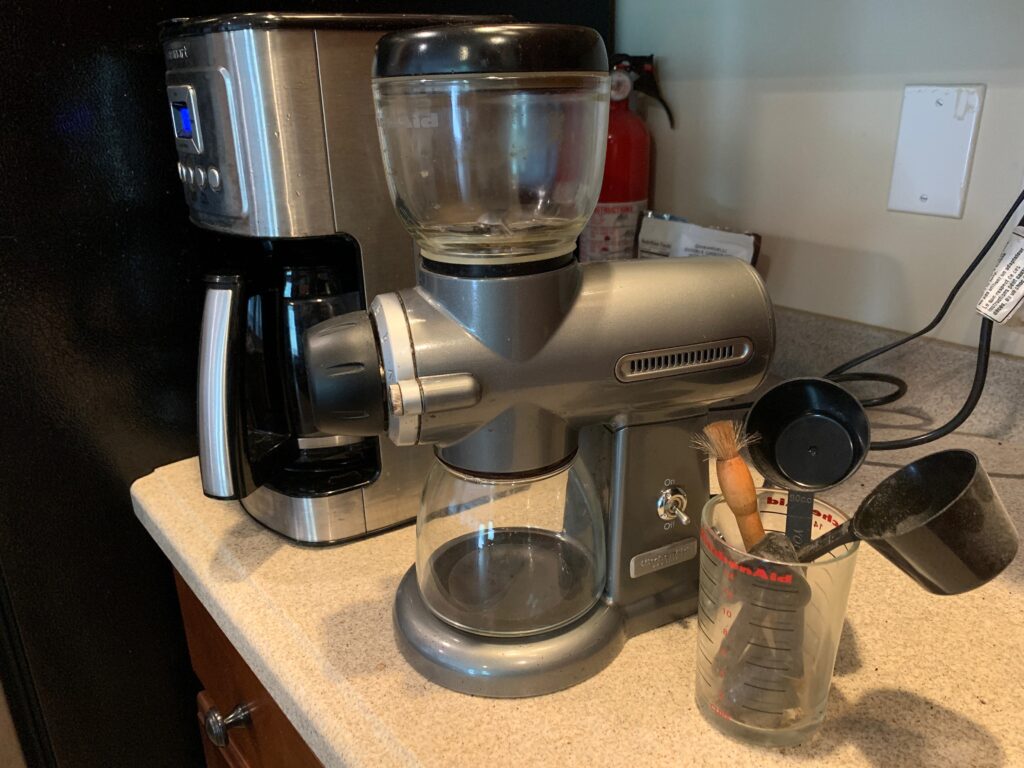
    KitchenAid burr grinder like mine. (Image from KitchenAid website)

    # 15 on my 99 Life Tips–A List is: Buy yourself a good burr coffee grinder when you can afford one. This is the one I’ve used for 20+ years. Use whole beans. You’re welcome.

    My first encounter with coffee

    I’ve been a coffee drinker since I was little—maybe 4 years old. I remember being at a family gathering at my maternal grandfather’s brother’s home in Podunk, SC. The name of the town is 96. Which has always seemed odd to me. It is nearby North, South Carolina, and even closer to Ware Shoals, which the locals pronounce as War Shoals, so I was scared to visit there as a youngster, not knowing when a battle might break out.

    Anyway, at this reunion of sorts, my grandfather’s brother, who I called Uncle James, and who was an old-school, handsaw carpenter with forearms like Popeye’s, was serving coffee. I don’t mean to give the impression he was carrying around a pot and refilling cups like a waitress at Waffle House. Just that coffee was available for self-serve all day. All. Day.

    At 4, I liked sugar, but my mom limited me to one piece of cake or pie. To my amazement, there was no limit on coffee. And there, right beside the coffeepot, sat a large cardboard tube of Dixie Crystals sugar with its own pour spout. All. Day. I probably had 8 or 10 cups of coffee-flavored syrup during the hours we spent listening to our relatives speak slow. (My mom was born in SC, near this gathering place, but she grew up and went to school in the Midwest where I was born, in Davenport, Iowa. So we spoke differently) By late afternoon, the combination of caffeine and sugar made me a nuisance, and my mom turned me outdoors to race and wrestle the dogs out back.

    But this is about burr coffee grinders isn’t it? It’s not about Southern Drawls.

    My love affair with coffee matures

    To the point. Coffee is ritualistic. It is good food. Sure. To my mind, it is the breakfast of champions. But there is something about making coffee, similar to making a cup of tea, that invites the coffee lover into the magic of ritual.

    When I was a younger man, I used to spoon Taster’s Choice or Folger’s into a cup, pour in boiling water, add milk (I stopped with the sugar), and think I was drinking coffee. That was fine on those mornings I when I’d gotten little to no sleep and the boss was in his pickup blowing the horn for me to come out and go to work. Speed was of the essence. A jar of pre-ground black dust in a jar was fast, if nothing else.

    Later, I discovered the finer things. First, I got a blade grinder and started buying whole beans. It was cheap and plastic, except for the thin metal blade that spun around to dice the beans. I learned somewhere, probably from my habitual reading and accumulation of unrelated facts, that coffee was better if you ground the beans just before brewing. I did this a while, but it wasn’t until I met a real coffee-man, a barista in a fancy coffee shop in the local mall, that I learned about burr grinders. His knowledge inspired me to buy a burr coffee grinder. I’m paying it forward.

    Burr beats blades

    Burr grinders use opposing, spinning pinwheels of ridges to crush and grind whole beans. Whereas a blade grinder will heat the beans, enough to change their composition—tainting their flavor, burr grinders don’t. Blade grinders also chop and dice uneven shapes. The grind is not consistent. Burr grinders are the slow and gentle approach to coffee bean perfection. There is a dial-in setting on burr grinders to match the grind to your coffee maker and taste preference. The grounds are uniform and perfectly alike.

    I have had the same Kitchen Aid grinder for at least 30 years. A workhorse, it has outlived 5 computers and as many televisions. It sits on my counter beside my Cuisinart coffee maker. My grinder is integral to my morning ritual.

    The Magic of Ritual

    Each morning, I empty the prior days grounds from the Cuisinart into the trash (I’m not currently composting, though I have in the past). I fill the tank with water, then I reach down my tub of beans and one Melita bamboo, unbleached #4 filter from the box I’ve cut open to expose the filters in the cupboard. Using a scoop I keep in with the beans, I shovel 7 scoops into the top of my grinder. 

    My kids recently pointed out that I use a peculiar cadence when scooping—it’s quick scoop, slow pour… quick scoop, slow pour… If they’ve been awake, they’ve heard me do this every morning for their entire lives. My grinder is older than all but 1 of my kids. So they know the peculiar rhythm of my coffee ritual.

    After the 7 scoops, I flip the toggle switch and hear the satisfying churn of the grinder. It is deep and resonant, not like the high-speed whine of a blade grinder. Those sound more like a smoothie maker or blender. My grinder is more like a throaty wood chipper. I watch the heap of grounds slowly disappear into the grinder’s maw. I assist with a tiny pastry brush, sweeping the reluctant beans into the hopper to disappear. The aroma is fresh, instant, and intoxicating.

    buy a burr coffee grinder
    My burr grinder at the center of my morning ritual. (Photo by Author)

    The ritual is peaceful, serene, almost hypnotic. It is half-mindful-half-autonomic magic. I could do it asleep, but I remain aware of every step of the process. I know every quick-slow scoop matters to the outcome, so I pay attention with a much deeper part of me than normal thinking. Like I said, it’s magic. And my burr grinder is at the center of it all.

    So, buy a burr coffee grinder. It is a fantastic investment in excellent coffee, healthy ritual, and the beauty of single-purpose, well-engineered tools. Which means it is a fantastic investment in yourself. Win-Win-Win.

  • Take It From A Snob—You Should Drink Coffee Fresh

    Take It From A Snob—You Should Drink Coffee Fresh

    Drink Coffee Fresh
    Ocrakoke Coffee at Cape Hatteras. Yes, I bought a mug. (Photo by Author)

    # 14 on my 99 Life Tips–A List is: Drink coffee fresh. Preferably within 20 minutes after brewing. A brewmaster once told me that after 20 minutes, coffee’s chemistry changes, turning it into something else. As an addendum to this tip: don’t serve old coffee to a guest in your home. Make a fresh pot, or offer them something else.

    I suppose I should have started this tip with the simpler imperative, “Drink coffee.” But then I’d be forced to make an exception for my girlfriend who in all other ways seems remarkably well-balanced and stable, but who does not drink coffee, so I’m certain there is some latent problem yet to be revealed.

    I jest. But not about drinking coffee fresh. And not about making it fresh for company.

    My tip stands on its own with sufficient explanation. You can google the details if you doubt the veracity. Here is a good site with decent information for the home barista.

    One addendum: Buy whole beans, store them properly in an air-tight opaque container and grind them fresh with a burr grinder (not a blade grinder). I will be adding a story about this.

    Is it more trouble to drink coffee fresh? Yes. Is it worth it? Yes. Am I a coffee snob? Yes.

    Drink Coffee Fresh
    Beachie Bean’s Coffee Shop in NSB, FL (Photo by Author)

    To sample the local pace, support locally owned coffee shops

    While on the topic, allow me to plug the idea of finding good local coffee shops to support whenever you travel. I know the ubiquity of large chains like Starbucks make them easier to find for their numbers, but there is something uniquely satisfying about a cup of fresh coffee enjoyed just after dawn in a locally owned shop. 

    Part of the allure is that traveling well, and by that I mean getting the most of the experience, involves at least sampling the local pace of life, if not outright melding into it. Where better to sample the local pace than at a locally owned, locally supported coffee shop?

    Just remember to drink coffee fresh. You’re welcome. Oh, and never use non-dairy creamers and continue to call yourself a coffee drinker. I’m not sure what that chemically processed stuff is. So, that’s it. You’re doubly welcome.

    Drink Coffee Fresh
    This coffee shop on the NC Outer Banks even has a lending library. How cool is that? (Photo by Author)

    PS- I’m not a coffee shop owner, just an opinionated coffee lover who happens to be right about this. Enjoy! 😉

  • Rise Early When The Day Is Still Yours—Be Proactive & Own Your Day

    Rise Early When The Day Is Still Yours—Be Proactive & Own Your Day

    Rise Early While The Day Is Still Yours
    Dawn: Coco’s Beach Antigua (Photo by Author)

    # 28 on my 99 Life Tips–A List is: Become an early riser…it’s the only possible chance you have to start the day being proactive and not reactive. If you start the day reactive: Aalarm>Commute>Schedule>Boss>tnbox), none of the day will feel like it was yours.

    First impressions are everything right? You get one start to each day. So rise early; be proactive, and own your day from jump. If you start the day with a reactive routine (the sequence described above), none of the day will feel like it was yours.

    In the early morning, when it’s still dark out, I feel like the entire day is mine to do with as I will. I enjoy this feeling so much I’m rarely wakened by an alarm. Curiously, I routinely wake 5-10 minutes before the set time. I’ve done this for over 20 years, and in the absence of a severe hangover, a rarity in the extreme, the alarm is superfluous. 

    When you rise early, you wake to a different world than the one that has been cranking along at full speed for a couple of hours. There is a newness, a freshness, a feeling of prospective possibility for what the day could hold.

    Rude Jolts Are Rude

    If you’re jolted to consciousness by the screech of an alarm, you’re slammed rudely into a day already making demands of you. 

    “Wake up!” it’s screaming. “You’re gonna be late!”

    God, I hate that feeling. If you’ve any hope of creating a life you want to be living, much less one in which you are also a creative creator, you must break this reactionary cycle.

    Creativity cannot exist simultaneously, with the chest tightening reactive responses to life’s incessant demands. It requires space to breathe.

    Someone may not dictate your day in exactly the way described in my first paragraph: alarm to commute to schedule to boss, etc. But, if it’s anything like that, the only way to feel like the day is yours is to start with that first hour when it can be yours. Else, you’re just a human pinball.

    Many try to carve out “me-time” at the end of their day. The time after dinner, and before collapsing into bed, becomes the time to “recover” from the day. Sometimes the recovery encroaches on the next day, robbing from sleep, adding fatigue to shock when tomorrow’s alarm goes off.

    I prefer to “precover” by preparing myself to meet the day on my own terms, on the front end, and not just once I complete all the day’s requirements. I take “me-time” first. Life is uncertain, after all.

    I have a ritual. It involves coffee, gratitude, and quiet listening. I want to hear the sounds of an unfolding day in a state of recognition that it won’t come around again. I want to listen to what my heart tells me I should do with it. If I’m harried, rushed, and pressured by external demands, I want to sit still and contemplate what I can change. 

    Join me.

    (This piece of advice is # 28 on my 99 Life Tips–A List which you can find on my wordpress blog here greg@gregproffit.com

  • Extract Value From Failure—Fail Forward To Success

    Extract Value From Failure—Fail Forward To Success

    Extract Value From Failure
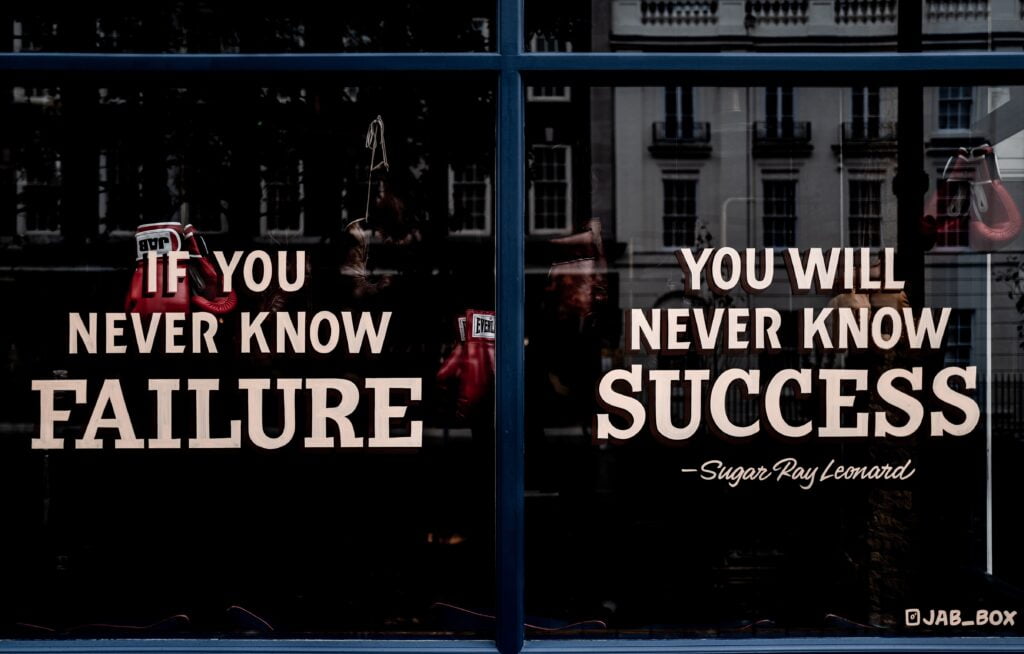
    Photo by the blowup on Unsplash

    # 75 on my 99 Life Tips–A List is: Living well involves extracting every positive thing of value from inevitable failures.

    It is a mistaken notion to believe that a good life is impossible unless only good things happen in it.

    Aside from its improbability—for anyone—as far as evidence suggests, it denies the value of improvement arising directly from the ashes of failure.

    Gregg Popovich, Hall of Fame NBA coach for the San Antonio Spurs, famously said of his teams that they were most vulnerable after a win (which they did often under his guidance). He said after a win you think you have nothing to learn and nothing to improve upon.

    “The measure of who we are is how we react when something doesn’t go our way.”

    ~Gregg Popovich

    Forgive quotes from a sports figure and not from the literati, but sports is one of those morality plays with lots of variables that pits opponents against one another in a test of comparable skill in which every night someone is undefeated for that day and someone else is a complete loser. 

    The winner gets to feel good about themselves and the loser has to find the fortitude to rise to the next day’s challenge. 

    The losers have to find something of value, some takeaway, to inspire them to their best effort in the next day’s contest. You know, like you and me when life trips us up. It is how we handle adversity, or how it handles us, that determines the quality of our lives.

    Not enough adversity?

    I recall an interview I saw with actor Mark Wahlberg (another famous literary figure… wink) in which he discussed his fears for his children. Wahlberg is a celebrity father who loves his kids, well known for his own gritty childhood in the Dorchester neighborhood of Boston, MA. The interviewer, talking to him about the difficulties he’d overcome as a young teenager on mean streets doing some bad things, asked what he feared most for his own children. 

    “That they won’t face enough adversity,” quipped Wahlberg in all sincerity.

    He knows the value of tenacity, perseverance, and resilience. He knew you cannot lie down when you get hit. You must get back up and keep moving. Those who have lived overly sheltered, pampered lives don’t.

    It is a truism that the severity of every person’s trials is relative. That truth gave rise to the atrocious, but true, phrase, “First World Problems”, as in 

    “OMG, There’s a crack in my iPhone’s screen protector! Uggghhh! FML!”

    It’s embarrassing. Still, everyone’s problems are existential threats and earth-shattering to them.

    Those of us who have faced down real difficulties know how tough real-world problems are, and we’ve learned how tough they’ve made us, right? We have learned how to extract value from failure.

    We’ve mined everything possible from the trials, tragedies, and travesties, learned from them, and we’re still standing. Standing and smiling. Smiling and moving forward. We know how to enjoy a good life and live well because we’ve seen the other side and we know how fortunate we are. Gratitude makes everything sweeter and makes living well easy.

    Don’t waste your failures!

    Fail forward.

  • Do You Negotiate Against Yourself?—How Often Do You Win?

    Do You Negotiate Against Yourself?—How Often Do You Win?

    Do you negotiate against yourself a lot? A part of you knows there are things you should or shouldn’t do, but another part bargains against those choices. This may be true for everyone.

    The negotiating you do with yourself determines your results.

    120 days ago my forward-thinking CEO self-negotiated a deal with my lazy, afraid, excuse-making employee self. My CEO got the employee to agree to a 30 in 30 challenge. For those who don’t know what that is, it’s a simple idea in which you write and publish 30 micro-blog posts in 30 days.

    CEO me got unreliable employee me to agree. To be fair, writing as a calling and vocation have been so important to both my CEO and employee selves that the fear of failure made it easier to shelve it, never do it at all, than try it—fail—and suffer irredeemable humiliation. 

    But there was a thick layer of dust on the plan to One Day Maybe become a writer… I’m talking years thick. Covid fallout impacted my usual source of income, freeing time for my CEO self to jolt the procrastinating employee into action. 

    “There’s time, now. That excuse is dead!”

    I found my login credentials for my long dormant blog, started spitting out some drivel that at least got my fingers limbered up and got the ball rolling.

    But it was sporadic. I didn’t get discovered after 3 days of blogging brilliance, and the employee self, doggedly pessimistic in the face of my CEO self’s aggressive optimism, was nearly ready to shut it down again.

    Along came the 30 in 30 challenge

    “Come on, dude. 30 250 word micro stories? Even you can do that. Tell ya what, when you’re finished each day, you can even have a bourbon and pretend you’re Hemingway.”

    “Sold!” agreed my novice-writer self. “You supply the bourbon and I’ll do 30 days.”

    Major negotiation completed, the challenge began that day. There was no more negotiating “IF” I was writing, only when, and about what.

    That was 120 days ago. I haven’t missed a day. Once I’d knocked down the original 30 days, it set the habit. I’m hooked, and I’m a writer now. My CEO self and employee self are nearly always on the same page… terrible pun intended. The employee writer still needs a haircut, but the CEO lets him write in Grateful Dead t-shirts so everything’s chill.

    So, friends with any kind of big negotiations you’ve struggled with for too long—cut a deal! Decide to do it. Take the “IF” part of the bargaining off the table. Get rolling and don’t look back! Oh yeah,… don’t forget the haircut. 

    Subscribe to follow me to see all my posts on Medium. You can also find my writing at gregproffit.com. Check out my 99 Life Tips—A List.

  • Overcoming Anxiety—Stop Making Worry Payments On A Lay-Away Plan

    Overcoming Anxiety—Stop Making Worry Payments On A Lay-Away Plan

    Overcoming Anxiety
    Photo by Uday Mittal on Unsplash

    # 72 on my, 99 Life Tips–A List is: Remember that anxiety is making payments of worry in the present for a future outcome that hasn’t occurred yet. There will be plenty of time to feel bad about that outcome when it arrives. 90% of the time, it won’t.

    The temptation when writing about overcoming anxiety is to sermonize Philippians 4:6, which starts with an imperative commandment:

    Be anxious for nothing…

    While the prohibition against anxiety is as binding as those against murder, adultery, and lying, this one usually gets a pass.

    We treat it as an affliction, or disease, more than as a volitional sin. That’s hard to even put in writing. I have such empathy for those in my life who suffer with sometimes debilitating bouts of anxiety.

    Nor have I been immune. But my tip above shows how I deal with it and to date, how I’ve successfully prevented succumbing to it.

    Recognize what anxiety is. It is present-tense worry about a future outcome. We rarely feel anxious about past events. There may be regret or even depression over some past misfortune or tragedy. Depression seems to occupy the past predominantly. But we rarely worry about events behind us.

    Anxiety about the future is the desire for reassurance and certainty that are impossible to give or receive. The uncertainty creates worry universally dominated by things out of your control. Wasting emotional energy on what you cannot control is debilitating.

    But you don’t need me to tell you that.


    Be Here, Now

    You cannot stop how you feel unless you refuse to get into the mental time capsule that keeps playing images for you of events that haven’t happened yet. 

    It takes a concerted effort to be present to right now.

    It is staying present to right now that defeats anxiety. It is the only thing that consistently does.

    Focus on the moment and the resources you have on hand to meet it. You don’t need resources for tomorrow yet, or for next week, or next month. When those moments arise, you’ll find the resources you need. Those scenes you fear, the ones playing on the future-projector in your head, may never happen. Leave room in your thinking for the possibility that unforeseen factors and forces may edit them out completely of your future.

    One thing about that verse from Philippians; it mentions Thanksgiving, or gratitude. One of the surest, most powerful tools in your arsenal against either anxiety or depression is the practice of present-tense gratitude

    It is impossible to be grateful and anxious, or grateful and depressed, at the same time. Gratitude is key to overcoming anxiety.

    Relish with gratitude every simple pleasure and praise-worthy thing in your life that is yours right now. That breath you’re taking might be a good starting point. You got this.

  • Everyone’s Ways Are Right In Their Own Eyes

    Everyone’s Ways Are Right In Their Own Eyes

    Everyone's ways are right in their own eyes - even this beautiful alley in Charleston, SC
    This Charleston Alley seems like the right way…it sure is beautiful. (Photo by Beth Hughes, used by permission)

    # 62 on my, 99 Life Tips—A List is: Know this as well: Everyone’s ways are right in their own eyes, including yours.

    Most of the inspiration for this tip comes from the Old Testament, with maybe a little from the Grateful Dead.

    “Every way of a man is right in his own eyes: but the Lord pondereth the hearts.”

    ~Proverbs 21:2

    This proverb reinforces the fact we all do what we prefer. Preferences yield choices, which produce behaviors. These habitual acts become our way of life. But our preferences come from a deeper well–the sense that what we prefer is right. 

    Let’s say this rings true and you believe me. Now what? Are you supposed to excavate every action–performing psychological archaeology–to uncover the latent impulses that inform your every preference? Damn, that’s exhausting just to type. Imagine how much you’d have to live in your head to do that for every decision?

    Yet, this describes so much of what makes up the advice found in self-help books. And even at the professional, clinical level, there’s a lot of retrograde motion attempting to uncover the why’s of behavior. That’s the rub of typical therapy or psychoanalysis once you strip away the jargon.

    What if we could agree on some basic assumptions?

    1- Our nature as humans is to pursue self interest until we meet an obstacle.

    2- Our actions conform to this nature. 

    3- We do what we do and live how we live because it seems to be the right way to fulfill self interest.

    4- We continue on this course until or unless something larger than self interest replaces it as our primary motive. (which is tricky because this becomes our new self interest, though perhaps not for selfish reasons)

    See? Simple. Where should I send my bill? 

    The ancient proverb cited above tells the why’s. But if you don’t like that font of wisdom, might I interest you in some Grateful Dead?

    “Sometimes we live no particular way but our own

    And sometimes we visit your country and live in your home

    Sometimes we ride on your horses, sometimes we walk alone

    Sometimes the songs that we hear are just songs of our own.”

    ~Grateful Dead: Eyes Of The World
    (Songwriters: Jerome J. Garcia / Robert C. Hunter)

    We live the way we do for reasons that seem right. I’ve never woken up and thought, I’m going to live all wrong today. Have you? Even when we do something we know is wrong, we rationalize it to make it right. (Interesting word, rationalize, the practice of torturing reason to turn something wrong into something right so you can avoid feeling bad about it.)

    But enough digression. When you see me, it is safe to assume I’m doing what is right in my own eyes. I’m going to assume that about you. The trick is to assume it about yourself. 

  • What Would It Look Like Fixed? A Life-Changing Question

    What Would It Look Like Fixed? A Life-Changing Question

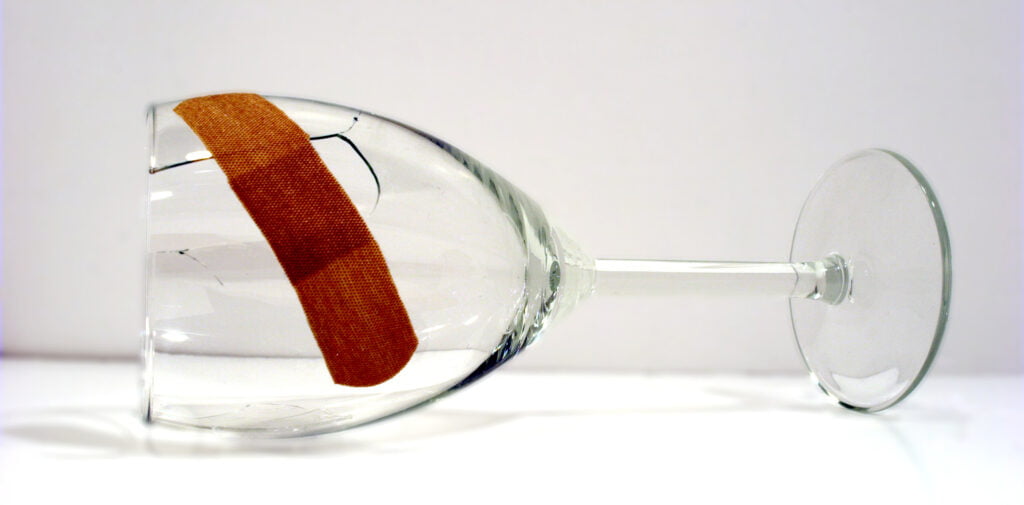
    What would it look like fixed? Probably not like this broken glass with a band-aid stuck on it.
    What would it look like fixed? Probably not like this…(Dreamstime Image: licensed to the author)

    # 60 on my, 99 Life Tips – A List is: You cannot solve any problem without having a clear picture of the solution in mind. Ask, ”what would it look like fixed?” borrowed from David Allen.

    Because this is one of my favorite questions, and has been so life-changing for me, I secured the domain whatwoulditlooklikefixed.com a few years ago, where I will eventually build out a self-help site based around this idea. I’m happy to share it here with you.  

    I was introduced to the concept in David Allen’s book: Getting Things Done: The Art of Stress-Free Productivity. I highly recommend the book if you want to dive deeper into the whole system of personal productivity and time management Allen espouses.

    Answering what would it look like fixed has become the starting point of my entire problem-solving heuristic.

    The premise is simple. A problem arises. You want to fix it. So far, so good…

    But fixing problems requires answers to two questions:

    1- What is the true problem? (This is a book in its own right)

    2- What would absence of the problem look like, or conversely, what would it look like fixed?

    Until you answer these two questions problems manifest will remain problems unsolved

    How often have you set out to fix a problem without first discovering what was really bothering you, or having a definite, clear idea of what needed to happen to not feel bothered by it anymore? If you’ve done this, you know how frustrating it can be to multiply effort using the wrong means for the wrong ends with no clear plan. (Which probably describes the typical workday of millions of people). And maybe this too accurately describes normal life for a lot of people as well.

    So, since you certainly want to avoid adding frustration to the feelings you already have about your issue. Do the hard work, the meaningful work, up front. The hard work is actually mental, involving thinking and imagination. You’re creating a world where your problem doesn’t exist. In this world, you vanquished the burden. It’s gone. Exterminated. Kaput.

    This picture gives you both a target state to achieve and the inspiration to achieve it. Don’t worry yet on what will have to happen to make this vision come to pass. That’s another part of the problem-solving process. Without a clearly defined destination, further steps in the process are tantamount to walking in circles.

    From Concept to Concrete

    This is how, precisely how, all the man-made reality that you look around you and see, gets from concept to concrete. Things go from abstract idea to tangible reality by answering some variation of this one question.

    What would it look like fixed?

    If you want to solve a problem and don’t have this idea clearly in mind, how will you know when you’re done? How will you gauge success at eliminating the problem. Do you see the dilemma? Unless you can clearly state, in specific language, ”This problem will be fixed when ______________.” happens, all efforts will amount to pushing in the clutch on a car, stomping the accelerator, and redlining the engine in a screaming cloud of smoke and fury, but the car goes nowhere.

    Instead, do the hard work up front. Get a clear picture of exactly what fixed would look like, then use the appropriate means to reach that desired end. (A subject for another day).

  • The Good Opinion Of Some People Is Not Worth Having

    The Good Opinion Of Some People Is Not Worth Having

    Wood block characters with comment clouds over their heads. Everyone has an opinion. The good opinion of some people is not worth having.
    Hey look! Everybody has an opinion. Gee, does that mean I should want the good opinion of everybody? (Adobe Stock image: licensed by author)

    # 54 on my, 99 Life Tips – A List is: The good opinion of some people is not worth having.

    If you followed the advice in Why You Should Stop Caring What Other People Think About You, and stopped caring what other people think about you, shouldn’t you still want everyone’s good opinion? What’s the harm in that? On the surface this seems desirable. Whence then, the assertion, since this is not so much a tip, that some good opinions are not worth having?

    A Matter Of Respect

    This is primarily a matter of respect. The degree of respect you have for the boss or the customer, the friend or the stranger, the critic or the fan, is what gives value to their opinion, or else devalues it.

    And there are at least two things that affect the level of your respect. They are character, and expertise. It is appropriate to give higher weight to the opinions of those with high character or proven expertise in any combination. Likewise, the inverse is true. It is safe and even advisable to discount the opinions of those with low or poor character, and/or zero or limited experience and expertise.

    I’m sure you can think of someone whose opinion of you is less than meaningless. Not only do you not care what they think, you’d be embarrassed if they had a good opinion of you. Their regard would serve as an indictment of your character.

    Is the person you have in mind a scoundrel or criminal? If so, they are probably at the extreme end of your personal scale. As you slide the scale upwards, you’ll reach a point at which opinions begin to have some meaning and value, at least as benchmarks. 

    Desiring Good Opinions Is Natural

    Even if you don’t struggle with receiving your sense of worth from the opinions of others, and even if your sense of who you are is self-determined, and not foisted upon you, none of us are completely immune to feelings that naturally arise when we hear the opinions of others expressed about us or our work. This happens in the workplace. It’s true with the views expressed by those closest to us. And is especially true when you’re a creator. The desire for positive feedback is natural.

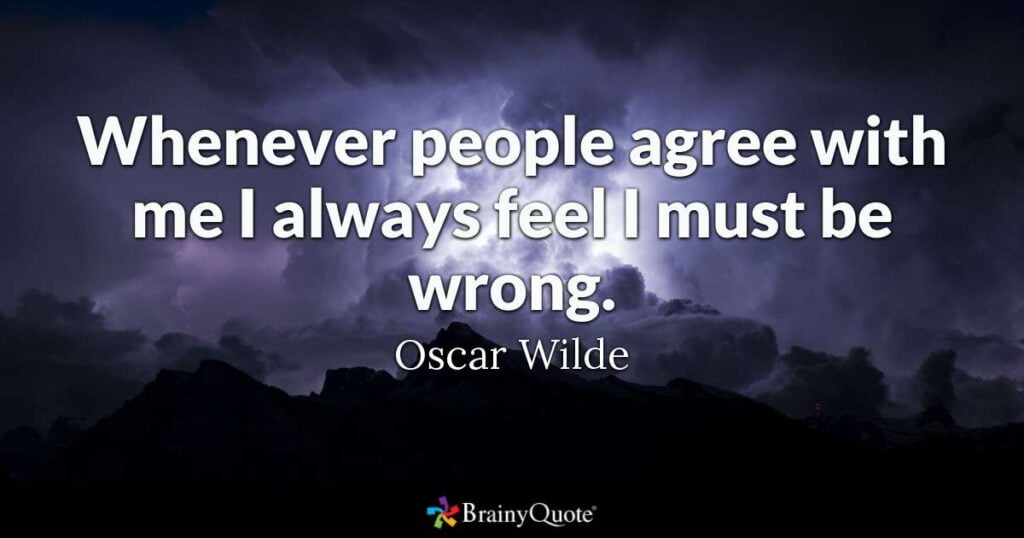
    Putting your work out for public consumption is one of the most vulnerable, and therefore terrifying, things you can do. It leaves many potential creatives paralyzed. Self-doubt erodes confidence. And it leaves many sheltering in place for years, preferring to feel the regret over not trying, rather than face the potential shame and horror of rejection and failure. Believe me, I know. Oscar Wilde shows the possibility of being an author and eventually arriving at a different state of mind. One in which the opposite becomes true. One in which good opinions may even alarm you. He clearly believed the good opinion of some people is not worth having.

    Quote from Oscar Wilde "Whenever people agree with me I always feel I must be wrong from BrainyQuotes - some good opinions are not worth having
    This is an artist comfortable in his own skin and comfortable with his own views (Image from BrainyQuotes)

    All Opinions Are Not Created Equal

    I’m not there. Perhaps few are. Sometimes the only feedback you have is the opinions of others. But all opinions are not created equal. The opinion of readers has value. Although, for a writer, the opinion of readers who are also writers is more valuable than that of non-writers, because familiarity with the difficulties of the craft makes the perspective and opinions of fellow writers more credible. 

    I’ve found thus far on my short journey as a daily writer, that the criticisms and edits suggested in love by my girlfriend, are of more worth to me than any number of accolades by strangers commenting online. It’s not that those good opinions aren’t worth having at all, it’s that they are worth far less than the honest, if pointed, opinion of someone who has seen me at my worst yet still believes in me at my best. 

    I’ll leave you with this final thought. While I believe the good opinion of some people is not worth having, I do think it’s worthwhile to have someone in your life who will push you to be your best, even if they’ve seen you at your worst. I’m aiming to be that kind of writer. Even though I don’t know you, I’m of a mind that there is far too much unrealized good in most people. 

    Therefore, the good opinion of anyone, who, by their assurances and affirmations, causes you to be complacent and contented with either subpar character, or shoddy work, whose approval and acceptance induces you to a lesser version of yourself, is also not worth having. At least that’s my opinion, for what it’s worth.