Category: Philosophy

  • Sequential Thinking—The Backwarder We Go, The Forwarder We Get

    Sequential Thinking—The Backwarder We Go, The Forwarder We Get

    Air-Traffic Controllers are masters of sequential thinking
    Air-Traffic Controllers are masters of sequential thinking (Shutterstock Image: Licensed to Author)

    # 70 on my 99 Life Tips–A List is: Sequential thinking is a life-skill that must be practiced and mastered over a lifetime.

    Sequential thinking is the kind that arranges knowledge and actions into ordered steps.

    It can also ease the fear associated with uncertainty. Each step taken towards unknown answers to perplexing questions follows and builds upon answers of which we are certain—having learned them by answering previous questions.

    This kind of thinking shows up everywhere, but the construction trades are a good example. Foundations before floor systems. Floors before walls. Walls before ceilings and roofs.

    Air-traffic controllers use sequential thinking to do their job. The controller takes lots of data into account to organize and arrange a sequence of one-at-a-time landings onto a single runaway. The perfect picture of linear, sequential order.  

    Humans usually experience time sequentially—as a linear series of causal events and their effects (one thing causes another which causes another… ad infinitum), connected one to another like the cars of a train.  

    We experience the slow unfolding of time, living it forward, understanding it backward, as Soren Kierkegaard, the Danish philosopher, put it. 

    And while there are a variety of thinking modes, each with its own characteristics—making them suitable to grapple with different kinds of problems; sequential thinking seems to have application to problems of all types.

    The Backwarder we go the Forwarder we get

    Sequential thinking takes two forms. One works backwards, the other forwards. 

    The first works backwards from a desired goal, thinking through the correct order of steps needed to reach that goal. Careful thinking of this type will prevent mishaps like installing sheet rock on walls before the electricians have wired them.

    The other type moves forward by asking a series of questions. Progress requires answering the first question before moving to the next. In this way, the answers to simple questions link, building upon one another, to solve a more complex problem.

    [If I live in an apartment and I want to own a dog, what are the things I will need to know in order to make that desire a reality? The size of the dog, the breed, the pet fee, etc.]

    Or if I want to write for a living—I’ll need to determine the things that are necessities for that to happen. There may not be as many variables as landing airplanes, but entertaining abstract thoughts about the beauty of written words and how cool it would be to live in Paris or Spain like Hemingway won’t get the job done.

    The Takeaway

    Is sequential thinking the best way to think? No, I wouldn’t say that. But it fits the model of time as we experience it. And frankly, we’re all practicing a semblance of it, since we can only think of one thing at a time anyway. So, no matter your habitually preferred thinking style, at some point you’ll need to plan how to deliver to us what you’ve been thinking about. So, it’s a skill worth working on.

    Thus endeth the sequence of words. Thanks for playing.

  • Wisdom Is The Choice of The Best End and The Best Means for Achieving It…to be continued

    Wisdom Is The Choice of The Best End and The Best Means for Achieving It…to be continued

    Wisdom is the choice of the best end — here is a nice one, Antigua, Mamora Bay at sunset
    Antigua, Mamora Bay Sunset (Photo by Author)

    # 78 on my 99 Life Tips–A List is: Wisdom is also the application of the best means for the most valuable ends. See # 77 above for initial thoughts regarding wisdom.

    In keeping with the string of tips and stories about intelligence, truth, and wisdom, this is the reader’s digest summation. Wisdom chooses the best end, then achieves it by the best methods.

    Easier said than done.

    Getting lost in the weeds of esoteric ideas is no benefit if you want to be wise (and who doesn’t want to be?). Simple answers and concepts are the most helpful to get you and keep you on track. 

    The Best End

    You may wish to grab a Venti-sized latté while you ponder what this means to you. It will take a while. 

    What is the mainspring of your life? What is your ultimate reason, purpose, goal? Why do you do what you do? What is it you’re hoping for?

    The ultimate end of a person’s life dictates their life, morality, their praiseworthiness or guilt. It is the motive behind every decision. It is the mission statement, even if unspoken, deeply buried in the unconscious.

    Wisdom is the choice of the best (most valuable) end.

    Which is what exactly? What is the correct answer?

    America’s founding documents declare it to be, “the pursuit of happiness”—but is the pursuit, or the happiness—the end?

    If happiness; is that the most valuable end? Is your happiness more valuable than mine? It may be to you, but when weighed on a universal scale? Are they not equal?

    And if that has you scratching your head, assuming a belief in God, is your happiness more valuable than God’s? And are you more deserving of happiness than God is?

    That will keep the mental wheels spinning a while.

    Lest we digress too much, a repetition is in order. Wisdom is the choice of the best end.

    Oh, that’s easy, you say. Lots of money is the best, most valuable end. But is it? Is money more valuable than time? What is an extra hour at the end of your life going for on the open market nowadays? A day? A year? Pretty pricey if you can find a vendor.

    Well, ok then, time is more valuable, you agree. But is time more valuable than health, or peace of mind? Would any reader wish to live for eternity with a tormented mind? Or with a debilitating illness?

    No? Didn’t think so.

    This explains why philosopher types are so vilified. So damn many questions!

    Still, you must choose a worthy end of your own if you hope to be wise. Your choice of end shows your wisdom—or lack thereof. A hint: You’ve already chosen an end regardless of whether you know what it is. We all have. But you can move off the default choice, which is to live entirely with regard for your own momentary pleasures as fully as possible, to some more valuable and well-considered purpose.

    The Best Way To Get There

    This is going to have to wait for another treatment of its own. You’ve got plenty to work on.

  • Extract Value From Failure—Fail Forward To Success

    Extract Value From Failure—Fail Forward To Success

    Extract Value From Failure
    Photo by the blowup on Unsplash

    # 75 on my 99 Life Tips–A List is: Living well involves extracting every positive thing of value from inevitable failures.

    It is a mistaken notion to believe that a good life is impossible unless only good things happen in it.

    Aside from its improbability—for anyone—as far as evidence suggests, it denies the value of improvement arising directly from the ashes of failure.

    Gregg Popovich, Hall of Fame NBA coach for the San Antonio Spurs, famously said of his teams that they were most vulnerable after a win (which they did often under his guidance). He said after a win you think you have nothing to learn and nothing to improve upon.

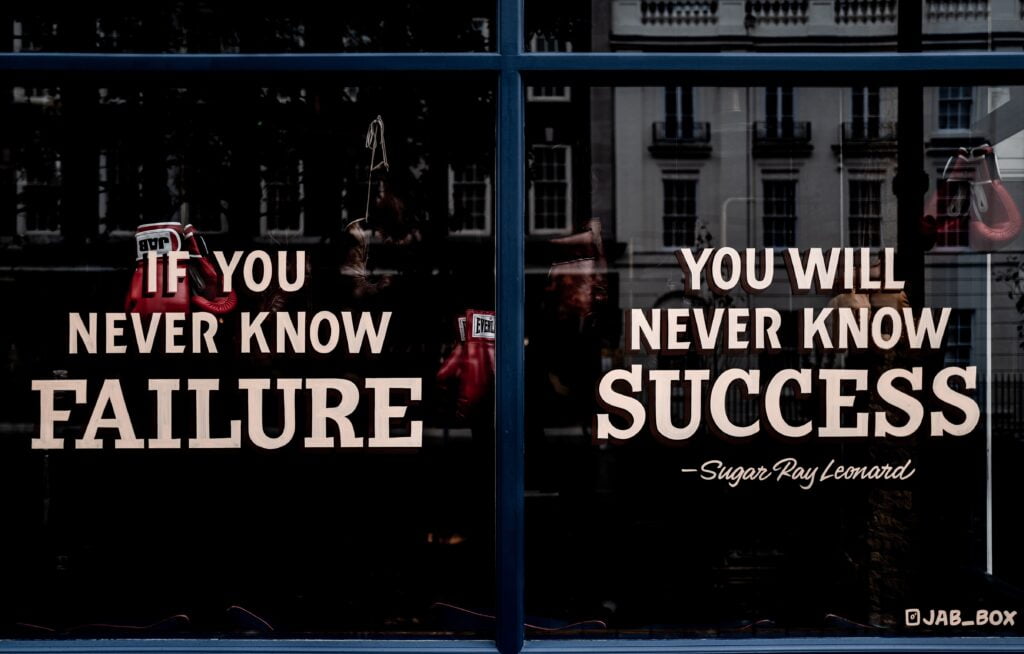
    “The measure of who we are is how we react when something doesn’t go our way.”

    ~Gregg Popovich

    Forgive quotes from a sports figure and not from the literati, but sports is one of those morality plays with lots of variables that pits opponents against one another in a test of comparable skill in which every night someone is undefeated for that day and someone else is a complete loser. 

    The winner gets to feel good about themselves and the loser has to find the fortitude to rise to the next day’s challenge. 

    The losers have to find something of value, some takeaway, to inspire them to their best effort in the next day’s contest. You know, like you and me when life trips us up. It is how we handle adversity, or how it handles us, that determines the quality of our lives.

    Not enough adversity?

    I recall an interview I saw with actor Mark Wahlberg (another famous literary figure… wink) in which he discussed his fears for his children. Wahlberg is a celebrity father who loves his kids, well known for his own gritty childhood in the Dorchester neighborhood of Boston, MA. The interviewer, talking to him about the difficulties he’d overcome as a young teenager on mean streets doing some bad things, asked what he feared most for his own children. 

    “That they won’t face enough adversity,” quipped Wahlberg in all sincerity.

    He knows the value of tenacity, perseverance, and resilience. He knew you cannot lie down when you get hit. You must get back up and keep moving. Those who have lived overly sheltered, pampered lives don’t.

    It is a truism that the severity of every person’s trials is relative. That truth gave rise to the atrocious, but true, phrase, “First World Problems”, as in 

    “OMG, There’s a crack in my iPhone’s screen protector! Uggghhh! FML!”

    It’s embarrassing. Still, everyone’s problems are existential threats and earth-shattering to them.

    Those of us who have faced down real difficulties know how tough real-world problems are, and we’ve learned how tough they’ve made us, right? We have learned how to extract value from failure.

    We’ve mined everything possible from the trials, tragedies, and travesties, learned from them, and we’re still standing. Standing and smiling. Smiling and moving forward. We know how to enjoy a good life and live well because we’ve seen the other side and we know how fortunate we are. Gratitude makes everything sweeter and makes living well easy.

    Don’t waste your failures!

    Fail forward.

  • The Best Time (Might have been 20 years ago; The Second Best Time is Today)

    The Best Time (Might have been 20 years ago; The Second Best Time is Today)

    The Best Time
    Photo by Mak on Unsplash

    # 38 on my  99 Life Tips–A List is: The best time to pursue your artistic or creative dream is 20 years ago. The second best time is today.

    “1To everything there is a season,

    A time for every purpose under heaven:

    2 A time to be born,

    And a time to die;

    A time to plant,

    And a time to pluck what is planted;

    3 A time to kill,

    And a time to heal;

    A time to break down,

    And a time to build up;

    4 A time to weep,

    And a time to laugh;

    A time to mourn,

    And a time to dance;

    5 A time to cast away stones,

    And a time to gather stones;

    A time to embrace,

    And a time to refrain from embracing;

    6 A time to gain,

    And a time to lose;

    A time to keep,

    And a time to throw away;

    7 A time to tear,

    And a time to sew;

    A time to keep silence,

    And a time to speak;

    8 A time to love,

    And a time to hate;

    A time of war,

    And a time of peace.”

    ~Ecclesiastes 3:1-8, NKJV

    The undeniable theme is there is a best time for everything 

    Borrowing from a phrase I read recently in The Overstory, by Richard Powers, that the “best time to plant a tree is 20 years ago, and the second best time is today,” I am convinced the same is true for artistic, creative pursuits.

    The best time to pursue them is 20 years ago. I wish I could turn back those years and start then, as a younger man, with more time to write more things and potentially reach more people and do more good. But wishing won’t make it so. I have the pleasure of having lived those 20 years and perhaps they have given me more things to write about, so I’m using the second best time… today.

    You should too. You cannot reclaim time lost, but you can prevent losing any more. Stop negotiating against yourself over whether you will pursue your art, your music, your writing, your creative dream, and begin. You won’t regret it. The fear of failure keeping you paralyzed, that seems so big, before you start, evaporates like the morning dew, once you begin. 

    Every creator is afraid. That is the essence of creation. I’m afraid every time I click Publish. To create is to make something never made before. You might fail. People may not like it. 

    So what? 

    If you never try, the people meant to love it, be inspired by it, even be saved by it, won’t be.

    So, since you have today, and since today is still the second best time to start…

    Start.

  • The 4th of July, 5 Uses of Rights in the Declaration, and the Idea of America

    The 4th of July, 5 Uses of Rights in the Declaration, and the Idea of America

    4th of July, The Declaration, 5 Uses of Rights, and an Idea
    Photo by Paul Weaver on Unsplash

    The Declaration of Independence, first published on this day in 1776, unanimously approved by the Continental Congress 2 days prior, on July 2nd, 1776, did not create laws, rights, a government, or a United States of America.

    It declared 13 Colonies’ unity in opposition to continued British rule, and their united determination to declare themselves Free and Independent States.

    The representatives who met, debated, resolved to break political ties, and who drafted and edited the document giving their reasons declared themselves at the end of that document to be representatives of the united States of America (lowercase united). Representatives of 13 Free and Independent States, united in the declaration of their freedom and independence.

    13 years of war

    The import of this is to note that it was some 13 years before a Continental Congress again met to “institute new Government, laying its foundation on such principles and organizing its powers in such form, as to them shall seem most likely to effect their Safety and Happiness.” to quote from the Declaration. That founding document is the US Constitution. Its Preamble enlarges upon ideas inherent in the Declaration laying out the purpose of Government envisioned by the framers.

    Those 13 intervening years between the Declaration and the Constitution were ones of war and privation on the citizens, property, and countryside of those 13 Independent States. Declaring themselves independent would have secured nothing without the blood that was shed to support the right they claimed to have, indeed the duty they claimed to have, to do so. The Revolutionary war put lead and steel in place of ink and parchment to win the rights ink and parchment asserted.

    That the representatives of those newly begotten States anchored themselves upon bedrock ideas predating any form of Government, party, or political system is noteworthy. 

    George F. Will, a notable political historian holding a doctorate in political philosophy, and well established as a Conservative thinker, says in his book The Conservative Sensibility, that America is the first country in world history founded upon an Idea. Geography did not establish it. Nor did ethnicity, nor genealogy, nor annexation by war. A political party or system did not create America. The inspirational coalescing power of an idea did.

    That all men are created equal, with rights that Government does not confer upon them, but they consent to enact and institute Government to secure and protect those rights.

    The word right or rights appears 5 times in the Declaration’s preamble. We may safely assert that the conception of rights, and the misuse or abuse of them by government, was preeminent in the representative’s minds.

    The Preamble

    “We hold these truths to be self-evident, that all men are created equal, that they are endowed by their Creator with certain unalienable Rights, that among these are Life, Liberty and the pursuit of Happiness.—That to secure these rights, Governments are instituted among Men, deriving their just powers from the consent of the governed,—That whenever any Form of Government becomes destructive of these ends, it is the Right of the People to alter or to abolish it, and to institute new Government, laying its foundation on such principles and organizing its powers in such form, as to them shall seem most likely to effect their Safety and Happiness. Prudence, indeed, will dictate that Governments long established should not be changed for light and transient causes; and accordingly all experience hath shewn, that mankind are more disposed to suffer, while evils are sufferable, than to right themselves by abolishing the forms to which they are accustomed. But when a long train of abuses and usurpations, pursuing invariably the same Object evinces a design to reduce them under absolute Despotism, it is their right, it is their duty, to throw off such Government, and to provide new Guards for their future security.”

    ~Wikipedia, Annotated Declaration of Independence

    unalienable Rights

    The Declaration enumerates what it calls Unalienable rights having come to all men from their Creator. The document declares all men are created equal with an equal share of, and claim to, the endowment of these rights. 

    Declaring this to be so, did not, unfortunately, make it so for all people then living in the 13 Colonial States, approximately 50% of whom were slaves or indentured servants.

    This is simple, verifiable, provable fact. To pretend it isn’t a fact is a disgrace to the name American and a slap in the face to history and history’s God.

    Many drafters of the Declaration, and most notably Jefferson himself, the document’s principal author, were slave owners. Their livelihoods and fortunes derived from slave labor. In declaring all men to be created equal, Jefferson penned a truth that preexisted his writing. In enumerating 3 specific rights as among those which are endowed to equal men, Jefferson names these: life, liberty, and the pursuit of happiness, clearly and indubitably denied to slaves.

    to secure these rights

    The revered document then states the most Revolutionary of ideas. That Government exists not to confer rights, but to secure rights that do not derive from government but from laws of human nature. 

    This is the most radical political statement in history. 

    Lest anyone use the word “radical” as an insult to hurl at a political opponent, remember these founders as the proud radicals they were. They would have worn the label as a badge of honor. 

    Once again, the Declaration rests upon an idea for its legitimacy before the court of public opinion, of history, and of history’s God.

    Right of the People to alter or to abolish it

    The Declaration asserts the absolute right of a people to overthrow any government that usurps individual rights or does not protect them; or that refuses to recognize that the only legitimate form of government for men who are created equal and endowed with equal rights must come from the consent of those equal men. This assertion, again based upon an idea, had to be tested on the battlefield, and proved with blood and treasure.

    right themselves by abolishing the forms to which they are accustomed

    Here Jefferson admits the willingness of people to suffer long with injustices to which they grow accustomed. Neither the willingness to do so, nor the duration of the season during which that willingness to suffer lasts, negates the right of the people to right themselves when they see fit to do so.

    It is their right, it is their duty to throw off such Government

    Indeed, in this bold last use of the word right in the preamble, Jefferson and the adopters elevate radical Revolution to overthrow illegitimate government from a right to a duty. At the end of the document, they again invoke their solemn duty to publish the document that officially signaled the dissolution of the political bonds between the 13 Colonies and British rule.


    In Conclusion

    I offer this very brief examination of the Declaration and some of its ideas and propositions for this reason: America, of all nations, was born of an idea. That idea is that all men are created equal. They have equal rights issuing from Nature and Nature’s God. Government does not create rights. Just government cannot take them away. Equal citizens with equal rights are free to their own lives, their own liberty, and to their own pursuit of happiness.

    This idea, this America is the one I love. The possibility for these things to be actualized exists only in this place, so far as I’m aware. That these ideals did not exist equally for all men (and women) from the nation’s inception is beyond dispute to honest students of history. 

    That the seeds of possibility and potential for a full flowering of freedom, liberty and equality for all were sown in the founding document, the Declaration of Independence, is likewise beyond dispute.

    That we as a nation, on our 245th birthday, still struggle to see these principles and ideas of equal rights and equal justice fully enacted for all our citizens, all the time, contradicts the very principles that first gave it birth.

    So, I celebrate America, the idea, more than America, the present reality. The present reality is the crucible in which to forge the idea, but the Idea, set forth on this day 245 years ago, is the America I love and pledge allegiance to on this 4th of July 2021. I celebrate the idea of America in acknowledgement that she has yet to live fully to the standards the framers set so high. And I celebrate with absolute determination to do my part to see the idea become the reality.

  • Gain Mastery—For All My Philosopher Friends, Both of You

    Gain Mastery—For All My Philosopher Friends, Both of You

    Gain Mastery like the swordsmith
    Photo by Motoki Tonn on Unsplash

    # 71 on my 99 Life Tips–A List is: Attempt to gain mastery at something, whether it be a topic or a skill.

    Malcolm Gladwell, in his book Outliers, asserts that it takes 10,000 hours of deliberate practice to achieve world class mastery in a field. A new study debunks that idea, but it doesn’t negate the importance of striving for mastery. Whether it’s 10K hours or half that, mastering a subject, topic, area of interest, or skill, is valuable as both a means and as an end. So, attempt to gain mastery at something.

    My journey hasn’t been so focused. I’ve adopted the shotgun approach to both interests and career paths. I rationalize it by claiming to be cut out of philosopher cloth. The truth is probably closer to an ADHD diagnosis. Regardless, I am heeding my own advice; I am going to master writing as both craft and career, and guitar as both hobby and personal therapy method.

    I can summarize almost all counsel for burgeoning writers in the phrase, “write what you know.” That’s fine. I mean, who would want to read non-sense from someone who doesn’t know what the hell they’re talking about? But a problem with this is that the other universal piece of writing advice which usually couples with the first in short order is, “be the first voice people think of in your niche.”

    A niche, you say?

    It’s that second part that is worrisome. Being a philosopher is fine, but it’s niche-averse. Having wide-ranging interests and even having some familiarity and expertise in a variety of disciplines is fun, exciting, and wards off boredom and monotony, but it’s not the recipe for mastering a niche. 

    The downside of niche-less-ness is amplified when you feel compelled to add your voice to a wide variety of topics. Where are my talking points, anyway? There’s a tendency to live off-script, which is sometimes more fun for you than the people around you.

    So, the attempt to gain mastery at something specific is worth the effort. It serves as a focal point, is measurable, gains are scalable, and can become exponential. What is difficult, requiring intense concentration and concerted energy in the beginning, can become second nature, autonomic, and fluid as mastery increases.

    It’s the first steps of the mastery journey that are all uphill. But those first steps are worth lacing up the hiking boots in anticipation of the gains along the path and the rewards at journey’s end.

    Besides, someday someone may come looking to you for Japanese steel only you can produce, regardless of your sushi-chef disguise. You wouldn’t want to let them down. 

  • Logic Has Its Limits–This Headline Is False!

    Logic Has Its Limits–This Headline Is False!

    Logic Has Its Limits - It is scaffolding and not substance
    Photo by K8 on Unsplash

    # 66 on my, 99 Life Tips–A List is: Logic is a useful scaffolding to climb the tower of truth, but it is not the tower, and will not always result in what is true.

    I mean here that logic is a framework and not substance. It is a system that is useful for testing rational statements. But it relies on the inherent limitations of language and sometimes its champions forget that language, whether written or spoken, only represents the thing or idea represented and is not the thing or idea itself. If Language is limited, and if Logic relies on Language, then it follows, logically, that Logic has its limits.

    So, I can build up an impressive array of premises and definitions about Hydrogen and Oxygen and how combined they form a substance that can exist in three different states depending upon temperature. And when finished I still won’t be able to drink it. The truth of water, experientially, evades both language and logic in the abstract.

    There are those who enjoy creating syllogisms that are absurd like:

    If God is all-powerful, then He can create something impossible for Him to lift.

    But if He did, then He wouldn’t be all-powerful since there would be something He could not do…

    These word games use logic not in the attempt to discover truth, but to camouflage it.

    Logic doesn’t admit the consideration of all variables that might affect a premise all times. Contexts change. So not all truth boils down to binary, true/false declarations with predictable, repeatable outcomes.

    Take this sentence from this article:

    “THIS sentence is false.” This sentence is also where the problems start. If true, it is false; if false, it is true.

    ~ Read more at newscientist

    That’s a good noodle-baker. And it provided the intellectual fodder for my headline, which has the same logical problem. If the first clause (“Logic Has Its Limits”) is true, then the entire headline is false, if the first clause is false, the entire headline is true. Either way, the scaffolding collapses.

    So logic is useful within its limits. But let’s remember logic has its limits. It will not as a necessity result in what is true. And in the minds of the disingenuous, it becomes a rhetorical tool to go the opposite direction.

  • Don’t Speculate—Just Admit You Don’t Know

    Don’t Speculate—Just Admit You Don’t Know

    just admit you don’t know
    Photo by Chris Ainsworth on Unsplash

    # 64 on my, 99 Life Tips–A List is: The wise know that they do not know, are not afraid to admit that they do not know, are wiser for this, and remain undeterred in the effort to know.

    I would reduce this tip to Don’t Speculate!… but the meaning is not exactly the same. Socrates is famous for being wise. Just as famously he did not boast of it. One of the hallmarks of the wise is their willingness to lean in to their own ignorance. The foolish and simple-minded are certain…and almost certainly wrong as a result.

    When you don’t know something (which is often, right?), don’t try to fill in the gaps with guesses, wishes, and hopes. Just admit you don’t know. Speculations won’t get you any closer to factual knowledge and may lead you further astray. Just carefully approach the unknowns armed with what you do know. 

    Back to Socrates for a sec. The method named after him, The Socratic Method, is a question-and-answer style approach to truth detection. Philosopher types refer to this style by the fancy-schmancy name–dialectic. This technical sounding word just means questions and answers between two viewpoints. In the method, the questions are as important as the answers. The questions clarify ideas as they get more and more focused on the essential knowledge sought.

    A follower of this approach learns that defining terms is important. Thus, the method seeks to categorize, catalogue and capture truth in words. This is useful, though one of my favorite words is ineffable, which means, literally, “too great or extreme to be expressed in words.” 

    Ineffable experiences and truths are my personal favorites, but that’s a topic for another day. Admittedly, truths that resist definition, resist dissemination as well.

    For a deeper dive on the topic, written in a very approachable format, read the late Robert Pirsig’s iconic Zen & The Art of Motorcycle Maintenance.

    Returning to the tip at hand, and especially when trying to make a decision, keep in mind what you know, what you don’t know, and what you need to know. The last is the most important point. It bears repeating. Ask yourself what you need to know in order to make the best decision. 

    When you’ve determined what you need to know don’t rely on your own speculations to fill in the answers. If you need to know what someone else thinks in order to make the most informed decision, ask them. Don’t just guess. 

    Now, to wrap this one up with a huge caveat. Lazy, uncaring, ignorance isn’t a trait you want. There is no famous philosopher named Mediocrates. There is nothing admirable about wallowing in the dark.

    When in doubt, be wise–or at least act wise. Don’t speculate, just admit that you don’t know.

  • Ends In Themselves Hide Everywhere In Plain Sight

    Ends in Themselves Hide Everywhere In Plain Sight
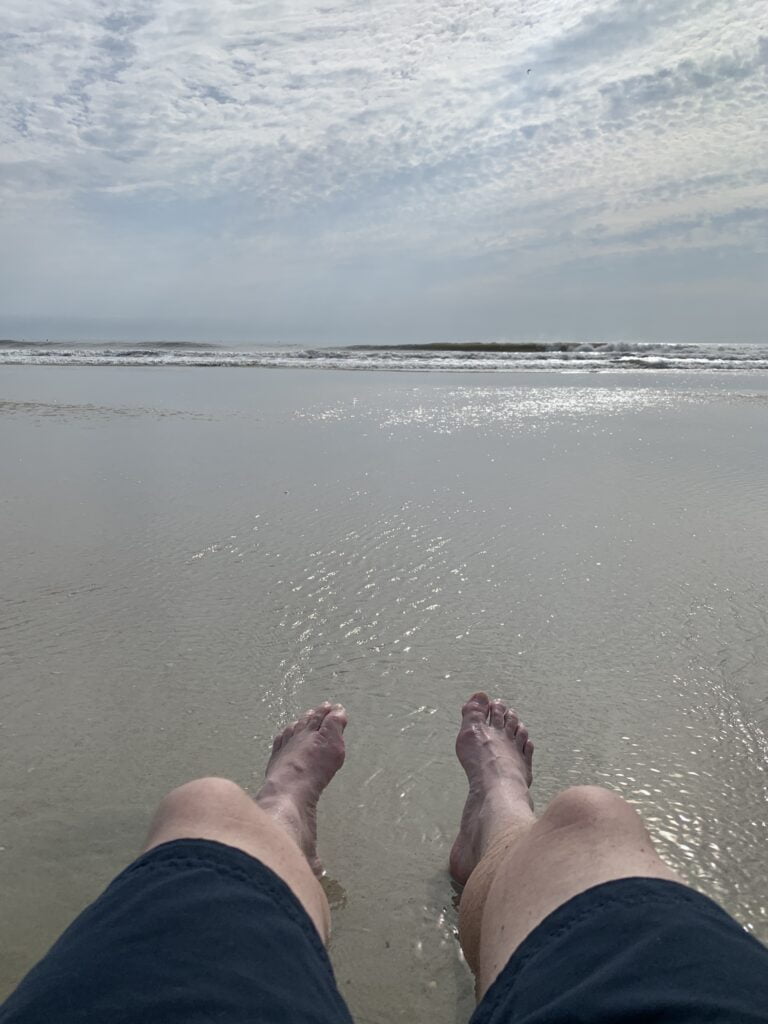
    The End Is Achieved photo by Author.

    When you stretch out your feet to the incoming tide, lazily reclined in a beach chair, and the sun is a hand’s width above the water on the horizon, and the wavelets are chasing each other up the sand, and the egrets and sandpipers skitter nervously away as if they’ll melt if the water touches them, your mind isn’t occupied with what’s next..

    You soak in the moment as you soak in the sun. This…this is the reason you’re here. It’s what you came for. It’s the end sought. 

    For most of us, ends as idyllic as that described above are rarities. They are valuable in proportion to their scarcity. Beach folk may no longer hear the murmur-Roar of the waves tumbling in. They may take these marvels of sight and sound for granted, because they’re no longer novel. And familiarity breeds contempt.

    But what can we do, regardless of where we pass our lives, to extract the sublime from the familiar, eliminate the contempt, and cease taking anything for granted?

    In that light, find small “mini-ends” throughout your day. Identify the ends in themselves. Look for them every time you drink a cup of coffee or tea. Savor every conversation with a loved one. Similarly, let each meal exemplify the opportunity to reflect on more than transience. Sure, you’ve had many meals. You anticipate others. But, stop to appreciate that by some miracle you’re having this one, right now. It’s the only time you’ll partake of this meal. That’s a worthy end in itself.

    That mindset and it’s objective is what we cultivate by the practice of awareness, or “mindfulness”. To do so is to fill the mind with what is right in front of it. Extract the precious by appreciation of the obvious. Discover what is too often disguised by plain sight, and realize that if you’re still conscious of being conscious, things could always be a whole lot worse.

    Find these moments hidden in plain sight

    Acquaint yourself with moments from which you want nothing else. Recognize and log in your awareness each time you recognize a moment to which you would add nothing to make it better, or sweeter, or richer. The more these inner promptings bring you into the present, the better you will  come to know your true self. 

    You’ll see that the good life isn’t about waiting for the big, rare thing to come along. Rather, it’s seeing and appreciating the good already present in the so-called mundane grind of life. And when you can maximize happiness from the everyday, you’re living a rare life indeed

  • What Would It Look Like Fixed? A Life-Changing Question

    What Would It Look Like Fixed? A Life-Changing Question

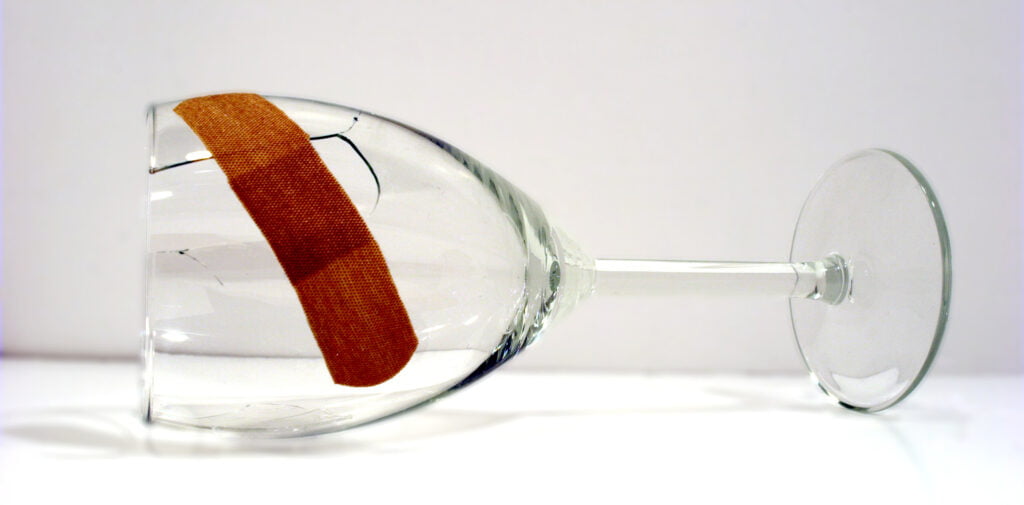
    What would it look like fixed? Probably not like this broken glass with a band-aid stuck on it.
    What would it look like fixed? Probably not like this…(Dreamstime Image: licensed to the author)

    # 60 on my, 99 Life Tips – A List is: You cannot solve any problem without having a clear picture of the solution in mind. Ask, ”what would it look like fixed?” borrowed from David Allen.

    Because this is one of my favorite questions, and has been so life-changing for me, I secured the domain whatwoulditlooklikefixed.com a few years ago, where I will eventually build out a self-help site based around this idea. I’m happy to share it here with you.  

    I was introduced to the concept in David Allen’s book: Getting Things Done: The Art of Stress-Free Productivity. I highly recommend the book if you want to dive deeper into the whole system of personal productivity and time management Allen espouses.

    Answering what would it look like fixed has become the starting point of my entire problem-solving heuristic.

    The premise is simple. A problem arises. You want to fix it. So far, so good…

    But fixing problems requires answers to two questions:

    1- What is the true problem? (This is a book in its own right)

    2- What would absence of the problem look like, or conversely, what would it look like fixed?

    Until you answer these two questions problems manifest will remain problems unsolved

    How often have you set out to fix a problem without first discovering what was really bothering you, or having a definite, clear idea of what needed to happen to not feel bothered by it anymore? If you’ve done this, you know how frustrating it can be to multiply effort using the wrong means for the wrong ends with no clear plan. (Which probably describes the typical workday of millions of people). And maybe this too accurately describes normal life for a lot of people as well.

    So, since you certainly want to avoid adding frustration to the feelings you already have about your issue. Do the hard work, the meaningful work, up front. The hard work is actually mental, involving thinking and imagination. You’re creating a world where your problem doesn’t exist. In this world, you vanquished the burden. It’s gone. Exterminated. Kaput.

    This picture gives you both a target state to achieve and the inspiration to achieve it. Don’t worry yet on what will have to happen to make this vision come to pass. That’s another part of the problem-solving process. Without a clearly defined destination, further steps in the process are tantamount to walking in circles.

    From Concept to Concrete

    This is how, precisely how, all the man-made reality that you look around you and see, gets from concept to concrete. Things go from abstract idea to tangible reality by answering some variation of this one question.

    What would it look like fixed?

    If you want to solve a problem and don’t have this idea clearly in mind, how will you know when you’re done? How will you gauge success at eliminating the problem. Do you see the dilemma? Unless you can clearly state, in specific language, ”This problem will be fixed when ______________.” happens, all efforts will amount to pushing in the clutch on a car, stomping the accelerator, and redlining the engine in a screaming cloud of smoke and fury, but the car goes nowhere.

    Instead, do the hard work up front. Get a clear picture of exactly what fixed would look like, then use the appropriate means to reach that desired end. (A subject for another day).