This says all that needs to be said about success. You are who you decide to become, unless you give that away to someone else.
Seth Godin’s apropos and brilliant piece today, Identity and Ideas draws an important distinction and raises an important question. The distinction is that some people receive their identities from other’s ideas, while other’s identities don’t derive from a dictated ideological position. The latter are free to examine various ideas, modify as needed, and feel no threat to their identity. This raises the question: Who gets to tell you who you are?
Seth writes:
”One way to define our identity is to fall in love with an idea (often one that was handed to us by a chosen authority). Another is to refuse to believe our identity is embodied in an idea, and instead embrace a method for continually finding and improving our ideas.”
Seth Godin
I am in the latter camp. I hope that is the case for you. If it isn’t, who have you allowed to tell you who you are? Whose ideas of what your life means and of your place in the world have you embraced and adopted as your own? Or maybe you’ve convinced yourself that you are independently finding and improving your own ideas. But your unwillingness to confront and accept evidence that destroys your current views contradicts that notion.
Can you not see this is the height of insecurity? Maybe you’ve allowed someone to tell you who you are your entire life. You look for someone to tell you through a lifetime of habit and conditioning. You probably adopt and parrot every new thing you hear (as long as it comes from a charismatic source popular with your current circle of friends). Because those who get their identity from outside themselves can never escape the bondage of fear over what other people think. Even though these same people who couldn’t care less about you; except as another ideological clone reinforcing their own beliefs.
Is this too harsh? Maybe. And just maybe it isn’t harsh enough. After all, I’m not the one trying to tell you who you are.
Authenticity is magnetic..and is valuable for its scarcity.
# 39 on my, 99 Life Tips – A List is: Surround yourself with people with whom you can be authentic and still be accepted and loved.
What does it mean to be authentic?
Personal authenticity means living with genuine moral, psychological, and emotional integrity. It recognizes and maintains value-based boundaries. Authentic persons are ”comfortable in their own skin”, and allow for and encourage the same in others.
While being authentic does not automatically mean being an uninhibited exhibitionist, this lifestyle includes the idea that the self-censorship slider is set to ”off” as much as possible. The more you feel the need to self-censor, the less authentic you are, as a rule.
You can be authentic and still act appropriately
While the above is true, there are certainly appropriate times to self-censor and tone it down. My girlfriend, who is the kindest person I know, suffers from what I call ”Traffic Tourette’s”. Sometimes, when I’m on the phone with her during her afternoon commute home, I will get an earful of blue-laced, red-hot authenticity when a driver cuts her off in traffic. This language, though authentic, would not be appropriate when sitting with family at her mother’s Thanksgiving table. Nor is it the kind of language she uses in normal conversation, even in private with me, or among friends.
Being authentic means no play-acting for approval, but is not a license for bad character
But being authentic means you don’t modify your personality to ”play a role” to suit someone else. Certainly not for any length of time. Play acting of this type is extremely common, especially in the modern era of social media, dating apps, and other tools that are little more than personal marketing aids. These tend to present people at the most surface level, and the lowest common denominator. They can cause inauthentic behaviors just to attract attention. And once you’ve attracted someone while not being true to yourself, there is a danger of perpetrating the same inauthenticity for the entirety of the “relationship”.
This comes from the fear of being rejected. This can cause you to change who you are at your core to satisfy their preferences or demands. But doing this means your authentic self gets rejected in favor of a pretend self that cannot be sustained indefinitely.
The flip side of morphing into a different persona, is that some people may use the claim of authenticity to justify being jerks. My admonition to surround yourself with people with whom you can be authentic does not mean you have license to be either rude, hateful, or indiscreet in more public social settings. The mature person recognizes that a facet of genuineness is the ability to moderate behavior and language to appropriate levels.
Be where you feel no need to pretend
If either tendency poses a struggle, here is a good article from Psychology Today that offers some steps and strategies for developing authenticity. There are some good practical steps that can be a help to anyone.
This is the essence of authenticity
It is important to recognize, value, and seek out those relationships which require the least restraint from the full expression of your honest self. The ones where you don’t feel the need to pretend. In my experience, those relationships will be with people who genuinely have your best interests at heart. Oftentimes, these are the people who have witnessed and experienced the full spectrum of YOU. They’ve known you at your best…and at your worst. If they are still there beside you after the latter, you’re with a true friend.
The difference between acceptance and love
The last thing to mention is to note the difference between acceptance and love. You will want to be around people who accept YOU, because they love you. This does not mean they will accept all of your behavior at all times. This is an important distinction. I can love someone and not like their actions. I can love someone and even reject their actions or words as unacceptable. But, if I love them, I believe in the best version of them. Therefore, I’m willing to be there for them through their not-so-stellar periods, provided they express appropriate remorse and willingness to reach for the best, too. And it’s people like that you want to do life with.
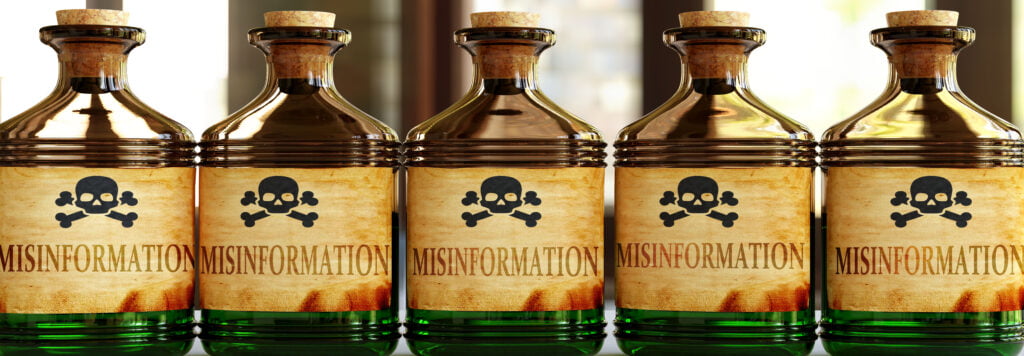
Misinformation Is A Toxic Poison – And Its Being Used As A Weapon
There are unwritten norms that in the past have governed and united us as Americans. But, these have proven too weak for the job in the face of modern stresses, and given the existence of weapons of mass misinformation (WMM’s). Especially since it is so easy to present alternate ”facts” using these channels, and do so with impunity. Sadly, the most basic assumptions we once shared about reality itself, and our agreed upon notions of it, are no longer a “given”. Even empirical, mathematical facts are not able to withstand politicized assaults in highly-charged racially or socially coded language, specifically intended to divide us into alternate worlds, with alternate facts, and alternate versions of ”reality”.
Destroy Consensus and Kill Consensus Reality
Consensus reality is that which is generally agreed to be reality, based on a consensus view. If so, is there a doctor in the house? This piece from Post Carbon Institute claims 2020 is the year that our shared reality finally cracked. We don’t seem to have any shared objective reality anymore. Nor, it seems, do we any longer enjoy a shared cultural reality. Seth Godin’s treatment of this concept is brilliant.
The consensus reality defining America and what it means to be an American may already be dead. Ironically, a reality-TV con man killed it. While ironic, I guess it is fitting. Give the devil his due. Modern American politics in the age of Twitter and Facebook is more like fake tv than we knew. Reality television, even though it is not real, doesn’t work, generate enough profit to stay on the air, and provide entertainment value unless enough people believe it’s real. Consensus reality doesn’t work without a consensus. It evaporates when enough people believe a different narrative. Destroy consensus with incendiary and divisive language, and kill the shared reality that was the by-product of that consensus. Done and done. Facts be damned.
Social Contract Theory
In some respects, it is miraculous that it has taken this long for the fabric of the country to fray and tear. Social Contract Theory has been around a long, long time. It arose in a time before printing presses and certainly before the internet or social media platforms. This entry at the Internet Encyclopedia of Philosophy suggests the idea has been around as long as philosophy itself. Check it out if you’re not familiar with the idea.
This is a short article on social contract theory from the University of Texas school of business. Members of society live together under certain pre-arranged and agreed upon rules of engagement. These ideas are deeply interwoven into social, economic, and political life. So much so that we have been able to assume their strength and take them for granted. Democratic, Representative governments, exist both as the result of, and for the protection of, this bedrock social contract. As such, they operate best behind the scenes of everyday, normal civic life.
I wrote this essay back in January in remembrance of the days when our government was virtually invisible except for rare, highly unusual, high visibility occurrences. Reliable assumptions about the underlying, invisible social contract are the foundation of a national reality. In combination with shared language and art, the result is stable, flourishing culture and civilization.
Who Wields Weaponized Misinformation?
To destabilize a society, attack the shared ideas that bond the members together in a mutually beneficial reality. Nothing does this more effectively than weaponized misinformation. Historically, only totalitarian, dictatorial governments (whether right-wing fascists, or left-wing communists), have turned their citizens against one another by means of misinformation and propaganda. Russia, or China, or fill-in-the-blank state actors have wanted to undermine the US with these tactics for half a century, having used them with success against their own citizens.
Now an ex-President and the political party he controls do the job for them. Only an autocrat wishing to use you for his own power willfully, repeatedly misinforms you to think of your neighbor and fellow citizen as an enemy. And to base that belief on some factor like race, or religion, or sexual orientation, or in the past year, misinformation about mask wearing, or getting a vaccine.
Obviously, the fissures in American society didn’t start overnight. They didn’t start with a dangerous, deranged, anti-democratic demagogue. In some ways, there have been two or three different Americas from the nation’s inception. Your version of America depended upon which race and economic class you were born into. But a large portion of the country has been unwilling or unable to see a clownish buffoon for what he was and is. Failing this, they have joined him and his puppets in the effort to turn us against one another, denying even basic human decency, medical science, the rule of law, and the democratic process. These are enough combined straws to break the back of the national consensus reality camel.
Misinformation Has Created A Separate World With Its Own Reality
Didn’t we used to be better than this? We used to have cherished words, national words, that we treasured for their inspiration. They urged us towards a common, shared vision of a more perfect union and a general welfare. But words are not reality. They are mere approximations of reality. And the same language that had the power to unite us in agreement and solidarity, has been used to foment hate, mistrust, and derision. Powerful, pervasive platforms of language dissemination have been used to craft alternate, disparate, separate versions of reality. Versions of reality believed in regardless of the presence of objective facts.
The Only World That Exists Is The One In Your Mind
In short, purveyors of malignant, malicious fiction have broadcast descriptions of an alternate reality in which many believe. I cannot argue against the truth that the only world that exists is the one that is in your mind as far as you are concerned. But, unless there is some return to consensus reality, based on verifiable, objective facts, and unless we hold those who traffic in lies and disinformation as culpable, dangerous criminals, this American experiment will soon be over.
Being discriminating is not a bad thing. It’s the only way to decide which world you’re going to live in
I appreciate fiction as much as the next person. I love that Stephen King, or Ernest Hemingway, or Daniel Silva can create world’s from words. To your mind, these elaborate worlds that are real and engaging.
In like manner, the world you woke up in today, and interact with from the driver’s seat of your own perspective, while not quite as fictitious as the one’s constructed so skillfully by a great author, is still fundamentally a fiction. It is also created with words. Yours. The ones you tell yourself, and the ones you listen to. It is fiction because it is limited and relative to your experience of life alone. It is however, very real to you. You don’t live in my head, nor I in yours, so our realities are unique to us. But if you’re reading this, you’ve given me, sitting here, at a particular juncture in space and time, access to your mind. And my words are shaping it.
Never in American history, have the unscrupulous, power-hungry, selfishly motivated, or willfully and negligently ignorant had so much access to such powerful tools to shape our minds with the fiction of misinformation. They do so via social and mainstream media platforms, wielding them as weapons of mass misinformation. The fact that they have gained such an allegiance among the non-discriminating is astonishing. And, that they have successfully created a completely different world with its own ”reality” is equally shocking. Perhaps, in the final analysis, we only have ourselves to blame.
Obviously, things like microscopic airborne viruses don’t give a damn what kind of lies you believe in. The truth will always prevail in the end. But for some, it will be too late. It may be too late already for the country. The disparate, divided realities may never reach consensus again.
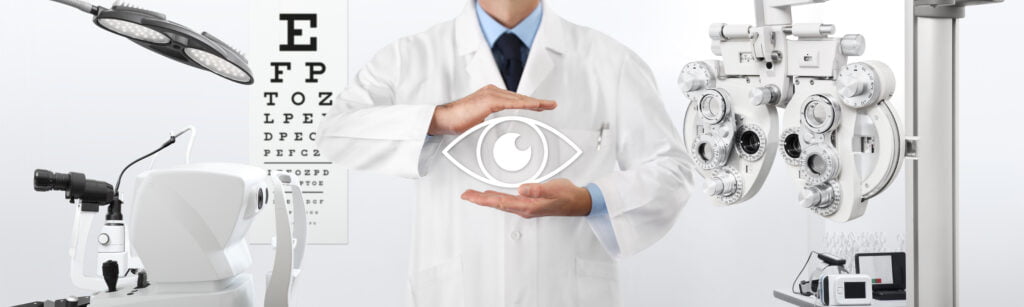
Eye vision test with sight chart – the chart is what it is
# 21 on my, 99 Life Tips – A List is: Accept life as it shows you it is, not as you wish it was, or as you want it to be. The same goes for people.
It’s possible some will read that tip, shrug, and think, ”No duh!” While others, myself included, will see that we resemble the remark, and try to act on it. While it is undoubtedly normal to put the best spin on life, some of us invest too much in the spin. If this is you, then let this be a reminder to accept life as it shows you it is. And also, accept people the way they show you they are, not as you want them to be.
Rather than try to enumerate all of the psychological reasons some people have difficulty with this, let’s stipulate that some simply do. You may be among that number. Assuming that’s the case, consider the following questions:
Is your experience of life the result of how you think life is; or do you think about life based on how life has shown itself to be to you?
Perception Is Reality
Few would admit they belong in the first camp. And yet, to some degree, we cannot experience anything differently than how we think prior to the actual experience. You bring your way of thinking about life to every life experience. This is commonly referred to as paradigm, which is nearly synonymous with perspective. The difference being that paradigm refers to the big picture ”model” of reality we mentally construct, while perspective refers to the small picture, individual, subjective point of view from which we observe the model and form beliefs about it. Together, these influence our perception of the world. And our perception is our functional reality. How could it be otherwise?
In this way we experience life like a person who perpetually wears sunglasses. The sunglasses filter everything. The filter modifies the reality of what is being looked at. Remove the sunglasses, and everything looks a little different. Change the filter and change the world.
This optician, with his charts and machines can help you see things in the physical world the way they are. You’ll have to do that for yourself in your mental world.
A patient in need of eyeglasses looks at a chart, or at images though a machine. The images are blurred. An adjustment is made. The images get worse. Another adjustment, and the images get better. They appear sharp, crisp, and in focus. In this scenario, do the actual images change at all? No…they are what they are. The patient would be foolish to see blurred images, wish they were clear, and declare them to be so because he wants them to be.
Reality Cataracts
A few years ago, I had cataract surgery for both eyes. Prior to the surgery, vision in my right eye had become so occluded that if I tilted my head a certain way, objects would disappear. I could make street signs, cars, and people disappear just by closing my left eye and tilting my head. Some people try to live this way. They try to make problems disappear by an inner tilting of their mind. But guess what? Just because you cannot or will not see something doesn’t mean it’s not there.
If your own paradigm, perspective, personality, perception, or personal hang-ups make it difficult to accept life as it shows you it is, then, like a person in need of an optometrist for corrective lenses, you probably need a new prescription. Or, like me you need an ophthalmologist for your eyes and your life. Tilting your head and pretending is not a long term solution.
And friends, not to be too heavy handed with the analogy, that’s us. Life and people are images on a chart. The chart does not change. The way you see the chart changes. Better to see the chart, and life as it shows you it is, not the way you wish it was.
Awareness Of The Susceptibility Helps You Look Twice
I wish there was a magic cure. If there is one, I haven’t found it. Knowing that I’m wearing my own sunglasses of perception, and that I cannot take them off, helps me to realize that I could be wrong. Knowing that I’ve had a past history of mistaking my glossed over version of reality from what was really on the chart, makes me wary. It makes me look twice. I don’t tilt my mind and hope the evidence will change. This healthy skepticism at least gives me the awareness that my own uncorrected filter tends to skew life towards the way I prefer it to be, not necessarily the way it is. This is an imperfection that I will likely always carry with me. So, my tip to accept life as it shows you it is…definitely applies to me. If it applies to you, get those eyes checked.
Emotional moment: man sitting holding face in hands, stressed, sad, feeling bad, depressed, disappointed. We’ve all been here.
# 11 on my, 99 Life Tips – A List is: Do not be afraid of feeling bad. There are things to feel bad about, and the contrast is a wonderful reminder of why gratitude is so important.
This is one of the most important Life Tips. It also swims upstream against the prevailing American cultural and social ethic. We are a country terrified of feeling bad. So, we medicate. We pre-medicate prophylactically to prevent even the chance we might feel bad. We’re so afraid to feel bad, we self-medicate. But you do not to be afraid of feeling bad. If you don’t know both how to, and when to, feel bad; if you make yourself artificially numb to negative feelings, then neither will you experience the full heights of feeling good.
This one has been difficult to learn. Obviously, one doesn’t learn to feel bad by being gifted a million bucks. I heard a preacher once say that if you pray and ask God to take away your bitterness, He won’t do it by giving you a Cadillac. The point being, we all learn to feel bad by hard practice. But face it, this life deals everyone some hard, hard blows eventually. Not to be morbid, depressing, or nihilistic, but everyone you love is going to die some day. And you will join them if not precede them. This unavoidable truth doesn’t exactly feel like Disney World.
But what do we do with that truth? I say, let’s wring all the pleasure and joy and love out of this short ride on the merry-go-round that we possibly can. And, let’s do so in the knowledge that being human is the experience of the full gamut of emotion: from heart-crushing grief to soul-enriching joy. We will face the things in life that feel bad and become more resilient, more capable of experiencing appropriate emotional responses, and more grateful.
And here is the most important point. You will feel the worst over the loss of something you loved the most. They are two sides of the same coin. It is impossible to feel bad over something you couldn’t care less about. Bad feelings are the result when something that made us feel good goes missing, or is lost to us in some way.
If you are afraid of feeling bad, my advice is never, NEVER, let yourself attach to anything that makes you feel good.
It is important that we allow ourselves to put on the sweater of our bad feelings as Morrie would remind us in Mitch Albom’s excellent book Tuesdays with Morrie. There are things that will always bring some measure of hurt, pain, or sadness when we reflect on them. This is as it should be. Some things in life just hurt. This is the way of life. How dare we try to escape that by numbing out? To do so is to deny the very thing that makes us human. That sweater of pain will always feel bad whenever we choose to put it on. But we can also take it off and not wear it all day, every day.
No friends, Do not be afraid of feeling bad. We are the species that loves, and marries, and feasts, and dances in the face of future imminent death. There is an undercurrent of sadness that accompanies our reality. You can accept that fact, face it, and choose to live as full of gratitude for the myriad good things that come your way in a world where nothing lasts forever, or you can numb out in the effort to escape it. Just be aware that if you are afraid of feeling bad, you’ll disqualify yourself from feeling good, really good.
NOTE:I am not negating the fact of clinical depression, or crippling anxiety. Nor am I either vilifying or castigating those who suffer from these medical conditions. These conditions supersede mere emotional states. However, as this article from February, 2021 suggests, the over-prescription of psychiatric drugs is not without serious drawbacks, especially when many cases of depression and anxiety are contextual, non-pharmacological, and would respond better to psychotherapy than to dependence on medications.
As a final thought on this topic, let me leave you with this beautiful song, from Rich Mullins, who was tragically killed way too young on his way back from a free benefit concert for Native Americans. A horribly sad thing indeed:
#3 on my, 99 Life Tips – A List is: Own it when you’re wrong. Accepting fault that is yours is the hallmark of character, maturity, and humanity.
”Well I ain’t often right, but I’ve never been wrong.Seldom turns out the way it does in the song.”
~ Grateful Dead: Scarlet Begonias
Why is it that some people have such a difficult time with this one? One of the most widely available avenues to personal growth and character development is simply to admit fault. As this article points out, it is one of the surest paths to both self respect and the respect of others. Own it when you’re wrong! Admit your mistakes. Own it as quickly as you can. Pride goeth before a fall, as the book says. A person who is always right (in their own eyes) has nowhere to go but down.
Is there anyone in your life who cannot admit fault? Do you know anyone who will not say, ”I’m sorry,” ”I was wrong,” ”that one is on me”, or any of the other variants?
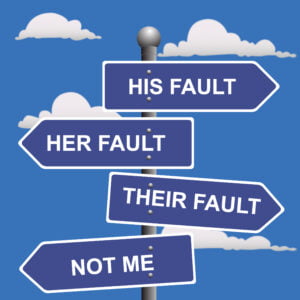
God, I despise a blame-shifter. That’s nothing but chasing one mistake with a worse one. This excellent article goes so far as to say it is a form of emotional abuse.
It’s not enough to simply raise your hand and mumble, ”my bad”, when you’re in the wrong. Own that ish… Take responsibility for what you did wrong and for the repercussions. You will forever prove to yourself that you are the kind of person who can. Character doesn’t come from never being in the wrong. Character comes from being in the wrong, owning it, and learning from it. So, own it when you’re wrong.
Why? Because you’re human, and fallible, and like all of us, you make mistakes. When you step up and own your mistakes, that act says much more about you than the mistake does. It defines you as the kind of person who can acknowledge fault, lay down their ego and pride, and accept responsibility for your contribution to a problem. It makes you trustworthy, approachable, accountable, ethical, and real. In other words, a high-quality person, mistakes notwithstanding.
People who think so highly of themselves that they never say, ”I’m sorry”, never accept blame, never take responsibility for things going sideways, are pathetic. They are insecure, immature, and willfully blind to their own shortcomings. Quick to find fault in others, they never let the finger of blame swing around and point at themselves. They are hell-bent on protecting the reputation of an error-free self, non-existent in the real world.
And we know that’s not you. Naw, you own it when you’re wrong.
You only get 16 pieces to play with, all of one color. That’s it. Not your opponent, or his pieces, or the board, or the table, or anything else…Your move.
At the end of my failed marriage, now 12 years behind me, my cheating spouse often accused me of being a “control freak”. That became her go-to excuse for her extra-marital dalliances. You know, because…Control. I submit, that if I was indeed a control freak, I was a damn poor one. The evidence showing that I was unable to control even my own wife. I offer this sad chapter to illustrate a point. Which is; there are very few things in your life over which you exercise direct, complete control. It is best practice, as soon as possible, to identify your handful of pieces, and then control them with all the concentration, attention to detail, and purposeful action that you can bring to bear.
However, on several counts, my ex was right about my attempts to control her behavior. First, her actions were hurting me. Second, I wanted the hurt to stop. Third, I saw her as the source of the pain and tried all I could think of to get her to stop. Alas, shame didn’t work. Prayer didn’t work. Bombarding her with scripture didn’t work. Threatening to kill her lover didn’t work. Threatening to kill myself didn’t work. Telling her family didn’t work. Telling our friends didn’t work. Despite my efforts, neither appeal, nor persuasion, nor kindness, nor anger worked. I simply could not control her, no matter which handle I grasped at.
Regardless of what I tried, all my efforts to control her were futile and fruitless. I had hitched all of my emotional well-being (sorry for the pun) to a person who’d become utterly devoid of care for my well being. For that matter, she refused to consider the well-being of our children either. That was also something my attempts to persuade her and turn her failed to accomplish. I had made myself dependent upon her behavior for my own happiness. Being unhappy, I saw her and her behavior as the culprit, and for far too long, attempted to change both.
Waking up to the hard truth
Far too late into this nightmare of hurt and betrayal, and then frustration and near murderous despair, I realized the the truth: the only one I could control in the whole sordid affair (no pun intended) was me. The nightmare ended when I decided to wake up. Waking up entailed taking control of me, owning my own responses to the hurt I was feeling, and then making thoughtful responses to eliminate my exposure.
This episode, painful though it was, taught me some valuable lessons, and opened the door to the happiest twelve year stretch of my life. The lesson forever etched into my psyche is: you cannot control anyone else. Period. You will do damn well in life to control yourself. That will be enough to keep you occupied. But also, it will serve you well to identify the small number of things in your life over which you exercise direct, complete control, and make purposeful decisions about them.
As I sit to type this, I can control everything within reach on my desk and beside it. That is, I am the one pressing the keys on the keyboard, I am the one who poured the cup of coffee (and sips from it), I put the mail in that far corner, and placed the iPad on the near one. I have a guitar within reach, that I will pick up to play at some point today. If I need to print something, I know how to control the printer. If I need to reference something in one of the books on my shelves, I also control those.
What I put in my body in terms of food and calories is my decision alone. Likewise, what I do to exercise my body. Spending or saving money is directly under my control. I control where my internet browsing takes me. And, I alone determine how much I will work at those things I do purely for money.
A distinction between internal and external control
To be clear, I am making a distinction here between the concept of self-control, and control by the self. The foregoing are related, but distinct. Self-control focuses on controlling internal responses, with particular attention to impulse and temptation. This is valuable in its own right, and is foundational to behavioral therapies in general. On the other hand, control-by-self focuses on controlling things external. Its focus is on which pieces on the chess board of life are mine to move and which are not. Which leads to the knowledge that I cannot control my opponent (to follow the chess analogy further), nor the hardness of my chair, nor the temperature in the room, etc. Likewise, I cannot change the board or the rules of the game. I can only pick up and move my own pieces within the limitations set by the rules.
There is no need to bore you with my complete list of moveable, controllable ”pieces”, but I assure you I’ve typed out 90% of it. Those things are what I control and almost nothing else. Once I stopped depending on people and things I could not control for my happiness and well-being, I was on the way to emotional independence. In my world, that is at least as valuable as financial independence.
I observe people all the time negatively impacted by precisely the things they could control, if they chose to. They may have become fat and unhealthy, yet have no idea what they put in their bodies on a day to day basis. They do not track caloric intake. But they can tell you what is trending on Twitter. They have zero control over the people, things, and events that dominate their attention and emotions. These poor people will be upset over a politician, or over a sports result, or over China, or Russia. Their emotional state is dependent on and dictated by things far beyond their control.
Some want you to share their outrage at a protest march all the way across the country. But in their unhappiness, they habitually spend money they don’t have on things they don’t need. They are trying to buy something that cannot be purchased. They are aghast hearing threats to decrease police funding in Seattle. Still, they cannot tell you where every dollar of their last paycheck went.
Or perhaps they remain connected to toxic friends and relationships. Attached out of habit and familiarity, they waste effort alternately trying to change or appease their friends and trying to fix up their ”project” partner. These people over which they have no control, slowly grind them down, eroding their happiness day after day. Yet in areas of their lives they could control, they are obliviously unconscious about their daily choices. These are the truly important things, yet they act without awareness or purpose, exercising little control at all.
This you? Think of all the emotional disturbance created by things you cannot exercise direct, complete control
For the majority of people, the true impact to their lives comes from things they could control, but don’t because of inattention. Instead, they give their attention and energy to things and events they cannot control. This emotional dependence leaves them dominated and drained by things they have no power to change. Because they have never taken the time or recognized the few things in life over which they exercise direct control, they act as if their happiness derives from some magical place far outside their own dominion. But they won’t clean their own room (which they control completely) and enjoy the benefit and peace of mind cultivated by an uncluttered space.
I advocate for becoming an absolute control freak over every. single. thing. you. can. control. That is what intelligence is for. Use it to determine what you can actually control, then control the hell out of it. And don’t apologize. Why would anyone not do that?
As an exercise, observe yourself and the people around you today. Pay careful attention to any negative emotions you become aware of. What is their source? Things you or they can control? Or things you or they cannot? I will bet you a cup of coffee, 95% of the distress you observe in yourself and others arises from things you or they cannot control anyway. Unless you’ve already realized these truths, and are already on the path to emotional independence.
Independence does not mean Detachment
Do not confuse emotional independence with emotional detachment. Far from it. Above, I stated that waking up from my nightmare opened the door to the happiest 12 year stretch of my life. That’s true because of the wonderful woman I share life with. She is also my best friend. But, I am not trying to control her, nor is she trying to control me. The best part of a great relationship, built on friendship and mutual respect, is that we don’t have to manipulate and control each other. We don’t have to bribe and cajole.
We are a good fit precisely because we want to make each other happy. Being in control of myself, and where I direct my attentions and affections, I choose her. I increase the happiness of us both with each successive choice. Would I miss her if she wasn’t in my life? Terribly beyond words…but my happiness isn’t her job. That’s my job, and it’s based on things I control.
To close, I want to encourage you to really think about the things in your life over which you exercise direct, complete control. Write them down if that helps you. Realize that this is the sphere that will determine 99% of your emotional life. If you are like most people, you’ve allowed things over which you have no direct control to dominate that 99%. But if you will focus your concentration, attend to every detail, and take purposeful action over those things you can control: your eating, your spending, your exercise, your choice of friends, your role in your relationships, your choice of what to read, or watch, or listen to, you will do well.
Note: If you really are a ”control freak”, trying to change things and people that you really don’t have the right or permission to change, here’s a helpful article. Just try to remember, there are very few things in your life over which you exercise direct, complete control.
“I was blind all the time I was learning to see” ~ Grateful Dead, Help On The Way
I’m listening to the Audible version of The Overstory during my daily walks. Yesterday, I heard the Bullhorn of Truth in the dialogue of two characters on page 430:
”What keeps us from seeing the obvious?”
Douglas puts his hand to the brass bull’s horn. ”And? What does?”
”Mostly other people.”
[Before proceeding with my remarks. Here is a fun tidbit. I just pulled a bookmark randomly from a pack I received from Amazon a couple days ago. Each has a quote from a famous person. The one I selected (without peeking) to mark the passage I quoted above, says:
”Don’t let the noise of other’s opinions drown out your own inner voice.” ~ Steve Jobs]
These aren’t exactly the same ideas, but are next of kin. Other people influence what we pay attention to, and therefore what we see and hear. Their opinions hold the power to silence and shelve our own opinions.
I could spend a month searching the psychological literature to find supports for those sentences above. I’m not going to do that. They are self-evident to me. I’m sold. I just wanted to package it up for your consideration.
To look below the surface, you have to know there’s more to see
None of us can see everything. We have to be selective. And we are constructed in a way that we cannot simultaneously see what is in front of, and behind, us. Unlike an owl, which can spin its head around, or a fly, with eyes that allow 360° vision, we can look in only one direction at a time. And often, we don’t really know what we’re looking at. To truly see a thing requires some idea of how much there is to look for, does it not? Who decides where we look? Who tells us how long to look, or much to look for? Who tells us what to pay attention to? Where do these impulses come from, if not other people?
(For God’s sake do not get me started about the algorithms Facebook, Twitter, and other social media platforms use to restrict what you see and hear about in order to capture your attention for sale to advertisers. The truth asserted above is the basis of their business models, by virtue of which, they are the richest companies in the history of the world.)
Who have you permitted to determine what you get to see? And who decides what you get to say about it? There is more going on friend, than the carefully curated world that has been pulled over your eyes to blind you to the truth. (with my tip of the cap to Morpheus’ quote in The Matrix.)
How do you know what you know? Did you discover it by thinking, or were you simply told?
As I work my way through the excellent essay, Two Concepts of Liberty, by Isaiah Berlin, I am experiencing anew a particular delight , common in my grade school years, of registering how the critical, skeptical, rational mind approaches a question. I am thrilled (which is exactly the correct word) to observe and follow Berlin thinking his way through complex questions about the nature of liberty, more than I am by any conclusions drawn.
I distinctly remember this feeling when very young; when I was first learning how to think, and not merely what to think. So much of my formal education, even at the college level, consisted in being told what, and not how, to think. (But that’s another topic).
It is a rare treat to discover a writer or speaker with the mental and psychological discipline to use his mind when approaching a question, and not be used by it. One who employs his mental faculties to see a problem the way one utilizes a magnifying glass, or a microscope, or an MRI machine. Neither the glass, the scope, nor the imaging machine impose preference upon the subject matter. They simply observe it, (but at increasingly higher resolution, depth, and granularity of detail).
Too often, presuppositional prejudices in the mind are a blinding filter, canceling some of the information needed for the fullest view. When the search for evidence supporting a pet theory or ideological point of view usurps the place of pure truth as the ultimate pursuit of inquiry, the resulting conclusions are always suspect. Berlin’s treatment of the subject of Liberty doesn’t fall prey to petty bias. It is an exemplary reminder of how bifurcated issues should be approached by the intellectually honest.
Here is a particularly thought-provoking quote from the essay:
”[From the standpoint of Liberty,] ‘Pagan self-assertion’ is as worthy as ‘Christian self-denial’ All errors which [a man] is likely to commit against advice and warning, are far outweighed by the evil of allowing others to constrain him to what they deem his good.”
Some statements are worth reading at least twice. (The bracketed words are mine, for context). Go ahead. I’ll wait.
Can you deduce what Berlin is asserting? He is not saying that Paganism is as worthy as Christianity. He is making no comparative argument about their respective virtues at all. He is referencing the respective practitioners solely in terms of their equal use of liberty in choosing to act for themselves without outside interference or coercion. Their respective liberty to choose their own path is equal. He is making no claims regarding the comparative value of what they choose.
For many readers, seeing the terms ‘Pagan’ and ‘Christian’ in such proximal juxtaposition, will cloud the mind with prejudice so that the the point being addressed is missed entirely. And for some readers, the juxtaposition may reveal a different type of prejudice. That only those practicing socially, culturally, religiously approved liberties, should be allowed to do so; while those believing or acting contrary to the mainstream view must have their choices curtailed by restrictive laws to protect them from harming themselves, or polluting the mainstream.
What do you think about the following questions? Remember – What you think is determined by How you think – so try to imagine your mind as a magnifying glass looking at each question afresh just to see all that is there to be discovered.
Is it better to A) erect a barricade of laws – out of benevolence – to prevent a man from committing errors that my harm himself, thus prohibiting him the liberty to do so, or B) allow the man liberty to commit errors and suffer the natural consequences?
Which is the greater evil to the man in question?
What are the ramifications of either course?
What if the potential self-harm has the possibility of becoming public harm?
Is this the most clearly revealed dividing line between private and public acts?
How far-reaching might the ripples of consequence extend for either choice?
How large – or how intrusive – a barricade of restriction might be needed if A is selected?
These questions and their answers are central to freedom. They form the heart, not only of Libertarian political philosophy, but circulate throughout both Conservative and Liberal ideologies. We all seem to share the idea that there is something wrong with allowing another to determine what is good for us, and then by force of law to constrain us to their, and not our own, ”choice”. Such an enforced ”choice” is no choice at all, in any normal sense of the word. Stop to think how many laws and policies have just this element of intrusive interference as their foundation.
These are things to think about, Dear Reader. These ideas make up the substance of the great questions of morality; and as politics is merely a branch, or social outworking of moral philosophy, we owe it to ourselves to get it right. And to do so, we will need to stop listening so intently to those voices on either side telling us what to think, rediscover the inward joys of how to think, and then get busy with it.
If you are regularly (perhaps even daily), buffeted by contrary winds, whether they be social, cultural, religious, or political, can you say of yourself that you are free? If your emotional state is impacted every time you turn on the News, every time you read an article, every time you see a Twitter or Facebook post, are you not voluntarily giving power, real power to forces outside yourself?
These voices aren’t making me happy! Can’t they just leave me alone?
Each of us faces opposition to our preferences. When the opposition is internal, we recognize the working of reason putting up a bulwark or providing reinforcements so that we don’t succumb to baser desires. But when the opposition to personal preference is external, and beyond direct control, how then do we deal?
Friend, exactly what is happening when you get upset over opinions that are different than yours? Why does a different viewpoint elicit irrational behavior? Are we not each entitled to our own opinions. To what degree does a complete stranger’s beliefs have an existential impact on you? What is the cause so dear, that results in you slinging zingers at the opposition? Do you suppose that deriding or defeating political opponents will create lasting happiness within you?
This you???
Does everything in your external world, things over which you have no control, have to be perfected aligned with your preferences in order for you to experience internal peace? Do you feel it your duty to verbally hack away at every perceived threat to your personal perspective? That does not make you smarter. It reveals your ignorance. It reveals the contradictions in the things you claim to believe.
If your state of mind as an individual human is impacted over and over again by the willful statements and actions of politicians, celebrities, the group to which you claim membership, or social media strangers (regardless of whether their names are on your ”friends” or ”followers” lists), then you are living under the domination of a form of heteronomy.
Who has you surrounded? Who is controlling you? Who gets to determine the “real” you?
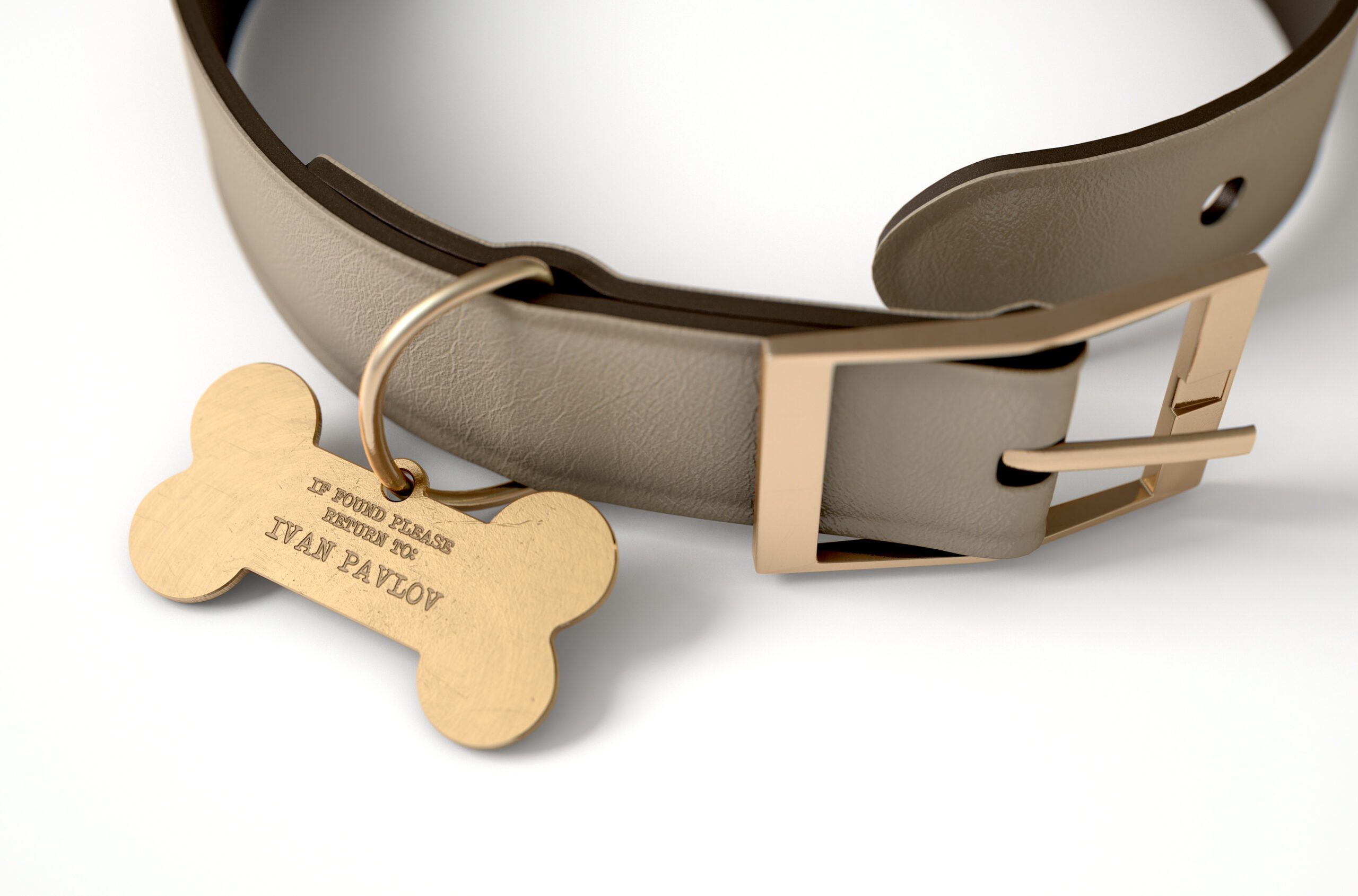
Your mental and emotional states are shaped, dominated, and ruled by outside factors that are non-responsive to your own will. And you may well be deceiving yourself that you are autonomous, self-directed, free, and impacted in life only by the things you will and choose. In Reality, you are just a bi-pedal version of Pavlov’s dog, and just about as free.
As they say, “If the collar fits…”
You have allowed yourself to be classically conditioned to respond to all sorts of stimuli that you have No. Power. To. Change. Instead, those external things are changing you.
For me, not a single thing either Donald Trump or Joe Biden or Kim Kardashian or Matt Gaetz or Bob Weir or Mitch McConnell or Major League Baseball says or does today will add or detract from my actual life. My hunch is that is equally true for you, Dear Reader, if you would allow yourself to take off your ”Angry glasses” or your ”Victim glasses” or your ”Righteous glasses” and just look with your own eyes and reason, at the measurable impact on your life these people (you either feel so allied with or so opposed to) actually have on your day.