Category: Psychology

  • Listening To The Grateful Dead Will Teach You Everything You Need To Know — But You Must Also Dance

    Listening To The Grateful Dead Will Teach You Everything You Need To Know — But You Must Also Dance

    # 99 on my 99 Life Tips–A List is: You can learn everything you need to know in life from listening to the Grateful Dead — but you must also dance.

    The Godfather is the i-Ching, I beg to differ

    My tip is a derivative of this Godfather scene in You’ve Got Mail, the 1998 rom-com starring Tom Hanks and Meg Ryan. In the classic scene, Hanks answers Ryans questions with references to the Godfather, assuring her it is the “answer to every question,” the “i-Ching,” and “the sum of all wisdom.” It is a brilliant scene Hanks pulls off with aplomb, throwing in some impromptu Brando imitations for emphasis.

    I love the scene, but beg to differ. My go-to source is the Grateful Dead. Within their musical catalogue is everything you need to know. Non DeadHeads don’t understand (and don’t want to know) how their music infiltrates, penetrates, and saturates a Dead fan’s mindset to the last brain cell. 

    “For the truly Deadicated, theMusic Never Stops” 

    My someday book

    I plan to write a book in which every chapter will be a life-topic with related song titles — like this sampler:

    • Love — They Love Each Other, Sugar Magnolia, Not Fade Away, Comes A Time
    • God — Hell in A Bucket, Lay Down My Brother, Wharf Rat
    • Family — Me & My Uncle, Brother Esau, Mama Tried
    • Relationships Row Jimmy, He’s Gone, Cold Rain & Snow
    • Politics — Throwing Stones, Standing On The Moon
    • Philosophy — Terrapin Station, St. Stephen, Eyes of the World, Box of Rain
    • Justice — Dupree’s Diamond Blues, Stagger Lee, Viola Lee Blues
    • Economics — Deal, Loser, Easy Wind, Big Boss Man
    • Psychology— China Cat Sunflower, Brown-Eyed Women, The Other One
    • Death— Death Don’t Have No Mercy, To Lay Me Down, Brokedown Palace, Black Peter

    This partial, non-exhaustive listing is exemplary of how songs in their extensive repertoire have application to every aspect of life. Like I said above, you can learn everything you need to know from listening to the Grateful Dead.

    Discovering all these connections made the music the soundtrack of my life; and one of my favorite lyrics serves up advice for all life’s uncertainties:

    “If you get confused, listen to the music play”

    ~Grateful Dead: Franklin’s Tower

    One Flew Over The Cuckoo’s Nest

    As a young adult, I got lost for several years in the hippy lifestyle (including the drug use part). I travelled cross-country following the band from show to show. The community was like none I’ve experienced since. The traveling kaleidoscope of clowns was family — a home on the road. 

    On my journey in 1985, I met Ken Kesey, author of One Flew Over the Cuckoo’s Nest, himself instrumental in the hey-day of what is known as the 60’s movement, and equally pivotal in the Dead’s beginnings as the house band for the infamous San Francisco Acid Tests so marvelously chronicled in Tom Wolfe’s seminal volume, The Electric Kool-Aid Acid Test

    I went to dozens and dozens of shows became more and more lost in the mysticism and mythology and mis-application of truths and nearly lost my physical and mental health in the melee. 

    A year later, I met someone even more famous than Kesey. At a show in March of 1986, I met Jesus. My life forever changed, though the music has remained the soundtrack of it. The accoutrements of drugs and touring, I left behind. They aren’t necessary. They really never were. The music itself is a healing gift. One I’m Grateful to God to still enjoy. 

    Dance as if your life depends on it

    So many Grateful Dead songs are about impending mortality. The idea is in their very name. A fellow writer on Medium wrote this beautiful essay Accepting Your Mortality is the Beginning of Living Well. I heartily concur. The Grateful Dead’s music helps remind me. And it reminds me that the only effective antidote against an encroaching death is to live, to sing, and by God, to dance.

    Is there anything more celebratory, more filled with life and joy, the kind of life-celebration powerful enough to mock death — than dancing in the face of it?

    I think often of the story in the Old Testamanet, when the Ark of The Covenant was restored to Israel and Jerusalem after spending months and years outside the city, a young King David danced in such ecstatic jubilation, he danced right out of his clothes. 

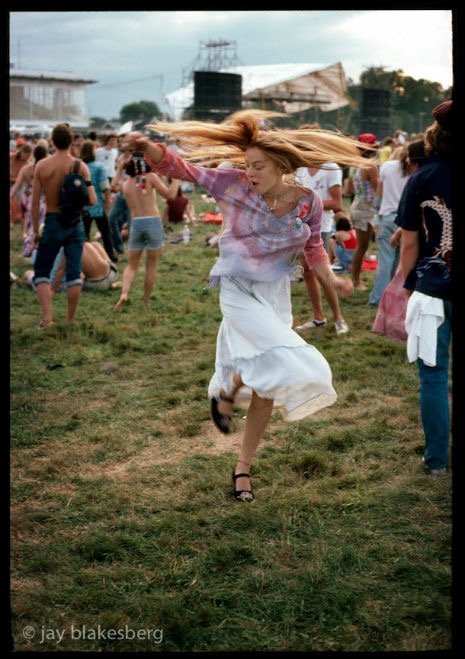
    I still dance that way — celebrating life — warding off death. Now, I spin and whirl and shake my bones in the privacy of my home. Almighty God is the recipient of my Gratitude as He watches the overflow of my pent-up life. Nothing expresses exultation for the joy of living the way dancing does. As I dance before my God, the band playing is Jehovah’s favorite choir, the Grateful Dead.

    Everything you need to know—Just remember to dance

    So yes, I’m quite convinced, you can learn everything you need to know in life from listening to the Grateful Dead… but you must also dance.

    “Sometimes the songs that we hear are just songs of our own.”

    ~ Grateful Dead: Eyes Of The World
  • Why You Should Be Motivated By Hope

    Why You Should Be Motivated By Hope

    be motivated by hope more than by fear
    Photo by Don Pinnock on Unsplash

    # 94 on my 99 Life Tips–A List is: As much as lies within you, be motivated by hope more than by fear. 

    For your entire life, two great underlying motivators have debated and fought over all your decisions — hope of gain and fear of loss. These two combatants, working in opposition, have driven you to do, or not do, to opt for, or against, every choice having meaningful results from the time you were old enough to exercise free agency (self-direction in your preferences).

    Scan through a listing of headlines and sub-titles on Medium, or any platform like it. Nearly all seek clicks and readers by triggering hopes or fears. I recently read an interesting article on Medium by Ashley Broadwater that admits playing upon reader’s fears hoping to make headlines go viral. Similarly, look at a news media website. It’s nearly all fear… with a sprinkling of hope. This isn’t a judgement—merely an observation you may not have noticed or framed in these terms. 

    Can you guess which of these is the strongest, most predominant? Do people prove to be motivated by hope more than by fear? Sadly, no. The dominant motivator is fear, as shown in this research paper

    Fear has Instagram

    Quicker to act on the brain, fear stimulates a more primal region, causing autonomic physical responses in a way that hope does not. Fear is the Tony Robbins of motivational speakers shouting at your brain. (Not that Tony himself motivates by fear, he’s just bigger and louder—look at his website).

    Hope is meek, mild-mannered Seth Godin. (Compare Seth’s website). Like Seth, Hope relies on an understated, minimalist style and aesthetic. It is an emotional motivator that comes from higher, cortical levels of passive brain activity and more rational and active reasoning. Yes, hope is there, but seems a little unsure of itself, almost apologetic, as if it would be too much of an imposition or interruption if it were suddenly to speak up and assert itself. 

    Not Fear. Like a lie, Fear is halfway around the world before Hope can put on its pants. Except in our case, fear has taken over the brain before you can arouse hope to compete. Hope won’t cause an adrenaline dump. It won’t make your heart climb into your throat. Fear will do both those things then post it on Instagram. 

    These two, one larger and louder, the other more suppressed and quiet, are so ingrained, and one in particular, fear, so deeply rooted into both your physiology and psyche, you may not be aware of either. You cannot see them anymore, you’ve grown so used to them. Which is exactly why I’m writing this. I want you to be aware. You NEED to be aware. You’re making all of your decisions at their behest.

    Fear wins on points

    Fear wins on points as the dominant motivator. But it has an unfair advantage gained by being first to the market, so to speak.

    Neurophysiologists and psychologists agree that fear appeared very early in evolutionary brain development. It is the proverbial lizard-brain. This makes sense. Responding to saber-tooth tigers quickly can save your life more than contemplating Sartre and metaphysics hoping to create more inspirational cave art. Fear is why the art is in caves — and hope is why, even in caves, there is art.

    Think of the fear that would drive humans to live in caves, and the hope that would inspire them to create art on their walls. Beautiful and inspiring isn’t it?

    Fears and hopes and dreams of our own

    And that’s you and me. We have fears that drive us into our own caves. Both you and I seek protection and security. We hate the idea of loss. We are afraid to fail. These fears make us tolerate conditions we would never encourage a loved one to accept. Some fears paralyze our most precious dreams. Until the hope of their realization whispers in our ear, and we take up the pen, or the brush. Other fears cripple our resolve and erode our self-esteem—until we confront our demeaning and demanding boss, break free from an abusive relationship, and go for our hopes.

    Hope, meek, mild-mannered hope is all we have to nudge us forward out of comfort, and safety, and certainty. Hope encourages us with promise, prospect, potential, and possibility in our struggle to overcome fear. We overcome fear, all of it, by reaching for the hope of something better, something more than, even though we put everything at risk to arrive there.

    So, dear friends, as often as you can, be motivated by hope more than by fear. At the very least I hope by reading this you’re stirred to a new cognizance of what motivates you on a day-to-day basis and especially what drives the most impactful, big-picture decisions you make.

    More to say and the takeaway for now

    There is more to say on this subject than can I can address in one article. I’ll be working on related stories on this topic, having only scratched the surface in my background research. The relation of hope and fear to behavioral economics, politics, labor markets, relationships, and social justice movements are all topics I hope to write about. I’m excited to discover more, and I hope my findings will assist in your life’s journey.

    As a writer, I know the mind-crippling fear you must overcome (repeatedly) hoping your work can be meaningful to others—not just scoffed at and cast aside. Kudos to all of you who face down that elemental fear to paint, to sculpt, and to write on the walls of your own caves — and who invite us to take a peak. I see your art, and I see you. I think that’s what you, me, and all creators are hoping for.

    Just take this away; these two principle motivators impact all of your decisions. Scan your history to determine which has prevailed to this point. Motivated by hope, I equipped you with a fresh awareness to help you determine which will prevail as you go forward. It is my earnest hope that you will be motivated by hope more than by fear.

  • Just Because You’ve Read About It Doesn’t Mean You Know About It

    Just Because You’ve Read About It Doesn’t Mean You Know About It

    you've read about it
    Photo by Kelcy Gatson on Unsplash

    # 24 on my 99 Life Tips–A List is: Reading about something is not the same as doing something. Reading a story about Paris is not the same as actually visiting Paris. This applies to every aspect of reading. As valuable as it is, it is no substitute for experience.

    The intended audience for this tip is the ardent, imaginative reader. Your mind can trick you into believing you’ve done and experienced something because you’ve read about it. You may convince yourself you’ve learned all there is to know because you’ve read about it. I don’t mean to imply your reading will cause a psychotic break with reality. But the emotional and intellectual engagement stirred by reading good writing creates a world. A real one. And sometimes it’s difficult for the most intelligent to realize that all the things they’ve read about, and therefore felt as if they were present seeing, hearing, feeling, fighting, loving, longing in the scenes and characters is real only in their mind. Perhaps this has happened to you.

    I am not being disparaging. Real in the mind is real. There is nothing more “real”. But no one is a trout fisherman because they read a story about trout fishing outside Pamplona. Even if you recall details like the crisp newspapers to wrap the day’s catch in. And regardless whether you can almost taste the dust from the bus ride back to town. Dust you’ll quench with Sangria in the bar in time for the day’s bull running. No, dear reader, reading about drinking red wine won’t stain your teeth or make you drunk. Even when Hemingway is writing the tale.

    I always think of two things in relation to this tip:

    The first is the scene in Good Will Hunting in which Robin Williams’ psychiatrist character chastises Matt Damon’s ne’er do well savant character. Damon’s Will Hunting receives a dressing down for being so smug. He’s never actually done the things he’s read about. He’s never been out of Boston. Although he could recite all kinds of facts about Michelangelo, gleaned from the books he’s read, he doesn’t know what it smells like inside the Sistine Chapel. Because he’s never been. “You’re Just A Kid”. Williams’ character tells him. He’s never really been in love. He’s merely read about a lot of things. Though he can provide brilliant analysis with his near perfect recall, reading is no substitute for the actual streets of Rome. It’s a fantastic scene.

    The second is on a cross-country car trip when I was 20. I had picked up a Frenchman named Dominic hitchhiking from Binghamton, NY, on his way to see a girl in Sterling, CO. After a side-trip to New York City we started west. On the second day, Dominic grew critical of the countryside in his fatigue at seeing the farms and cornfields along the interstate. 

    As night fell on a long day of driving, my passenger got impatient. He pleaded with me to get out of the cornfields. After seemingly endless miles of nothing but corn, we saw an exit towards a town. Maybe it would be a more suburban, less pastoral view. I could drive forever at that age, but the corn was like a green ocean. I was suffering sensory deprivation. Plus, we were forced to limit our expenditures to fuel and food. We would not waste precious money on a hotel for the few hours of sleep we’d need before heading out again. I either needed to drive on to a rest stop, or find a suitable place.

    This is the West

    We came off the interstate and I turned off the service road onto a long, wide 2-lane in western Ohio. Mailboxes dispersed on either side marked the corners of front yards as big as baseball fields. Dark, wood-framed farmhouses sat well back from the road. Only occasionally did we see a light in a window. Still, Dom suggested I pull off into one of the front yards where we could sleep. He insisted we could set up my tent beside my Toyota, or sleep under the stars in our sleeping bags. 

    “What? Right in their front yard?” I said, “Have you lost your mind?”

    “Oh, not at all,” he replied in good but broken English, “This is the West, I have read all about it.”

    “Oh,” says I, “you’ve read about it. Good. Then you’ve no doubt read about shotguns, too.”

    I kept right on driving, headed back nearer the interstate, away from Dom’s temptation to get us shot at or dog bit, and eventually found a dirt farm road leading back into a cornfield where we would be safe and could get a few hours shut eye.

    “I have read about it.” I’ll never forget that. Don’t you forget it either.

  • How Music Affects Your Emotions Directly

    How Music Affects Your Emotions Directly

    # 23 on my 99 Life Tips–A List is: Music bypasses your thoughts to affect your emotions directly. It is unique among art forms for this quality as far as I’ve discovered. Take care then, what you are inviting to stir your emotions.


    Music affects emotions and brain responses in emotional centers regardless of lyrical content, or whether the pieces are solely instrumental. There is a body of brain imaging and clinical proof that music bypasses your thoughts to affect your emotions directly.

    This topic is worthy of a book or a doctoral thesis on its own. I will limit my commentary to calling your attention to the facts stated. Of note is that one study linked above showed that hearing sad music provoked some people to deeper levels of sadness.

    “… the study found that for some people, sad music can cause negative feelings of profound grief.”

     ~ Memorable Experiences with Sad Music—Reasons, Reactions and Mechanisms of Three Types of Experiences published in Plos One

    Emotions usually spring from thoughts

    Emotions usually arise as the products of thoughts, and independent of willing them into existence. A person can choose to be happy, but cannot by willing it, make it so directly. One cannot will happiness. One must first think happy thoughts… or listen to happy music. Music affects your emotions directly, not needing the mind to act as conduit.

    I am listening to jazz by Art Pepper as I write this. This is the first time I’ve immersed myself in an hour of his playing. I am familiar with him as a jazz musician only because I’ve read references to him in some Barry Eisler books, and I’ve heard snippets of tunes while watching the Bosch detective series derived from Michael Connelly’s novels. (You can stream Bosch on Amazon Prime Video).

    Having no familiarity with Pepper’s music, I am enjoying his fluid, sensual, upbeat, even cheerful jazz clarinet and saxophone as the perfect accompaniment to writing. There is nothing melancholy or depressing about it. It is urgent and energetic—sometimes staccato, phrased like well punctuated sentences. He plays woodwinds the way a hummingbird flies, darting here and there—never still for long. There is nothing angry, and certainly no rage. I find myself carried along, fully engaged with the virtuosity of expression, the coolness of style that draws me in like a whisper rather than repelling me like a shout.

    Ray Bradbury said the best jazz musicians play as if they don’t believe in death. An hour or so in and I know Pepper is an unbeliever, too. Listening to him I don’t believe in death, either. Rather, I feel smarter, more sophisticated and cosmopolitan—more vibrant and alive. It would be the perfect soundtrack for a dinner party, or an art crawl. Perhaps to serenade a gathering of happy, comfortable friends as they sample wines, cheeses, and chocolates. I like it. It makes me feel good and I will add Pepper’s jazz to my rotation.

    You have your favorite music. Ask yourself what it does for you. How does it make you feel? Do you have a “go to” band or song?

    Music as mental health medicine

    I have a life-rule not included on my 99 Life Tips list, but it would easily be the hundredth tip. Never, ever drink when you’re down. That, too, is a story in its own right. You should, however, have some healthy alternatives for self-medicating your mental health. I find there is nothing better than music. The studies linked above cite the therapeutic value of music as well. Music affects your emotions. Just take care to recognize which emotions you’re inviting yourself to feel when you make your choice of music to listen to.

    “Dear Mr. Fantasy, play us a tune

    Something to make us all happy

    Do anything, take us out of this gloom

    Sing a song, play guitar, make it snappy

    You are the one who can make us all laugh

    But doing that you break out in tears

    Please don’t be sad, if it was a straight mind you had,

    We wouldn’t have known you all these years”

    ~Traffic: Dear Mr. Fantasy
  • If You Want To Dance, You Have To Pay The Piper—And Other Sacred Verses Of My Youth

    If You Want To Dance, You Have To Pay The Piper—And Other Sacred Verses Of My Youth

    # 93 on my 99 Life Tips–A List is: If you want to dance, you have to pay the piper.

    This advice is from my Uncle. He said it so often that it is now enshrined in my life’s accepted canon. 

    This sacred tidbit is 1 Kurt 1:1.

    It stands beside other canonized wisdom I received as a kid from those more wise than I.

    My Granddaddy, Leo, used to say things like, “The faint heart never won the fair maiden.” 

    And, “Look before you leap.” 

    And “Nothing good ever happens after midnight.” 

    (Much later I would tell him he had never been out with me after midnight except to go flounder gigging).

    He said these things so-matter-of-factly and with such conviction he also has a book in the canon—First Leo.

    It is filled with priceless treasures, sometimes mixed with half-scriptures, like “the wages of sin is death.” Sometimes he elevated his extra-biblical quips to Divine status by asserting things like, “You know the Good Book says one in the hand is worth two in the bush.”

    A melting pot of wisdom

    I would shake my head and roll my eyes. But I didn’t dare try to dissuade him from mingling those aphorisms from Poor Richard’s Almanac and other dubious sources into a melting pot of wisdom. After all, I wasn’t “old enough for my wants to hurt me.”

    But, the one from my Uncle stands out, both for its succinct truth, and for its unfailing accuracy. 

    If you want to dance, you have to pay the piper.

    Other memorable verses from my Uncle include the timeless, “Let’s put her in the wind.” 

    He always said this at the end of a long workday when the power saws had screamed their last, the smell of fresh cut pine was hanging in the air, the tools were all gathered and put away, the job site was prepped for tomorrow, and power cords collected, coiled and looped like lassos. 

    That magical phrase signaled quitting time. It conjured sailing away towards a better shore, or riding off into the sunset, or exiting the stage into an evening of rest, relaxation, and recuperation, usually accompanied by a cold beer. Hearing it,  just as remembering it now, induces a Pavlovian response. Your face parts in an involuntary smile, and you’re ready to tap a reserve of strength to pack up and go—away from work and towards play.

    My Uncle and Granddad shared a common desire that propelled their energies. They wanted to play! So they worked hard to fully enjoy the play of not working in the interim. Neither one ever uttered something so mundane as “Work Hard, Play Hard.” But they lived it. And it rubbed off on me.

    I do want to dance. Both literally (sometimes), and figuratively (daily). To dance is to play. In my mind, I hear my uncle, and dance becomes representative of play. To do so, I work, cause you have to pay the piper, as it says in First Kurt chapter one. So, you too, remember this advice, if you want to dance, you have to pay the piper.

  • Never Ignore Your Conscience—Even If Tempted By Camisoles, Honeysuckle, and Dreams

    Never Ignore Your Conscience—Even If Tempted By Camisoles, Honeysuckle, and Dreams

    Never Ignore Your Conscience
    Photo by Jan Segatto on Unsplash

    # 82 on my 99 Life Tips–A List is: Never ignore your conscience. It is the only internal compass you have to accuse or excuse your behavior. Ignore it at your peril.

    Your conscience is to your future moral life as the ability to feel heat from a burner is to your future sense of touch. Ignore it at your peril. You should never ignore your conscience. It’s a pre-loaded tool that either excuses or accuses your thoughts and behaviors. A moral compass if you will.

    A clear conscience, free from internal, self-directed accusations and recriminations, is essential to peace of mind. And peace of mind, one of the highest of all ends to be sought for its own sake, is essential to a good life. Therefore, if you hope to have the peace of mind that enables a good life, don’t ignore your conscience.

    Alternately, you can lie to yourself, cover up your faults, sins, and poor treatment of others telling yourself you’re not as bad as Osama Bin Laden or Hitler, so you’re probably still not on God’s naughty list, since you aren’t as bad as you could be.

    But face it, a good life is really a life in which you’re as good as you can be in every area of which you exercise any degree of agency and control. No one would define the good life as the one in which you fail to be as bad as you could have been.

    Fear and Longing in a Camisole

    I remember my initial wrestlings with my conscience and the FEAR OF GOD! 

    Boy, do I! It involved some strange things happening in my dreams because of a raven-haired “sitter” who read me sections of the Hobbit in a too-sheer camisole . (She was my grandfather’s second wife’s 19-year-old daughter.) I remember the feel of her silken smooth arm against my pre-teen shoulder, propped up on pillows, listening to Gollom’s riddles. I remember how she smelled of honeysuckle. And I remember the unbidden and uncontrollable, and horrible longings all that innocent sensuality provoked.

    Soon, the honeysuckle-scented camisole’d sitter was in my dreams too! How did she get there? And, well… let’s just say my conscience worked just fine.

    It was my first encounter with the lifelong truth so ably depicted in the Grateful Dead’s Dupree’s Diamond Blues:

    “That jellyroll will drive you so mad!”

    Look, there are things you can control and things you can’t. Don’t fool yourself. And don’t attempt to fool God either, remember:

    “Do not be deceived, God is not mocked; for whatever a man sows, that he will also reap.”

    ~ Galatians 6:7, NKJV

    The Takeaway

    Look, after all that 19-year old in a camisole, and honeysuckle, and dreams, you’re not stupid. You get the takeaway. I’m trying to keep a clear conscience here.

  • How You Feel Matters Less Than What You Do—Refocus Your Attention For Better Results

    How You Feel Matters Less Than What You Do—Refocus Your Attention For Better Results

    How you feel matters less than what you do
    (Adobe Stock Image: Licensed to Author)

    # 74 on my, 99 Life Tips–A List is: Think less about how you feel and more about what you should do.

    The people I know who spend the most time analyzing how they feel consistently feel the worst. I may confuse correlation with causation, a common problem, but the predictability of this outcome led to the tip above. 

    For consistently better feelings, how you feel matters less than what you do. If you will refocus your attention, you’ll feel better,… and be more productive, to boot.

    I’m on a sometimes weight loss (sometimes weight gain) regimen known by its common name as a “diet”. To track progress, I stand on a scale hoping it doesn’t chuckle and say, “One at a time, please.” I can see the number. It is measurable, serving as an indicator of whether I can afford to drink a beer. 

    There is no empirical scale for emotional states

    Seriously though, emotional states don’t work that way. There is no objective, empirical scale. 

    Asking someone whose emotional states fluctuate dangerously how they feel on a subjective 5-point scale is the equivalent of asking an obviously drunk person if they’re drunk, and what they think they’d blow. Chances are high you will not get an accurate answer.

    Maybe I’m different, but whenever asked to pick from three emoticon faces ranging from sad—to neutral—to happy, nine times out of ten, I’m neutral. I seldom think about how I feel. 

    When I feel good, I just enjoy it. It doesn’t occur to me to stop and evaluate whether I’m at a 3.5 or 4. If I feel bad; I figure out why, what I’m thinking, what it would look like fixed, and what I can do about it. I don’t ponder whether I’m feeling a dismal 1 or perhaps as high as a 2. Degree is irrelevant.

    If you get stuck here, analyzing and cataloguing your feelings, you may wish to reconsider. How effective is it? What does your subjective answer about your subjective feelings tell you except in the most general terms?

    It is important to know how things make you feel so that you can do something to either recreate them or eliminate them. The action you take is the key thing.

    I’ve written about the relationship between emotions and thoughts, so this is where I start when I feel bad. My thinking is the usual culprit. I don’t start by figuring out how bad I feel. I don’t press on my emotions like I do bruises. If I feel bad at all, that’s bad enough to take action.

    You most definitely figure out what you’re feeling so you can act accordingly. What you feel and how much you feel are different. Yes, figure out what you’re feeling; think less about how you’re feeling, and figure out what you should do. 

    Because ultimately, how you feel matters less than what you do.

  • Overcoming Anxiety—Stop Making Worry Payments On A Lay-Away Plan

    Overcoming Anxiety—Stop Making Worry Payments On A Lay-Away Plan

    Overcoming Anxiety
    Photo by Uday Mittal on Unsplash

    # 72 on my, 99 Life Tips–A List is: Remember that anxiety is making payments of worry in the present for a future outcome that hasn’t occurred yet. There will be plenty of time to feel bad about that outcome when it arrives. 90% of the time, it won’t.

    The temptation when writing about overcoming anxiety is to sermonize Philippians 4:6, which starts with an imperative commandment:

    Be anxious for nothing…

    While the prohibition against anxiety is as binding as those against murder, adultery, and lying, this one usually gets a pass.

    We treat it as an affliction, or disease, more than as a volitional sin. That’s hard to even put in writing. I have such empathy for those in my life who suffer with sometimes debilitating bouts of anxiety.

    Nor have I been immune. But my tip above shows how I deal with it and to date, how I’ve successfully prevented succumbing to it.

    Recognize what anxiety is. It is present-tense worry about a future outcome. We rarely feel anxious about past events. There may be regret or even depression over some past misfortune or tragedy. Depression seems to occupy the past predominantly. But we rarely worry about events behind us.

    Anxiety about the future is the desire for reassurance and certainty that are impossible to give or receive. The uncertainty creates worry universally dominated by things out of your control. Wasting emotional energy on what you cannot control is debilitating.

    But you don’t need me to tell you that.


    Be Here, Now

    You cannot stop how you feel unless you refuse to get into the mental time capsule that keeps playing images for you of events that haven’t happened yet. 

    It takes a concerted effort to be present to right now.

    It is staying present to right now that defeats anxiety. It is the only thing that consistently does.

    Focus on the moment and the resources you have on hand to meet it. You don’t need resources for tomorrow yet, or for next week, or next month. When those moments arise, you’ll find the resources you need. Those scenes you fear, the ones playing on the future-projector in your head, may never happen. Leave room in your thinking for the possibility that unforeseen factors and forces may edit them out completely of your future.

    One thing about that verse from Philippians; it mentions Thanksgiving, or gratitude. One of the surest, most powerful tools in your arsenal against either anxiety or depression is the practice of present-tense gratitude

    It is impossible to be grateful and anxious, or grateful and depressed, at the same time. Gratitude is key to overcoming anxiety.

    Relish with gratitude every simple pleasure and praise-worthy thing in your life that is yours right now. That breath you’re taking might be a good starting point. You got this.

  • Do Not Take Yourself Too Seriously—No One Else Does

    Do Not Take Yourself Too Seriously—No One Else Does

    Don't Take Yourself Too Seriously - Like this sailboat, you are in motion and changing.
    Photo by Kristel Hayes on Unsplash

    # 67 on my 99 Life Tips–A List is: Do not take yourself too seriously. You aren’t the same you as you were at five, or perhaps at twenty-five. You are fluid and dynamic. Today’s “you” may vanish tomorrow, just as a stormy, wind-tossed ocean may tomorrow be as smooth as glass.

    Learn to laugh at yourself

    The ability to laugh at oneself is a life skill to cultivate. It’s tied to the realization, often hard won, that you are fallible and sometimes weak but still resilient and worthy of love. You are a work in progress. The edits aren’t all in. So don’t take this present draft, this iteration, too seriously. 

    The capacity for change is one of the enduring and ennobling traits of this life. From birth, we change and morph and develop and grow. Our beliefs vacillate, our energies fluctuate, faced with defects we compensate, and all of this admixture forms a distillate; the current self occupying today. 

    So, for the semblance of stability, if we’re both lucky and wise, we discover some values around which to pour concrete and anchor down. We drop anchor on a belief, or a lover, or a quest. You can find us moored there for a while. 

    As sure as the wind changes, our course can change, too. We can hoist the anchor, scrape the barnacles, unfurl the mainsail, and ride the wind. You may not see me here tomorrow. It’s possible tomorrow’s version may be different altogether—other than the wrapper. If I haven’t spoken to you in 5 years, I’ll wager you’re a different person. The physical resemblance might prove vaguely familiar, but internally you will have changed. There is plenteous truth in the trope:

    “We are always in the process of becoming. Self-identity is a fusion of our prior decisions and our current thoughts.”

    ~ Kilroy J. Oldster: Dead Toad Scrolls


    Think of the applications in your life. Your age, your health, your knowledge, your experience; all are in flux. What’s your longest running good habit? Which version of you should we take seriously? Which is the real you?

    Nothing in life is static

    Now, lest I wax too poetic, or else get too serious in a ditty contrived to convince you not to take yourself too seriously, let me encourage you with those words of wisdom that have come to us through the years:

    This too shall pass.

    ~ Anonymous

    I hated hearing that during a struggle. Because in the middle of one you’re consumed. It’s serious business. Sometimes you can’t see your way out or to the other side. But friend, there is a way out, and there is another side. And either way, like it or not, the quote is true, and the struggles we face turn us into different versions of ourselves. I find it helpful to remember neither good fortune nor bad lasts forever, as it says so poignantly in the Grateful Dead’s Stella Blue: 

    “There’s nothing you can hold for very long.”

    ~ Grateful Dead: Stella Blue

    Since our layover on this plane of existence is so brief, let’s not get too bogged down in the mire and minutiae of personal insults and minor snubs. Better to smile, shrug, and move on. Exemplify resilience. On the other hand, when you’re riding high in April, remember not to gloat, May is coming.

    So, let’s laugh more than we cry and love more than we hate and like good boy-scouts, let’s leave things better than we found them. Do not take yourself too seriously. After all, no one is going to remember all the great things you do for yourself, nor all the high-minded opinions you espoused. They’ll remember what you did for them and how you made them feel. Take others seriously and you’ll do a lot more good, receive lots more love, and have a lot more fun.

  • Selective Attention–You Cannot Trust Your Eyes For All That Is Real

    Selective Attention–You Cannot Trust Your Eyes For All That Is Real

    # 65 on my, 99 Life Tips–A List is: You cannot trust your eyes for all that is real.

    “So I give you my eyes, and all of their lies

    Please help them to learn as well as to see”

    ~ Grateful Dead: Black-Throated Wind

    One of the best examples of this truth is this video, known as the Monkey Business Illusion.

    How did you do?

    Selective Attention is a thing

    We have eyes only on the fronts of our heads. This means in order to see something, we must face it. You can only see in the direction you’re looking. Does this mean that nothing exists in outside your field of vision? Of course not, but it means you must look for and look at something in order to see it.

    Add to this the fact that it is not the eyes that see. It is your brain. Neuroscientists know that the brain create and feeds an image of the world into our conscious perception of reality. It generates a moment-by-moment hallucination. How weird is that? The ramification is that we’re always playing catch up to the present, and that what our brains show us via the openings in front of our heads is the best-case prediction of what the next millisecond ought to look like.

    And even within your field of vision, as the video linked above shows, about 50% of viewers don’t see something even if it happens in the direction they’re looking. I didn’t the first time I watched the video, which my children could have easily predicted. They’ve known for years the easiest way to hide something from me is to hide it in plain sight. We won’t see what we aren’t paying attention to, or if we are distracted by giving attention to something else. For me, that’s often a book (which means I can’t hear, either).

    But I’ve had the belief for as long as I can remember that there is more going on in reality than meets the eyes. Of course, we know that to be true scientifically. The fact that you cannot see in the infrared spectrum doesn’t mean bees cannot. They do in fact. And they see well into the ultraviolet spectrum, well beyond human visual capability.  It’s speculated that venomous snakes see infrared as heat signatures as well, so be careful out there.

    The point of my tip is that our eyes are not the final determinants as to what is real. Without a long harangue about metaphysics and the nature of consciousness and reality in general, suffice it to say that, while you can trust your eyes for the tasks they’re well suited for, you cannot trust your eyes for all that is real.