Tag: life advice

  • Listening To The Grateful Dead Will Teach You Everything You Need To Know — But You Must Also Dance

    Listening To The Grateful Dead Will Teach You Everything You Need To Know — But You Must Also Dance

    # 99 on my 99 Life Tips–A List is: You can learn everything you need to know in life from listening to the Grateful Dead — but you must also dance.

    The Godfather is the i-Ching, I beg to differ

    My tip is a derivative of this Godfather scene in You’ve Got Mail, the 1998 rom-com starring Tom Hanks and Meg Ryan. In the classic scene, Hanks answers Ryans questions with references to the Godfather, assuring her it is the “answer to every question,” the “i-Ching,” and “the sum of all wisdom.” It is a brilliant scene Hanks pulls off with aplomb, throwing in some impromptu Brando imitations for emphasis.

    I love the scene, but beg to differ. My go-to source is the Grateful Dead. Within their musical catalogue is everything you need to know. Non DeadHeads don’t understand (and don’t want to know) how their music infiltrates, penetrates, and saturates a Dead fan’s mindset to the last brain cell. 

    “For the truly Deadicated, theMusic Never Stops” 

    My someday book

    I plan to write a book in which every chapter will be a life-topic with related song titles — like this sampler:

    • Love — They Love Each Other, Sugar Magnolia, Not Fade Away, Comes A Time
    • God — Hell in A Bucket, Lay Down My Brother, Wharf Rat
    • Family — Me & My Uncle, Brother Esau, Mama Tried
    • Relationships Row Jimmy, He’s Gone, Cold Rain & Snow
    • Politics — Throwing Stones, Standing On The Moon
    • Philosophy — Terrapin Station, St. Stephen, Eyes of the World, Box of Rain
    • Justice — Dupree’s Diamond Blues, Stagger Lee, Viola Lee Blues
    • Economics — Deal, Loser, Easy Wind, Big Boss Man
    • Psychology— China Cat Sunflower, Brown-Eyed Women, The Other One
    • Death— Death Don’t Have No Mercy, To Lay Me Down, Brokedown Palace, Black Peter

    This partial, non-exhaustive listing is exemplary of how songs in their extensive repertoire have application to every aspect of life. Like I said above, you can learn everything you need to know from listening to the Grateful Dead.

    Discovering all these connections made the music the soundtrack of my life; and one of my favorite lyrics serves up advice for all life’s uncertainties:

    “If you get confused, listen to the music play”

    ~Grateful Dead: Franklin’s Tower

    One Flew Over The Cuckoo’s Nest

    As a young adult, I got lost for several years in the hippy lifestyle (including the drug use part). I travelled cross-country following the band from show to show. The community was like none I’ve experienced since. The traveling kaleidoscope of clowns was family — a home on the road. 

    On my journey in 1985, I met Ken Kesey, author of One Flew Over the Cuckoo’s Nest, himself instrumental in the hey-day of what is known as the 60’s movement, and equally pivotal in the Dead’s beginnings as the house band for the infamous San Francisco Acid Tests so marvelously chronicled in Tom Wolfe’s seminal volume, The Electric Kool-Aid Acid Test

    I went to dozens and dozens of shows became more and more lost in the mysticism and mythology and mis-application of truths and nearly lost my physical and mental health in the melee. 

    A year later, I met someone even more famous than Kesey. At a show in March of 1986, I met Jesus. My life forever changed, though the music has remained the soundtrack of it. The accoutrements of drugs and touring, I left behind. They aren’t necessary. They really never were. The music itself is a healing gift. One I’m Grateful to God to still enjoy. 

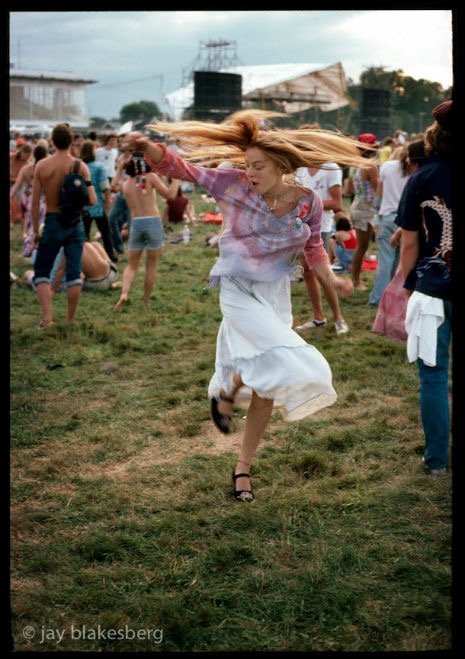
    Dance as if your life depends on it

    So many Grateful Dead songs are about impending mortality. The idea is in their very name. A fellow writer on Medium wrote this beautiful essay Accepting Your Mortality is the Beginning of Living Well. I heartily concur. The Grateful Dead’s music helps remind me. And it reminds me that the only effective antidote against an encroaching death is to live, to sing, and by God, to dance.

    Is there anything more celebratory, more filled with life and joy, the kind of life-celebration powerful enough to mock death — than dancing in the face of it?

    I think often of the story in the Old Testamanet, when the Ark of The Covenant was restored to Israel and Jerusalem after spending months and years outside the city, a young King David danced in such ecstatic jubilation, he danced right out of his clothes. 

    I still dance that way — celebrating life — warding off death. Now, I spin and whirl and shake my bones in the privacy of my home. Almighty God is the recipient of my Gratitude as He watches the overflow of my pent-up life. Nothing expresses exultation for the joy of living the way dancing does. As I dance before my God, the band playing is Jehovah’s favorite choir, the Grateful Dead.

    Everything you need to know—Just remember to dance

    So yes, I’m quite convinced, you can learn everything you need to know in life from listening to the Grateful Dead… but you must also dance.

    “Sometimes the songs that we hear are just songs of our own.”

    ~ Grateful Dead: Eyes Of The World
  • Don’t Let The Love Of God Hit You In The Back

    Don’t Let The Love Of God Hit You In The Back

    don't let the love of God hit you in the back
    Photo by Eleni Bellou on Unsplash

    # 34 on my 99 Life Tips–A List is: The love of God is like light from the Sun. If you turn your back on the Sun, the light will hit you in the back.

    I’m writing so you don’t let the Love of God hit you in the back. In the Bible, or Christian scriptures, there are many references to the love of God. Here is a listing of some of the more well know of them. Leaving aside very thorny, legitimate questions about the existence of evil and pain in the world for now, I will focus on one verse:

    Whoever does not love does not know God, because God is love.

    ~ 1 John 4:8, NKJV

    This verse, pregnant with meaning, tells the reader all they need to know about the essential nature of God. God is love. Love is not an attribute, feature, or property God has or sometimes flexes. Love is God’s essence.

    Does the Sun HAVE light and heat or IS it light and heat?

    We could say, speaking about the star at the center of our solar system, the sun has light, or the sun has heat. But when we think about the sun, it is most accurate to think about what the sun IS than what it has or what it does. For us, the sun is light and heat, therefore energy and life. It is the energy source of all living things on the planet. Every calorie consumed (a measure of thermal units) is stored, portable energy from the sun.

    Now we may imagine a person living in isolation, closed off in a room with heavy light blocking shades drawn, pulled closed against the intrusion of all sunlight. We may imagine duct tape at the edges to create an atmosphere devoid of even the leakage of light. But we know that all those efforts to avoid sunlight won’t make the sun itself stop shining. It will shine on the exterior of that building. It will shine on the back of those shades. Yes, those inside can ignore that and shut themselves off from it, but the sun will shine on undeterred.

    The Love of God is the same

    I see the God who is Love the same way. Since God is Love, there is nothing any of us can do to create love in God. And since God is Love, there is nothing any can do to shut it off, either. For God to stop loving would be to cease being God. The ode to Love and the God who is Love in the fourth chapter of 1 John in the New Testament is so compelling, one might almost invert the words to Love is God and still be just as true.

    Beloved, let us love one another, for love is of God; 

    and everyone who loves is born of God and knows God.

    ~ 1 John 4:7, NKJV

    Love needs a recipient

    I decided a long time ago. If God is love, then the one thing an essential Love of that magnitude needs is a recipient, a “beloved” if you will. I decided God doesn’t have to look past me. I will absorb all the Love God wants to shine my way. For over 35 years, I have kept my face turned in the posture of recipient, the beloved. You can do the same. Turn towards that love. Don’t let the love of God hit you in the back. If you wake each day to the simple truth that God is Love, and you are still here, therefore you are loved, it will change your life.

    I recognize that I’m not loved for my perfections, nor unloved for my sins. Nor am I loved for anything other than existence. I’m loved in spite of myself. I am loved because I’m here, and just like light from the sun, God’s love is shining upon me whether I face it or turn my back on it. Best to throw my arms and heart wide and give that God who is Love, what that Love is after… a home.

    “And we have known and believed the love that God has for us.

    God is love, and he who abides in love abides in God, and God in him.”

    ~ 1 John 4:16, NKJV

    Yes, perplexing questions remain. They are above my pay-grade. Most are beyond my capacity to understand at all. Doubtless you and I both have unanswered, bothersome, and painful questions, but they don’t negate the answers I have. And the single greatest answer is God is Love… not has, or shows, or gives Love, but IS Love. Don’t let the Love of God hit you in the back.

  • If You Want To Dance, You Have To Pay The Piper—And Other Sacred Verses Of My Youth

    If You Want To Dance, You Have To Pay The Piper—And Other Sacred Verses Of My Youth

    # 93 on my 99 Life Tips–A List is: If you want to dance, you have to pay the piper.

    This advice is from my Uncle. He said it so often that it is now enshrined in my life’s accepted canon. 

    This sacred tidbit is 1 Kurt 1:1.

    It stands beside other canonized wisdom I received as a kid from those more wise than I.

    My Granddaddy, Leo, used to say things like, “The faint heart never won the fair maiden.” 

    And, “Look before you leap.” 

    And “Nothing good ever happens after midnight.” 

    (Much later I would tell him he had never been out with me after midnight except to go flounder gigging).

    He said these things so-matter-of-factly and with such conviction he also has a book in the canon—First Leo.

    It is filled with priceless treasures, sometimes mixed with half-scriptures, like “the wages of sin is death.” Sometimes he elevated his extra-biblical quips to Divine status by asserting things like, “You know the Good Book says one in the hand is worth two in the bush.”

    A melting pot of wisdom

    I would shake my head and roll my eyes. But I didn’t dare try to dissuade him from mingling those aphorisms from Poor Richard’s Almanac and other dubious sources into a melting pot of wisdom. After all, I wasn’t “old enough for my wants to hurt me.”

    But, the one from my Uncle stands out, both for its succinct truth, and for its unfailing accuracy. 

    If you want to dance, you have to pay the piper.

    Other memorable verses from my Uncle include the timeless, “Let’s put her in the wind.” 

    He always said this at the end of a long workday when the power saws had screamed their last, the smell of fresh cut pine was hanging in the air, the tools were all gathered and put away, the job site was prepped for tomorrow, and power cords collected, coiled and looped like lassos. 

    That magical phrase signaled quitting time. It conjured sailing away towards a better shore, or riding off into the sunset, or exiting the stage into an evening of rest, relaxation, and recuperation, usually accompanied by a cold beer. Hearing it,  just as remembering it now, induces a Pavlovian response. Your face parts in an involuntary smile, and you’re ready to tap a reserve of strength to pack up and go—away from work and towards play.

    My Uncle and Granddad shared a common desire that propelled their energies. They wanted to play! So they worked hard to fully enjoy the play of not working in the interim. Neither one ever uttered something so mundane as “Work Hard, Play Hard.” But they lived it. And it rubbed off on me.

    I do want to dance. Both literally (sometimes), and figuratively (daily). To dance is to play. In my mind, I hear my uncle, and dance becomes representative of play. To do so, I work, cause you have to pay the piper, as it says in First Kurt chapter one. So, you too, remember this advice, if you want to dance, you have to pay the piper.

  • Expectations Are Resentments Waiting To Happen—More Like Minefields

    Expectations Are Resentments Waiting To Happen—More Like Minefields

    Expectations Are Resentment Waiting To Happen
    Photo by Chris Mai on Unsplash

    # 83 on my 99 Life Tips–A List is: Expectations are resentments waiting to happen. Under promise and over deliver. Rinse and repeat.

    I did not coin this phrase. I have, however, borrowed copiously from its minted vaults. 

    Never was a truer truism uttered. “Expectations are resentments waiting to happen.” The oft-used quote is from author, Anne Lamott.

    You can create expectations in others, or harbor them yourself

    This is a sword that cuts in both directions. You may either harbor or create expectations. 

    The directive in my advice is to the creator of expectations. If you create expectations that you lack either the willingness or ability to fulfill, you will be resented. End of story.

    Expectations are a test drive of hopes you convince yourself are already real

    On the other hand, if you harbor expectations that are unrealistic, wishful, or fantastical, not being based in a semblance of reality that can reliably produce them, you are resentment walking. It is important to think of expectations as hopes—only hopes. Unfounded expectations blow up, go up in smoke, cause disappointment, or fail to materialize in all sorts of ways. But they act on our emotions like a trial run at actualization. Because of this, if an expected outcome doesn’t turn out the way you imagine, it will blindside you emotionally. They are imagined entitlements we treat as if already real. So, of course, they make us act entitled, spoiled, and finally angry, as if we’ve had something that was ours stolen out of our very hands, if, in the end, they don’t happen as imagined.

    Either way, whether by creating them, or by harboring them expectations in life determine so much of our experience of it. I’ve written before on the little equation, also not mine (forgive me, I’m a borrower as I already confessed above): Happiness=Reality-Expectations.

    I try not to own things in my mind not already present in my hand. I usually expect the worst, even plan for it. It is quite a pleasant surprise, whenever the outcome exceeds my expectations. I prefer the delight of surprise to depression. I like to feel shocked by unexpected good fortune.

    And if I set correct expectation levels for my kids, friends, girlfriend, customers, readers, and meet them, no one is the worse for wear. If I exceed them, I’m an instant hero. All good.

    Whenever you face uncertainty about a person, an event, an outcome, set a very low expectation threshold.

    The takeaway

    When you face demands upon you; whether of your time, your skills, your expertise, or your level of involvement and engagement in some endeavor or other, be honest with yourself and the ones creating expectations of you in their minds. Don’t promise more than you can deliver. Under promise and over deliver.

    If asked to do something and you sincerely doubt your ability to deliver and meet expectations, employ one of the most valuable words in our language, the pound for pound champion in terms of it’s positive impact on your life in proportion to the number of its letters. It is the word—NO

  • Sequential Thinking—The Backwarder We Go, The Forwarder We Get

    Sequential Thinking—The Backwarder We Go, The Forwarder We Get

    Air-Traffic Controllers are masters of sequential thinking
    Air-Traffic Controllers are masters of sequential thinking (Shutterstock Image: Licensed to Author)

    # 70 on my 99 Life Tips–A List is: Sequential thinking is a life-skill that must be practiced and mastered over a lifetime.

    Sequential thinking is the kind that arranges knowledge and actions into ordered steps.

    It can also ease the fear associated with uncertainty. Each step taken towards unknown answers to perplexing questions follows and builds upon answers of which we are certain—having learned them by answering previous questions.

    This kind of thinking shows up everywhere, but the construction trades are a good example. Foundations before floor systems. Floors before walls. Walls before ceilings and roofs.

    Air-traffic controllers use sequential thinking to do their job. The controller takes lots of data into account to organize and arrange a sequence of one-at-a-time landings onto a single runaway. The perfect picture of linear, sequential order.  

    Humans usually experience time sequentially—as a linear series of causal events and their effects (one thing causes another which causes another… ad infinitum), connected one to another like the cars of a train.  

    We experience the slow unfolding of time, living it forward, understanding it backward, as Soren Kierkegaard, the Danish philosopher, put it. 

    And while there are a variety of thinking modes, each with its own characteristics—making them suitable to grapple with different kinds of problems; sequential thinking seems to have application to problems of all types.

    The Backwarder we go the Forwarder we get

    Sequential thinking takes two forms. One works backwards, the other forwards. 

    The first works backwards from a desired goal, thinking through the correct order of steps needed to reach that goal. Careful thinking of this type will prevent mishaps like installing sheet rock on walls before the electricians have wired them.

    The other type moves forward by asking a series of questions. Progress requires answering the first question before moving to the next. In this way, the answers to simple questions link, building upon one another, to solve a more complex problem.

    [If I live in an apartment and I want to own a dog, what are the things I will need to know in order to make that desire a reality? The size of the dog, the breed, the pet fee, etc.]

    Or if I want to write for a living—I’ll need to determine the things that are necessities for that to happen. There may not be as many variables as landing airplanes, but entertaining abstract thoughts about the beauty of written words and how cool it would be to live in Paris or Spain like Hemingway won’t get the job done.

    The Takeaway

    Is sequential thinking the best way to think? No, I wouldn’t say that. But it fits the model of time as we experience it. And frankly, we’re all practicing a semblance of it, since we can only think of one thing at a time anyway. So, no matter your habitually preferred thinking style, at some point you’ll need to plan how to deliver to us what you’ve been thinking about. So, it’s a skill worth working on.

    Thus endeth the sequence of words. Thanks for playing.

  • Wisdom Is The Choice of The Best End and The Best Means for Achieving It…to be continued

    Wisdom Is The Choice of The Best End and The Best Means for Achieving It…to be continued

    Wisdom is the choice of the best end — here is a nice one, Antigua, Mamora Bay at sunset
    Antigua, Mamora Bay Sunset (Photo by Author)

    # 78 on my 99 Life Tips–A List is: Wisdom is also the application of the best means for the most valuable ends. See # 77 above for initial thoughts regarding wisdom.

    In keeping with the string of tips and stories about intelligence, truth, and wisdom, this is the reader’s digest summation. Wisdom chooses the best end, then achieves it by the best methods.

    Easier said than done.

    Getting lost in the weeds of esoteric ideas is no benefit if you want to be wise (and who doesn’t want to be?). Simple answers and concepts are the most helpful to get you and keep you on track. 

    The Best End

    You may wish to grab a Venti-sized latté while you ponder what this means to you. It will take a while. 

    What is the mainspring of your life? What is your ultimate reason, purpose, goal? Why do you do what you do? What is it you’re hoping for?

    The ultimate end of a person’s life dictates their life, morality, their praiseworthiness or guilt. It is the motive behind every decision. It is the mission statement, even if unspoken, deeply buried in the unconscious.

    Wisdom is the choice of the best (most valuable) end.

    Which is what exactly? What is the correct answer?

    America’s founding documents declare it to be, “the pursuit of happiness”—but is the pursuit, or the happiness—the end?

    If happiness; is that the most valuable end? Is your happiness more valuable than mine? It may be to you, but when weighed on a universal scale? Are they not equal?

    And if that has you scratching your head, assuming a belief in God, is your happiness more valuable than God’s? And are you more deserving of happiness than God is?

    That will keep the mental wheels spinning a while.

    Lest we digress too much, a repetition is in order. Wisdom is the choice of the best end.

    Oh, that’s easy, you say. Lots of money is the best, most valuable end. But is it? Is money more valuable than time? What is an extra hour at the end of your life going for on the open market nowadays? A day? A year? Pretty pricey if you can find a vendor.

    Well, ok then, time is more valuable, you agree. But is time more valuable than health, or peace of mind? Would any reader wish to live for eternity with a tormented mind? Or with a debilitating illness?

    No? Didn’t think so.

    This explains why philosopher types are so vilified. So damn many questions!

    Still, you must choose a worthy end of your own if you hope to be wise. Your choice of end shows your wisdom—or lack thereof. A hint: You’ve already chosen an end regardless of whether you know what it is. We all have. But you can move off the default choice, which is to live entirely with regard for your own momentary pleasures as fully as possible, to some more valuable and well-considered purpose.

    The Best Way To Get There

    This is going to have to wait for another treatment of its own. You’ve got plenty to work on.

  • How To Use Intelligence, How Not To Use It—And A Warning To The Wise

    How To Use Intelligence, How Not To Use It—And A Warning To The Wise

    How to use intelligence. Use intelligence to pursue truth.
    Photo by Ryan Jacobson on Unsplash

    # 76 on my 99 Life Tips–A List is: Use your intelligence to pursue Truth. Do not use your intelligence to produce misinformation.

    Simple. The warning is a little further below.


    Intelligence is both a gift, a tool, and a potential curse. Use your intelligence to pursue Truth. (Yes capital T, because all truth issues from The Truth, just as all lies issue from the father of lies).

    Too often, intelligence is used to corrupt, camouflage, or constrain truth. This is a shameful abuse of the gift, a shameful misuse of the tool, and ends up being a curse both to the intelligent misuser, and to those harmed by the misuse. 

    Intelligence is a tool for finding truth, because it is the only tool we have to recognize it once found. To use it for another purpose is to damage the tool.

    We live in an age of misinformation affecting everything we hear from politics to healthcare to religion. We are shamelessly lied to by the powerful who control the machinery. And some, parroting the powerful, use social media to scatter the lies like one pushing a broadcast spreader of grass seed infested with weeds. 

    What are the intelligent to do? In the land of lies, truth seekers are enemy combatants. The intelligent are labeled “elitists”, as if it is elite to believe in mathematics, scientific data, and live video (regarding vote counting, or virus spread rates, or a violent insurrection, respectively). 

    Call me elite.

    Grow your intelligence bar and power up

    I sometimes wish we lived in a world that rewarded or penalized us the way characters in video games are. 

    Use your intelligence correctly and cause your intelligence bar to fill and glow. Fill it to maximum and level up, enabling discovery of even more truth. You progress and advance, careful to increase, not decrease, your intelligence meter.

    Use it incorrectly, either by believing, or spreading a lie, and the bar level drops. Believe or spread lies often enough and the intelligence bar drops to zero, disabling even the simplest actions.

    Of course if that was happening in RL, there would be millions who could no longer dress themselves. Kitchens would be on fire in every neighborhood. And drooling, blubbering, naked and shoeless fools would be strewn everywhere, having abused the gift of intelligence they had started with to their own detriment. If only…

    But that is not our reality. There is no immediately discernible, internally affective penalty. So liars prepare and feast on deceptive nonsense with impunity.


    Truth starts with me and you

    But what if we didn’t tolerate that anymore? What if we demanded truth of ourselves, those with whom we remain in contact, and from those to whom we turn for information? Truth starts with me… and with you. It starts with policing ourselves, refusing the commission or admission of lies.

    The degree to which we live and act in harmony with truth is the degree to which our intelligence displays its existence and vigor. Conformity to truth determines the degree to which we can hear, recognize, and embrace new truths as we discover them.

    Just as a conscience is be-numbed each time its own warnings are ignored, until ultimately it becomes cauterized and useless, so intelligence is defiled with every lie believed and uttered, until it too is useless — twisted by its own misuse into self-deception. Every lie believed or uttered contributes to deceiving oneself, extracting a toll on the ability to recognize truth at all.

    Here’s a perilously frightening warning to those I’ve described, who do not love, seek, and cling to truth, confirming the deterioration and ultimate disaster coming their way. Notice the susceptibility to further delusion once love of truth is abandoned.


    “… and with all unrighteous deception among those who perish, because they did not receive the love of the truth, that they might be saved. And for this reason God will send them strong delusion, that they should believe the lie, that they all may be condemned who did not believe the truth but had pleasure in unrighteousness.”

    ~ 2 Thessalonians 2:10-12, NKJV


    I strongly suspect that verse is not magnet’d to the refrigerator of many of the self-righteous perpetrators of the numerous lies polluting the national dialogue. 

    They probably think they can pick-and-choose which truths to love… not so!

    So, the takeaway, I repeat, is to use your intelligence to pursue truth. Cause if not…

    Self-deception and delusion is its own condemnation.

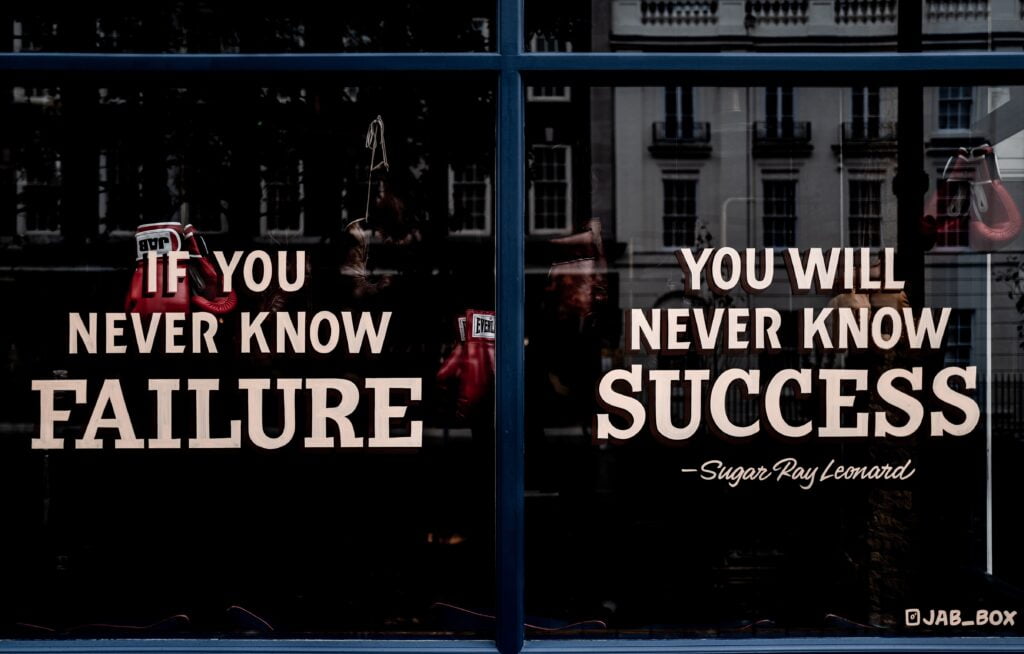
  • Extract Value From Failure—Fail Forward To Success

    Extract Value From Failure—Fail Forward To Success

    Extract Value From Failure
    Photo by the blowup on Unsplash

    # 75 on my 99 Life Tips–A List is: Living well involves extracting every positive thing of value from inevitable failures.

    It is a mistaken notion to believe that a good life is impossible unless only good things happen in it.

    Aside from its improbability—for anyone—as far as evidence suggests, it denies the value of improvement arising directly from the ashes of failure.

    Gregg Popovich, Hall of Fame NBA coach for the San Antonio Spurs, famously said of his teams that they were most vulnerable after a win (which they did often under his guidance). He said after a win you think you have nothing to learn and nothing to improve upon.

    “The measure of who we are is how we react when something doesn’t go our way.”

    ~Gregg Popovich

    Forgive quotes from a sports figure and not from the literati, but sports is one of those morality plays with lots of variables that pits opponents against one another in a test of comparable skill in which every night someone is undefeated for that day and someone else is a complete loser. 

    The winner gets to feel good about themselves and the loser has to find the fortitude to rise to the next day’s challenge. 

    The losers have to find something of value, some takeaway, to inspire them to their best effort in the next day’s contest. You know, like you and me when life trips us up. It is how we handle adversity, or how it handles us, that determines the quality of our lives.

    Not enough adversity?

    I recall an interview I saw with actor Mark Wahlberg (another famous literary figure… wink) in which he discussed his fears for his children. Wahlberg is a celebrity father who loves his kids, well known for his own gritty childhood in the Dorchester neighborhood of Boston, MA. The interviewer, talking to him about the difficulties he’d overcome as a young teenager on mean streets doing some bad things, asked what he feared most for his own children. 

    “That they won’t face enough adversity,” quipped Wahlberg in all sincerity.

    He knows the value of tenacity, perseverance, and resilience. He knew you cannot lie down when you get hit. You must get back up and keep moving. Those who have lived overly sheltered, pampered lives don’t.

    It is a truism that the severity of every person’s trials is relative. That truth gave rise to the atrocious, but true, phrase, “First World Problems”, as in 

    “OMG, There’s a crack in my iPhone’s screen protector! Uggghhh! FML!”

    It’s embarrassing. Still, everyone’s problems are existential threats and earth-shattering to them.

    Those of us who have faced down real difficulties know how tough real-world problems are, and we’ve learned how tough they’ve made us, right? We have learned how to extract value from failure.

    We’ve mined everything possible from the trials, tragedies, and travesties, learned from them, and we’re still standing. Standing and smiling. Smiling and moving forward. We know how to enjoy a good life and live well because we’ve seen the other side and we know how fortunate we are. Gratitude makes everything sweeter and makes living well easy.

    Don’t waste your failures!

    Fail forward.

  • How You Feel Matters Less Than What You Do—Refocus Your Attention For Better Results

    How You Feel Matters Less Than What You Do—Refocus Your Attention For Better Results

    How you feel matters less than what you do
    (Adobe Stock Image: Licensed to Author)

    # 74 on my, 99 Life Tips–A List is: Think less about how you feel and more about what you should do.

    The people I know who spend the most time analyzing how they feel consistently feel the worst. I may confuse correlation with causation, a common problem, but the predictability of this outcome led to the tip above. 

    For consistently better feelings, how you feel matters less than what you do. If you will refocus your attention, you’ll feel better,… and be more productive, to boot.

    I’m on a sometimes weight loss (sometimes weight gain) regimen known by its common name as a “diet”. To track progress, I stand on a scale hoping it doesn’t chuckle and say, “One at a time, please.” I can see the number. It is measurable, serving as an indicator of whether I can afford to drink a beer. 

    There is no empirical scale for emotional states

    Seriously though, emotional states don’t work that way. There is no objective, empirical scale. 

    Asking someone whose emotional states fluctuate dangerously how they feel on a subjective 5-point scale is the equivalent of asking an obviously drunk person if they’re drunk, and what they think they’d blow. Chances are high you will not get an accurate answer.

    Maybe I’m different, but whenever asked to pick from three emoticon faces ranging from sad—to neutral—to happy, nine times out of ten, I’m neutral. I seldom think about how I feel. 

    When I feel good, I just enjoy it. It doesn’t occur to me to stop and evaluate whether I’m at a 3.5 or 4. If I feel bad; I figure out why, what I’m thinking, what it would look like fixed, and what I can do about it. I don’t ponder whether I’m feeling a dismal 1 or perhaps as high as a 2. Degree is irrelevant.

    If you get stuck here, analyzing and cataloguing your feelings, you may wish to reconsider. How effective is it? What does your subjective answer about your subjective feelings tell you except in the most general terms?

    It is important to know how things make you feel so that you can do something to either recreate them or eliminate them. The action you take is the key thing.

    I’ve written about the relationship between emotions and thoughts, so this is where I start when I feel bad. My thinking is the usual culprit. I don’t start by figuring out how bad I feel. I don’t press on my emotions like I do bruises. If I feel bad at all, that’s bad enough to take action.

    You most definitely figure out what you’re feeling so you can act accordingly. What you feel and how much you feel are different. Yes, figure out what you’re feeling; think less about how you’re feeling, and figure out what you should do. 

    Because ultimately, how you feel matters less than what you do.

  • Do Not Take Yourself Too Seriously—No One Else Does

    Do Not Take Yourself Too Seriously—No One Else Does

    Don't Take Yourself Too Seriously - Like this sailboat, you are in motion and changing.
    Photo by Kristel Hayes on Unsplash

    # 67 on my 99 Life Tips–A List is: Do not take yourself too seriously. You aren’t the same you as you were at five, or perhaps at twenty-five. You are fluid and dynamic. Today’s “you” may vanish tomorrow, just as a stormy, wind-tossed ocean may tomorrow be as smooth as glass.

    Learn to laugh at yourself

    The ability to laugh at oneself is a life skill to cultivate. It’s tied to the realization, often hard won, that you are fallible and sometimes weak but still resilient and worthy of love. You are a work in progress. The edits aren’t all in. So don’t take this present draft, this iteration, too seriously. 

    The capacity for change is one of the enduring and ennobling traits of this life. From birth, we change and morph and develop and grow. Our beliefs vacillate, our energies fluctuate, faced with defects we compensate, and all of this admixture forms a distillate; the current self occupying today. 

    So, for the semblance of stability, if we’re both lucky and wise, we discover some values around which to pour concrete and anchor down. We drop anchor on a belief, or a lover, or a quest. You can find us moored there for a while. 

    As sure as the wind changes, our course can change, too. We can hoist the anchor, scrape the barnacles, unfurl the mainsail, and ride the wind. You may not see me here tomorrow. It’s possible tomorrow’s version may be different altogether—other than the wrapper. If I haven’t spoken to you in 5 years, I’ll wager you’re a different person. The physical resemblance might prove vaguely familiar, but internally you will have changed. There is plenteous truth in the trope:

    “We are always in the process of becoming. Self-identity is a fusion of our prior decisions and our current thoughts.”

    ~ Kilroy J. Oldster: Dead Toad Scrolls


    Think of the applications in your life. Your age, your health, your knowledge, your experience; all are in flux. What’s your longest running good habit? Which version of you should we take seriously? Which is the real you?

    Nothing in life is static

    Now, lest I wax too poetic, or else get too serious in a ditty contrived to convince you not to take yourself too seriously, let me encourage you with those words of wisdom that have come to us through the years:

    This too shall pass.

    ~ Anonymous

    I hated hearing that during a struggle. Because in the middle of one you’re consumed. It’s serious business. Sometimes you can’t see your way out or to the other side. But friend, there is a way out, and there is another side. And either way, like it or not, the quote is true, and the struggles we face turn us into different versions of ourselves. I find it helpful to remember neither good fortune nor bad lasts forever, as it says so poignantly in the Grateful Dead’s Stella Blue: 

    “There’s nothing you can hold for very long.”

    ~ Grateful Dead: Stella Blue

    Since our layover on this plane of existence is so brief, let’s not get too bogged down in the mire and minutiae of personal insults and minor snubs. Better to smile, shrug, and move on. Exemplify resilience. On the other hand, when you’re riding high in April, remember not to gloat, May is coming.

    So, let’s laugh more than we cry and love more than we hate and like good boy-scouts, let’s leave things better than we found them. Do not take yourself too seriously. After all, no one is going to remember all the great things you do for yourself, nor all the high-minded opinions you espoused. They’ll remember what you did for them and how you made them feel. Take others seriously and you’ll do a lot more good, receive lots more love, and have a lot more fun.