Category: Personal

  • Writing At The Red-Line — A 140 Day Streak, 200 Posts, and 50 Articles in 30 Days

    Writing At The Red-Line — A 140 Day Streak, 200 Posts, and 50 Articles in 30 Days

    Writing at the red-line
    Shutterstock Image licensed to Author

    I’ve now posted over 200 articles, essays, and stories on both my personal blog and on Medium. I’ve published most of them during the last 140 days, during which I’ve kept alive a streak of posting at least one piece daily. (50 articles being published in a span of just 30 days.) 

    By keeping this streak alive, and publishing this many articles, I’ve been probing for my personal outer limit of maximum productivity. I wanted some answers to a burning question — What kind of results could you get, and what would life as a writer look like if you“red-lined” it all the time?

    You May Throw More Balls Than Strikes

    Those familiar with sports will appreciate the analogy to a baseball pitcher. He may be able to throw 100 mph fastballs—100 mph being his red-line. But while red-lining can he consistently hit the target his catcher sets for him? Or does maximum velocity come at the expense of control?

    If you’re a creator, you will appreciate what I’m saying. At some point, maximum output takes its toll in eroded creativity. Quality suffers and yields more balls than strikes. We may fool ourselves for a time and call it production, because it is a type of production. But if we fool ourselves for long, we risk losing the creative spark along with the discernment to tell the difference. Sure we can “throw” 100, but easing off may help us find the strike zone more consistently.

    Revision Goes On Holiday

    I’m glad for this time I’ve red-lined it and churned out as many stories as I could realistically write. Though I know fully that not each story is my best work. Some may be embryonic. There may be the framework of an idea, but that kind of speed doesn’t allow for much reflection before you take up the next story. Writing means revision. You revise little at the red-line. 

    “I’ve found the best way to revise your own work is to pretend that somebody else wrote it and then to rip the living shit out of it.” 

    Don Roff

    Thankfully, some quality seeped into one of my stories which is sitting at nearly 1000 views and over 500 reads since its publication earlier this month. This may be the norm for many or you, but it isn’t yet for me. Compared to my usual results, the stats for this story are pleasantly shocking.

    I’m encouraged by the number of reads, highlights, comments, and positive feedback this story is garnering. I want my writing to be meaningful. The experience with this story is affirming. It is driving my current statistics causing this month to outpace anything I’ve achieved on Medium as measured by reads and engagement—which equates to more pay.

    Meaning Over Money

    I’ve consistently earned over a hundred grand a year for the last eighteen in the job I’m transitioning from to write full time—but I haven’t touched this many lives in two decades. That feels fantastic. Money is nice. This is better. Both would be, well…

    I’m far, far from real money in my career reboot, and farther still from making a living from writing solely for my Medium audience (which may not be possible at all—at least not for another 4 or 5 years), but there is some attestation that with time and continued hard work, I can make a living writing. 

    There is a nice growth curve happening due to both the productivity of having more articles up, and the instance of one well-performing story. If there’s a formula for success on Medium, it’s likely found in some combination of those two essential ingredients.

    Of course, another thing I’ve learned besides my production limit is that pushing the publish button isn’t the harbinger of personal nuclear destruction I once feared. You may occasionally publish what is mere sophisticated drivel, and it won’t kill you. Critics don’t automatically jump out of the woodwork to cut you to shreds with the cat-o’-nine-tails of derision in an open public forum.

    Besides, if you’re anything like me, you’re your own harshest critic. You know when your stuff is flat. 

    Out-Publish Your Fears

    I out-argued myself for decades into writing nothing at all for public consumption. I was afraid. The fear of failure arising from my belief that I would write nothing good enough to matter kept me from writing anything but journal entries, copious notes, and skeletal drafts of ideas—each of which I abandoned before giving them skin and heart. Publishing stories at my red-line has taken away a lot of the fear of both failure and criticism. Now I’m motivated much more by the hope of success than by those fears.

    You Write What Life Gives You

    Writers know it isn’t as easy as falling off a log. There’s a lot of demon wrestling. If everyone could write well and make money at it, they would. Let’s see your creative work, critic.

    Writing isn’t supposed to be too easy, since good writing is born of life. It has the truth of life in it—and it sows seeds of life from writer to reader. Raise your hand if you think life is easy. But writing should be more emotionally and mentally rewarding than just chasing a buck in a meaningless job. And that means not writing all the time at your highest WPM (words per minute) red-line.

    Take Your Foot Off The Gas — This Isn’t A Drag Race

    I will gradually ease the tachometer of my writing output away from the red-line of imminent engine failure, but I’m hooked on the habit of daily writing now. I realize this isn’t a drag race. There is no shortcut to success that sprinting can achieve. Good writing, like becoming a good writer, is a process. That engagement with the process is the best fruit of the last 140 days. I’m a daily writer — not because I have to be in response to external pressures. I have no contracts to meet, nor a bucket of minimum words to fill at two cents each. 

    No, I’m a daily writer now—because I’m compelled internally. I always marveled at those who said you know you’re a writer when you have to write. I never really understood. Now, I do.
  • Listening To The Grateful Dead Will Teach You Everything You Need To Know — But You Must Also Dance

    Listening To The Grateful Dead Will Teach You Everything You Need To Know — But You Must Also Dance

    # 99 on my 99 Life Tips–A List is: You can learn everything you need to know in life from listening to the Grateful Dead — but you must also dance.

    The Godfather is the i-Ching, I beg to differ

    My tip is a derivative of this Godfather scene in You’ve Got Mail, the 1998 rom-com starring Tom Hanks and Meg Ryan. In the classic scene, Hanks answers Ryans questions with references to the Godfather, assuring her it is the “answer to every question,” the “i-Ching,” and “the sum of all wisdom.” It is a brilliant scene Hanks pulls off with aplomb, throwing in some impromptu Brando imitations for emphasis.

    I love the scene, but beg to differ. My go-to source is the Grateful Dead. Within their musical catalogue is everything you need to know. Non DeadHeads don’t understand (and don’t want to know) how their music infiltrates, penetrates, and saturates a Dead fan’s mindset to the last brain cell. 

    “For the truly Deadicated, theMusic Never Stops” 

    My someday book

    I plan to write a book in which every chapter will be a life-topic with related song titles — like this sampler:

    • Love — They Love Each Other, Sugar Magnolia, Not Fade Away, Comes A Time
    • God — Hell in A Bucket, Lay Down My Brother, Wharf Rat
    • Family — Me & My Uncle, Brother Esau, Mama Tried
    • Relationships Row Jimmy, He’s Gone, Cold Rain & Snow
    • Politics — Throwing Stones, Standing On The Moon
    • Philosophy — Terrapin Station, St. Stephen, Eyes of the World, Box of Rain
    • Justice — Dupree’s Diamond Blues, Stagger Lee, Viola Lee Blues
    • Economics — Deal, Loser, Easy Wind, Big Boss Man
    • Psychology— China Cat Sunflower, Brown-Eyed Women, The Other One
    • Death— Death Don’t Have No Mercy, To Lay Me Down, Brokedown Palace, Black Peter

    This partial, non-exhaustive listing is exemplary of how songs in their extensive repertoire have application to every aspect of life. Like I said above, you can learn everything you need to know from listening to the Grateful Dead.

    Discovering all these connections made the music the soundtrack of my life; and one of my favorite lyrics serves up advice for all life’s uncertainties:

    “If you get confused, listen to the music play”

    ~Grateful Dead: Franklin’s Tower

    One Flew Over The Cuckoo’s Nest

    As a young adult, I got lost for several years in the hippy lifestyle (including the drug use part). I travelled cross-country following the band from show to show. The community was like none I’ve experienced since. The traveling kaleidoscope of clowns was family — a home on the road. 

    On my journey in 1985, I met Ken Kesey, author of One Flew Over the Cuckoo’s Nest, himself instrumental in the hey-day of what is known as the 60’s movement, and equally pivotal in the Dead’s beginnings as the house band for the infamous San Francisco Acid Tests so marvelously chronicled in Tom Wolfe’s seminal volume, The Electric Kool-Aid Acid Test

    I went to dozens and dozens of shows became more and more lost in the mysticism and mythology and mis-application of truths and nearly lost my physical and mental health in the melee. 

    A year later, I met someone even more famous than Kesey. At a show in March of 1986, I met Jesus. My life forever changed, though the music has remained the soundtrack of it. The accoutrements of drugs and touring, I left behind. They aren’t necessary. They really never were. The music itself is a healing gift. One I’m Grateful to God to still enjoy. 

    Dance as if your life depends on it

    So many Grateful Dead songs are about impending mortality. The idea is in their very name. A fellow writer on Medium wrote this beautiful essay Accepting Your Mortality is the Beginning of Living Well. I heartily concur. The Grateful Dead’s music helps remind me. And it reminds me that the only effective antidote against an encroaching death is to live, to sing, and by God, to dance.

    Is there anything more celebratory, more filled with life and joy, the kind of life-celebration powerful enough to mock death — than dancing in the face of it?

    I think often of the story in the Old Testamanet, when the Ark of The Covenant was restored to Israel and Jerusalem after spending months and years outside the city, a young King David danced in such ecstatic jubilation, he danced right out of his clothes. 

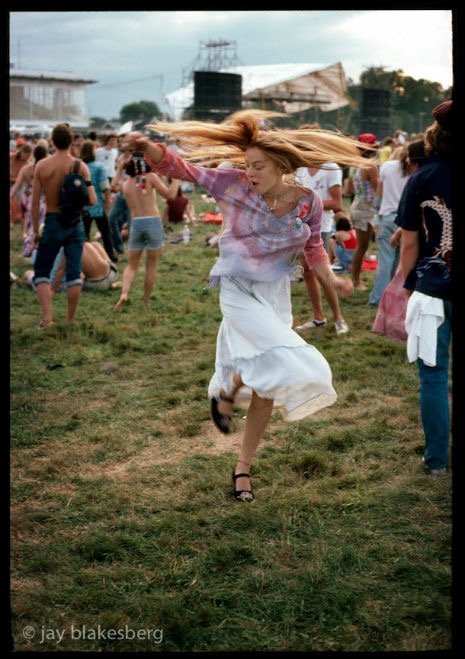
    I still dance that way — celebrating life — warding off death. Now, I spin and whirl and shake my bones in the privacy of my home. Almighty God is the recipient of my Gratitude as He watches the overflow of my pent-up life. Nothing expresses exultation for the joy of living the way dancing does. As I dance before my God, the band playing is Jehovah’s favorite choir, the Grateful Dead.

    Everything you need to know—Just remember to dance

    So yes, I’m quite convinced, you can learn everything you need to know in life from listening to the Grateful Dead… but you must also dance.

    “Sometimes the songs that we hear are just songs of our own.”

    ~ Grateful Dead: Eyes Of The World
  • Do The Hardest Thing First — Always Be Working Toward Easier

    Do The Hardest Thing First — Always Be Working Toward Easier

    do the hardest thing first
    Shutterstock image licensed by Author

    # 96 on my 99 Life Tips–A List is: Do the hardest thing first. Move the heaviest thing first is like it. Always be working towards easier.

    “Eat a live frog every morning, and nothing worse will happen to you the rest of the day.” 

    ~Mark Twain

    Here is a link to a fellow Medium writer,Saimadhu Polamuri’s, book review on the business productivity tome, Eat That Frog, by Brian Tracy. You can read it to learn more about the business and productivity applications of this principle.

    But I didn’t learn the concept of doing the hardest, least pleasant thing, first, from Mark Twain, Brian Tracy, or Saimadhu. I got it from my Uncle Kurt building houses and learning the construction trade.

    On a construction site, the lowest person on the totem pole is a “grunt”, the same term used for the lowest ranked infantry soldier in the army. Grunts get the dirty jobs, and the dirty jobs are usually unskilled ones, like hauling lumber. 

    Lumber loads

    Intermittently, while working on a project, lumber trucks would deliver truckloads of lumber banded together with metal straps to keep the load secure on the back of the truck. Once offloaded, the lumber had to be sorted into kinds and then carried to strategic positions on the job site. It would be horribly inefficient for the more skilled lawman, for instance, to have to retrieve a board for every cut. The sawyer and his helper pull new stock for cutting from a pile of boards ready to hand. That pile doesn’t magically move itself to the saw station though. A grunt carries it there, board by board, depending on the dimension of the lumber being carried.

    Kiln-dried spruce studs, pre-cut to 93-inch lengths are light. Almost airy compared to pressure treated yellow pine 2 x 12’s, called two-by-twelves, that might be 16 to 20 feet long. And four-by-eight sheets of plywood (in this case 4-feet by 8-feet) are not only heavy, they are unwieldy. They don’t walk themselves to the correct place on the site, ready for cutting or assembly.

    Crowning boards

    My uncle taught me how to identify the board types by width and length. He taught me how to crown dimensional lumber, too. Crowning involves quickly sighting down the length of a board to see which way it curves. No piece of lumber is perfectly straight. Or, at least it’s rare to find a perfectly straight board. Once crowned, I marked the edge of the board at one end with my carpenter’s pencil, jabbing out a quick inverted “V” called a carrot, with the point touching the crowned side of the board. 

    It amazes and distresses me to walk into a house under construction, site down a wall, and see waving undulations. The carpenters did not crown the boards so they would at least all curve in the same direction, giving the illusion of straightness. These undulations are amplified and noticeable once sheetrock is hung and trim molding or cabinetry is fastened to the wavy walls.

    .

    And crowning floor joists is even more important. You always want the crowns up so that the load of weight placed on the floor will have the tendency to straighten the boards. Floor joists should never have crowns facing down, which will create a shallow depression in the floor. You don’t want them will-nilly either, which will make the floor feel like it’s rolling underfoot depending on the finished flooring material.

    Simple Logic

    Anyway, now that you know all about crowing lumber, back to eating frogs, and why you should do the hardest thing first.

    Once marked, I had to carry the boards. My uncle taught me to carry the heaviest, longest boards first. The only exception was if I had to carry boards a further distance. Then I might start with lighter boards, trading distance for weight. The energy expenditure amounted to the same thing. I worked my way through a lumber pile exactly like this each time we received a delivery.

    My Uncle’s rationale made perfect sense to me. 

    He asked, “Are you going to be more or less tired after carrying the first board?”

    “More,” I said.

    “Right,” agreed my uncle, “then don’t you want to carry the lightest boards when you’re the least tired?”

    “Yes, sir,” I allowed.

    And so that’s the way I did it. I carried the heaviest boards the furthest distance, reserving my strength and knowing each trip to the lumber pile was getting easier. 

    That’s the way I’ve tackled life ever since. I do the hardest thing first. Then every subsequent thing feels a little easier. I’m always working towards the next easiest thing. Working this way shrinks a huge stack of lumber, and it shrinks problems, and it helps you give your best to your least favorite necessities. You should try it, too. Do the hardest thing first, everything is easier from there on.

  • Just Because You’ve Read About It Doesn’t Mean You Know About It

    Just Because You’ve Read About It Doesn’t Mean You Know About It

    you've read about it
    Photo by Kelcy Gatson on Unsplash

    # 24 on my 99 Life Tips–A List is: Reading about something is not the same as doing something. Reading a story about Paris is not the same as actually visiting Paris. This applies to every aspect of reading. As valuable as it is, it is no substitute for experience.

    The intended audience for this tip is the ardent, imaginative reader. Your mind can trick you into believing you’ve done and experienced something because you’ve read about it. You may convince yourself you’ve learned all there is to know because you’ve read about it. I don’t mean to imply your reading will cause a psychotic break with reality. But the emotional and intellectual engagement stirred by reading good writing creates a world. A real one. And sometimes it’s difficult for the most intelligent to realize that all the things they’ve read about, and therefore felt as if they were present seeing, hearing, feeling, fighting, loving, longing in the scenes and characters is real only in their mind. Perhaps this has happened to you.

    I am not being disparaging. Real in the mind is real. There is nothing more “real”. But no one is a trout fisherman because they read a story about trout fishing outside Pamplona. Even if you recall details like the crisp newspapers to wrap the day’s catch in. And regardless whether you can almost taste the dust from the bus ride back to town. Dust you’ll quench with Sangria in the bar in time for the day’s bull running. No, dear reader, reading about drinking red wine won’t stain your teeth or make you drunk. Even when Hemingway is writing the tale.

    I always think of two things in relation to this tip:

    The first is the scene in Good Will Hunting in which Robin Williams’ psychiatrist character chastises Matt Damon’s ne’er do well savant character. Damon’s Will Hunting receives a dressing down for being so smug. He’s never actually done the things he’s read about. He’s never been out of Boston. Although he could recite all kinds of facts about Michelangelo, gleaned from the books he’s read, he doesn’t know what it smells like inside the Sistine Chapel. Because he’s never been. “You’re Just A Kid”. Williams’ character tells him. He’s never really been in love. He’s merely read about a lot of things. Though he can provide brilliant analysis with his near perfect recall, reading is no substitute for the actual streets of Rome. It’s a fantastic scene.

    The second is on a cross-country car trip when I was 20. I had picked up a Frenchman named Dominic hitchhiking from Binghamton, NY, on his way to see a girl in Sterling, CO. After a side-trip to New York City we started west. On the second day, Dominic grew critical of the countryside in his fatigue at seeing the farms and cornfields along the interstate. 

    As night fell on a long day of driving, my passenger got impatient. He pleaded with me to get out of the cornfields. After seemingly endless miles of nothing but corn, we saw an exit towards a town. Maybe it would be a more suburban, less pastoral view. I could drive forever at that age, but the corn was like a green ocean. I was suffering sensory deprivation. Plus, we were forced to limit our expenditures to fuel and food. We would not waste precious money on a hotel for the few hours of sleep we’d need before heading out again. I either needed to drive on to a rest stop, or find a suitable place.

    This is the West

    We came off the interstate and I turned off the service road onto a long, wide 2-lane in western Ohio. Mailboxes dispersed on either side marked the corners of front yards as big as baseball fields. Dark, wood-framed farmhouses sat well back from the road. Only occasionally did we see a light in a window. Still, Dom suggested I pull off into one of the front yards where we could sleep. He insisted we could set up my tent beside my Toyota, or sleep under the stars in our sleeping bags. 

    “What? Right in their front yard?” I said, “Have you lost your mind?”

    “Oh, not at all,” he replied in good but broken English, “This is the West, I have read all about it.”

    “Oh,” says I, “you’ve read about it. Good. Then you’ve no doubt read about shotguns, too.”

    I kept right on driving, headed back nearer the interstate, away from Dom’s temptation to get us shot at or dog bit, and eventually found a dirt farm road leading back into a cornfield where we would be safe and could get a few hours shut eye.

    “I have read about it.” I’ll never forget that. Don’t you forget it either.

  • If You Want To Dance, You Have To Pay The Piper—And Other Sacred Verses Of My Youth

    If You Want To Dance, You Have To Pay The Piper—And Other Sacred Verses Of My Youth

    # 93 on my 99 Life Tips–A List is: If you want to dance, you have to pay the piper.

    This advice is from my Uncle. He said it so often that it is now enshrined in my life’s accepted canon. 

    This sacred tidbit is 1 Kurt 1:1.

    It stands beside other canonized wisdom I received as a kid from those more wise than I.

    My Granddaddy, Leo, used to say things like, “The faint heart never won the fair maiden.” 

    And, “Look before you leap.” 

    And “Nothing good ever happens after midnight.” 

    (Much later I would tell him he had never been out with me after midnight except to go flounder gigging).

    He said these things so-matter-of-factly and with such conviction he also has a book in the canon—First Leo.

    It is filled with priceless treasures, sometimes mixed with half-scriptures, like “the wages of sin is death.” Sometimes he elevated his extra-biblical quips to Divine status by asserting things like, “You know the Good Book says one in the hand is worth two in the bush.”

    A melting pot of wisdom

    I would shake my head and roll my eyes. But I didn’t dare try to dissuade him from mingling those aphorisms from Poor Richard’s Almanac and other dubious sources into a melting pot of wisdom. After all, I wasn’t “old enough for my wants to hurt me.”

    But, the one from my Uncle stands out, both for its succinct truth, and for its unfailing accuracy. 

    If you want to dance, you have to pay the piper.

    Other memorable verses from my Uncle include the timeless, “Let’s put her in the wind.” 

    He always said this at the end of a long workday when the power saws had screamed their last, the smell of fresh cut pine was hanging in the air, the tools were all gathered and put away, the job site was prepped for tomorrow, and power cords collected, coiled and looped like lassos. 

    That magical phrase signaled quitting time. It conjured sailing away towards a better shore, or riding off into the sunset, or exiting the stage into an evening of rest, relaxation, and recuperation, usually accompanied by a cold beer. Hearing it,  just as remembering it now, induces a Pavlovian response. Your face parts in an involuntary smile, and you’re ready to tap a reserve of strength to pack up and go—away from work and towards play.

    My Uncle and Granddad shared a common desire that propelled their energies. They wanted to play! So they worked hard to fully enjoy the play of not working in the interim. Neither one ever uttered something so mundane as “Work Hard, Play Hard.” But they lived it. And it rubbed off on me.

    I do want to dance. Both literally (sometimes), and figuratively (daily). To dance is to play. In my mind, I hear my uncle, and dance becomes representative of play. To do so, I work, cause you have to pay the piper, as it says in First Kurt chapter one. So, you too, remember this advice, if you want to dance, you have to pay the piper.

  • What Do You Like & Why Do You Like It?

    What Do You Like & Why Do You Like It?

    # 85 on my 99 Life Tips–A List is: Know why you like what you like. Learn to identify the feeling of liking something before you have the words to tell yourself you like it. That resonance, that connection, that is your home.


    This one has been staring at me for a couple of days. I know what I mean by the tip I offered months ago when I created my list and posted it, but this one captures so much.

    What you like defines you

    Why do you like that? Why don’t you like this? Can your likes change—become weaker (?), or stronger? If they can change, did the thing formerly liked change? Or did the former “Like-er” change? Important stuff.

    We all start in infancy as blank slates. Yes, I know, the argument of nature vs. nurture. Sure, sure. Still… I have no Grateful Dead genes that make me resonate to that frequency, nor any Russian genes I’m aware of that make the slow, deliberated, painstakingly detailed accounts of Dostoevsky so appealing and full of life and truth to me.

    So, as for the accumulation of culture—which is really a fancy word for group or social liking of a thing—I’m on the nurture side of that debate. We like what we like because we get exposed to it by someone who convinces us that people like us like stuff like this. There’s a kind of peer pressure to like most of the things we choose. 

    [That, and the size of the menu in proportion to the size of our appetites, and whether we find good entrements (palate cleansers) between samplings.] 

    There are also degrees of liking a thing. You may wear the tee-shirt, but not kill bats on stage and drink their blood. (You can look up the old Ozzy Osbourne legend somewhere… Google it.)

    So, Greg, you’re 300 words in and haven’t told me a damn thing about why I like some stuff and not other stuff.

    True, dear reader, we are halfway down a proper electronic page and I cannot tell you what to like. I can, however, urge this—Don’t let anyone else tell you either!

    We all got our first likes because someone pushed sweet mashed pears into our baby mouths before they spooned in disgusting pureed lima beans. Someone played Mozart, or Miles Davis or Metallica before Beethoven, Benny Goodman, or Bad Company.

    We first gain likes and tastes from the people around us who expose us to them and usually because they like them too. (Maybe not with babyhood pears, but you catch my drift).

    Here’s the rub

    At some point, earlier or later, I don’t know, you will want to pay attention to whether or not you’d like Led Zeppelin at all if that delectable girl in the yellow overalls didn’t look so good wearing that logo emblazoned across her beautiful… t-shirt (what did you think I was going to type?)

    My mom was a member of the Columbia Records club. This was back when dinosaurs roamed North America and people still had turntables on which to extract sound from round plastic platters. She got several albums a month, and she used to sit dreamily and play one album called Go To Heaven by a band of long-haired men, standing in a cloud on the cover, wearing cheesy looking, white, polyester-velveteen Lawrence Welk suits. 

    Alabama Getaway and Don’t Ease Me In off that record sounded like countrified crapola to my 13-year-old ears. Hearing it made me gag and flee the premises, long before I got to hear Lost Sailor and Saint of Circumstance

    I couldn’t stand it! Yuck! 13-year-olds ought not be judged too harshly for underdeveloped anything. Puberty makes for a cloudy filter.

    But I did like her Fleetwood Mac, and Rickie Lee Jones, and Little Feat albums. I even liked Jimmy Buffett, and I wanted to like Crosby, Stills, Nash, and Young because they had the coolest album cover. (You know the antique looking, sepia-toned album where they’re posed with a dog, and Crosby cradles a shotgun, and Neil is draped with bandoleers and a pistol, and a guitar is lying on the ground — Deja Vu—and it looks like Matthew Brady took the photograph right after the battle of Antietam or something). 

    God, I loved the look of that album cover because I was crazy for all kinds of Civil War stuff. That picture was so cool! Who cared about hippies floating in white John Travolta suits in a cloud!?

    But the music, Jeez! My misanthropic mom would get drunk, put on Teach Your Children and slur, “Hunnneee, jusss lishen to theesh wordzz. Thish iss evertheeen I wanna  shay to you kidzz.”


    OMG!! Please No!Likes can change

    I hated C,S,N,Y then. Association, ya know?

    Though, I LOVE their music now. Different association… ya know?

    The same reason I now love all things Grateful Dead. I had to grow into it. Then it grew into me.

    So, sometimes early exposure doesn’t take root. Germination takes longer. Circumstances change, and then, bam! You hear something, or see something, or taste it, and it’s like tasting and seeing and hearing home. Like gathering up fragments of self that complete you. I know, weird.

    But, they say there’s no accounting for taste. And truly there isn’t. If you will put on your Indiana Jones hat and do some personal archeology to dig up the reasons you’ve buried and kept your own personal treasures, you’ll learn a hella lot about yourself.

    Fact is, your likes and loves will tell you more about yourself than your dislikes.

    Shove over, I’ve invited God in

    Probably shouldn’t drag God into a story already crowded with Jimmy Buffett, my drunk mom, Rickie Lee Jones, and bandoleers, but I see [Him] as defined (bad word, I don’t think [He] can be defined adequately, else the whole God idea shrinks, but it’s the best word we’ve got) by what [He] likes, immeasurably more than by what [He] dislikes. Just like you and me are defined more by what we like and allow in than by what we hate and keep out.

    It’s the opposite of the way evangelical Christians think of God and themselves. These define themselves by what they oppose, what they’re against, what they resist and are afraid of. They never crack open Song of Songs, the most beautiful ode to physical, sexual love ever written (“kisses sweeter than wine”). It just sits there unread and unappreciated in their bibles. They conveniently forget Noah got drunk (after preserving humanity), David committed adultery—and murder (and was still called a man after God’s own heart), Jesus turned water into about a hundred gallons of wine at a wedding, and Peter denied Jesus (but Jesus restored him again over fish tacos on the beach).

    They forget God loved everybody, EVERYBODY so much, [He] paid the ultimate price to win us back. I don’t imagine [He’s] trying to keep anyone out on technicalities like who they love. [He’d] prefer to outfit us all in white suits, invite us to stand in a cloud, and Go To Heaven. Or maybe my God is just bigger and more full of Grace and Mercy than yours. I dunno. Or maybe I’m wrong. But I’d rather be wrong believing in God as revealed Love. Maybe you’re unflawed, and you’re loved for your perfection. That doesn’t apply to me. But because God loves flawed me as much as [He] does, my only response is to trust [Him.] That is what faith is all about, after all. The heart’s response to a God showing and proving [His] Love.

    If you’re curious about my brackets around masculine pronouns in reference to God, it’s because of my uncertainty of how to think of God and gender. I think of God as Father, the only real Father I’ve ever known. But God is called El Shaddai in the Hebrew scriptures, too, which means “the Breasted One”, or nurse. I love that image—of God being the source of life and growth and sustenance, of comfort, and warmth, and security, the way a nursing mother is to her infant child. You are welcome to your own images. I am convinced in my heart that my brackets aren’t offensive to [Him], or Him. End of disclaimer.

    Back to the topic at hand—Here’s an unlimited credit card

    Learn to identify what you like, on your own terms. Evaluate your preferences to see if you picked them up as the price of admission to some tribe or other, or thinking they’d be the key to some girl’s heart. 

    What do you like, the real you? Imagine you have an unlimited credit card. Your preferences and tastes are the only ones you need consult. You start with an empty iPod, empty media shelves, and an unfurnished home—no pictures on the walls, nothing in the pantry, fridge, wine cellar, or liquor cabinet. What’s parked in the driveway? What do you get? What do you like? Not—what does your wife, husband, lover like? No. What do you like?

    Go ahead, you have my full permission to fill your life with as many of those things you can. On the way, you’ll answer the question: Why do you like that? It may be this simple. You just do! It resonates. And it scratches the persistent itch, uncovers the empty spot, and fills up the void. Because it caresses your heart; and sings you, rocks you, swaddles you, envelops you, whispers you—home.

    It may as simple as the idea enshrined by Mick Jagger—

    “I know it’s only Rock n’ Roll, but I like it… yes I do!”

    ~ Rolling Stones: It’s Only Rock n’ Roll

    Mick likes Rock n’ Roll, and that like defines Mick. What defines you? What do you like?

    One day, I’ll invite you over to my own imaginary bare-floored, yoga-pillowed pad where we can have church listening for the whisper of God, blasting my collection of studio and live Dead performances on my megawatt stereo system, while we drink Napa Valley wine and Russel’’s Reserve and Grok out on all my Van Gogh and Monet and Mondrian paintings. Or maybe we’ll “ooh and aahhh” over my library of thousands of volumes of curated literature, housing everything from Brené Brown to Zane Grey.

    You’ll like it. Or at least I will.

    What did you ask? Oh, yeah, that Aerosmith you hear coming from the other room? Oh, that’s just my girlfriend rocking out on the sounds she likes. She calls mine alternately “Grandpa” or “Sleepy” music. If you prefer the Demon of Screamin’ to my sleepy tunes, you are welcome to plug in your headphones. To each his own. I can’t tell you what to like, I can only ask you to tell me, why do you like it?

  • Never Ignore Your Conscience—Even If Tempted By Camisoles, Honeysuckle, and Dreams

    Never Ignore Your Conscience—Even If Tempted By Camisoles, Honeysuckle, and Dreams

    Never Ignore Your Conscience
    Photo by Jan Segatto on Unsplash

    # 82 on my 99 Life Tips–A List is: Never ignore your conscience. It is the only internal compass you have to accuse or excuse your behavior. Ignore it at your peril.

    Your conscience is to your future moral life as the ability to feel heat from a burner is to your future sense of touch. Ignore it at your peril. You should never ignore your conscience. It’s a pre-loaded tool that either excuses or accuses your thoughts and behaviors. A moral compass if you will.

    A clear conscience, free from internal, self-directed accusations and recriminations, is essential to peace of mind. And peace of mind, one of the highest of all ends to be sought for its own sake, is essential to a good life. Therefore, if you hope to have the peace of mind that enables a good life, don’t ignore your conscience.

    Alternately, you can lie to yourself, cover up your faults, sins, and poor treatment of others telling yourself you’re not as bad as Osama Bin Laden or Hitler, so you’re probably still not on God’s naughty list, since you aren’t as bad as you could be.

    But face it, a good life is really a life in which you’re as good as you can be in every area of which you exercise any degree of agency and control. No one would define the good life as the one in which you fail to be as bad as you could have been.

    Fear and Longing in a Camisole

    I remember my initial wrestlings with my conscience and the FEAR OF GOD! 

    Boy, do I! It involved some strange things happening in my dreams because of a raven-haired “sitter” who read me sections of the Hobbit in a too-sheer camisole . (She was my grandfather’s second wife’s 19-year-old daughter.) I remember the feel of her silken smooth arm against my pre-teen shoulder, propped up on pillows, listening to Gollom’s riddles. I remember how she smelled of honeysuckle. And I remember the unbidden and uncontrollable, and horrible longings all that innocent sensuality provoked.

    Soon, the honeysuckle-scented camisole’d sitter was in my dreams too! How did she get there? And, well… let’s just say my conscience worked just fine.

    It was my first encounter with the lifelong truth so ably depicted in the Grateful Dead’s Dupree’s Diamond Blues:

    “That jellyroll will drive you so mad!”

    Look, there are things you can control and things you can’t. Don’t fool yourself. And don’t attempt to fool God either, remember:

    “Do not be deceived, God is not mocked; for whatever a man sows, that he will also reap.”

    ~ Galatians 6:7, NKJV

    The Takeaway

    Look, after all that 19-year old in a camisole, and honeysuckle, and dreams, you’re not stupid. You get the takeaway. I’m trying to keep a clear conscience here.

  • The Wise Use The Best Means—Even If It’s A Long, Strange Trip Getting There

    The Wise Use The Best Means—Even If It’s A Long, Strange Trip Getting There

    Picking right up where we left off in the preceding companion piece in which you drank coffee and chose the ultimate end for your life, we proceed to the second of wisdom’s applications. Wisdom chooses the best end, then uses the best means to achieve it. So, the wise use the best means.

    I didn’t learn about the application of means and ends to my life until after I’d already confused them royally. At 17, I entered college as a freshman. I chose the college I attended because I loved the basketball team. Seriously. What was not to love? Michael Jordan had just helped the team win a national championship. Is there any better criterion for choosing a university?

    So, at 17 I arrived on campus with a cooler, a stereo with huge speakers, a bong, and some albums. My pre-med roommate said he’d never seen a freshman so outfitted. I probably took his meaning the wrong way… it made me proud.

    I had not just arrived on campus, by God, I had arrived in LIFE! And I was at the summit! King of my Universe! And let me tell you, as king, I had a helluva lot of fun. All my gear was put to incessant use.

    2 Years Later

    It took two years to realize I had selected the wrong end.

    As much as I loved cheering MJ’s exploits as a man among boys at Carmichael Auditorium (this was pre-Dean E. Smith Center, mind you), the lifestyle was unsustainable. The classes were dull. My other roommate spent two hours a night on a single accounting problem. I knew that wasn’t for me. I had no conception of why I was there once basketball season ended. The football team was mediocre even then.

    The wise use the best means, and I was as far from wise as I was from equalling Jordan’s skills as a basketball player. I didn’t know what means even were. 

    A Long, Strange Trip

    So I left college with questions about life college couldn’t answer. I went on the road to follow around the Grateful Dead instead. Hey now, don’t laugh! There are worse means to use exploring the meaning of life and consciousness than Dead shows.

    Anyway, after a long, strange trip, I now know what ends and means are all about. I know that college is a means to an end, not the end. And I know a job is a means to an end, not the end. Likewise, money, most learning, etc.

    Once you’ve chosen wisely and selected your life mission, your ultimate end, you’ll need to determine what it will take to achieve it. What path will bring you there? What metaphorical mode of transportation?

    Remember, it is not enough to casually try out the best means. You must use them diligently. Along with diligence is patience, teachability, and flexibility. The best ends take time. It takes a lot of time to figure out what value is. Then more time to know what is valuable enough to make it your life’s pursuit. Still more to adopt the best means and stick with the program.

    But if it is truly valuable enough, a wise choice, and therefore worthy of the effort, don’t make the effort by all means—make it by the best means. That’s what the wise do.

  • Do You Negotiate Against Yourself?—How Often Do You Win?

    Do You Negotiate Against Yourself?—How Often Do You Win?

    Do you negotiate against yourself a lot? A part of you knows there are things you should or shouldn’t do, but another part bargains against those choices. This may be true for everyone.

    The negotiating you do with yourself determines your results.

    120 days ago my forward-thinking CEO self-negotiated a deal with my lazy, afraid, excuse-making employee self. My CEO got the employee to agree to a 30 in 30 challenge. For those who don’t know what that is, it’s a simple idea in which you write and publish 30 micro-blog posts in 30 days.

    CEO me got unreliable employee me to agree. To be fair, writing as a calling and vocation have been so important to both my CEO and employee selves that the fear of failure made it easier to shelve it, never do it at all, than try it—fail—and suffer irredeemable humiliation. 

    But there was a thick layer of dust on the plan to One Day Maybe become a writer… I’m talking years thick. Covid fallout impacted my usual source of income, freeing time for my CEO self to jolt the procrastinating employee into action. 

    “There’s time, now. That excuse is dead!”

    I found my login credentials for my long dormant blog, started spitting out some drivel that at least got my fingers limbered up and got the ball rolling.

    But it was sporadic. I didn’t get discovered after 3 days of blogging brilliance, and the employee self, doggedly pessimistic in the face of my CEO self’s aggressive optimism, was nearly ready to shut it down again.

    Along came the 30 in 30 challenge

    “Come on, dude. 30 250 word micro stories? Even you can do that. Tell ya what, when you’re finished each day, you can even have a bourbon and pretend you’re Hemingway.”

    “Sold!” agreed my novice-writer self. “You supply the bourbon and I’ll do 30 days.”

    Major negotiation completed, the challenge began that day. There was no more negotiating “IF” I was writing, only when, and about what.

    That was 120 days ago. I haven’t missed a day. Once I’d knocked down the original 30 days, it set the habit. I’m hooked, and I’m a writer now. My CEO self and employee self are nearly always on the same page… terrible pun intended. The employee writer still needs a haircut, but the CEO lets him write in Grateful Dead t-shirts so everything’s chill.

    So, friends with any kind of big negotiations you’ve struggled with for too long—cut a deal! Decide to do it. Take the “IF” part of the bargaining off the table. Get rolling and don’t look back! Oh yeah,… don’t forget the haircut. 

    Subscribe to follow me to see all my posts on Medium. You can also find my writing at gregproffit.com. Check out my 99 Life Tips—A List.

  • Overcoming Anxiety—Stop Making Worry Payments On A Lay-Away Plan

    Overcoming Anxiety—Stop Making Worry Payments On A Lay-Away Plan

    Overcoming Anxiety
    Photo by Uday Mittal on Unsplash

    # 72 on my, 99 Life Tips–A List is: Remember that anxiety is making payments of worry in the present for a future outcome that hasn’t occurred yet. There will be plenty of time to feel bad about that outcome when it arrives. 90% of the time, it won’t.

    The temptation when writing about overcoming anxiety is to sermonize Philippians 4:6, which starts with an imperative commandment:

    Be anxious for nothing…

    While the prohibition against anxiety is as binding as those against murder, adultery, and lying, this one usually gets a pass.

    We treat it as an affliction, or disease, more than as a volitional sin. That’s hard to even put in writing. I have such empathy for those in my life who suffer with sometimes debilitating bouts of anxiety.

    Nor have I been immune. But my tip above shows how I deal with it and to date, how I’ve successfully prevented succumbing to it.

    Recognize what anxiety is. It is present-tense worry about a future outcome. We rarely feel anxious about past events. There may be regret or even depression over some past misfortune or tragedy. Depression seems to occupy the past predominantly. But we rarely worry about events behind us.

    Anxiety about the future is the desire for reassurance and certainty that are impossible to give or receive. The uncertainty creates worry universally dominated by things out of your control. Wasting emotional energy on what you cannot control is debilitating.

    But you don’t need me to tell you that.


    Be Here, Now

    You cannot stop how you feel unless you refuse to get into the mental time capsule that keeps playing images for you of events that haven’t happened yet. 

    It takes a concerted effort to be present to right now.

    It is staying present to right now that defeats anxiety. It is the only thing that consistently does.

    Focus on the moment and the resources you have on hand to meet it. You don’t need resources for tomorrow yet, or for next week, or next month. When those moments arise, you’ll find the resources you need. Those scenes you fear, the ones playing on the future-projector in your head, may never happen. Leave room in your thinking for the possibility that unforeseen factors and forces may edit them out completely of your future.

    One thing about that verse from Philippians; it mentions Thanksgiving, or gratitude. One of the surest, most powerful tools in your arsenal against either anxiety or depression is the practice of present-tense gratitude

    It is impossible to be grateful and anxious, or grateful and depressed, at the same time. Gratitude is key to overcoming anxiety.

    Relish with gratitude every simple pleasure and praise-worthy thing in your life that is yours right now. That breath you’re taking might be a good starting point. You got this.