# 78 on my 99 Life Tips–A List is: Wisdom is also the application of the best means for the most valuable ends. See # 77 above for initial thoughts regarding wisdom.
In keeping with the string of tips and stories about intelligence, truth, and wisdom, this is the reader’s digest summation. Wisdom chooses the best end, then achieves it by the best methods.
Easier said than done.
Getting lost in the weeds of esoteric ideas is no benefit if you want to be wise (and who doesn’t want to be?). Simple answers and concepts are the most helpful to get you and keep you on track.
The Best End
You may wish to grab a Venti-sized latté while you ponder what this means to you. It will take a while.
What is the mainspring of your life? What is your ultimate reason, purpose, goal? Why do you do what you do? What is it you’re hoping for?
The ultimate end of a person’s life dictates their life, morality, their praiseworthiness or guilt. It is the motive behind every decision. It is the mission statement, even if unspoken, deeply buried in the unconscious.
Wisdom is the choice of the best (most valuable) end.
Which is what exactly? What is the correct answer?
America’s founding documents declare it to be, “the pursuit of happiness”—but is the pursuit, or the happiness—the end?
If happiness; is that the most valuable end? Is your happiness more valuable than mine? It may be to you, but when weighed on a universal scale? Are they not equal?
And if that has you scratching your head, assuming a belief in God, is your happiness more valuable than God’s? And are you more deserving of happiness than God is?
That will keep the mental wheels spinning a while.
Lest we digress too much, a repetition is in order. Wisdom is the choice of the best end.
Oh, that’s easy, you say. Lots of money is the best, most valuable end. But is it? Is money more valuable than time? What is an extra hour at the end of your life going for on the open market nowadays? A day? A year? Pretty pricey if you can find a vendor.
Well, ok then, time is more valuable, you agree. But is time more valuable than health, or peace of mind? Would any reader wish to live for eternity with a tormented mind? Or with a debilitating illness?
No? Didn’t think so.
This explains why philosopher types are so vilified. So damn many questions!
Still, you must choose a worthy end of your own if you hope to be wise. Your choice of end shows your wisdom—or lack thereof. A hint: You’ve already chosen an end regardless of whether you know what it is. We all have. But you can move off the default choice, which is to live entirely with regard for your own momentary pleasures as fully as possible, to some more valuable and well-considered purpose.
The Best Way To Get There
This is going to have to wait for another treatment of its own. You’ve got plenty to work on.
Will you be like the chihuahua who chases the bus down the street?
I mean, what would it do if it ever caught the bus?
But you’re no chihuahua, when you discover truth, you will:
Accept
Truth is floating all around you right now. It is everywhere. It permeates creation and saturates reality. The existence of lies has no more impact on the existence of truth than darkness does on light.
But truth will not dispel darkness unless you accept it as truth.
Remarkably, the mind is so made up that acceptance of truth as true flips a switch that settles the question. It will remain so until it discovers fresh evidence, more true.
Acceptance of what is true also implies acceptance of what is false. Sometimes, this is difficult. Pet beliefs may fall by the wayside. Dogmas may crumble. Sparkling fantastical claims lose their luster, dull, and drop away.
Admittedly, this can be painful. All learning changes you. The old dies a little death. A new, truer self steps to the fore. This is nothing to be afraid of, but one must remain vigilantly prepared, because this happens when you discover new truth and accept it.
Adopt
The next step is adoption. Truth accepted is not enough to elicit the full benefit. Make the truth your own. Make it your truth. Do so knowing that you are malleable and open to the possibility that new, more full, more complete truth may appear.
But for the time being, think of the difference between acceptance and adoption as that between one who acknowledges the existence of a child and one who assumes responsibility for the child to raise as their own.
Act
In my wanderings I may see a chair. My senses encourage me to accept that it is indeed a chair, and in fact, a very good one. Pleased with my discovery, I take it home, adopting it as mine.
The proof of whether my acceptance and adoption of the chair has any depth is whether I sit on it. Do I use it for the end to which it was designed and for which I accepted it, adopted it and carted it home?
Regarding practical value, truth unenacted is no better than a lie. Just as an unused chair may become merely an object upon which to bang one’s toe in the night.
The Takeaway… There is no 4th “A”
A person is wise in proportion to the truth accepted, adopted, and acted upon in their life. Notice there is no 4th “A” for accumulation. Truths catalogued and shelved, but not accepted, adopted, nor acted upon do not make one wise; They make one guilty.
# 76 on my 99 Life Tips–A List is: Use your intelligence to pursue Truth. Do not use your intelligence to produce misinformation.
Simple. The warning is a little further below.
Intelligence is both a gift, a tool, and a potential curse. Use your intelligence to pursue Truth. (Yes capital T, because all truth issues fromThe Truth, just as all lies issue from the father of lies).
Too often, intelligence is used to corrupt, camouflage, or constrain truth. This is a shameful abuse of the gift, a shameful misuse of the tool, and ends up being a curse both to the intelligent misuser, and to those harmed by the misuse.
Intelligence is a tool for finding truth, because it is the only tool we have to recognize it once found. To use it for another purpose is to damage the tool.
We live in an age of misinformation affecting everything we hear from politics to healthcare to religion. We are shamelessly lied to by the powerful who control the machinery. And some, parroting the powerful, use social media to scatter the lies like one pushing a broadcast spreader of grass seed infested with weeds.
What are the intelligent to do? In the land of lies, truth seekers are enemy combatants. The intelligent are labeled “elitists”, as if it is elite to believe in mathematics, scientific data, and live video (regarding vote counting, or virus spread rates, or a violent insurrection, respectively).
Call me elite.
Grow your intelligence bar and power up
I sometimes wish we lived in a world that rewarded or penalized us the way characters in video games are.
Use your intelligence correctly and cause your intelligence bar to fill and glow. Fill it to maximum and level up, enabling discovery of even more truth. You progress and advance, careful to increase, not decrease, your intelligence meter.
Use it incorrectly, either by believing, or spreading a lie, and the bar level drops. Believe or spread lies often enough and the intelligence bar drops to zero, disabling even the simplest actions.
Of course if that was happening in RL, there would be millions who could no longer dress themselves. Kitchens would be on fire in every neighborhood. And drooling, blubbering, naked and shoeless fools would be strewn everywhere, having abused the gift of intelligence they had started with to their own detriment. If only…
But that is not our reality. There is no immediately discernible, internally affective penalty. So liars prepare and feast on deceptive nonsense with impunity.
Truth starts with me and you
But what if we didn’t tolerate that anymore? What if we demanded truth of ourselves, those with whom we remain in contact, and from those to whom we turn for information? Truth starts with me… and with you. It starts with policing ourselves, refusing the commission or admission of lies.
The degree to which we live and act in harmony with truth is the degree to which our intelligence displays its existence and vigor. Conformity to truth determines the degree to which we can hear, recognize, and embrace new truths as we discover them.
Just as a conscience is be-numbed each time its own warnings are ignored, until ultimately it becomes cauterized and useless, so intelligence is defiled with every lie believed and uttered, until it too is useless — twisted by its own misuse into self-deception. Every lie believed or uttered contributes to deceiving oneself, extracting a toll on the ability to recognize truth at all.
Here’s a perilously frightening warning to those I’ve described, who do not love, seek, and cling to truth, confirming the deterioration and ultimate disaster coming their way. Notice the susceptibility to further delusion once love of truth is abandoned.
“… and with all unrighteous deception among those who perish, because they did not receive the love of the truth, that they might be saved. And for this reason God will send them strong delusion, that they should believe the lie, that they all may be condemned who did not believe the truth but had pleasure in unrighteousness.”
I strongly suspect that verse is not magnet’d to the refrigerator of many of the self-righteous perpetrators of the numerous lies polluting the national dialogue.
They probably think they can pick-and-choose which truths to love… not so!
So, the takeaway, I repeat, is to use your intelligence to pursue truth. Cause if not…
Self-deception and delusion is its own condemnation.
# 28 on my 99 Life Tips–A List is: Become an early riser…it’s the only possible chance you have to start the day being proactive and not reactive. If you start the day reactive: Aalarm>Commute>Schedule>Boss>tnbox), none of the day will feel like it was yours.
First impressions are everything right? You get one start to each day. So rise early; be proactive, and own your day from jump. If you start the day with a reactive routine (the sequence described above), none of the day will feel like it was yours.
In the early morning, when it’s still dark out, I feel like the entire day is mine to do with as I will. I enjoy this feeling so much I’m rarely wakened by an alarm. Curiously, I routinely wake 5-10 minutes before the set time. I’ve done this for over 20 years, and in the absence of a severe hangover, a rarity in the extreme, the alarm is superfluous.
When you rise early, you wake to a different world than the one that has been cranking along at full speed for a couple of hours. There is a newness, a freshness, a feeling of prospective possibility for what the day could hold.
Rude Jolts Are Rude
If you’re jolted to consciousness by the screech of an alarm, you’re slammed rudely into a day already making demands of you.
“Wake up!” it’s screaming. “You’re gonna be late!”
God, I hate that feeling. If you’ve any hope of creating a life you want to be living, much less one in which you are also a creative creator, you must break this reactionary cycle.
Creativity cannot exist simultaneously, with the chest tightening reactive responses to life’s incessant demands. It requires space to breathe.
Someone may not dictate your day in exactly the way described in my first paragraph: alarm to commute to schedule to boss, etc. But, if it’s anything like that, the only way to feel like the day is yours is to start with that first hour when it can be yours. Else, you’re just a human pinball.
Many try to carve out “me-time” at the end of their day. The time after dinner, and before collapsing into bed, becomes the time to “recover” from the day. Sometimes the recovery encroaches on the next day, robbing from sleep, adding fatigue to shock when tomorrow’s alarm goes off.
I prefer to “precover” by preparing myself to meet the day on my own terms, on the front end, and not just once I complete all the day’s requirements. I take “me-time” first. Life is uncertain, after all.
I have a ritual. It involves coffee, gratitude, and quiet listening. I want to hear the sounds of an unfolding day in a state of recognition that it won’t come around again. I want to listen to what my heart tells me I should do with it. If I’m harried, rushed, and pressured by external demands, I want to sit still and contemplate what I can change.
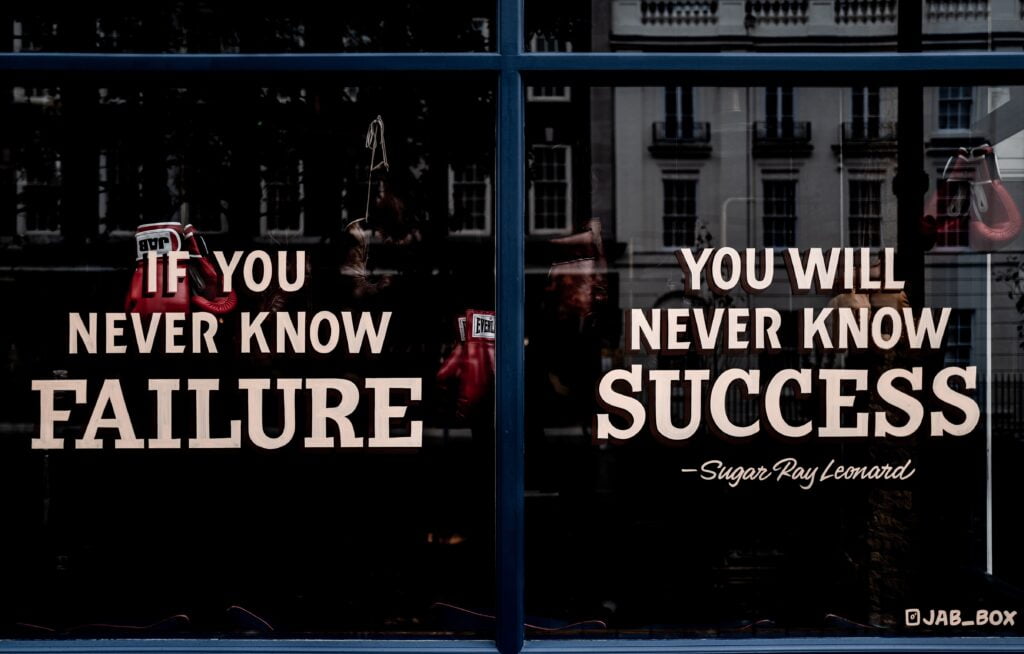
# 75 on my 99 Life Tips–A List is: Living well involves extracting every positive thing of value from inevitable failures.
It is a mistaken notion to believe that a good life is impossible unless only good things happen in it.
Aside from its improbability—for anyone—as far as evidence suggests, it denies the value of improvement arising directly from the ashes of failure.
Gregg Popovich, Hall of Fame NBA coach for the San Antonio Spurs, famously said of his teams that they were most vulnerable after a win (which they did often under his guidance). He said after a win you think you have nothing to learn and nothing to improve upon.
“The measure of who we are is how we react when something doesn’t go our way.”
Forgive quotes from a sports figure and not from the literati, but sports is one of those morality plays with lots of variables that pits opponents against one another in a test of comparable skill in which every night someone is undefeated for that day and someone else is a complete loser.
The winner gets to feel good about themselves and the loser has to find the fortitude to rise to the next day’s challenge.
The losers have to find something of value, some takeaway, to inspire them to their best effort in the next day’s contest. You know, like you and me when life trips us up. It is how we handle adversity, or how it handles us, that determines the quality of our lives.
Not enough adversity?
I recall an interview I saw with actor Mark Wahlberg (another famous literary figure… wink) in which he discussed his fears for his children. Wahlberg is a celebrity father who loves his kids, well known for his own gritty childhood in the Dorchester neighborhood of Boston, MA. The interviewer, talking to him about the difficulties he’d overcome as a young teenager on mean streets doing some bad things, asked what he feared most for his own children.
“That they won’t face enough adversity,” quipped Wahlberg in all sincerity.
He knows the value of tenacity, perseverance, and resilience. He knew you cannot lie down when you get hit. You must get back up and keep moving. Those who have lived overly sheltered, pampered lives don’t.
It is a truism that the severity of every person’s trials is relative. That truth gave rise to the atrocious, but true, phrase, “First World Problems”, as in
“OMG, There’s a crack in my iPhone’s screen protector! Uggghhh! FML!”
It’s embarrassing. Still, everyone’s problems are existential threats and earth-shattering to them.
Those of us who have faced down real difficulties know how tough real-world problems are, and we’ve learned how tough they’ve made us, right? We have learned how to extract value from failure.
We’ve mined everything possible from the trials, tragedies, and travesties, learned from them, and we’re still standing. Standing and smiling. Smiling and moving forward. We know how to enjoy a good life and live well because we’ve seen the other side and we know how fortunate we are. Gratitude makes everything sweeter and makes living well easy.
The undeniable theme is there is a best time for everything
Borrowing from a phrase I read recently in The Overstory, by Richard Powers, that the “best time to plant a tree is 20 years ago, and the second best time is today,” I am convinced the same is true for artistic, creative pursuits.
The best time to pursue them is 20 years ago. I wish I could turn back those years and start then, as a younger man, with more time to write more things and potentially reach more people and do more good. But wishing won’t make it so. I have the pleasure of having lived those 20 years and perhaps they have given me more things to write about, so I’m using the second best time… today.
You should too. You cannot reclaim time lost, but you can prevent losing any more. Stop negotiating against yourself over whether you will pursue your art, your music, your writing, your creative dream, and begin. You won’t regret it. The fear of failure keeping you paralyzed, that seems so big, before you start, evaporates like the morning dew, once you begin.
Every creator is afraid. That is the essence of creation. I’m afraid every time I click Publish. To create is to make something never made before. You might fail. People may not like it.
So what?
If you never try, the people meant to love it, be inspired by it, even be saved by it, won’t be.
So, since you have today, and since today is still the second best time to start…
# 74 on my, 99 Life Tips–A List is: Think less about how you feel and more about what you should do.
The people I know who spend the most time analyzing how they feel consistently feel the worst. I may confuse correlation with causation, a common problem, but the predictability of this outcome led to the tip above.
For consistently better feelings, how you feel matters less than what you do. If you will refocus your attention, you’ll feel better,… and be more productive, to boot.
I’m on a sometimes weight loss (sometimes weight gain) regimen known by its common name as a “diet”. To track progress, I stand on a scale hoping it doesn’t chuckle and say, “One at a time, please.” I can see the number. It is measurable, serving as an indicator of whether I can afford to drink a beer.
There is no empirical scale for emotional states
Seriously though, emotional states don’t work that way. There is no objective, empirical scale.
Asking someone whose emotional states fluctuate dangerously how they feel on a subjective 5-point scale is the equivalent of asking an obviously drunk person if they’re drunk, and what they think they’d blow. Chances are high you will not get an accurate answer.
Maybe I’m different, but whenever asked to pick from three emoticon faces ranging from sad—to neutral—to happy, nine times out of ten, I’m neutral. I seldom think about how I feel.
When I feel good, I just enjoy it. It doesn’t occur to me to stop and evaluate whether I’m at a 3.5 or 4. If I feel bad; I figure out why, what I’m thinking, what it would look like fixed, and what I can do about it. I don’t ponder whether I’m feeling a dismal 1 or perhaps as high as a 2. Degree is irrelevant.
If you get stuck here, analyzing and cataloguing your feelings, you may wish to reconsider. How effective is it? What does your subjective answer about your subjective feelings tell you except in the most general terms?
It is important to know how things make you feel so that you can do something to either recreate them or eliminate them. The action you take is the key thing.
I’ve written about the relationship between emotions and thoughts, so this is where I start when I feel bad. My thinking is the usual culprit. I don’t start by figuring out how bad I feel. I don’t press on my emotions like I do bruises. If I feel bad at all, that’s bad enough to take action.
You most definitely figure out what you’re feeling so you can act accordingly. What you feel and how much you feel are different. Yes, figure out what you’re feeling; think less about how you’re feeling, and figure out what you should do.
Because ultimately, how you feel matters less than what you do.
# 71 on my 99 Life Tips–A List is: Attempt to gain mastery at something, whether it be a topic or a skill.
Malcolm Gladwell, in his book Outliers, asserts that it takes 10,000 hours of deliberate practice to achieve world class mastery in a field. A new study debunks that idea, but it doesn’t negate the importance of striving for mastery. Whether it’s 10K hours or half that, mastering a subject, topic, area of interest, or skill, is valuable as both a means and as an end. So, attempt to gain mastery at something.
My journey hasn’t been so focused. I’ve adopted the shotgun approach to both interests and career paths. I rationalize it by claiming to be cut out of philosopher cloth. The truth is probably closer to an ADHD diagnosis. Regardless, I am heeding my own advice; I am going to master writing as both craft and career, and guitar as both hobby and personal therapy method.
I can summarize almost all counsel for burgeoning writers in the phrase, “write what you know.” That’s fine. I mean, who would want to read non-sense from someone who doesn’t know what the hell they’re talking about? But a problem with this is that the other universal piece of writing advice which usually couples with the first in short order is, “be the first voice people think of in your niche.”
A niche, you say?
It’s that second part that is worrisome. Being a philosopher is fine, but it’s niche-averse. Having wide-ranging interests and even having some familiarity and expertise in a variety of disciplines is fun, exciting, and wards off boredom and monotony, but it’s not the recipe for mastering a niche.
The downside of niche-less-ness is amplified when you feel compelled to add your voice to a wide variety of topics. Where are my talking points, anyway? There’s a tendency to live off-script, which is sometimes more fun for you than the people around you.
So, the attempt to gain mastery at something specific is worth the effort. It serves as a focal point, is measurable, gains are scalable, and can become exponential. What is difficult, requiring intense concentration and concerted energy in the beginning, can become second nature, autonomic, and fluid as mastery increases.
It’s the first steps of the mastery journey that are all uphill. But those first steps are worth lacing up the hiking boots in anticipation of the gains along the path and the rewards at journey’s end.
Besides, someday someone may come looking to you for Japanese steel only you can produce, regardless of your sushi-chef disguise. You wouldn’t want to let them down.
# 70 on my 99 Life Tips–A List is: A college degree is unnecessary if; you have an innate, voracious appetite and capacity for knowledge, you also have the personality and skill to sell yourself to a prospective employer. Otherwise, a degree is proof that they can teach you and you can stick to something long enough to be considered a credible candidate for employment.
Having written previously on the benefits of a college degree, this companion piece is my take on the sine qua non attributes any person in the modern economy must possess if they are to make money using their mind (and not their muscle) in sufficient quantity for the lack of the college degree not to be either a roadblock, or a constant source of anxiety.
Whew! That was a long sentence. If you don’t have a college degree, go get one and then come back and try that sentence again.
Look, making a living in the US, in a technology heavy, services dominated, consumer driven economy, will be tough with no degree. Without verifiable skills, as showed by completing approximately 120 credit hours’ worth of study in some concentrated subject, you will compete on price for your talents and presence at any job. Scarcity creates value. Persons with college degrees are not scarce. Their overall value has fallen as discussed in my previous piece. Though they have an achievement on their resume that prospective employers look for.
The Pool is Larger
That means you’ll be competing against a much larger segment of the employable pool of workers for pay. Your competition includes both those with and without degrees. And the larger the pool of anything, the less valuable it is.
You will need to set yourself apart to climb out of the largest pool. To differentiate yourself, you’ll need at least 2 things. One is sufficient mastery of a relatively rare skill people will pay for. The second is the ability to convince someone of that mastery and to pay you. The rarer the skill you develop, the more valuable. But, you’ll still have to market yourself to prospective employers and customers. In short, you’ll need to develop major people skills.
You’ll also need to have the resilient personality and mental fortitude to face lots of rejection. Lots of potential positions on job posting sites will require a degree as the first requirement of consideration. You won’t even have the chance to talk your way into a trial run.
I am on your side in this venture. We are in the same camp. I am about halfway to a degree, and could complete it, but I made different decisions in life a long time ago that I have absolutely zero regrets about. But I’m damn lucky not to be full of regrets.
I’m warning you on the front end that you may regret not having that proof that you can stick to something, get a degree and never have to worry about that as a requirement in your preferred area of employment.
Now, if you’re Steve Jobs, or Jerry Garcia, or some other whiz-bang, super talented, highly motivated individual who will wow us with your every creation, skipping college might make a lot of sense. If that describes you, by all means, please go for it!
The Old Well at the University of North Carolina at Chapel Hill. Photo by Dan Sears.
# 69 on my 99 Life Tips–A List is: A college education is a useful context for exposure to knowledge you may not be familiar with. You may just discover your cup of tea.
It’s important to remember many successful persons never completed college. Not that they weren’t intelligent. Foregoing college didn’t prevent them from furthering their knowledge, skills, or education. They gained these from non-traditional methods and paid no tuition to do so.
My college story
Full Disclaimer: I didn’t complete a degree. The University of my choice accepted me as a student. It was the only school I applied to, and I received a half-ride scholarship. At 17, going to my favorite University felt like I’d achieved my only life goal. I was excited to attend. But I was ill prepared to regard college as the means to a greater end. I arrived filled with questions about life. But I couldn’t get the answers in the classroom. They weren’t even asking the same questions. So, I left after 2 years.
My lack of a bachelor’s degree only bothers me when I contemplate a normal life. Thankfully, this is rare. It is a glaring omission on my resume. But I haven’t been resume dependent, so that’s never been an issue. Despite the lack of a degree, I’m well read. I’ve always been curious, with an insatiable appetite to learn new things. These traits factored in to my decision to leave college. The rigid structure left me cold, impatient with the pace of the process. I was curious and hot to know everything—now—prerequisites be damned!
I owe what education I have to my continuing curiosity and acquisitiveness. My education isn’t the formal kind, but then my living isn’t the normal kind.
But I encourage and urge my college-age kids to get a degree (one of whom just did—with honors, I might add). I stress college as a means to some end they will need to choose for themselves. I hope they will see college as a useful stepping stone on the path of life. My rationale is mostly for the reasons I touch on in this brief piece. So I suppose I’m one of those do as I say, not as I did, parents regarding a college degree.
Success stories without degrees are exceptional today
Non-degreed success stories represent the exception in modern times. Especially so in a knowledge based economy, more and more dependent on novel technologies, and those trained to use them. The pursuit of a degree provides opportunities for exposure to technologies and skills acquisition, making the degree holder more marketable, all other factors being equal.
Even mediocre students should go to college. Especially if they remain unsure of their skill set, talents, or career interests. A college degree today is what a high school diploma was in the early 80s when I graduated from high school.
It is an entry-level requirement for a satisfying job. Yes, the value of the degree has decreased in inverse proportion to its necessity and ubiquity. Yes, many undergrads with degrees today have potential adjusted earnings no greater than their high school graduate counterparts of 40 years ago, as discussed in this Forbes article.
The factors affecting the value of a degree from one generation to the next are beyond this advice and opinion piece. But, if you’re interested in further reading, the aforementioned and linked Forbes article is a good place to start.
Regardless of generational valuations, exposure to knowledge is valuable in its own right. And college is a fantastic means of exposure to varied knowledge if nothing else.
Degree holders earn significantly more
But… setting aside the generalized devaluation of a degree comparing successive generations, the potential earnings of today’s bachelor’s degree holders compared to only high school diploma wage earners is stark. This article from Northeastern University published a year ago shows the scale of expected earnings. This salary advantage for degree holders adds up to serious money over a career.
2 important considerations for the undecided
Setting aside salary considerations, the value in a college education is two-fold:
1- Earning a degree keeps doors from closing.
A degree is not a passport to open all doors. Depending on the degree field and the industry, a degree won’t automatically guarantee a job or career. It is easier for companies to find at least nominally talented workers from the larger pool of degree holders, and even to pay them less because of the glut. But, if you have a degree and the labor market requires a degree, at least you haven’t locked the door to your options. Companies can buy more talented labor at a cheaper rate than ever. This makes it easy for companies to bar entry to those with no degree.
2- Going to college keeps your options open and provides exposure to ideas, interests, and perspectives you may not bump into otherwise.
This 2nd part of the college benefit equation should never end. No matter what you do about college or career, be a lifelong learner. For many, college is the introduction to subject material they’d see nowhere else.
Expose your trip wire
Most 1st through 12th graders don’t get a lot of opportunity to study neurophysiology. I suspect high school science labs rarely map genomes. Even advanced STEM students may not study the calculus of wing design, or aeronautical engineering for a spacecraft capable of lift off and re-entry. College can introduce these specialized fields of study and the career paths available. It can uncover a latent interest or undiscovered aptitude.
So that exposure may be the trip wire for your entire future. College may be the place where you discover what floats your particular boat. If the opportunity is available for you, avail yourself of it. Do so as inexpensively as possible. It may be a useful means to uncovering your talents and purpose.
Though “professional students” exist, for most, college isn’t the end. In at least the ways discussed, a college education is valuable as a means towards future benefits. As long as you can afford the cost, and there are some excellent guidelines to follow to determine those ratios (this is the best one I’ve found), a degree will be cheaper to buy now, than the expense you’ll incur by not having one.