Tag: 99tips

  • All Salesmen Are Selling—Are You Buying, or Being Sold?

    All Salesmen Are Selling—Are You Buying, or Being Sold?

    All Salesmen Are Selling
    Photo by Austin Distel on Unsplash

    # 68 on my 99 Life Tips–A List is: All salesmen are selling. They are a part of the experience you are buying. If you don’t like the salesman, don’t buy the experience he is part of.

    I spent 18 years of my recently former life as a salesman. In all honesty, I’ve never not been a salesman. As a little kid, at Christmas, I’d sell my brother on the idea that he wanted a football helmet, and my sister on the idea that she wanted a Johnny West. I’d go through the huge Sears wish book and mark their selections for them. 

    But this isn’t about my selling ability, other than to sell you on the idea that all sales attendants are selling. They all have a vested interest in you buying whatever it is they’re pitching. Salespersons are not altruistic and disinterested. Shocker, right?

    Consider: If you are ready to part with money to buy something, you already have an idea about what you’re trying to buy. (It may not be the correct idea, as discussed here, but it is what you think you’re buying). So, you know what you’re hoping to gain from your purchase decision. Your purchase is a means to those ends. All good. Just keep a couple things in mind. 

    You’re buying an experience

    1- You’re not just buying a widget, or a service. You’re actually buying an experience (or a series of experiences). You are going to have different emotions before, during, and after you take ownership of the particular item or service. The feelings will change at each stage of the transaction from pre-purchase to newly minted owner.

    A skilled sales agent will steer your attention to the experience of some of the after-sale emotions before ever concluding the transaction. They will target your emotions attempting to create positive feelings. In fact, this technique may precipitate and accelerate the conclusion the salesperson wants. Pay attention and watch for this during your next interaction with a salesperson. Remember the premise; all salesmen are selling. Listen for clues like these.

    “Those earrings look so beautiful on you.”

    “Man, you look good in that car!”

    “You are smart to get in now before this opportunity is gone.”

    One of the world’s most famous salespeople, Zig Ziglar, said, “Selling is essentially a transfer of feelings.”

    There is nothing inherently wrong with this. Good sales associates know it to be true and help their customers determine what it is they’re really trying to buy. They know the customer is trying to buy a feeling. And they help them get there. But, a line is crossed when the sales associate over promises or misrepresents just to close the sale. In that type of interaction, you’ve been sold.

    As the customer, or buyer, you also need this awareness. Behavioral economics predicts you won’t make rational economic decisions. Nine times out of ten you will make emotional ones. You feel one way, you convince yourself that getting “X” will make you feel better, so you decide to purchase “X”.

    The sales process is a transition of feelings

    2- The transition between your emotions before a purchase is made, the emotions you anticipate will result from the purchase, and the after-sale feelings is the sales process. The entire experience of which becomes part of the after-sale feelings. Buyer’s remorse occurs when the post-sale feelings don’t match the pre-sale anticipation. Your mind will link the sales process to the item or service forever, to either enhance or erode your feelings about the thing itself. The sales experience will be part of your future memories of the thing itself.

    It’s because of the inescapable linkage of #2 to the purchase that I caution you. If you don’t like the salesperson during the sales process, you won’t like their memory afterwards. All salesmen are selling. Just make certain you want to own the whole package, including the associated memory of your sales associate, before you close the deal.

  • Do Not Take Yourself Too Seriously—No One Else Does

    Do Not Take Yourself Too Seriously—No One Else Does

    Don't Take Yourself Too Seriously - Like this sailboat, you are in motion and changing.
    Photo by Kristel Hayes on Unsplash

    # 67 on my 99 Life Tips–A List is: Do not take yourself too seriously. You aren’t the same you as you were at five, or perhaps at twenty-five. You are fluid and dynamic. Today’s “you” may vanish tomorrow, just as a stormy, wind-tossed ocean may tomorrow be as smooth as glass.

    Learn to laugh at yourself

    The ability to laugh at oneself is a life skill to cultivate. It’s tied to the realization, often hard won, that you are fallible and sometimes weak but still resilient and worthy of love. You are a work in progress. The edits aren’t all in. So don’t take this present draft, this iteration, too seriously. 

    The capacity for change is one of the enduring and ennobling traits of this life. From birth, we change and morph and develop and grow. Our beliefs vacillate, our energies fluctuate, faced with defects we compensate, and all of this admixture forms a distillate; the current self occupying today. 

    So, for the semblance of stability, if we’re both lucky and wise, we discover some values around which to pour concrete and anchor down. We drop anchor on a belief, or a lover, or a quest. You can find us moored there for a while. 

    As sure as the wind changes, our course can change, too. We can hoist the anchor, scrape the barnacles, unfurl the mainsail, and ride the wind. You may not see me here tomorrow. It’s possible tomorrow’s version may be different altogether—other than the wrapper. If I haven’t spoken to you in 5 years, I’ll wager you’re a different person. The physical resemblance might prove vaguely familiar, but internally you will have changed. There is plenteous truth in the trope:

    “We are always in the process of becoming. Self-identity is a fusion of our prior decisions and our current thoughts.”

    ~ Kilroy J. Oldster: Dead Toad Scrolls


    Think of the applications in your life. Your age, your health, your knowledge, your experience; all are in flux. What’s your longest running good habit? Which version of you should we take seriously? Which is the real you?

    Nothing in life is static

    Now, lest I wax too poetic, or else get too serious in a ditty contrived to convince you not to take yourself too seriously, let me encourage you with those words of wisdom that have come to us through the years:

    This too shall pass.

    ~ Anonymous

    I hated hearing that during a struggle. Because in the middle of one you’re consumed. It’s serious business. Sometimes you can’t see your way out or to the other side. But friend, there is a way out, and there is another side. And either way, like it or not, the quote is true, and the struggles we face turn us into different versions of ourselves. I find it helpful to remember neither good fortune nor bad lasts forever, as it says so poignantly in the Grateful Dead’s Stella Blue: 

    “There’s nothing you can hold for very long.”

    ~ Grateful Dead: Stella Blue

    Since our layover on this plane of existence is so brief, let’s not get too bogged down in the mire and minutiae of personal insults and minor snubs. Better to smile, shrug, and move on. Exemplify resilience. On the other hand, when you’re riding high in April, remember not to gloat, May is coming.

    So, let’s laugh more than we cry and love more than we hate and like good boy-scouts, let’s leave things better than we found them. Do not take yourself too seriously. After all, no one is going to remember all the great things you do for yourself, nor all the high-minded opinions you espoused. They’ll remember what you did for them and how you made them feel. Take others seriously and you’ll do a lot more good, receive lots more love, and have a lot more fun.

  • Logic Has Its Limits–This Headline Is False!

    Logic Has Its Limits–This Headline Is False!

    Logic Has Its Limits - It is scaffolding and not substance
    Photo by K8 on Unsplash

    # 66 on my, 99 Life Tips–A List is: Logic is a useful scaffolding to climb the tower of truth, but it is not the tower, and will not always result in what is true.

    I mean here that logic is a framework and not substance. It is a system that is useful for testing rational statements. But it relies on the inherent limitations of language and sometimes its champions forget that language, whether written or spoken, only represents the thing or idea represented and is not the thing or idea itself. If Language is limited, and if Logic relies on Language, then it follows, logically, that Logic has its limits.

    So, I can build up an impressive array of premises and definitions about Hydrogen and Oxygen and how combined they form a substance that can exist in three different states depending upon temperature. And when finished I still won’t be able to drink it. The truth of water, experientially, evades both language and logic in the abstract.

    There are those who enjoy creating syllogisms that are absurd like:

    If God is all-powerful, then He can create something impossible for Him to lift.

    But if He did, then He wouldn’t be all-powerful since there would be something He could not do…

    These word games use logic not in the attempt to discover truth, but to camouflage it.

    Logic doesn’t admit the consideration of all variables that might affect a premise all times. Contexts change. So not all truth boils down to binary, true/false declarations with predictable, repeatable outcomes.

    Take this sentence from this article:

    “THIS sentence is false.” This sentence is also where the problems start. If true, it is false; if false, it is true.

    ~ Read more at newscientist

    That’s a good noodle-baker. And it provided the intellectual fodder for my headline, which has the same logical problem. If the first clause (“Logic Has Its Limits”) is true, then the entire headline is false, if the first clause is false, the entire headline is true. Either way, the scaffolding collapses.

    So logic is useful within its limits. But let’s remember logic has its limits. It will not as a necessity result in what is true. And in the minds of the disingenuous, it becomes a rhetorical tool to go the opposite direction.

  • Selective Attention–You Cannot Trust Your Eyes For All That Is Real

    Selective Attention–You Cannot Trust Your Eyes For All That Is Real

    # 65 on my, 99 Life Tips–A List is: You cannot trust your eyes for all that is real.

    “So I give you my eyes, and all of their lies

    Please help them to learn as well as to see”

    ~ Grateful Dead: Black-Throated Wind

    One of the best examples of this truth is this video, known as the Monkey Business Illusion.

    How did you do?

    Selective Attention is a thing

    We have eyes only on the fronts of our heads. This means in order to see something, we must face it. You can only see in the direction you’re looking. Does this mean that nothing exists in outside your field of vision? Of course not, but it means you must look for and look at something in order to see it.

    Add to this the fact that it is not the eyes that see. It is your brain. Neuroscientists know that the brain create and feeds an image of the world into our conscious perception of reality. It generates a moment-by-moment hallucination. How weird is that? The ramification is that we’re always playing catch up to the present, and that what our brains show us via the openings in front of our heads is the best-case prediction of what the next millisecond ought to look like.

    And even within your field of vision, as the video linked above shows, about 50% of viewers don’t see something even if it happens in the direction they’re looking. I didn’t the first time I watched the video, which my children could have easily predicted. They’ve known for years the easiest way to hide something from me is to hide it in plain sight. We won’t see what we aren’t paying attention to, or if we are distracted by giving attention to something else. For me, that’s often a book (which means I can’t hear, either).

    But I’ve had the belief for as long as I can remember that there is more going on in reality than meets the eyes. Of course, we know that to be true scientifically. The fact that you cannot see in the infrared spectrum doesn’t mean bees cannot. They do in fact. And they see well into the ultraviolet spectrum, well beyond human visual capability.  It’s speculated that venomous snakes see infrared as heat signatures as well, so be careful out there.

    The point of my tip is that our eyes are not the final determinants as to what is real. Without a long harangue about metaphysics and the nature of consciousness and reality in general, suffice it to say that, while you can trust your eyes for the tasks they’re well suited for, you cannot trust your eyes for all that is real. 

  • Don’t Speculate—Just Admit You Don’t Know

    Don’t Speculate—Just Admit You Don’t Know

    just admit you don’t know
    Photo by Chris Ainsworth on Unsplash

    # 64 on my, 99 Life Tips–A List is: The wise know that they do not know, are not afraid to admit that they do not know, are wiser for this, and remain undeterred in the effort to know.

    I would reduce this tip to Don’t Speculate!… but the meaning is not exactly the same. Socrates is famous for being wise. Just as famously he did not boast of it. One of the hallmarks of the wise is their willingness to lean in to their own ignorance. The foolish and simple-minded are certain…and almost certainly wrong as a result.

    When you don’t know something (which is often, right?), don’t try to fill in the gaps with guesses, wishes, and hopes. Just admit you don’t know. Speculations won’t get you any closer to factual knowledge and may lead you further astray. Just carefully approach the unknowns armed with what you do know. 

    Back to Socrates for a sec. The method named after him, The Socratic Method, is a question-and-answer style approach to truth detection. Philosopher types refer to this style by the fancy-schmancy name–dialectic. This technical sounding word just means questions and answers between two viewpoints. In the method, the questions are as important as the answers. The questions clarify ideas as they get more and more focused on the essential knowledge sought.

    A follower of this approach learns that defining terms is important. Thus, the method seeks to categorize, catalogue and capture truth in words. This is useful, though one of my favorite words is ineffable, which means, literally, “too great or extreme to be expressed in words.” 

    Ineffable experiences and truths are my personal favorites, but that’s a topic for another day. Admittedly, truths that resist definition, resist dissemination as well.

    For a deeper dive on the topic, written in a very approachable format, read the late Robert Pirsig’s iconic Zen & The Art of Motorcycle Maintenance.

    Returning to the tip at hand, and especially when trying to make a decision, keep in mind what you know, what you don’t know, and what you need to know. The last is the most important point. It bears repeating. Ask yourself what you need to know in order to make the best decision. 

    When you’ve determined what you need to know don’t rely on your own speculations to fill in the answers. If you need to know what someone else thinks in order to make the most informed decision, ask them. Don’t just guess. 

    Now, to wrap this one up with a huge caveat. Lazy, uncaring, ignorance isn’t a trait you want. There is no famous philosopher named Mediocrates. There is nothing admirable about wallowing in the dark.

    When in doubt, be wise–or at least act wise. Don’t speculate, just admit that you don’t know.

  • Open Car Doors–Small Investments Can Yield Large Returns

    Open Car Doors–Small Investments Can Yield Large Returns

    Open Car Doors
    Photo by Markus Spiske on Unsplash

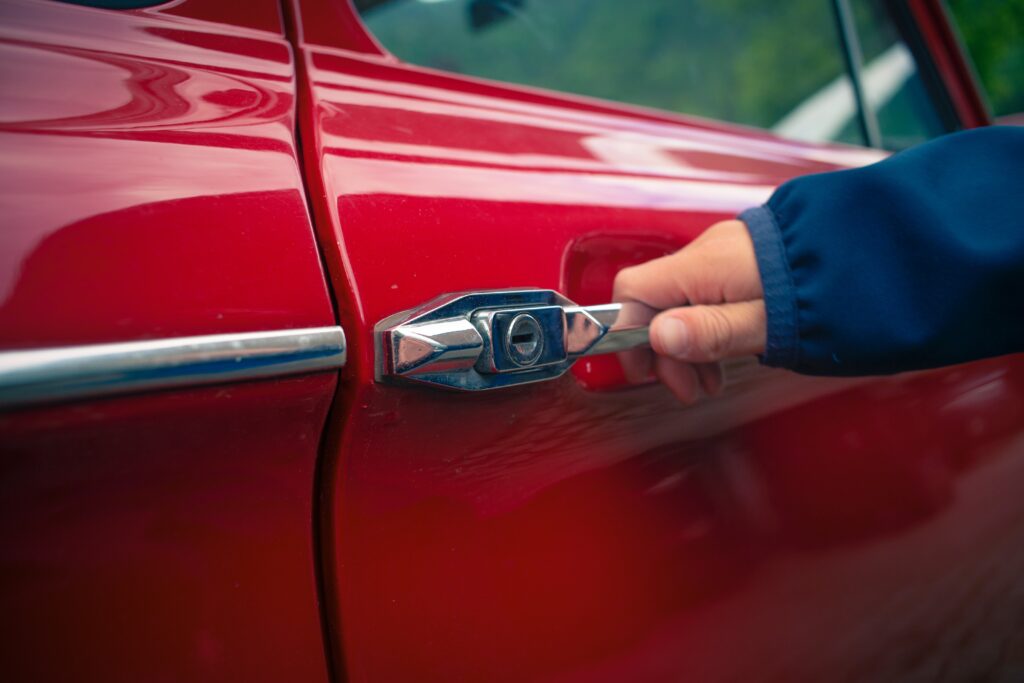
    # 8 on my, 99 Life Tips – A List is: If you’re a guy, open car doors for your date, girlfriend, wife, lover. It’s a small way to say, ”I’m aware of how lucky I am to have you in my life at this moment in time, and this is a simple way I can show it.

    Yes. This one is sexist. I’m writing to guys. I am one. Get over it. That being said, I’ve never had a woman offer to open my car door. It’s just never been a thing.

    When I see my sons open the door for their dates, I feel proud, like maybe I’ve instilled something good in them.

    I admittedly do not know the protocol for same-sex relationships. But, in the absence of any protocol, I think the second part of my tip still applies.

    There is a very large return to relationships from small, ordinary investments of acknowledgement and appreciation.

    Taking a partner for granted is a relationship killer. I’m sure that’s true across the spectrum.

  • Tip Well

    # 9 on my, 99 Life Tips – A List is: Be kind to waiters, waitresses, and service personnel. By kind, I mean, tip well. They are human beings doing a tough job. If you’re comfortable with it, ask for a first name, I do.

    You can tell a lot about a person by how well he treats those he’s not obligated or necessarily expected to treat with courtesy, respect, and dignity. I cringe and get angry when I see weak, insecure people act demeaning and degrading towards servers and other persons they consider beneath them. People who are compensating for their own powerlessness should just stay home. Others, aren’t so cringeworthy, they’re just cheap. They may treat others decently, but forget that they survive on tips.

    And courtesy, respect, and dignity – as valuable as those are – won’t buy groceries, or pay bills.

    So, when a tip is called for; in a restaurant, in a hotel, with other service personnel, enlarge your perspective to imagine yourself in their position and treat them the way you’d want to be treated. The pay is well below minimum wage in many of these industries with the expectation that tips will make up the difference. So, if someone does even an average job, pay them for it. They served you directly. Pay them directly. Easy. Think of how different your experience would be if that service worker wasn’t there. In many ways, they make the experience possible. In that light, reward their efforts.

    If you feel the need to teach them a lesson about the virtue and character that accrues from doing low-paying hard work, include a lesson about human kindness and generosity…yours.

  • You Could Be Wrong

    You Could Be Wrong

    You could be wrong
    Photo by Nathan Dumlao on Unsplash

    # 63 on my, 99 Life Tips–A List is: Learn to preface statements with, “I could be wrong,” as needed. Recognize how true this is.

    I’ve written previous pieces on preference and on being right in your own eyes exploring the idea expressed in this piece. Yes, you choose what you prefer. You also feel right in your own eyes when you do so. But… you could be wrong. 

    This truth about the potential for error applies not solely to actions, but applies to opinions and beliefs as well. It is important to keep open the possibility that you could be wrong.

    I count as among my most helpful moments in life, two disasters when, to my horror and shame, I was wrong about everything. I don’t know if there is a sage adage that you learn more from failure than from success, but if there isn’t, there should be.

    The first such moment was learning how wrong I was—living independently from God.

    That was a Big one.

    The second was learning how wrong I was to build a life around an unfaithful woman in the naïve belief that it would last forever because we’d stood in front of the aforementioned God, and a bunch of people, declaring that it would.

    Never trust anyone without a limp

    Both these instances pulled the rug out from under me in the most marvelous way. And they’ve left me with a limp. Remind me sometime to tell you my story about Jacob wrestling with the Angel. 

    That limp is internal. It’s the constant reminder to be vigilant not to put confidence in myself as an accurate predictor of my accuracy.

    And let me just say here in my piece about the need to admit to yourself that you could be wrong… I could be wrong.

    I don’t feel any need to set myself up as a guru or ultimate authority, even on matters I know a lot about. That flies in the face of conventional wisdom, especially for writers like me who produce lots of so-called “life advice” stuff. We’re supposed to own our niche, and position ourselves as THE VOICE, or the expert, or some other non-sense. Hmmm… I wonder if GregTheOracle dot com is available???

    When I read someone like that, I discount 95% of it, and laugh at the other 5%. Seriously. 

    Look, confidence is great to have. If you need some, be confident in this. You could be wrong.

  • Everyone’s Ways Are Right In Their Own Eyes

    Everyone’s Ways Are Right In Their Own Eyes

    Everyone's ways are right in their own eyes - even this beautiful alley in Charleston, SC
    This Charleston Alley seems like the right way…it sure is beautiful. (Photo by Beth Hughes, used by permission)

    # 62 on my, 99 Life Tips—A List is: Know this as well: Everyone’s ways are right in their own eyes, including yours.

    Most of the inspiration for this tip comes from the Old Testament, with maybe a little from the Grateful Dead.

    “Every way of a man is right in his own eyes: but the Lord pondereth the hearts.”

    ~Proverbs 21:2

    This proverb reinforces the fact we all do what we prefer. Preferences yield choices, which produce behaviors. These habitual acts become our way of life. But our preferences come from a deeper well–the sense that what we prefer is right. 

    Let’s say this rings true and you believe me. Now what? Are you supposed to excavate every action–performing psychological archaeology–to uncover the latent impulses that inform your every preference? Damn, that’s exhausting just to type. Imagine how much you’d have to live in your head to do that for every decision?

    Yet, this describes so much of what makes up the advice found in self-help books. And even at the professional, clinical level, there’s a lot of retrograde motion attempting to uncover the why’s of behavior. That’s the rub of typical therapy or psychoanalysis once you strip away the jargon.

    What if we could agree on some basic assumptions?

    1- Our nature as humans is to pursue self interest until we meet an obstacle.

    2- Our actions conform to this nature. 

    3- We do what we do and live how we live because it seems to be the right way to fulfill self interest.

    4- We continue on this course until or unless something larger than self interest replaces it as our primary motive. (which is tricky because this becomes our new self interest, though perhaps not for selfish reasons)

    See? Simple. Where should I send my bill? 

    The ancient proverb cited above tells the why’s. But if you don’t like that font of wisdom, might I interest you in some Grateful Dead?

    “Sometimes we live no particular way but our own

    And sometimes we visit your country and live in your home

    Sometimes we ride on your horses, sometimes we walk alone

    Sometimes the songs that we hear are just songs of our own.”

    ~Grateful Dead: Eyes Of The World
    (Songwriters: Jerome J. Garcia / Robert C. Hunter)

    We live the way we do for reasons that seem right. I’ve never woken up and thought, I’m going to live all wrong today. Have you? Even when we do something we know is wrong, we rationalize it to make it right. (Interesting word, rationalize, the practice of torturing reason to turn something wrong into something right so you can avoid feeling bad about it.)

    But enough digression. When you see me, it is safe to assume I’m doing what is right in my own eyes. I’m going to assume that about you. The trick is to assume it about yourself. 

  • Life Is A Preferences Menu Writ Large

    Life Is A Preferences Menu Writ Large

    A software preferences menu. Life is a preferences menu writ large.
    Outlook Preferences Menu (Screen Shot by Author)

    61 on my, 99 Life Tips – A List is: Know this about people: Everyone chooses what they prefer at all times from the menu of choices available to them.

    Most software has a preferences menu like the one pictured in the image above. This is where you can select your own favorites from the features and options available–your preferences. The software remembers your choices as you use it. Depending on the software, the selectable options are often binary, meaning they are Yes or No, Red or Blue, On or Off. Life is a preferences menu writ large. All of us, always and without exception, choose what we prefer from the menu of options available to us at the time the choice is made.

    What are you doing right now? Reading this? Why, when you could be doing something else? Isn’t it because you prefer to be reading this than the something else you could be doing?

    If you ask yourself the question, ”why am I doing this?” a thousand times in a day, the answer will always be that you prefer whatever it is you’re doing to some other choice you could have made.

    We can think about this in the negative if you like. Behaviorists and economists speak of opportunity cost. This is the idea that if you take one path, it closes the opportunity of taking an alternate path. If you work at one job, you cannot work at another at the same time. The lost potential opportunities are the real costs of the actual choice you make. And the choice you make is because you prefer that one to the opportunities you’re willing to lose.

    There is a difference between preference and desire

    But, as you think about this remember the difference between preferring  something and desiring it. I desire to be in Hawaii right now. But that’s not on my menu of options, or even if it is the expense to fulfill that desire would be too great. So, I’m stuck with my preference to remain at home, in front of my computer, writing this. Among my current menu of available options, this is what I prefer. 

    Does this mean everyone does what they want to do all the time?

    No. People do what they prefer, not necessarily what they want. Preference and desire are not the same thing. Sometimes the choice is between two evils. Neither is wanted, nor desired. Yet a choice must be made. People choose what they prefer, even if it’s not what they want. They will choose one unwanted thing rather than another they want even less.

    Knowing this about people, and about yourself, clears up a lot of confusion about why people do what they do. They do what they do because they prefer it. It cannot be otherwise.

    So, the next time you’re faced with a choice, which will be probably be within the next five minutes, think about this. Think about your menu of options. Becoming an astronaut might not be selectable, becoming nicer might be.